Be direct when you give feedback. People do not get enough feedback on how they can grow. Also, you may be the first person who will share plain and simple feedback with them. Feedback is a gift; clear feedback helps people transform and grow using their strengths.
Tech
Leading with Heart: Elaine Turville of Accenture Federal Services On The Power of Authentic Women’s Leadership

In today’s dynamic world, the concept of leadership is continuously evolving. While traditional leadership models have often been male-dominated, there is a growing recognition of the unique strengths and perspectives that women bring to these roles. This series aims to explore how women can become more effective leaders by authentically embracing their femininity and innate strengths, rather than conforming to traditional male leadership styles. In this series, we are talking to successful women leaders, coaches, authors, and experts who can provide insights and personal stories on how embracing their inherent feminine qualities has enhanced their leadership abilities. As part of this series, we had the pleasure of interviewing Elaine Turville of Accenture Federal Services.
Accenture Federal Services. She brings industry-leading functional and domain expertise to deliver value anchored to client missions. Turville leads a multidisciplinary team that provides strategic and operational expertise to federal clients across all sectors of the US federal government.
Thank you so much for joining us in this interview series. Before we dive into our discussion about authentic leadership, our readers would love to “get to know you” a bit better. Can you share with us the backstory about what brought you to your specific career path?
I grew up across both coasts, always living near the water. My dad served in the US Navy, and we moved every 2–3 years; I grew up going to 6 different schools. My family became close driving back and forth across the United States. The one place we visited frequently was Williamsburg, VA, where both of my parents, who were named William and Mary, met at the College of William and Mary (W&M). When I was looking at schools, I just wanted to go home and stay in one place for a bit, it was the longest time I was in a school during my entire education history.
While at W&M, I really wasn’t sure exactly what I wanted to do, but I knew I wanted to work with people on teams solving hard problems. I also knew I wanted to work at Arthur Andersen Consulting (which became Accenture in 2001) due to their investment in training, focus on skill-building, and because most of my accounting friends got to work there in very cool-sounding summer internships.
A massive disappointment, but I was not initially selected for a summer internship. So, I spent my summer and fall semester gaining data focused skills to ensure I would qualify for an interview. Once I landed at Accenture, it felt like home. I have stayed for 27+ years and I have taken every opportunity to build skills, join new teams, and tackle problems some may have avoided. That willingness to continually chart new paths has given me a unique career path, moving from commercial, to non-profit, to federal consulting across most social services industries.
Can you share the most interesting story that happened to you since you started your career?
One of the most impactful projects I supported was working with a major restaurant chain on how to employ more veterans, matching access to additional education and employment benefits. We spent a day whiteboarding and brainstorming pathways to employment and how to create more opportunities for servicemembers transitioning from the military when the company’s high-profile CEO walked in.
He wanted to talk more, so he invited our team of four home to have dinner with his wife and share more ideas and riff on ways to drive impact. He shared some of his vision around growth, why driving veteran employment was so important to him, and broader perspectives on the philanthropic landscape. It was a work trip to remember, and one that I often think about. You never know who will show up in your meetings or workshops and you have to be prepared to share and connect all of the way up to the CEO.
What do you think makes your company stand out?
Accenture people are amazing. They are smart, focused, and always willing to jump in to solve any problems. I have stayed at Accenture because of the challenges; there is always a new one to tackle. We are focused on critical issues and how to bring the most cutting-edge technologies to solve them. The ability to flex across difference clients with different teams and bring my most curious and problem-solving self makes this place special.
You are a successful business leader. Which three character traits do you think were most instrumental to your success? Can you please share a story or example for each?
I love connecting and engaging directly with our people and clients; it is where my passion sits and what gets me excited every day. As a graduate of the TLT executive training program, I have come to understand that showing up authentically and leveraging our innate strengths, we can really tackle complex situations and have massive impact. I focus my time in connecting directly with clients and teams, helping our people to understand their strengths, as well as how to form teams that bring a collection of strengths together for a project or effort. When we realize everyone has a magical power and the best teams bring those strengths together with an even footing, we enable people to feel truly valued.
My career brand is connecting people with technology to solve complex problems. Here are my 3 strongest character traits:
- Activator — Activating the network, a simple ask can get an idea off the ground or a team moving. Knowing who to ask and how to motivate people can transform an effort and get it kickstarted.
- Maximizer — I am the one pulling people across the room or business units to meet someone who has a similar problem, background or where there may be a natural connection. Creating these connections enables others to tap into a broader network and break down silos.
- Positivity — You will frequently hear me saying ‘Awesome’ or ‘Amazing’ and being the biggest cheerleader for our teams. #Keepbelieving is a long-time team mantra, inspired by one of my mentors. I often send notes up to leadership highlighting a team’s hard work or client feedback to give teams more senior visibility and positive feedback.
Leadership often entails making difficult decisions or hard choices between two apparently good paths. Can you share a story with us about a hard decision or choice you had to make as a leader? I’m curious to understand how these challenges have shaped your leadership.
Midway in my career, I was offered a choice — a safe and steady path forward versus the unknown. I had taken a year-long project with one of our international programs delivering a consulting project in Sub-Saharan Africa. It was an amazing experience in which I gained lots of hands-on skills in a new industry and location, while also stretching myself to take on new leadership areas.
After an incredible year, I was offered a role returning to roughly where I had been with a clear path to advancement. On the other hand, following my international experience, I had crafted a new role in which I could establish and grow a new capability focused on the non-profit industry. But this would be unproven and a far longer path to advancement. Which path to choose?
I chose the less traveled path, developing and growing a new business which enabled me to grow skills in creating a start up inside a well-established operation. Taking the “road less traveled” was one of the best decisions I have made inside Accenture. When I meet with our new joiners, the advice I share is to say yes, take on new challenges and try new things. The world is big, and who knows what you will enjoy doing.
Ok, thank you for that. Let’s now jump to the primary focus of our interview. Can you share a personal experience where embracing your unique leadership style, which might not align with traditional expectations, led to a significant positive impact in your organization or team?
Early in my career, I often heard, “Don’t wear your heart on your sleeve and get a thicker skin.” I still don’t have one all these years later, but it has become one of my superpowers. I remember one difficult client meeting, where a new client known for being a hard negotiator was making incorrect statements about some of our work and methods. The meeting was very tense, with the client raising their voice. I wrote down every concern, took a deep breath, and discussed every aspect raised, providing additional data and facts, and laid out my own concerns. I shared authentically and kept my ego at bay.
I kept it together, and as soon as the meeting was over, I put my head down and let it all out. The emotions of the meeting, the adrenaline of standing up for our team, and the fear of what might happen next all came out. But I didn’t give up. I followed up immediately, summarized our point of view, and asked for the next meeting. In round two, the client apologized and gave me positive feedback for addressing the concerns and having the courage to come back again. In the end, our relationship grew based around authentic communication.
How have you navigated and challenged gender stereotypes, especially in situations where traditional male-dominated approaches are the norm? What strategies have you employed to remain authentic to your style?
Early in my career, a senior partner told me I would not remain on the team for our next phase of work, as the work was moving to an international location where there were security risks. Rationally I do think he had the best intentions in his heart, but it made me feel a bit powerless in my career decisions. I had led the initial phases and delivered strong work products for our clients. I was disillusioned and let my ego get the best of me, but I found other cool projects to focus on and grow new skills.
As a leader, I have often thought about this situation and how people are impacted when they are not empowered to make fully informed decisions about their career. I encourage people to fully understand the context before making career decisions; step back, get clarity, understand how their strengths play into the role, and see the situation from all angles. When you remove the pressure and challenge people to think differently, it helps them to make authentic decisions where they are focused on employing their strengths.
What role has mentorship played in developing your authentic leadership style, and how do you communicate authentically to inspire and empower both your mentors and mentees?
I have been lucky to have many heros and ‘sheros’, as one of my mentors coined them, who have been critical at unique phases across my career, all encouraging me to be true to myself. They cemented in me confidence in my decision making, trusting my gut, and separating emotions from the decision. They have also showed me how to be unapologetically direct in how to communicate and gave me raw and direct feedback when I needed it. They inspired me to share the gift of clear communication with my mentees — providing feedback or probing to help get clarity on direction — or the space to work through approaches or new ideas.
Based on your experience and research, can you please share “5 Ways Leading Authentically enables strong Leadership”?
Below are some of the ways I try to lead authentically across every opportunity or role:
1 . People come first. Make connections with your teams and clients. Get to know them personally and what drives them. Advocate for your teams, make sure you are removing barriers, helping them to align to the best roles, and helping them see their impact.
2 . Be direct when you give feedback. People do not get enough feedback on how they can grow. Also, you may be the first person who will share plain and simple feedback with them. Feedback is a gift; clear feedback helps people transform and grow using their strengths.
3 . Use your heart when delivering tough messages. Tone and intent are critical to delivering messages and having someone hear them. Being empathetic in the delivery of messages helps you to be heard, helps the impact to be more deeply understood, and the criticality more measured. A softer approach in communication leads to authentic connections.
4 . Connection drives a strong team. Embrace it, celebrate everyone’s wins, losses, highs, and lows. Be the cheerleader and sing the team’s praises. Everyone is working hard, and we do not do enough to pause, celebrate, and say thank you. Help to make all people feel valued for their efforts.
5 . Always ask ‘Why’. Challenge yourself and others to avoid doing the same things. When you can get a broader perspective as to why things are being done, it makes it easier to simplify and drive transformative change. Understanding the why also helps people be more comfortable with the change you are trying to implement; it is tied to a common understanding about how to make things simpler and easier.
Are there potential pitfalls or challenges associated with being an empathetic leader? How can these be addressed?
When you lead with heart, there may be a perception that you are not tough or serious. People may see your empathy and positivity and assume you cannot make the hard decisions or take on challenging work. I think the exact opposite is the case. When you lead with heart, you authentically understand all the underlying reasons and whys for the decisions you are making. By stepping back and understanding the people dynamics, you can see the downstream impacts and consequences, and connect with people to navigate difficult situations. Your messaging is trusted because people know you have taken all of the viewpoints into account and are going to be completely authentic in how you lead forward. I actually think leading authentically makes us stronger, drives better connections, and enables teams to be more confident and effective working together.
You are a person of great influence. If you could start a movement that would bring the most amount of good to the most amount of people, what would that be? You never know what your idea can trigger. :-)
Since COVID, I have been trying to bring about the knit beanie movement with limited success. Every winter, I bust out my colorful collection and wait for really cold days to start wearing them. They bring smiles, laughs and eye rolls — but it’s so much fun.
If I could start a movement, I do think there are ways we can protect our time and implement strategies to be more creative and effective. Setting up periods where people can use the time independently, removing meetings, allowing people the time to catch up on the backlog or invest in themselves. Imagine what people could do with that time? Invest in their mental health, focus on physical health, spend more time with family, learn new skills? Could we use the time to volunteer or give back in big meaningful ways to others?
For me, I reserve time on my calendar on Friday to focus on the most important activities from the week, capture ideas and frame out new strategic focus areas, and spend time one-on-one working with leaders on how we can tackle difficult problems. This break from the back-to-back meetings helps me to pause and work through what’s next.
How can our readers further follow you online?
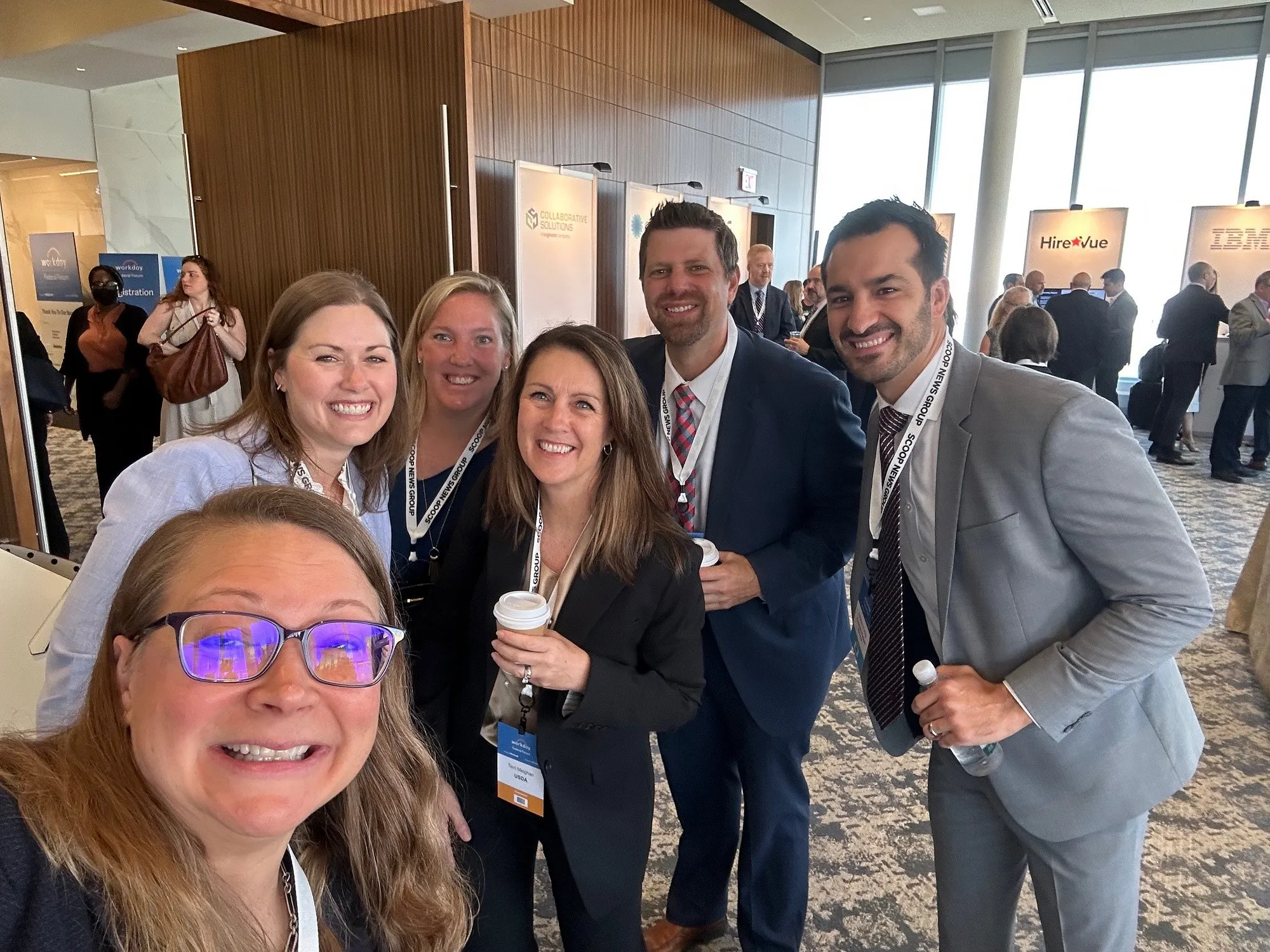
Connect with me on LinkedIn; I love to snap selfies with my teams and post about my life and adventures with Accenture and Accenture Federal Services.
Thank you for the time you spent sharing these fantastic insights. We wish you only continued success in your great work!
About The Interviewer: Pirie is a TedX speaker, author and a Life Empowerment Coach. She is a co-host of Own your Throne podcast, inspiring women in the 2nd chapter of their lives. With over 20 years in front of the camera, Pirie Grossman understands the power of storytelling. After success in commercials and acting. She spent 10 years reporting for E! Entertainment Television, Entertainment Tonight, also hosted ABC’s “Every Woman”. Her work off-camera capitalizes on her strength, producing, bringing people together for unique experiences. She produced a Children’s Day of Compassion during the Dalai Lama’s visit here in 2005. 10,000 children attended, sharing ideas about compassion with His Holiness. From 2006–2009, Pirie Co-chaired the Special Olympics World Winter Games, in Idaho, welcoming 3,000 athletes from over 150 countries. She founded Destiny Productions to create Wellness Festivals and is an Advisory Board member of the Sun Valley Wellness Board.In February 2017, Pirie produced, “Love is Louder”, a Brain Health Summit, bringing in Kevin Hines, noted suicide survivor to Sun Valley who spoke to school kids about suicide. Sun Valley is in the top 5% highest suicide rate per capita in the Northwest, prompting a community initiative with St. Luke’s and other stake holders, to begin healing. She lives in Sun Valley with her two children, serves on the Board of Community School. She has her Master’s degree in Spiritual Psychology from the University of Santa Monica and is an Executive Life Empowerment Coach, where she helps people meet their dreams and goals! The difference between a dream and a goal is that a goal is a dream with a date on it!
PJ
Written by
Pirie Jones Grossman
Editor & Journalist · Authority MagazineEditor and journalist at Authority Magazine, sharing in-depth executive interviews, leadership insights, and empowering stories from world-class founders and creators.
Published inAuthority MagazineTop Lessons, Top Authorities · 42K Followers
Exclusive, curated interviews with the leaders and changemakers shaping tomorrow. Leadership lessons, industry deep dives, and executive profiles.
More from Authority Magazine
See all stories →A
Authority Magazine Editorial StaffBrandon Wade & Dana Rosewall on Why ‘Yes’ People are a Liability and the “Painful” 180-Degree Redemption Story
Tech27 min read

Y
Yitzi WeinerAmazon’s Lauren Stovall Talks AWS Nonprofit Programs, Enterprise AI and the Push for Unrestricted Funding
Tech22 min read
G
Gabriel Borden, Managing Partner at Arrow FundGuardians of AI: Kerstin Woods of Toshiba America Business Solutions On How AI Leaders Are Keeping AI Safe, Ethical, Responsible, and True
Tech17 min read
A
Authority Magazine Editorial StaffFrom New York Wild Child to Bali Wellness Queen: Inside Meghan Pappenheim’s Spiritual Empire
Tech20 min read