My epiphany occurred when I saw that there was a real need beyond just capital from partners of early-stage start-up operators.
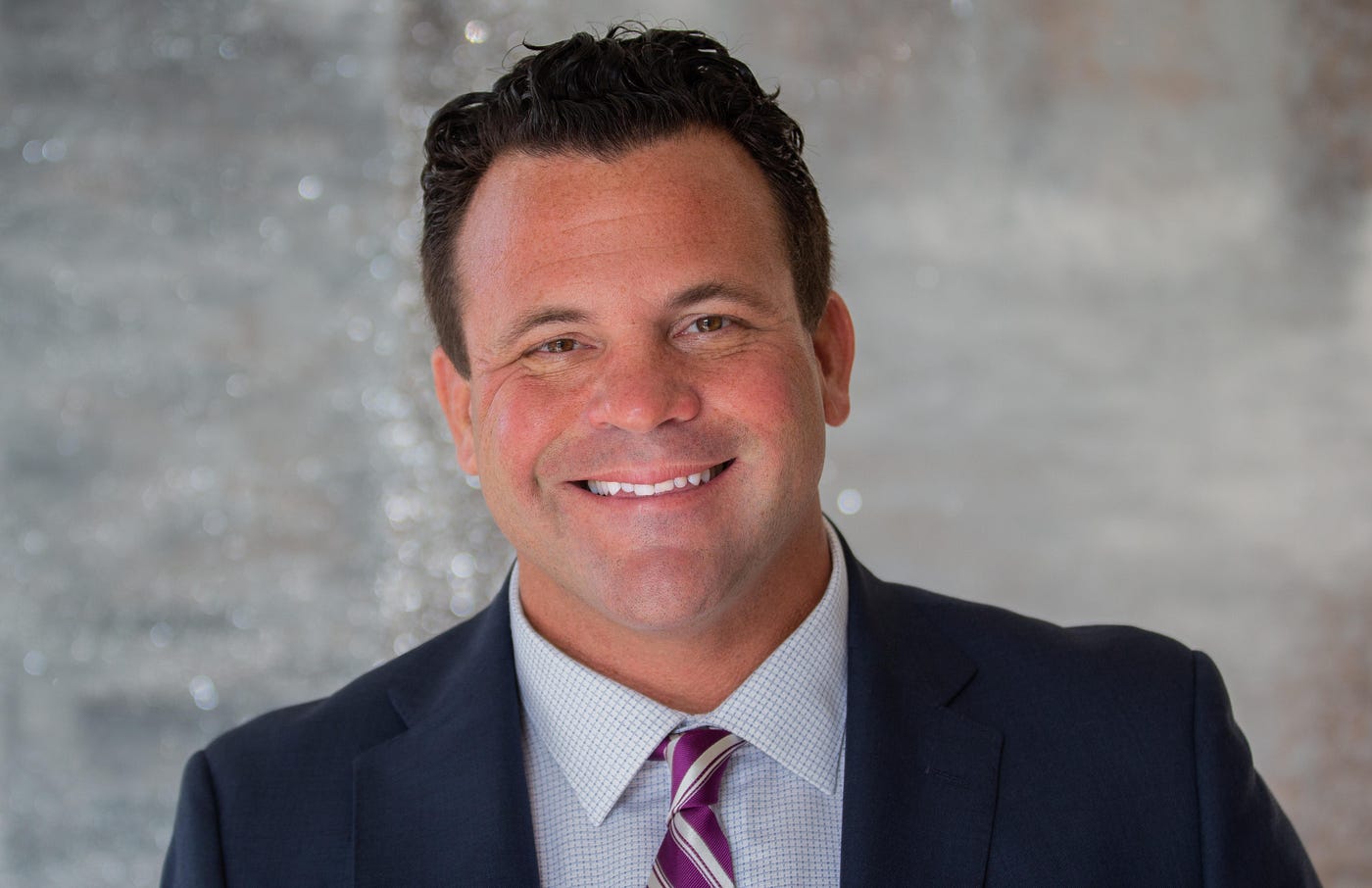
John Cerasani is a Chicago native who currently resides in the greater Chicagoland area. He has successfully launched businesses in the insurance, event planning, real estate, and food industries, as well as the venture capital space. John was a scholarship athlete and was a starting tight end at the University of Notre Dame and Northwestern University. John is actively involved in philanthropic efforts ranging in multiple verticals, including endowed college scholarships, ministry, youth athletics, socio-economic equality advocacy programs, and the promotion of the arts.
In the early 2000’s John was featured on the 40 Under 40 List in Crain’s Business at the age of 27. After earning his B.S. at Northwestern University, John split his time between running his event planning company and a sales position in the corporate insurance industry. He eventually moved on to the brokerage/consulting side of the insurance industry and earned his way into a position as an Area Vice President at insurance giant Arthur J. Gallagher while still in his 20’s.
In 2005, after only 2 years with Arthur J. Gallagher, Cerasani learned the intricacies of the industry and left his position to start his own brokerage/consulting firm out of the kitchen of his home called Northwest Comprehensive. With a 2-year-old daughter and an idea on a niche focus, he began reaching out to private colleges and universities with a value proposition that would eventually enable him to work with over 100 different colleges in 20+ states, while earning a reputation nationally as the leader in higher education insurance. He was featured on the cover of the insurance publication: Benefit Selling Magazine. This success and exposure grabbed the attention of much larger competitors and Cerasani eventually sold his company in 2015 to a private-equity-backed competitor.
With the capital accumulated over the last 20+ years in his business endeavors, he founded Glencrest Global in 2020, a venture capital firm based in the Greater Chicago area. Cerasani wants to not only invest but also assist entrepreneurs as they build their businesses with advisement and resources. He attempted this earlier in life as well with his entrepreneurial journey book, "Paid Training", which was released in 2011.
Thank you so much for joining us in this interview series! Before we dive in, our readers would love to “get to know you” a bit better. Can you tell us a bit about your ‘backstory’ and how you got started?
I believe my “back story” really starts with college for me. I played football at Notre Dame and in the Big Ten at Northwestern University. An injury stopped me from going pro but I was projected to be a mid-late round draft pick. After college, realizing that my NFL dreams were no longer in the cards, I still had other dreams. I always had an entrepreneurial spirit and had a great education to go along with it. This enabled me to effectively conquer these dreams.
In 2015, I had an exit from an insurance company that I founded from my kitchen table. The exit involved a large private equity player. After the transaction, contractually, I needed to remain part of the organization. This was a blessing in disguise because over the next 5 years I experienced two additional exits and received what I like to think of as a Ph.D. in Private Equity acquisition strategies. I would have never been exposed to this world or this experiential education within 99.9% of the paths I could have taken. I recognized that I was blessed to have fallen into this environment. It was an environment that I previously knew very little about.
After fulfilling my commitment post-sale, I decided I would focus my second career phase on an area that I feel is more exciting, and what I am passionate about. Although insurance was very lucrative for me, it was not exactly interesting dinner conversation. So, I decided to utilize my sincere interest in entrepreneurship and start a venture capital firm that focuses on areas that I deem "interesting." This has involved start-ups in the sports gambling realm, entertainment technology, beachfront hotels, and even something in cannabis, though I do want to mention that I am not a weed smoker.
What was the “Aha Moment” that led to the idea for your current company? Can you share that story with us?
My epiphany occurred when I saw that there was a real need beyond just capital from partners of early-stage start-up operators. I started out angel investing but quickly realized that there was plenty of space to have a role in advisory or even on the board of directors. Being someone that has started a company and sold it to a private equity-backed company, then worked at the acquiring company for a few years before officially moving on, I have been exposed to a channel of experience that is not easily learned without living it. I can offer my guidance from this experience to entrepreneurs I work with, in addition to the capital. As a result, I formalized what I was doing already and launched Glencrest Global.
In your opinion, were you a natural-born entrepreneur or did you develop that aptitude later on? Can you explain what you mean?
I believe it was in my DNA. I knew I had it at a young age—a knack for following the dollar signs and almost an OCD-like passion for understanding how a business works and where the profits are being made. I recall being shell-shocked when the dot-com boom happened in the '90s. I did not understand how any of the companies could make money, so I was rather perplexed as to how these founders were becoming millionaires on them. I was practically still a teenager trying to figure out why websites were going through the roof without having any sales. I could wrap my head around supply/demand and net profit without anyone teaching it to me, but the dotcom thing had me confused. This is indicative of how my brain has always worked, even back then.
The dot-com revolution and technology have perhaps more of a clearer path now than back then, but on the other hand, maybe not. Any venture capitalist that is playing in the early stage tech space knows that he/she is essentially at a casino—perhaps a casino with odds more in your favor—but an environment where you can still lose all your money nonetheless.
I believe any entrepreneur is a risk-taker to some degree, and regardless of my stage in life, this has been inherent for me always.
Was there somebody in your life who inspired or helped you to start your journey with your business? Can you share a story with us? I believe that life experiences all lead us in a direction and circumstances will sometimes drive us to make decisions. For instance, when I started my insurance company in 2005 it was largely because I was unhappy with not getting a large raise at the place I worked. They couldn’t have given me the raise, it would not have fit their “model,” however, if they had, or if I had worked at a competitor with a model that did fit my request, perhaps I would have been happy and not gone out on my own. I can truly say that my employer not giving me the raise I asked for is probably what inspired or impacted my decision to go into business on my own most directly.
The book "The Outliers" discusses people like Bill Gates and his trajectory. If he was born a decade sooner or a decade later he would not have achieved the level of success he obtained. It talks about how the same opportunities for advancement in personal computers would have been achieved already had he been ten years later, and had he been ten years earlier, he would have already been too far along in a lucrative career to focus on this “new personal computer thing.” I am paraphrasing from memory, but the example went something like that at least, hopefully I have been clear enough as to where you get my point.
I firmly believe in this concept and add that opportunism is critical within whatever situation you exist in. You don’t have to be Bill Gates. I do look back and feel as if I have been extremely opportunistic I used to use the word "lucky”, and my colleagues and friends would compassionately tell me that luck has nothing to do with my success. Over time, I have seen their point and agree that “opportunistic” is a more appropriate term.
In answering this question, I would also like to give credit to my late father regarding inspiration. Although my dad was not in the business world, instead was a high school teacher and football coach, he was passionate about his occupation and had very strong leadership qualities. I saw this my whole life and have applied a great deal of the traits to how I go about running my businesses. I can say that my OCD-like passion for what I do is something he handed down to me, and this passion is probably where more than 90% of my success comes from.
What do you think makes your company stand out? Can you share a story?
A key differentiator for Glencrest Global is a genuine interest in personal relationships. You often hear “invest in people” which holds true here. But for Glencrest Global, it is beyond that cliché. I have become very close friends with several founders we work with, and I am confident they would share the same sentiment. I am talking about checking in with each other beyond just business-related items—going to lunches, dinners, even vacations at times. There are people you simply just hit it off with and that is one of the things we are looking for in our partners. We are only here on earth for a finite period of time. Why not work with people that you enjoy being around? This is as important as the money.
This outlook has also resulted in better business development opportunities. A great example involves a large acquisition on the west coast we participated in. I was having lunch with a founder we work with in the sports technology space with whom I have become great friends. We were in Newport Beach and he said he was going to meet up with his business partner for drinks in Laguna Beach. This business partner runs a late-stage VC fund. He invited me along and our intent had zero to do with business. It was truly about a genuine interest in each other’s lives.
Unbeknownst to us, he had just finished golfing with one of his fund’s limited partners (LP) and he was there too. Party of four now. I was a former athlete and the person that joined us was a former NBA player. We shared some war stories and really hit it off. Over conversation, it turned out that the LP was part of an off-market deal to acquire the Newport Beach Marriott. I expressed how cool of an acquisition that is and that my parents took me on vacation when I was a kid there. The day concluded. We all shared contact info and added each other on social media to stay in touch.
A couple of weeks later one of their other investors pulls out in the 11th hour of the Newport Beach Marriott deal. He didn’t have a lot of time to refill the spot and would have ended up just funding it himself if he couldn’t find anyone relatively quickly. Because of our conversation that day he wanted to throw it out to me as an option. I decided to participate.
As a result, Glencrest Global is now part of an investment group that includes billionaires who are doing things like buying pro sports franchises in addition to half-billion-dollar hotel deals. Not a bad group to be in the room with. I now personally participate in their quarterly investor meetings and meet more new folks in the group while socializing after the day’s agenda.
What is most interesting about this though is that Glencrest Global had only been formalized for about 4 months when we were invited to participate in this deal. A year prior I was in insurance and this kind of interaction was not even in consideration. One might suggest that we had no business being a part of this deal at this stage. It was highly exclusive and an “invite-only” environment.
This never happens without a genuine interest in people and trying to focus on working with people you want to be around. If you can focus on being around people you like, genuine interest happens rather easily.
You are a successful business leader. Which three character traits do you think were most instrumental to your success? Can you please share a story or example for each?
Number One: Get Your Hands Dirty - There is not one function of my current company or any of my former companies that I could not tell you the inner workings of. I am a firm believer that you can't lead a team if you are not familiar with their occupation. Now, I am not saying that you need to be the best at each function; you shouldn't be, but you should understand the job function intimately so you can find and hire a person that can do it as good or better than you, and then effectively lead him/her.
A great example of what I think does NOT work is the hiring of sales leaders when they’ve never been in sales. This is usually a bad idea, but it is ALWAYS a bad idea if that person is also one to micromanage the sales process. It’s a joke.
On the other hand, look at the opposite approach. When I was running my insurance company, if someone with the assistant account manager role wasn’t present and I knew he/she had a huge workload that day, I knew exactly what needed to be done and delegated the tasks, or better yet, just did them myself.
Number Two: Inflate Your Company, Not Your Head - Take phrases like “my employee” out of your vocabulary and replace them with “my colleagues.” Go to an initial prospective client meeting as someone that is looking to help and serve that client. Do not go as the company President that is looking to impress them.
I always positioned myself as a seasoned sales rep or consultant to clients. I never lied if asked what the ownership structure of my company was, but I didn’t run around touting myself as the owner or President either. I’m simply a good, polished salesperson representing a company that is being introduced to the client for its business. I am then given the greatest reward because my company is now seen as an organization that can hire top talent, and the client is impressed by that. This is more favorable than, as my son would say, “flexing” your title to impress them.
I’m often challenged on this ideology by some of my entrepreneurial peers. They argue that being C-Level or the owner is a treat for the client and the client will give you more credibility as a result. I simply refer to what I said in the previous paragraph and add “we are here to get new clients, not new girlfriends.”
Number Three: Be Concise, Be Succinct, Be Detail-Oriented in All Communications - In 2011, I wrote a book called “Paid Training” and one of the chapters is named “Speak the Language, but don’t BS.” I cringe when I hear BS and I have greater respect for clients that recognize when someone else is doing it too. Every industry has its share of buzz words or phrases that simply are what I think of as space fillers when there is nothing intelligent to add or say. In the book, I was comparing this kind of jargon coming from the mouth of someone from a smaller organization not having the same impact as from someone at a larger more established place of employment. The reality is though, that there isn't a place for it anywhere.
Example:
“I know in the environment we are currently working in, we must put the fires out proactively and adapt to the ever-changing issues presented in this eco-system. It can appear to be quite a daunting task at times.”
Just get to the point. If your buyer is sophisticated and you enter the meeting assuming he/she is, then cater your presentation to an assumed high-level audience.
This also holds true for how I communicate with people internally. There are never needlessly prolonged conference room meetings. There is always an organized agenda, and there are always bullet points that are usually shared in advance of the meeting. People within the organization tend to especially appreciate this type of behavior because they see it out of me daily and it resonates. They know I am not there to waste their time and we have a job to do.
Often leaders are asked to share the best advice they received. But let’s reverse the question. Can you share a story about advice you’ve received that you now wish you never followed?
This isn’t answering the question exactly how it was asked, but I think it is along the same lines.
I had looked closely at scaling my insurance company to a great degree before I sold it. I was told to invest more money, bring in more sales reps, and bring in more resources. I didn’t do those things because I was laser-focused on the client and felt they'd be better served by me outsourcing certain resources. I knew if I had to bring in more sales reps, some would not work out. I also knew that the sales reps would need to get paid well for the ones that did work out. Ultimately, doing this would screw up my margins and not just short-term, but really drive them down permanently.
I took an “if it ain’t broke, don’t fix it” approach.
However, what I did not anticipate or realize, was that one day I was going to sell my company to a private equity firm. Private equity firms in this space purchase companies based on a multiple of EBITDA. EBITDA is a dollar amount; margin is a percentage. So, in other words, every extra dollar of EBITDA might be worth $10 in the price a private equity firm is willing to buy your business for. If the margins went down from say 70%+ to 20%, but with that 50% investment you were able to grow the EBITDA at all, that would be a profitable endeavor at the time of sale even if it was just a little bit of profit growth. Why? Because the private equity firm multiplied it by 10 when they bought the company.
Due to confidentiality, I am not using specific numbers, however, the above example is not far from reality. With that said, would I have changed anything I did, and should I have taken this advice years ago? It is hard to say because ultimately this would have distracted me from the well-served client base, at least to a small degree. I am happy with how things did work out for me; however, I do ponder at times if I would have done things differently if I fully appreciated the private equity model while my company was in its growth phase.
Which tips would you recommend to your colleagues in your industry to help them create a work culture in which employees thrive and do not “burn out” or get overwhelmed?
The pandemic has changed things. Before COVID I would have mentioned working from home and offering flexibility with scheduling, but this is not uncommon now. No longer would this be viewed by employees as a perk to keep them motivated or onboard.
I believe that a collaborative environment that doesn’t necessarily have an upward mobility component as a goal is important. I know this is different than what others would say, it is probably the opposite. But not everyone can move upward in an organization; we run out of positions. If the culture is one where we are constantly promoting upward mobility, when someone gets passed up on a promotion, they are feeling like they are unwanted. That is not how someone should feel. I recommend coming up with a model that does not put so much emphasis on this.
I have watched smaller organizations that scaled larger completely fail by trying to still act like a smaller organization where “everyone” can climb up the ladder. There is nowhere to go sometimes, even when the company is big. If the culture emphasized this, the only way that person can now feel fulfilled is by getting the job they wanted somewhere else.
What would you advise other business leaders to do in order to build trust, credibility, and Authority in their industry?
Master a niche within your craft and, without giving away trade secrets, speak to why it has been effective. If this niche involves outside-of-the-box logic, that is even better. Credibility and PR surrounding you and what you are doing will present themselves organically. Worry about why you should have credibility, authority, and trust in the first place.
Can you help articulate why doing that is essential today? There is so much information out there and so many different platforms to promote yourself. My instinct is that those left standing when the dust settles are those people that actually had something to say that mattered. The trust and credibility come to those that earn it. It is undeniable for those that truly bring substance to the table. That should be our only focus. The media and the platforms that exist will sort themselves out over time.
What are the most common mistakes you have seen CEOs & founders make when they start a business? What can be done to avoid those errors?
For first-time founders, I believe the biggest mistake is not knowing that you don’t know what you don’t know. I meant that just how I wrote it. Those who know what they don’t know are in a far better position than those that don’t even know they don’t know it. The best way to overcome this is to have a well-rounded advisory board. I advise, especially first-time founders, to surround themselves with people that can bring something different to the table than what they already bring.
Ok fantastic. Thank you for those excellent insights, Let’s now shift to the main focus of our interview about How to Successfully Ride the Emotional Highs & Lows Of Being An Entrepreneur. The journey of an entrepreneur is never easy, and is filled with challenges, failures, setbacks, as well as joys, thrills and celebrations. This might be intuitive, but I think it will be very useful to specifically articulate it. Can you describe to our readers why no matter how successful you are as an entrepreneur, you will always have fairly dramatic highs and lows? Particularly, can you help explain why this is different from someone with a “regular job”?
I love this question. I reflect on when I left a large, publicly-traded company to start my own firm in 2005, doing the same thing and going after the same kinds of clients. It was also an incestuous industry where everyone kind of knew each other from a revolving door involving jobs within wholesalers, intermediaries, and competitors. When I decided to leave one of the biggest players in the game to go do this on my own, people thought I had lost my mind as I had a pretty good position for a 28-year-old and I’d be crazy to give that up.
For me, the lows would often come from the frustration of no recognition amongst my peers, especially considering how it was the complete opposite where I worked prior. Even though I was having success, and a lot of it, there was very little acknowledgment from anyone. That is something that bothered me. I cared about it. Well, I overcame this by not caring about it (at least temporarily). At industry conferences and outings, I remember feeling like a second-hand citizen because the company name on my business card was not recognizable like the others. The reality was that I was building something that the individuals who worked at the larger competitors would never come close to achieving. So, I dealt with this frustration by using a term I first heard from one of my college football coaches— “keep the main thing the main thing." Rather simple, right? Well, It's true. I was not here to impress peers, I was here to build a business. If they recognize it or not is not the main thing.
On the other side of this, there are the highs that far outweigh the lows. Once the company scales to a certain level, and there are no additional expenses associated with the servicing of a new account acquisition, then wow, this is where you want to be. That means that you walk in that door and get that new client and 100% of that revenue is reflected on your bottom line. I got to that point and loved it, it is truly a feather in the cap. This is just simply not something that exists as an employee. Only an entrepreneur that has been there can fully understand it. It’s like spraying a hose into a full pot of water and watching all of the excess spill and splash everywhere each time you get a new client. This was exciting to me and this is a feeling of accomplishment for me.
Do you feel comfortable sharing a story from your own experience about how you felt unusually high and excited as a result of your business? We would love to hear it. I remember being told by a prospective client over the phone that they want to sign off on documents and move forward with us the next day in their office. This was back in 2007. I just started the company in 2005, and the revenue associated with this account represented 35% of my company’s total revenue. I worked hard on this account and battled very large and more established competitors.
I got a call at 3 p.m. on a Tuesday and the meeting was at 11 a.m. on Wednesday. I did not sleep the entire night. No coffee, no caffeine, no anything; I just couldn’t sleep because I was so excited. There was nothing to prepare. The sale was already done. I was just so happy and excited about this and stared at my ceiling all night. When the meeting time came, I was almost like a zombie after the 40-minute car ride to get to their office. I had to tell them I have been under the weather and didn’t sleep well so they didn’t think they were about to hire some moron who couldn’t complete full sentences at the moment.
I can’t say I recall ever having this issue before or after. It was at that particular moment that I had verification that what I am doing is working and there is something potentially huge here down the road if I am landing clients of this magnitude. I ended up keeping that client for years.
Do you feel comfortable sharing a story from your own experience about how you felt unusually low, and vulnerable as a result of your business? We would love to hear it.
I’m sorry I don’t have a particular horror story about not being able to pay my mortgage or anything, or losing a client that broke the company’s back temporarily. I must say I am glad I can’t answer this question better.
I will share this though. I would be frustrated at times regarding hires that I would make, hoping that the person I am hiring can perform to the level I expected, which was my own. It took me years to realize that everyone is different. I needed to understand that if someone can do the things at the same level I was doing them, they’d be trying to hire me, not me hiring them. I would not necessarily call this a low for me, but as I reflect on my career, there was definitely a lot of angst in this and I do wish I would have made this type of realization earlier, and perhaps used it as a guide into compromising what it is I need out of a person in a particular role.
Based on your experience can you tell us what you did to bounce back? N/A
Ok super. Here is the main question of our interview. What are your “Five Things You Need To Successfully Ride The Emotional Highs & Lows Of Being An Entrepreneur”? Please share a story or an example for each.
#1 Discipline. For first time entrepreneurs, there is nothing more important than discipline. There no longer is anyone to hold you accountable, other than you. There is no boss, no time card, no anything, you must have the discipline to do all the things that someone who used to watch over you did. When I first started and was working out of my kitchen, I would still do a morning routine as if I was going into the office. I would shower, shave, and put on a suit and be at my kitchen table with my laptop opened no later than 7:30 a.m. Why 7:30 a.m.? Because when I worked for someone else and had a commute, I had to get to work at 8:30 a.m. The extra hour was meant for me to outachieve my previous routine.
#2 Perseverance. For most new businesses, clients aren’t going to know who you are, nor care. You must stay in front of them and give them reasons to care. This will be challenging at times because there usually is no easy or comfortable path to stay in communication with a potential client that doesn’t care to know who you are. However, this is essential.
A private company that I am on the Board of Directors for in the public technology space recently had success landing one of the largest public entities in the state of Illinois. The client was first introduced to us in 2014, then considered us in 2018, but thought our company wasn’t ready yet. Now in 2021, they just signed a long-term deal with us and this was truly an “elephant” type of account that will probably never leave this platform for a very long time.
#3 Good Will. Intentions matter and if you operate in a way that regularly demonstrates good intent, even in tough times, people will notice. This is how you work with vendors, how you work with clients, how you work with prospective clients, and how you work with former clients. Perhaps how you treat former clients is the best way to demonstrate goodwill.
I remember a situation where a client left us and there was a transitional period with the new vendor coming in. We needed to work with the new vendor directly largely due to the client being understaffed. The new decision-maker that replaced us had not really had a lot of experience in working with us directly, and really was just trying to make changes at her new organization. This is fine, it happens, however, the way we handled the process was above and beyond and ultimately the client ended up retracting the decision to get rid of us. This was not the intent of operating this way, and perhaps we were given an immediate reward for demonstrating goodwill, but in most cases, this will be rewarded indirectly and in other ways. If you demonstrate goodwill consistently and make it part of your culture, you will end up "up" on the trade.
#4 Organization. As an entrepreneur, you need to be organized. There is a lot on your plate and you are more than likely having to oversee areas that may not be your strong suit and/or you simply do not enjoy them. So be it, but you better have all ducks in a row, always.
One of the things I do is never let my inbox get out of control. I file and respond to emails often, and do not let the inbox sit there with 50 follow-ups. I will usually get 50 or so emails a day, but the day will end with probably 1-5 in my inbox. If I have 10+ in there, it truly bothers me.
Another thing I do is physically write down my schedule each day in my padfolio. Not in my Outlook calendar, in my actual padfolio with a pen. Then I check off items as I accomplish them. The right side of the paper will have time slots and scheduled appointments for the day, the left side are things on my “to do” list that are not tied to a specific time. Then I look over the day as a whole and figure out when I am going to do each of them.
You don’t need to use my antiquated techniques, but you do need to prioritize being organized in order to be a successful entrepreneur.
#5 Strong Leadership. When you have people working for you, you have an impact on them that is possibly more substantial than you realize. Strong leadership means being thoughtful when you write an email. It means thinking before you blurt out any criticism. It also means demonstrating that you 100% bought into the organization in which you lead. This includes, but is not limited to: long hours, no negative commentary, and a passion to get better.
It is also so much easier to lead when the people you are leading respect you. I do not believe this was ever a problem for me because I was always psycho with my work ethic. Maybe I was the butt of jokes every once in a while at a happy hour, but there was never a doubt by anyone around me that I was going to work my rear end off for the good of the organization.
We are living during challenging times and resilience is critical during times like these. How would you define resilience? What do you believe are the characteristics or traits of resilient people?
I would say someone that regularly defies negativity in the face of any drama; someone that can stay above it all. Some examples of this in the workplace are those that will avoid office politics like the plague, even when others are bringing them into it. Someone who will still have a skip in their step at work even when they just lost a big account. Someone that comes to work early and stays late even the day after they were passed up for a promotion. A person that can do things like this consistently and over time is a person that earns the term “resilient” in my eyes. Anyone can do this here and there.
It is an absolute must that an entrepreneur demonstrates resiliency. Not only is it important for the team they are leading to see, but also for personal well-being.
Did you have any experiences growing up that have contributed to building your resiliency? Would you mind sharing a story?
I reflect on a chain of events that happened when I was in college. I was the starting tight end at the University of Notre Dame. Well, I was set to be the starter the next season after the senior in front of me graduated. I was on track as planned and would be playing the next few years with plans to then go to NFL after.
Things changed, quickly. Something I will refer to as an unfortunate off-campus incident between another football player and myself transpired. It ended in an altercation with each other, the school was made aware, and I was suspended from the university for one semester. Most close to the incident thought it was a major overreaction by the university. Worse off, the semester I was suspended was the following fall--football season. You can’t play football if you aren’t enrolled in school.
I decided to leave Notre Dame permanently and had plenty of options. I was a good football player, good in school, and the incident I was involved in was not major enough to deter interest in any other schools from recruiting me. The head coach at Notre Dame at the time, Bob Davie, tried to talk me out of it and told me “if you transfer from here, you will be explaining to people why you transferred for the rest of your life.”
I took all of this into consideration and chose to go to Northwestern University. I didn’t go to other great options that many might find to be more “football schools” like Miami, Wisconsin, or UCLA. I chose Northwestern and to this day my old coach’s statement holds true. People often ask why I left Notre Dame for Northwestern. When this comes up, I simply respond, “to get a better education. Why else?”
That is resiliency.
In your opinion, do you tend to keep a positive attitude during difficult situations? What helps you to do so?
I will say that I keep an attitude of realistic optimism. When a challenging circumstance presents itself, it is an opportunity to overcome it. This is a growth and learning opportunity. If it involves a client, it is also an opportunity to demonstrate value. My theme song when this happens is Tupac’s “All Eyes on Me.” Rise to the occasion and perform.
Can you help articulate why a leader’s positive attitude can have a positive impact both on their clients and their team? Please share a story or example if you can.
Energy is contagious and when it is coming from a well-respected person, it is extremely contagious. Clients do not need false hope, but they do need to have confidence that you can overcome and achieve. If you do not operate with a confident aura about you, how will the client know it’s there? This can come in the form of positivity but I warn people not to ever overdo the positiveness at the sacrifice of realism. There is a fine line. The ability to achieve and overcome are the characteristics you want to be emphasized.
Ok. Super. We are nearly done. What is your favorite inspirational quote that motivates you to pursue greatness? Can you share a story about how it was relevant to you in your own life?
“Price only matters in the absence of value.”
I know this probably doesn’t seem like a motivational quote, but I use it as one. It should be a self-evaluation tool for everyone, really in every capacity. The price you pay may come in different forms. It may be the time you spend with someone or the thought you give a subject. The value is what you get in return from that relationship or those thoughts. It does not need to be solely financial and it does not need to be just for your business. Another tie-in to this is asking “do the ends justify the means?” As you operate, build networks, and relationships, evaluate and use this mantra often.
I will give an example of this in the more literal sense. As I was building my insurance business, there was a big push for “transparency” to clients involving pricing. Often the compensation for intermediaries, like my company was, came in the form of a portion of the gross insurance premiums that the clients paid to a different entity. This was a negotiable number and some of my competitors were gouging clients. There was widespread media attention around it, and it became the industry “thing” to push transparency to prospective clients and make them demand it from the current provider. The hopes were then to be that the client would be surprised how much they are getting paid and then switch providers to the entity that brought it to their attention.
Luckily, I was never gouging my clients, so I wasn’t worried about that. However, who knows? Maybe some clients were still going to question the amount we got paid. I know there were plenty of others out there that would do it for cheaper than us as well, so maybe I should just go in and lower our fees, so we don’t look bad and also keep our clients. I was right about my suspicions. Plenty of my clients received phone calls. Plenty of my clients were presented with “deals” to lower the compensation and save a few bucks.
I never lowered our costs. Why? Because price only matters in the absence of value. Our clients were happy with our work and they valued our relationship. We didn’t lose clients as a result of this charade.
Many of our competitors, on the other hand, swapped clients back and forth. Why? Because they had no value proposition, and their price is all that mattered.
How can our readers further follow you online?
Instagram @JohnCerasani
Email me at info@glencrestglobal.com
See our progress at www.glencrestglobal.com