Curiosity. Not so much a strategy but a mindset. This is more for the complex sales cycles. Companies today have “swim lanes” product specialty groups lots of silos and we miss the opportunity to be curious with the client to explore what might be possible, or Better yet identify either a different approach or new opportunities for business impact.
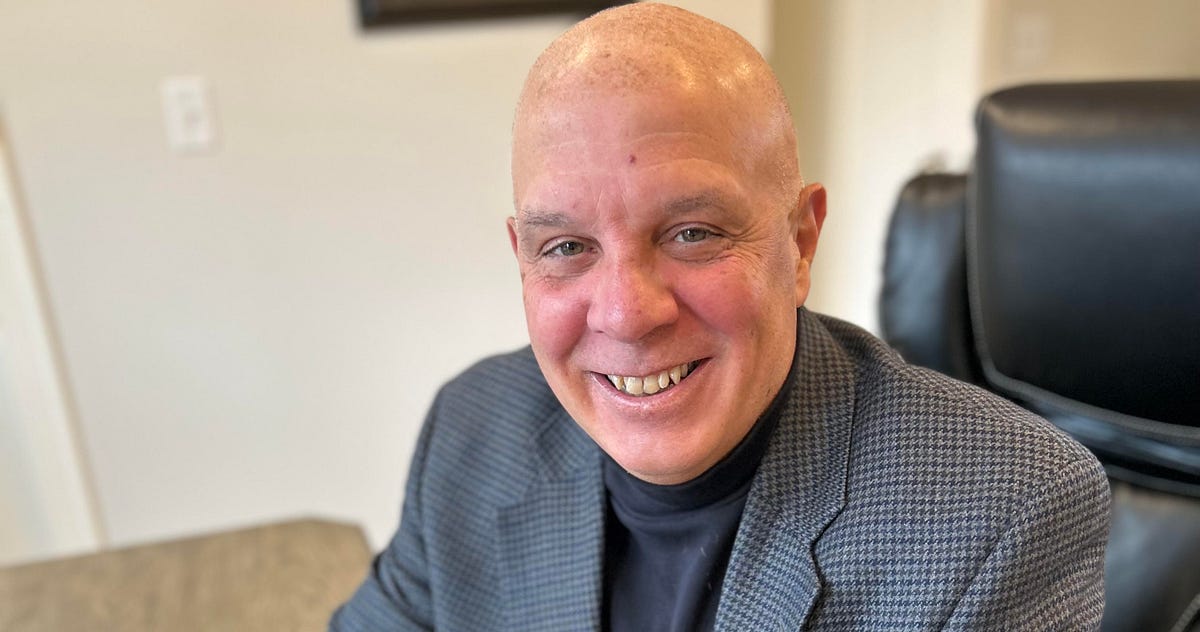
A strong, high-performance sales team is critical to a successful business. But what makes a sales team successful? What strategies can leaders use to create a highly successful sales team? To address these questions, in this interview series, we are talking to CROs, marketing leaders, and sales leaders about “How To Turn a Good Sales Team into a Great One. “As a part of this series, I had the pleasure of interviewing Joe Batista.
Joe Batista formerly DELL Technologies and Hewlett Packard Enterprise executive and deeply curious leader focusing on growth agendas over the past four decades. Often referred to as Business Sherpa who lives at the nexus of technology & business with well over 1200 client engagements unlocking over US$12B of unseen opportunities and with his game changing approach.
His colleague summed it up nicely, Joe’s “focus on innovation based on specific business strategy, powerful insights, and facts, with a collection of unique talents earned him the right to be called by many of his colleagues and clients as the Chief Creatologist.”
Thank you for doing this with us! Before we begin, our readers would like to learn a bit more about you. Can you tell us the “backstory” about what brought you to this career path?
I would like to say it was a grand plan after graduating college, but I would be lying. Had an opportunity to work for a leading computer company and never looked back. What I learned early in my career is that sales offered a continuous opportunity to gain experience not only about my company and its products. But learn about my client’s business. It was this continuous learning pp[opportunity and curious nature that kept me on the path in my career. Never a dull moment.
Four decades working with clients, some 1200+ engagements across multiple industries during his career working with both colleagues and partners of teams of 2–50. The most important insight that I can share is that sales leadership changes based on the context of the client engagements, from advisor, technical lead, coach, client advocate and sales leader.
QUOTE- “Great leaders know when share leadership in the best interest of the client”
Can you share with our readers the most interesting or amusing story that has occurred to you in your career so far? Can you share the lesson or takeaway you took from that story?
First months in sales, right out of college moved to Pennsylvania and given a company car and two zip codes to sell computing technologies to companies. What a gig right!
I am the youngest rep in an office of Ex-Burrough sales professionals, with a funny accent from Boston. My Manager Bob decide to ride shotgun and go on a full day of sales calls, yes, a little nervous picked him up at his home, driving out on 202 west to visit a steel company
And I ran out of gas! @#$%^&*()_+
Middle of nowhere, and no we did not have AAA and no cell phones were not around. What’s left start walking to the nearest gas station, wow, what better way to get some quality time with my sales manager!
Lesson-Sweat the details as a sales professional
The rest of the story, Bob became my mentor, we progressive our sales careers together over the next five years through 4 promotions and incredible journey helping our clients succeed.
Lesson 2- Fine mentors, win together.
Are you working on any exciting new projects now? How do you think that will help people?
“Reimaging the sales dialogue.”
Currently working with many emerging technology companies and CRO’s Chief Revenue Officers with the challenges of the he next generation of sales professionals to embrace outcome-based selling approach and creating alignment of interest with their client’s business/operational/technical challenges.
The sales dialogue between brands, people selling and people buying, is changing. The emergence of ecosystems, set of today’s complexities, the velocity of change has increased, and the varying Color of money requires selling beyond solutions.
Sales professionals who see and retool their dialogues will be big winners and customers will unlock new value.
None of us can achieve success without some help along the way. Is there a particular person who you are grateful for who helped get you to where you are? Can you share a story about that?
I have been asked this question by many and I really struggle with “particular person.”
QUOTE “success is a journey” it’s a collection of opportunities.
-Opportunity that a client gave you to represent your product and how it can impact their business
-The opportunity that your manager gave to lead a project
-The opportunity for someone allows you to mentor.
-The opportunity for your family to make some sacrifices to follow your sales career
So a direct answer to the “particular person” you never forget your first. It was a sales executive from a large computer manufacturer who offered my first sales position out of college, Peter Pennington set me on a four-decade career journey.
For the benefit of our readers, can you tell us a bit about your experience leading sales teams? How many years of experience do you have, and what size teams have you worked with?
Almost four decades working with clients, some 1200+ engagements, 16,000 sales calls during my career working with both colleagues and partners of teams of 2–50. The most important insight that I can share is that leadership changes based on the context of the client engagements, sometimes you’re and advisor, technical lead, coach, client advocate and sales leader,
QUOTE- “Great leaders know when share leadership in the best interest of the client”
What do you think makes a sales team great? What strengths or characteristics do you try to cultivate?
Client centricity, sales professionals who place the client first. Some of the behaviors include learning the client business (INSIGHTS) by investment time and when it comes time to transact create (ALIGNEMENT of INTEREST) between the brand you represent and the client’s needs.
QUOTE “Two pillars if continuous sales greatest is anchored on 1) creating deep insights into the client’s business and 2) creating alignment of interest!”
As with any department, there can be a lot of different strengths, weaknesses, and personalities. How do you manage such diversity on an individual basis? Is there such a thing as a blanket motivator?
First, different strengths, weaknesses, and personalities are welcomed because diversity is the key to great teams. I know this sounds like a canned answer to your question, but 1) effective communication, 2)active listening, and 3)setting clear expectations while encouraging 4)open communication and feedback are key elements of managing diversity.
“The powerful insight that I can share in today’s complex enterprise class or products and services sales is that we need to learn how team members come together quickly FAST LEARN and AGILITY to pivot. So yes managing diversity is only one part of the equation the second part is that teams need to be agile and learn fast they need to FLOW”
Quote: “Find your teams FLOW learn FAST be AGILE”
Of all the strategies you’ve tried, which did you find to be most effective? How did this have a direct correlation to sales?
By far the most influential and impactful is learning a new set of skills around “learning your clients business” and I will add better than they know their business. It a combination of insightful strategies including going on Safari’s to learning new competitive intelligence publicly available resources to garner “deep client insights.”
Can you tell us about a time that your sales team outperformed their targets? How high over did they go, and what was that like for everyone involved? Can you share a possible reason for this unique performance?
In the B2B enterprise landscape today it takes a team to deliver exceptional client experience.
The opportunity was a major new logo win from a long-time competitor, in a multi-million-dollar deal, 500% performance. The most important thing I can suggest is take time to celebrate with the extended family. Not only your colleagues and partners but recognize those around you, your significant others and family in some celebratory event beyond your company’s traditional award ceremony.
Unique performance characteristics? You will get a lot of answer to this question from the team for sure, because they did a lot of things right. But, if I were to analyze the root cause given the complexity at many levels was the “frequency of dialogue” not only among team members but the client! Based on the learnings from the journey the team’s ability to be agile and pivot with the client demonstrated EXTREME sense of partnership.
QUOTE “If you have high frequency and rich of dialogue you have the foundation for impactful results.”
Great things often take time. What do you think is a realistic timeline to take a sales team from good to great?
Well, many choose the old algorithm 10,000 hours to become an expert. As a measurement of time. Andy Jassy, CEO of AWS, states about time & experience his quote “There is no compression algorithm for experience,”
In either case I believe the focus is not on time but on the skills and experiences you acquire along the journey.
QUOTE “Going from good to great is a continuous learning process where sales professionals acquire a vast portfolio of capabilities to not only represent their company but participate in the journey to make the client successful. Think of it as a collection of well written chapters.

Ok. Thanks for all that. Here is the main question of our interview. What are your five strategies that will help turn a good sales team into a great one? Please share a story or example for each.
1. Insights Your clients want to hear about the IMPACT that your product or service has on their business!
So, you need to cultivate deep insights about your clients business beyond just reading the 10K and asking qualifying questions. You need to go on a safari!
One idea is go on a customer safari live their shoes, it might be going on a sales call with their selling teams, Shadow a specific person for the day, buy and use the client’s products. You will not believe the incredible deep insights you will learn in the process. My last safari was with the incredible team MedFlight | Critical Care Medical Transportation the first responders and team behind the scenes who provide patient care by providing the highest quality critical care transport system.
QUOTE; “SO GO ON A SAFARI.”
2. Outcomes Go beyond the product, and its feature benefits. Clients want to hear how your company and the products you represent impact their business, the new focus is outcomes. Outcomes have many flavors, technical, operational, financial, and business. There is a whole emerging science in sales around crafting your value propositions in “client terms” =business outcomes!
THINK BUSINESS IMPACT & Outcomes, GO beyond feature/benefits.
3. Collaboration with a twist. We all know collaboration is important. Important among our colleagues the working together to complete a task or achieve a common objective. Collaboration with the client and other partners on the project. But I look for two indicators in the collaboration journey.
Frist, depth, and frequency of candid dialogues. When rich dialogues exist between parties you know you have something special.
Secondly, Now is the time to create “alignment of interest” between your brand and offering with the client’s needs or unseen opportunities.
CREATE DIALOGUE DEPTH & ALIGNEMENT OF INTEREST you and your client will always win together.
4. Curiosity. Not so much a strategy but a mindset. This is more for the complex sales cycles. Companies today have “swim lanes” product specialty groups lots of silos and we miss the opportunity to be curious with the client to explore what might be possible, or Better yet identify either a different approach or new opportunities for business impact.
QUOTE “STAY CURIOUS, you will be surprise what you uncover”
5. Empathy Not a strategy but more of an awareness, understanding customers’ perspectives and thinking.
Quick story, I will never forget the valuable lesson I learned early in my career with a data center IT leader, Ray, in NJ. I did this extensive ROI analysis on replacing old equipment that included, floor space savings, electrical and cooling costs along with the new capital investment.
I must have been 24 years old Ray looked at me and said “Joe not interested in the power/cooling and floor space saving that comes out of a facility budget” My analysis wasn’t important to Ray, at least the costs that came from a different budget!
Lesson BE SENSITIVE AND UNDERSTANIDNG OF THE CLIENTS perspectives and thinking, be more empathic.
How can our readers further follow your work online?
Reach out to me anytime.
Follow me on www.linkedin.com/in/chiefcreatologist
Recently launch stay tuned.
https://medium.com/@chief.creatologist/about
Thank you for the interview. We wish you only continued success!
AM
Written by
Authority Magazine Editorial Staff
Writer & ContributorContributor at Authority Magazine covering leadership, innovation, and industry insights.

Published inAuthority MagazineTop Lessons, Top Authorities · 42K Followers
Exclusive, curated interviews with the leaders and changemakers shaping tomorrow. Leadership lessons, industry deep dives, and executive profiles.
More from Authority Magazine
See all stories →A
Authority Magazine Editorial StaffFrom CNN Bomb Threat to Podcast Empire: Haley Draznin on the Art of the Unfiltered Interview
Business19 min read
Y
Yitzi WeinerFrom Newsroom Obsession to Tech CEO: How Steph Yiu Is Championing the Open Web at WordPress VIP
Business12 min read
A
Authority Magazine Editorial StaffSophia Maddox on Confronting Family Trauma and the Shocking Discovery That Charles Manson Is Her Grandfather
Business18 min read
Y
Yitzi WeinerFormer Marvel CEO Peter Cuneo on the ‘Superhero Leadership’ Podcast, IP Hits & the Art of the “Natural High”
Business34 min read