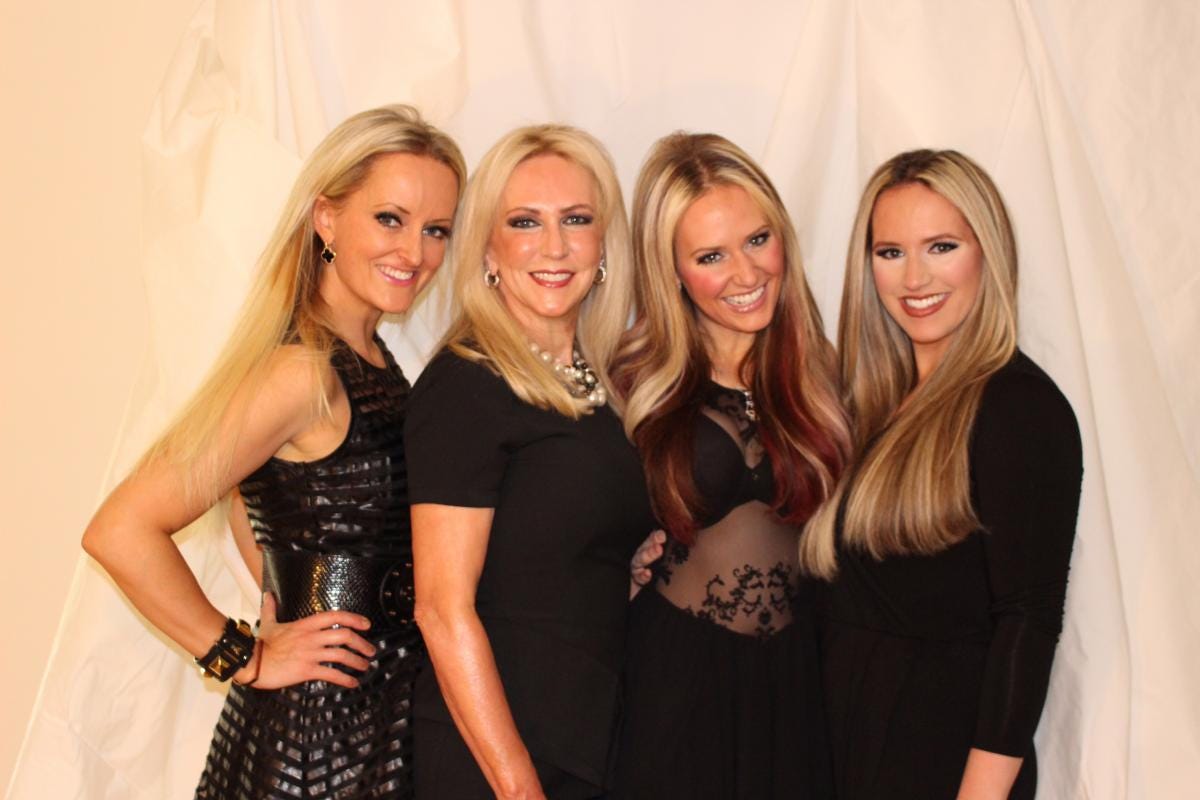
I was flirting with various companies for several years, and the way I ultimately chose my path was based on fit and feel, not dollars.
Business
Jenn McCabe of Armanino: The Gut-Instinct Pivot That Transformed a 25-Year Entrepreneur Into a C-Suite Leader
The consulting partner and veteran entrepreneur shares how she navigated corporate culture shock after a major merger and why gut instinct beats higher math.

As a part of our interview series called “Women Of The C-Suite”, we had the pleasure of interviewing Jenn McCabe.
Jenn McCabe is a Consulting Partner for national top 20 accounting and consulting firm Armanino LLP. Jenn has more than 25 years of outsourced accounting and finance experience, with particular expertise in startups and the advertising and creative production industries. She is passionate about seeing companies utilize the latest accounting technology to maximize their efficiency, productivity, and ultimately, success. Before joining Armanino, Jenn founded and led Team Jenn Corp., a firm dedicated to the strategic financial management of startups and small businesses, offering a comprehensive back office solution with accounting, finance and HR solutions.
Thank you so much for joining us in this interview series! Before we dig in, our readers would like to get to know you a bit more. Can you tell us a bit about your “backstory”? What led you to this particular career path?
So much of what I’ll say can be called luck (or learning from bad luck) and fortuitous timing! Somehow I’ve gone from being a corporate dropout entrepreneur — by accident — to a Board Member at a top 20 accounting and consulting firm. I’m a bit of a goofball and entirely focused on living a storied and fun life, so this has all been a surprise.
My first jobs were in big advertising and banking. I was working for the man… literally, it was always a man — and also had two Dobermans, two young kids and self-employment was a way to get more fairly compensated for my hard work. Suddenly, my effort was directly related to how much money I made. I was going to school at night, was passionate and competitive in triathlons, and was also on the USA Skydiving team. I barely remember those years. I had to work a lot, around the clock. At 8:30 PM when the kids went to bed, I went to work. I worked out when they were at school and my husband was at work. The family rode their bikes on the sidewalk next to me on my long runs.
My friends in the ad agency business were starting to drop out of corporate America too and were asking me to help write “business plans” and help them with their own startups. I had girlfriends who, back then, couldn’t work full time if they had kids, or who had lost their jobs because back then, jobs weren’t protected if you had a baby. All these fantastic women were asking me if they could be useful — and so I started this business of sharing desks and phones and working around a variety of family schedules. It was called a “virtual accounting department” back when we had AOL email addresses and being “virtual” or sharing desks was seen as “rookie” or weird fringe work.
Can you share the most interesting story that happened to you since you began leading your company?
I’ve been fortunate to work on some very exciting M&A deals, but the most interesting story is about selling my company, Team Jenn Corp, after more than 25 years of entrepreneurship, to Armanino LLP. Suffice it to say I struggled with the conflict of wanting to let go of it all, to have partners share the burden, and to not be in charge of everything. But, after I did sell my company, I was angry every day for a year that I wasn’t in charge anymore!
I was flirting with various companies for several years, and the way I ultimately chose my path was based on fit and feel, not dollars. The flirting amounted to a constant inflating and deflating of my ego. Finally, it came down to a) a near fascination with the leaders at Armanino, b) a gal I really liked at first sight and c) some really good-looking socks used in conjunction with a well-placed curse word at a deal dinner. I made the biggest decision of my career on gut instinct. I’d like to say I did all kinds of higher math and negotiating… but I didn’t. And it turned out to be the rightest of things.
Here’s why, and it’s embarrassing: After the merger, I had a near meltdown within seven months. I was an instant failure. I had a boss for the first time in decades. The HR officer was always watching me to make sure I didn’t drop an F-bomb at the wrong meetings. I had a “bookings goal” and I didn’t even know what that meant. I had to work on a PC, not a Mac. I cried on the drive to work for days in a row — and one amazing day I got help from a colleague who told me he’d never worked with anyone he loved working with as much. He put me on the next plane to meet the C-suite with swollen frog eyes, and my new partners did NOT fire me as I expected them to. Instead, they stopped the hamster wheel I was on and helped me. I am so lucky.
It has been said that our mistakes can be our greatest teachers. Can you share a story about the funniest mistake you made when you were first starting? Can you tell us what lesson you learned from that?
I’ve made so many mistakes and only some of them were funny.
When starting my company, I adopted the tagline “We do anything for money” which pretty much says it all. That was the culture I created; it was a little bit on the edge of acceptable. But I lived it and I taught clients to call me when they needed a smog check or a babysitter. I was “not like other people’s accountants” and it got me invited to all their weddings and parties.
In the past, I’ve been a horrible hiring manager. My best hires are the ones I made because I liked someone or had a gut instinct about them. They’re still with me and they’re my best friends. But I have made some truly embarrassingly awful hires and some great hires purely by lucky accident.
Another learning lesson would be “The Flood.” This ended up being less of a mistake and more of a major lesson in “what insurance is for” for me. My office was destroyed in a flood, due to a broken main, at 11:00 p.m. I was still there, typing away, and noticed water pouring out of the electrical outlets. I heard rain sounds. I opened the door to the lobby and saw water pouring down from the ceiling. I went back to work rather than dealing with it because I couldn’t handle it. It was sensory overload and I was BUSY. About 30 minutes passed, and I realized I needed to act. I called my office manager who ran over to the building in his pajamas and the two of us proceeded to rapidly unplug all the equipment and rush it out to our SUVs.
I got home and woke up my husband, who instructed me to call the fire department. I later met them back at the office and the destruction was major. The next day I cried and called my dad. I thought I was out of business. The office was destroyed and no one could even work. He said “Honey, do you have insurance? Why are you calling me, sweetie?” and all I can say is that was when I learned about business insurance. That lesson translated to how I advised clients going forward, and how I decided to learn everything I could about liability planning. It made me a better and smarter advisor to my clients.
None of us are able to achieve success without some help along the way. Is there a particular person who you are grateful towards who helped get you to where you are? Can you share a story about that?
Two women whom I have lost touch with and think of very often, and who gave me an example to follow when there were no women to follow!
Susan Chittum, 1985 at Ogilvy and Mather, who wore pencil skirts and high heels and kicked ass. She got down on the floor late one night and helped me staple a stack of presentations.
Jeri Drefs, 1990, was an incredible CFO/treasurer at a global agency who gave me an opportunity to shine at a mega level at a global ad agency.
Two guys who are fantastic networkers who made key introductions and led me to my merger, and to the current position I’m in which is startling every day in how wonderful it is: David Horwich and Mark Balaban, 2015–2016.
Leadership often entails making difficult decisions or hard choices between two apparently good paths. Can you share a story with us about a hard decision or choice you had to make as a leader?
Letting people go. Whether good or bad, layoffs and firings always keep me up at night. It’s something you have to do, but it stinks and I always take it personally. The absolute worst was letting people go at the beginning of COVID. It was so awful — and I called my CFO and insisted he take me off the payroll because I could barely live with myself.
Ok, thank you for that. Let’s now jump to the primary focus of our interview. Most of our readers — in fact, most people — think they have a pretty good idea of what a CEO or executive does. But in just a few words can you explain what an executive does that is different from the responsibilities of the other leaders?
CEOs have to make lonely decisions. That’s the key difference between my role on a team, as the leader of a team and being CEO. In that job, you can ask your trusted inner circle what to do, but in the end, it’s you alone on the line, shouldering the risk of a bad decision. Most days you like it, and you’re not really alone. But when it’s time to cut away, it’s you alone in the big blue sky. (For reference, when a skydiver has a malfunctioning parachute, you have to cut away that main parachute and use your reserve, and you have only seconds to do it, so you can’t get a second opinion!)
What are the “myths” that you would like to dispel about being a CEO or executive? Can you explain what you mean?
You must display confidence and decisiveness, or your staff get wiggly and nervous. But that means sometimes your CEO self is faking.
Being the boss doesn’t mean you feel like you’re in control. Being the boss doesn’t mean you work less. It doesn’t mean that when you’re busy you just hire an assistant. Being the boss means that every bad decision feels like it reflects on you personally. It’s not all glory. And the glorious spots are also super stressful. You’re constantly aware that your behavior, bad or good, will be replicated and that you’re responsible for a ripple effect!
In your opinion, what are the biggest challenges faced by women executives that aren’t typically faced by their male counterparts?
Not being heard, or not being taken seriously unless you exhibit a bulletproof veneer.
What is the most striking difference between your actual job and how you thought the job would be?
I have zero control and no sense of satisfaction to a degree where I feel I can slow down. Now that I’m at “the top of my career” and have been told I have influence and prestige, I have imposter syndrome! You never get where you thought you’d get, and you’re always trying harder. I always thought I’d know when I’d arrived at my destination — and it’s shocking to realize that I’ll probably never get there and that I need to stop periodically and force myself to recognize progress and celebrate moments.
Is everyone cut out to be an executive? In your opinion, which specific traits increase the likelihood that a person will be a successful executive and what type of person should avoid aspiring to be an executive? Can you explain what you mean?
Not everyone is cut out for this role. Being an executive and a leader requires a lot of courage to take action when everyone is looking at you to “do something” and you have to say, “This might be wrong, but we’re gonna do it, and if it’s wrong, it’s on me and we’ll start over.” A leader must be decisive, speak up when no one else is brave enough to have an opinion and not just follow the herd. A leader must have a competitive need to move forward, a need for a sense of momentum, a passion for whatever it is you’re leading, and the creativity to invent ways to beat the competition.

What are your “5 Things I Wish Someone Told Me Before I Started” and why? (Please share a story or example for each.)
1 . Working for yourself is more stressful than working for someone else. Don’t start a business so you can have more flexibility in your life.
2 . Being a good boss means being transparent and vulnerable, but also steady (which means you have to fake it and lie sometimes too). For example, when my team makes a big mistake, I fake calm and tell them it’s going to be ok.
3 . Sharing “equity” is an impracticality if you plan on it unless you truly have people who understand the risk of ownership and don’t just expect the financial rewards of equity. I tried on multiple occasions to help my employees buy my company — but once they started to understand the risk of signing a lease or firing a disgruntled employee, they backed away.
4 . Having an advisory board, if you’re private, is very valuable, even if that board is two or three people you take to dinner quarterly and pay for their time. They make introductions and can call you out when you’re in the wrong. They should be far enough away from your day-to-day that they can give you perspective. I figured this out in the years leading up to the sale of my company. My advisory board helped me prepare for battle. They looked me in the eye and forced me to answer them when they asked me what I really wanted.
5 . The courage to spend on big hires is necessary, and if you are a service provider, your people are your product. Invest in your product by getting good people and making sure they feel valued, either with the money you pay or your heartfelt care for them.
6. Money can’t buy happiness. Really. I had a few opportunities to have great wealth, but I figured out that it wouldn’t make me happy just before I made the wrong decision.
You are a person of great influence. If you could inspire a movement that would bring the most amount of good for the greatest number of people, what would that be? You never know what your idea can trigger.
I want people to know that they should never cut down a big tree! The big ones are the ones that are citizens of the universe. They are the ones that clean our air. They live so much longer than we do and see so much. The math on what ONE big tree does for the yard, the neighborhood, the city and the planet is amazing.
I’m currently trying to inspire the Armanino Canopy Project. Skydivers call their Parachutes “canopies.” My project will start with trying to plant a tree for every one of our roughly 2,500 employees. Then instead of buying people flowers, I’m sending them a note that a tree was planted in their honor — in a burn area, or in an inner city that needs some shade! My company has a company-wide volunteer day, called The Great Give, where, in my area, my colleagues and I plant and water trees in Southern California.
We are very blessed that some very prominent names in Business, VC funding, Sports, and Entertainment read this column. Is there a person in the world, or in the US with whom you would love to have a private breakfast or lunch with, and why? He or she might just see this if we tag them
I would love to talk about The Overstory (Pulitzer Prize Winner) with President Obama.
I would love to meet Stephen Colbert and do the Colbert Questionnaire.
I also want to meet Jane Fonda so I can tell her I really wanted to get arrested with her, and almost bought a ticket to march with her in Washington D.C. back when she was trying to get arrested every week during Trump’s presidency. She’s a big Greenpeace gal like me.
Thank you for these fantastic insights. We greatly appreciate the time you spent on this.
About the Interviewer: Douglas E. Noll, JD, MA was born nearly blind, crippled with club feet, partially deaf, and left-handed. He overcame all of these obstacles to become a successful civil trial lawyer. In 2000, he abandoned his law practice to become a peacemaker. His calling is to serve humanity, and he executes his calling at many levels. He is an award-winning author, teacher, and trainer. He is a highly experienced mediator. Doug’s work carries him from international work to helping people resolve deep interpersonal and ideological conflicts. Doug teaches his innovative de-escalation skill that calms any angry person in 90 seconds or less. With Laurel Kaufer, Doug founded Prison of Peace in 2009. The Prison of Peace project trains life and long terms incarcerated people to be powerful peacemakers and mediators. He has been deeply moved by inmates who have learned and applied deep, empathic listening skills, leadership skills, and problem-solving skills to reduce violence in their prison communities. Their dedication to learning, improving, and serving their communities motivates him to expand the principles of Prison of Peace so that every human wanting to learn the skills of peace may do so. Doug’s awards include California Lawyer Magazine Lawyer of the Year, Best Lawyers in America Lawyer of the Year, Purpose Prize Fellow, International Academy of Mediators Syd Leezak Award of Excellence, National Academy of Distinguished Neutrals Neutral of the Year. His four books have won a number of awards and commendations. Doug’s podcast, Listen With Leaders, is now accepting guests. Click on this link to learn more and apply.

Published inAuthority MagazineTop Lessons, Top Authorities · 42K Followers
Exclusive, curated interviews with the leaders and changemakers shaping tomorrow. Leadership lessons, industry deep dives, and executive profiles.