We discovered this gap 12 years ago and set about reimagining the clothing business so that everyone was included and that we never had to tell anyone we didn’t carry their size or couldn’t give them their style.
Business
B G Krishnan: How Mass-Customization and Zero-Inventory Are Disrupting the Fashion Industry
The Founder and CEO of eShakti explains how his made-to-order apparel model is eliminating fashion waste and solving size inclusivity in retail.

As a part of our series about business leaders who are shaking things up in their industry, I had the pleasure of interviewing B G Krishnan, Founder & CEO of eShakti.
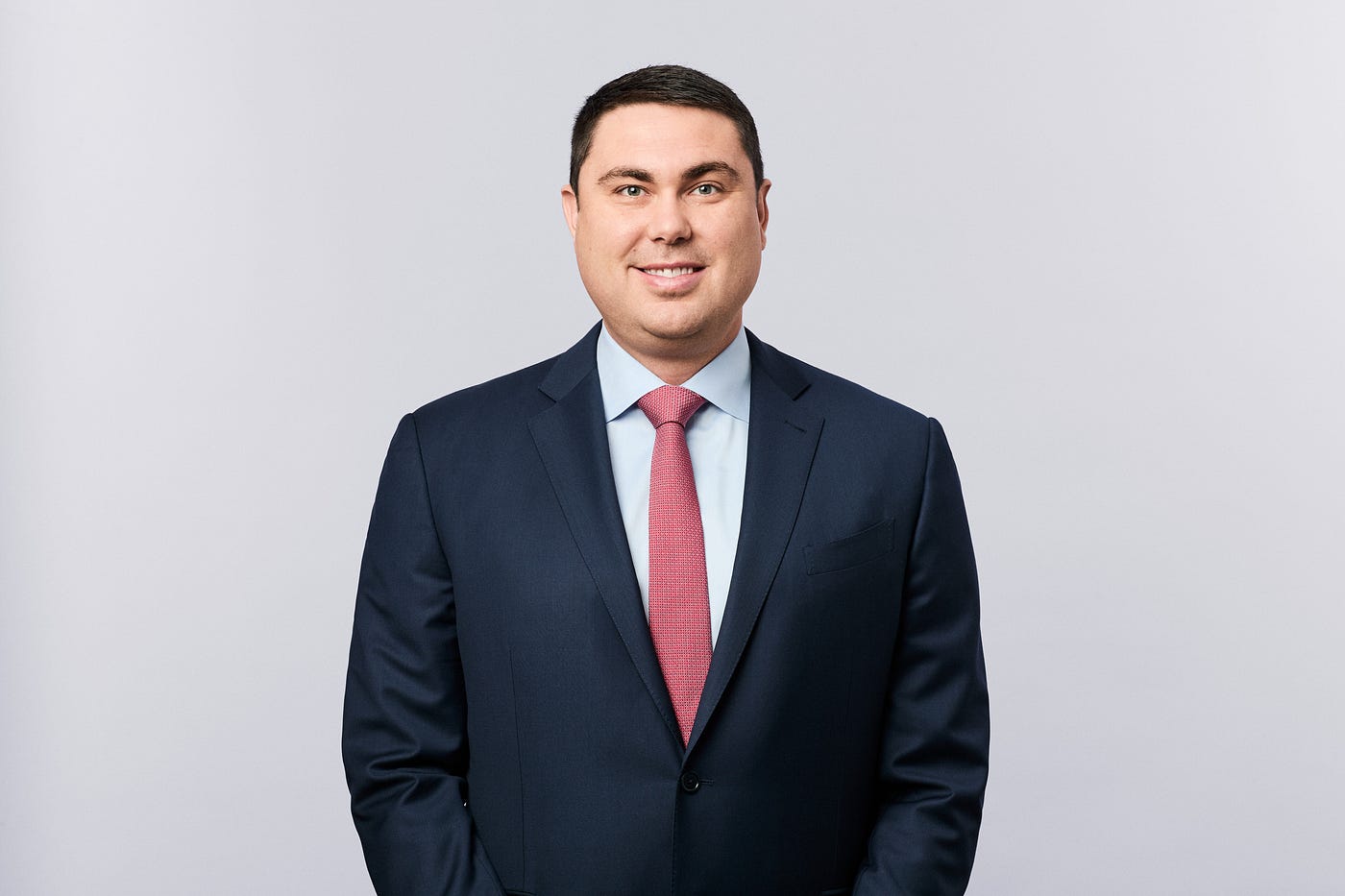
B G Krishnan is the Founder & CEO of eShakti, an online retailer of women’s fashion clothing offering a unique customer benefit: customization of size and style, delivering unparalleled fit at affordable prices.
Thank you so much for doing this with us! Before we dig in, our readers would like to get to know you a bit more. Can you tell us a bit about your “backstory”? What led you to this particular career path?
The ‘e’ in eShakti stands for the Net. The ‘Shakti’ is for power (in Sanskrit) — so the name means ‘the power of the Net’. We anticipated that the internet would change our lives. (What it has done also is to change the way we think.)
We noticed that women’s clothing offered in stores typically has limited sizes and doesn’t give the wearer real joy due to height, size, or shape restrictions. Not to mention, they do nothing for women who would like to make adjustments to a garment based on their preferred style of neckline, sleeve, and length.
We discovered this gap 12 years ago and set about reimagining the clothing business so that everyone was included and that we never had to tell anyone we didn’t carry their size or couldn’t give them their style. We decided to offer made-to-order customized clothes, which no one before had thought could be feasible at scale, then we set out to build the structure to make it happen. We built a factory from the ground up, starting very small, with just ten of us in it, and look at where we are now.
Today, eShakti has another meaning — empowering women — as Shakti is also the goddess of incredible power in Indian mythology. At eShakti, we find out what the customer wants and do what it takes to provide it to her.
Can you tell our readers what it is about the work you’re doing that’s disruptive?
Made-to-order is disruptive. With this business model, there is no overflow inventory of finished goods to worry about or unsold clothes to dump into the oceans and landfills at season’s end. This way, every woman is included, and everyone gets clothes they could have never imagined to be possible — customized to their size and style at an affordable price.
Can you share a story about the funniest mistake you made when you were first starting? Can you tell us what lesson you learned from that?
The thing about mistakes is that they only look funny later! The good thing is you learn each time. Once we reached out to customers who hadn’t shopped with us for a while. One or two of the customers wrote back very upset saying we were not being sensitive enough to the other concerns in their lives besides buying clothes from us. We got that — 100%.
We all need a little help along the journey. Who have been some of your mentors? Can you share a story about how they made an impact?
Yes, I have always found support whenever I needed it. Two friends of mine came in as angel investors, and one of them even alerted me to the need for customized clothing. There were others who helped me navigate the complex regulatory issues involved in international e-commerce as well. There were literally tons of folks I reached out to. I had to learn everything from scratch because I didn’t have a background in fashion — I was a Physics student with an MBA. It would also be right to say that I have learned a lot from those who work in eShakti — as much as what I have learned outside.
In today’s parlance, being disruptive is usually a positive adjective. But is disrupting always good? When do we say the converse, that a system or structure has ‘withstood the test of time’? Can you articulate to our readers when disrupting an industry is positive, and when disrupting an industry is ‘not so positive’? Can you share some examples of what you mean?
At school, when you disrupted the class you were hauled up to the Principal’s office. Disruption was probably used idiomatically in the context of innovative practices beginning a couple of decades ago, but it has now gained legitimacy as a word with its own positive meaning! It now also means to take something apart and put it together in a new way that makes it better for a consumer. The entire online revolution has disrupted retail and has been just phenomenal for consumers. To me, being disruptive is looking at something from a consumer’s point of view and seeing what would make it easier, faster, and more affordable for her. It calls for reimagining and then reengineering to make it happen. A sort of right brain-left brain thing. Everything we take for granted today was the result of disruption: mobile phones, then smartphones, social media, then voice-over-ip, free international calls, free international video calls, video conferences, on-demand entertainment, on-tap music, information on tap, ride-hailing — all these replaced an earlier product or service to serve the consumer better. If you define disruption as thinking of doing mass-customization instead of assembly-line mass-production, or giving customers clothes to match them instead of off-the-rack clothes that may not always do so, then it takes the ‘good’ and ‘bad’ out of the equation, and you have only ‘it works’.
Can you share five of the best words of advice you’ve gotten along your journey? Please give a story or example for each.
Correct advice is good, but knowing when you get bad advice is better. I check with a lot of sources before making decisions, but ultimately I find I have to make the call on my own. Some advice I got ultimately turned out wrong. For instance, when we offered a sales returns policy for customized clothing, there were many who said it was a big mistake. Thankfully, we didn’t let that stop us. Some people told me that I can’t possibly sell under my own brand as it is too costly to build a brand — why not white label it? I chose not to take any of that kind of advice. The jury is out, but I think we did the right thing. Some of the best advice I got was from our customers. Once someone told us that we shouldn’t be pricing our bigger size clothes at the same level as smaller size ones as the former take up more material. So I asked my customers, and they said just give a weighted average price — but please don’t discriminate by size. We followed that advice.
In general, if you are trying to go where no one else has gone before, there are not too many people to light your path. You often have to go in solo and learn the hard way. The best advice I have received is to test anything new on a small scale. So, we research and test everything. No fashion product goes online unless it is run by a customer panel and makes a certain score for intention to buy. We are trying to make our customers our advisors — after all, if we asked the customers what they want and give it to them, how can we go wrong?
We are sure you aren’t done. How are you going to shake things up next?
We have built a widget that can sit in any online marketplace and is able to offer the benefit of the customization user-interface within that site. We are now going to offer this widget to every marketplace that is interested, so they can then integrate this widget into their system with a single line of code that we’ll provide them. This means any online store can offer eShakti’s customized clothes instantaneously without any tech requirements. The aim is to make customization more widely available.
Do you have a book, podcast, or talk that’s had a deep impact on your thinking? Can you share a story with us? Can you explain why it was so resonant with you?
Some things have stuck with me. For example, Douglas McGregor said 5 decades ago that people, left to themselves, like to work. Peter Drucker also said 7 decades ago that good managers make the fewest decisions (because they make the few root-cause-based decisions that obviate other decisions). Most of what I have experienced is that if we know or create a purpose, we then find a way to achieve it. So in an organization, one motivational principle that never fails is to ensure people have a clear sense of how their outcomes connect with those of the organization. It gives them a greater sense of their purpose. Why be a brick-layer when you can participate in building a cathedral?
Can you please give us your favorite “Life Lesson Quote”? Can you share how that was relevant to you in your life?
“The reasonable man adapts himself to the world; the unreasonable one persists in trying to adapt the world to himself. Therefore, all progress depends on the unreasonable man.” George
Bernard Shaw.
Making customized clothing at scale was like a contradiction. No one was doing it, it was very hard to execute and there were many reasons not to venture into it. But if you look at it from the opposite end, you see that there is a great need for it. Then, it allows you to switch from the reasons why it can’t be done to thinking of how to make it happen.
You are a person of great influence. If you could inspire a movement that would bring the most amount of good to the most amount of people, what would that be?
Right now, I am focused on my work. From my perspective, we have barely scratched the surface and there are miles to go. If I could influence anyone, it would be to encourage them to examine their own belief system and then find ways to transcend it and move into the realm of possibilities.
How can our readers follow you online?
I am on LinkedIn. But the best way to follow me is to see what eShakti is up to.
· Instagram: @eShakti
· Facebook: @eShakti
This was very inspiring. Thank you so much for joining us!
AM
Written by
Authority Magazine Editorial Staff
Editorial Desk · Authority MagazineThe Authority Magazine Editorial Desk produces, verifies, and edits long-form primary-source interviews with executives, innovators, clinicians, creators, and social impact leaders across Business, Tech, Pop Culture, Wellness, and Social Impact.

Published inAuthority MagazineTop Lessons, Top Authorities · 42K Followers
Exclusive, curated interviews with the leaders and changemakers shaping tomorrow. Leadership lessons, industry deep dives, and executive profiles.