There is no shortage of ideas in healthcare, we are far from where we need to be in solving for the vast amount of patient conditions plaguing populations around the globe. Most good ideas must be invented, developed, tested, validated and iterated before they ever even come to market, and many never get there. It takes a lot of hard work, time, investment and resources to successfully turn an idea into technology that will positively impact society, yet equally as important is the values and Mission that ensure you’re doing the work the right way.
Tech
Health Tech: Emily Elswick Of Medtronic On How Their Technology Can Make An Important Impact On Our Overall Wellness
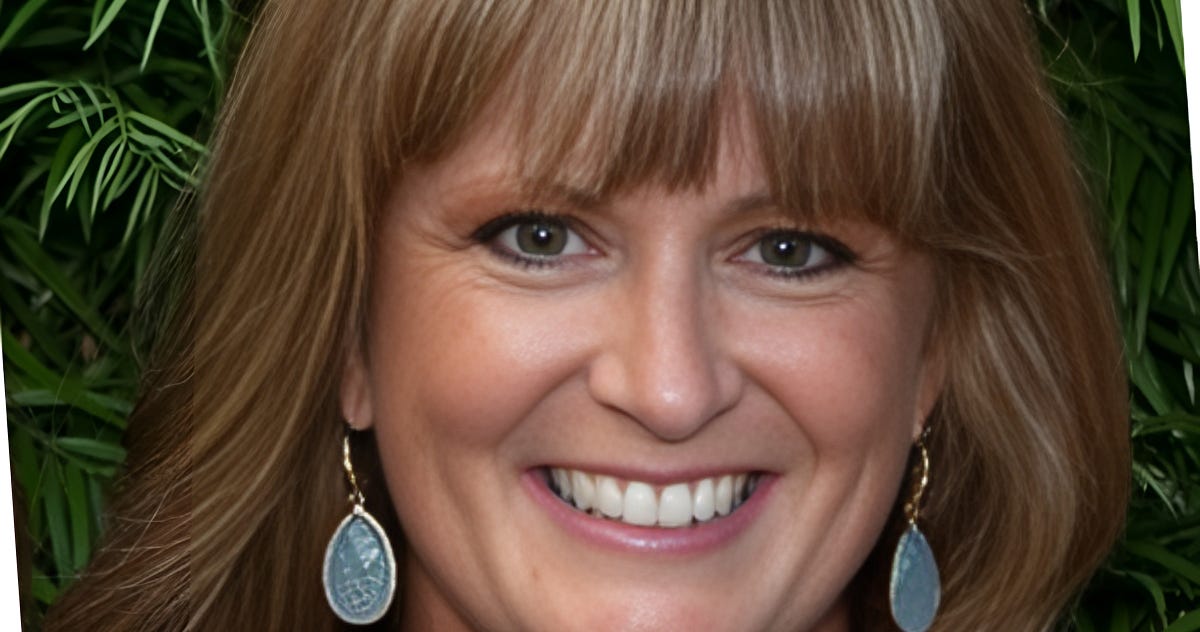
In recent years, Big Tech has gotten a bad rep. But of course many tech companies are doing important work making monumental positive changes to society, health, and the environment. To highlight these, we started a new interview series about “Technology Making An Important Positive Social Impact”. We are interviewing leaders of tech companies who are creating or have created a tech product that is helping to make a positive change in people’s lives or the environment. As a part of this series, I had the pleasure of interviewing Emily Elswick.
Emily Elswick is President of the Medtronic Pelvic Health business, where she also serves on the Neurosciences leadership team. She has held global leadership positions in MedTech and Telecommunications for over 26 years, 20 of which have been at Medtronic. Prior to this role, she focused on implementing Enterprise-wide strategic initiatives, including coordinating the annual strategic planning and capital allocation processes. Before that, she served as Vice President and General Manager of the Medtronic Lung Health and Visualization business, where she led a cross-functional global organization dedicated to developing minimally invasive diagnostic and therapeutic solutions that help improve outcomes for patients around the globe. Emily is a strong people advocate and supports inclusion, diversity, and equity initiatives inside and outside of Medtronic. She currently sits on the Medtronic Women’s Network (MWN) leadership team, where she serves as the chair of the MWN Hub Operations team, where she serves over 24K+ members and provides oversight of the 115+ hubs around the globe- focused on developing, advancing, and inspiring women. Emily holds a Bachelors in Journalism from Indiana University, and has volunteered and served on the board for A Breath of Hope Lung Foundation.
Thank you so much for joining us in this interview series. Before we dive in, our readers would love to learn a bit more about you. Can you tell us a bit about your childhood backstory and how you grew up?
I grew up in a small town in Indiana, where my mom raised me as a single mother, until she met my dad when I was five years old. We were a very working, middle-class family. I learned to truly appreciate the blessings of life, to value hard work and to stay grounded in faith and family above everything, which has kept me centered throughout all the twists and turns of life, including my own health. I’m actually a Medtronic patient myself, one of the thousands of Medtronic patients who don’t even know the product that saved their lives! In college, I was diagnosed with Wolff Parkinson White Syndrome (WPW), a congenital heart condition that required an ablation. I learned after the fact that it was performed using Medtronic cardiac ablation technology.
Can you share the most interesting story that happened to you since you began your career?
I accepted my first sales role at a MedTech company at a time when it was still uncommon to see women sales representatives — and I had a two-year-old and became pregnant with my second. I was staying at a hotel, getting out of bed for emergency cases any time of day or night, even 2:00 am at times. I remember literally rolling my pregnant self out of bed to attend a case and close an important deal, and then getting in my car and driving two hours to deliver my son that day. Six weeks later, I was back at work. That year was also the year I made Chairmans Circle of Excellence, which represented the very top performers of the U.S. commercial organization. While I look back at those years and appreciate all I was able to accomplish, I’m also grateful that times have changed! I was one of only two women managers in my first MedTech area. Now, I’m at a company where 44% of managers or above are women. I returned to work six weeks after having my second child, now I work for a company where birthing or primary parents in the U.S. can receive 6 months of paid leave!
None of us are able to achieve success without some help along the way. Is there a particular person who you are grateful towards who helped get you to where you are? Can you share a story about that?
A number of people have advocated for me throughout my career — whether I was in the room or not. One of those people was Matt Anderson, who now leads Medtronic Surgical. He saw something in me that I didn’t even know was there myself. He encouraged me to branch out of the commercial side of the business and to take on more strategic leadership roles so when the time was right, I was ready to step into a General Manager position. That investment in me was really profound and meaningful. It’s thanks to the many people who have believed in me that I’ve learned to say “yes,” even when I may not think I’m ready.
Can you please give us your favorite “Life Lesson Quote”? Can you share how that was relevant to you in your life?
My longtime motto is, “I’m not telling you it’s going to be easy; I’m telling you it’s going to be worth it.” We all face really hard things in life, and often it’s those things we look at and think, “no way,” that end up being the most impactful and rewarding. We end up learning the most when we jump into the mucky middle — whether we want to or not! I personally wouldn’t be where I am today if I didn’t take the opportunities that pushed me to just the other side of my comfort zone.
You are a successful business leader. Which three character traits do you think were most instrumental to your success? Can you please share a story or example for each?
Empathy, curiosity and doing things the right way. I believe these traits are valuable in life, both professionally and personally, and would help in any industry. In MedTech, we work in the service of patients, and therefore I routinely ask, “is this putting patients first? Will this get our product to more patients quickly, and with integrity?” I’ve found success because I constantly ask questions, not because I doubt the people around me, but because I want them to be confident in their decision, and if they’re not, this gives them the chance to explore a new route to success. I feel so blessed to work for a truly Mission-driven company and for 75 years, patients have relied on us to advance treatment options. That is a responsibility I don’t take lightly.
Ok super. Let’s now shift to the main part of our discussion about the technology or medical devices that you are helping to create that can make a positive impact on our wellness. To begin, which particular problems are you aiming to solve?
Right now, it’s estimated that one in six adults suffer from overactive bladder, and approximately one in 12 adults suffer from fecal incontinence. Even though so many people live with these conditions, we hear from some patients who finally learn about InterStim™ Sacral Neuromodulation (SNM) that they felt embarrassed and alone for years, since having bowel or bladder accidents isn’t something that’s openly discussed. Patients may go ten years before even seeking treatment! That’s ten years of unnecessary stress, embarrassment and shame. For far too long, quality of life products have been overlooked. Yet, when you hear from a patient who hasn’t been able to go to the movies, or is worried about riding in a plane, or fears they can’t make it through their child’s graduation, or just wants to go walk in a park, you realize the power of people getting to live the life they choose — and deserve.
How do you think your technology can address this?
I know that we are making a difference, and I know we can have an even greater impact with more awareness of the conditions and the treatment options. For nearly 30 years in the U.S and over 30 years globally, Medtronic Pelvic Health has been the leading developer of medical devices designed to treat fecal and urinary incontinence. We developed and received commercial approval to sell the first Sacral Neuromodulation System (SNM) to treat the symptoms of incontinence over 20 years before anything else came to the market. We remain the industry leader today, continuing to come out with updates and advancements to our technology that are designed to help patients live the lives they deserve.
Can you tell us the backstory about what inspired you to originally feel passionate about this cause?
I can answer this twofold. Medtronic was the first company to investigate using neurostimulation to treat incontinence, in large part because we saw there was a huge patient need and our Mission drives us to put patients first — even when it appears no other company believes the need is great enough for their investment. We also have an extensive history of neuromodulation therapy, having developed the first spinal cord stimulator for chronic pain, and the fist deep brain stimulator for the treatment of Parkinson’s Disease. Because of this, we were able to leverage the breadth and depth of Medtronic to tackle underserved populations decades before any other company in the industry was able to do so. We also heard from patients and physicians that there was room for other overactive bladder treatments, which is why we invested in a second type of therapy called percutaneous tibial stimulation, which stimulates a nerve on a patient’s ankle. The data to support this treatment are strong, showing significant Quality of Life improvements in total health-related quality of life and its subscales — including concern, coping, sleep and social — as well as symptom bother, which led us to explore the concept of tibial stimulation further. Our Implantable tibial stimulation device is currently in review by the FDA, a true example of listening to patients and building on our data and technology.
Personally speaking, I am a woman who turned 50 this year. I have three kids, and I know enough people who could benefit from our Pelvic Health products that I personally want to raise more awareness around incontinence. What better way to ensure we are reaching new patients than to lead the business myself?
How do you think this might change the world?
We continue to change the world one patient at a time, but there is work to be done. The stigma around incontinence is real, and the more that stigma can be broken, the more likely people will feel comfortable opening up to a physician about their condition. No one should spend ten years of their life mapping out where the closest bathroom is, worrying about making it through a movie, or avoiding activities for fear of having an accident. We have spent years educating physicians and patients about SNM as a therapeutic option. It was a significant — albeit worthwhile — investment to build this market, one that continues today, as we serve the urology and urogynecology community.
Keeping “Black Mirror” and the “Law of Unintended Consequences” in mind, can you see any potential drawbacks about this technology that people should think more deeply about?
A word of caution is that innovation is never “done.” To avoid the unintended consequences, we must constantly improve alongside industry advancements and physician and patient needs. For example, when MRI scans became more advanced, we realized we needed to update our technology so patients who receive an InterStim device could also get an MRI. The FDA approved our head-only MRI in 2012, the full-body MRI compatible systems in 2019–2020, and in 2024, we received approval for lead fragments and T3 MRI, giving us the broadest MRI compatibility in the industry. I recommend always staying current on trends to see how advancements may impact our work.
Based on your experience and success, can you please share “The things you need to know to successfully create technology that can make a positive social impact”?
There is no shortage of ideas in healthcare, we are far from where we need to be in solving for the vast amount of patient conditions plaguing populations around the globe. Most good ideas must be invented, developed, tested, validated and iterated before they ever even come to market, and many never get there. It takes a lot of hard work, time, investment and resources to successfully turn an idea into technology that will positively impact society, yet equally as important is the values and Mission that ensure you’re doing the work the right way. It’s honestly why I am so proud to be at Medtronic. 75 years of invention and innovation, and never losing sight of the why and how we do what we do — To maintain good citizenship as a company. The people we have at Medtronic are truly the best in the industry and their commitment is grounded in the Mission. We are always looking for the next solution and asking the question, what’s the next thing that will change the lives of patients for the better. Doers don’t rest on where they’re at, they continue to keep moving forward, and we do that through innovation.
Can you share a few best practices that you recommend to safeguard your technology or medical devices from hackers?
I want to underscore that there are different types of hackers, and you shouldn’t leave yourself vulnerable to any. There are security-related hackers who may try to steal personal information or data, and there are Intellectual Property (IP) hackers who try to steal and profit from someone else’s technology. Both are willful, both are illegal, and we safeguard against both. For IP, we have a rigorous patent process. We were the first to bring Sacral Neuromodulation (SNM) to the market and have since developed proprietary technology that allows us to stand out from the competition. We will continue to defend against those who try and benefit financially from our property, whether stealing personal information and data, or stealing and selling our IP.
If you could tell other young people one thing about why they should consider making a positive impact on our environment or society, like you, what would you tell them?
I firmly believe that sustainability is one of the most critical problems we need to solve, and it should always be considered when designing products or processes. Furthermore, just because something has always been done a certain way doesn’t mean it is the best way, or that it can’t be done differently — which can open the door to new sustainability initiatives. For example, our SNM products have an initial period when the patient tries the therapy to see if it works before the final implant is placed. An External Neurostimulator (ENS) is used as part of this trial; however, it was designed as a single-use device that physicians threw away after the trialing period. We got creative and developed a new process to sterilize the ENS units, which now makes them a reusable device instead of one-time disposable. As a result, we’ve avoided sending well over 2,000 pounds of waste to the landfill. Sustainability with every opportunity matters. Then, it’s how you scale it to make maximum impact — however and wherever you can. Each of us can play a role.
Is there a person in the world, or in the US with whom you would like to have a private breakfast or lunch, and why? He or she might just see this, especially if we tag them. :-)
Oprah Winfrey, a woman brought up on very humble means and under adversity, has continued to take every opportunity available to her, and to make her own opportunities she knew she deserved when others told her no. She overcame many hardships and prejudices, never letting other people define her. I have long admired her for knowing her worth and never forgetting to give back. How she gives back is unique and admirable. I try to model similar behaviors with my family. We created the Elswick Live to Give Fund, so my children always understand the importance of giving back when we can. You don’t have to be Oprah to have an Oprah state of mind.
How can our readers further follow your work online?
Thank you so much for joining us. This was very inspirational, and we wish you continued success in your important work.
About The Interviewer: David Leichner is a veteran of the Israeli high-tech industry with significant experience in the areas of cyber and security, enterprise software and communications. At Cybellum, a leading provider of Product Security Lifecycle Management, David is responsible for creating and executing the marketing strategy and managing the global marketing team that forms the foundation for Cybellum’s product and market penetration. Prior to Cybellum, David was CMO at SQream and VP Sales and Marketing at endpoint protection vendor, Cynet. David is a member of the Board of Trustees of the Jerusalem Technology College. He holds a BA in Information Systems Management and an MBA in International Business from the City University of New York.
DL
Written by
David Leichner
Editor & Journalist · Authority MagazineEditor and journalist at Authority Magazine, sharing in-depth executive interviews, leadership insights, and empowering stories from world-class founders and creators.

Published inAuthority MagazineTop Lessons, Top Authorities · 42K Followers
Exclusive, curated interviews with the leaders and changemakers shaping tomorrow. Leadership lessons, industry deep dives, and executive profiles.
More from Authority Magazine
See all stories →A
Authority Magazine Editorial StaffBrandon Wade & Dana Rosewall on Why ‘Yes’ People are a Liability and the “Painful” 180-Degree Redemption Story
Tech27 min read

Y
Yitzi WeinerAmazon’s Lauren Stovall Talks AWS Nonprofit Programs, Enterprise AI and the Push for Unrestricted Funding
Tech22 min read
G
Gabriel Borden, Managing Partner at Arrow FundGuardians of AI: Kerstin Woods of Toshiba America Business Solutions On How AI Leaders Are Keeping AI Safe, Ethical, Responsible, and True
Tech17 min read
A
Authority Magazine Editorial StaffFrom New York Wild Child to Bali Wellness Queen: Inside Meghan Pappenheim’s Spiritual Empire
Tech20 min read