Acting is no longer just a prepubescent dream but a full-fledged career for me now.
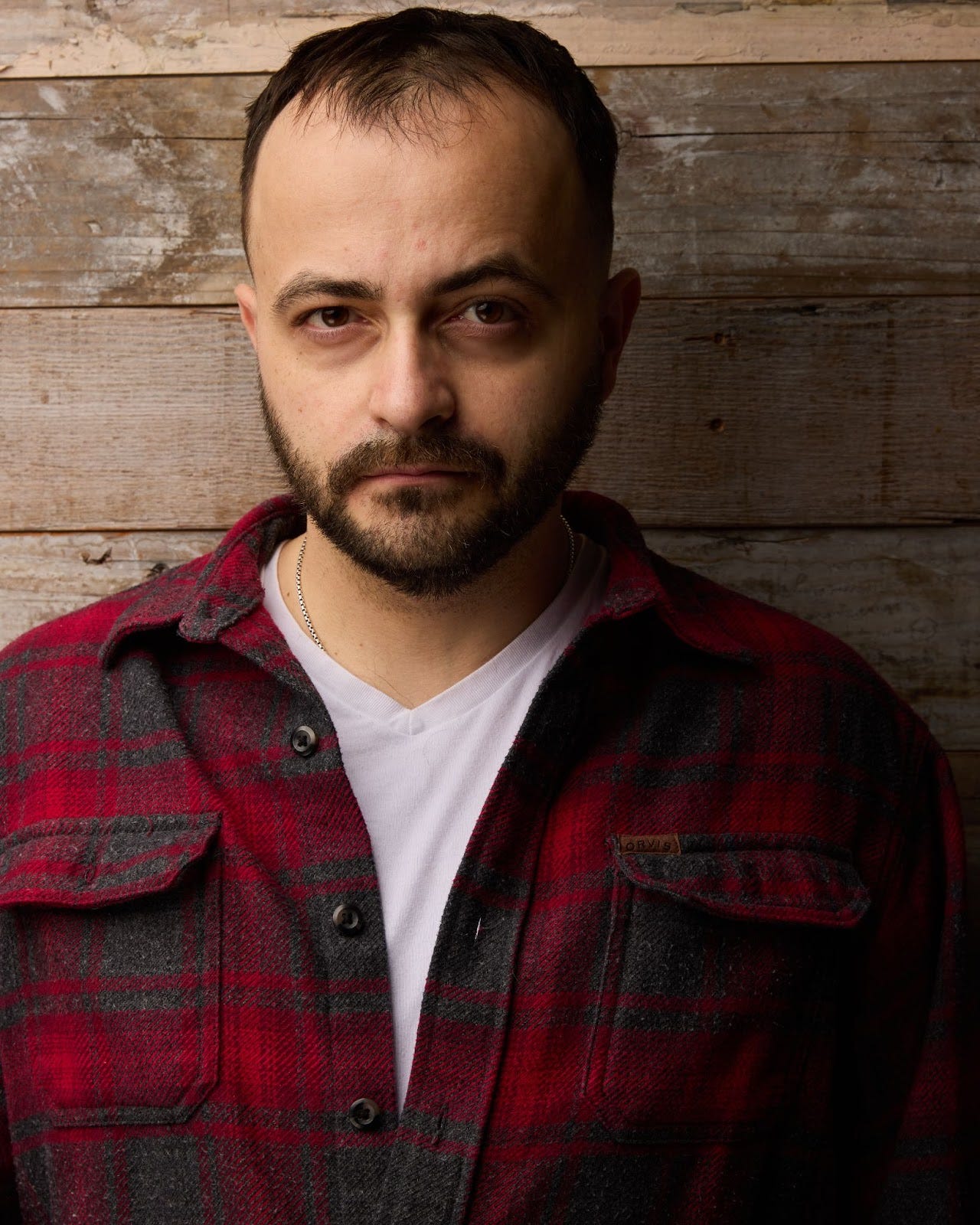
I had the distinct pleasure of talking to Goran Ivanovski. Originally from Macedonia, Goran Ivanovski learned to speak English watching Tom Cruise action movies, and has wanted to be an actor ever since. While living in NY, Goran appeared in shows at Living Theatre, The Flea Theatre, the Michael Chekhov Theatre Co and was nominated for a New York Independent Theatre award for his portrayal of Coleman in a production of “Lonesome West” directed by Anne Bowen. Goran received his MFA from USC’s School of Dramatic Arts, where his favorite roles included John Dodge in Middletown and Horace Vandergelder in The Matchmaker. While at USC, Goran produced and starred in productions of The Aliens and Dead Hands. His film credits include: “Law & Order: SVU,” “The Blacklist,” “Lucifer,” “Dead to Me,” and “American Auto.” He is also currently recurring on this season of CSI:Vegas and Seasons 2–4 of Apple TV’s “For All Mankind.” Goran is married to actress Molly Gray and just welcomed his first daughter, Zelda.
Goran, thank you for joining us. Our readers would love to learn about your origin story. Could you please share with us the story of how you grew up?
Iam originally from Macedonia, now called Northern Macedonia. When I was born, it was Yugoslavia. The country changed three times before I even turned one. I have always had a passion for movies, and that’s actually how I learned English. As a child, I would watch movies with Steve Martin, John Candy, and Eddie Murphy and pick up their cadence and rhythms, like in “Planes, Trains, and Automobiles.” People would get a kick out of a five-year-old kid in Macedonia saying, “I want my fucking car right fucking now.”
By the time we came to the States in 1995, I didn’t have a working vocabulary of English yet, but my accent was down pat, so people didn’t understand how I could speak with such an accent but not have the complete vocabulary. We settled in New Jersey, right outside of New York City, and my parents thought that private school would be better for me than public school. Little did they know that I wanted to be an actor and if they had known that, they would have left me in public school.
Can you tell us the story of how you first became an actor?
In high school, I discovered drama classes and the drama program, so I applied to that. I found that I didn’t have any shame or giggles like some of the other kids did when they got up to perform. It was easy for me, and I enjoyed it. When I went to college, I decided to stick with it and keep doing it.
However, acting is a thing of discovery, and it’s different from what I thought it would be. It’s always changing and evolving.
Early on, I thought I was a born actor and didn’t need training, but after being a waiter for 12 years, I realized that maybe I did need training.
My childhood watching movies is why I wanted to be an actor, and high school allowed me to take some drama classes, but it was when I got into my M.F.A. program at USC that I found a personal reason for wanting to be an actor. It used to be about sex, drugs, and rock and roll, but now that I have a wife and kids, I want to make something meaningful.
As the personal reason for why I want to be an actor becomes closer to my heart, it gets stronger.
You probably have a lot of fascinating experiences being on a ton of different sets. Can you share with us the most exciting or humorous story that happened since you began your acting career?
Thank you for thinking I’ve been on many sets, but I have not. I’ve actually done many more Broadway and theater shows than I’ve ever been on sets. I’ve only been on three professional sets before I got to For All Mankind. Those were all just “itty bitty” co-star roles and in-and-out situations. Every time I would show up on set, my heart would start pounding, and I’m like, “Oh my God, I’m here, I’m here, I’m here,” you know? I never got to be on set long enough for it to feel normal to me. Every time it felt like Disneyland to me, you know? I’m like, “Oh my God, there’s Mickey Mouse right there, he’s right there, he’s right there.”
I remember one time when I was on The Blacklist, and I saw James Spader. I was like, “Oh my God, it’s James Spader. James Spader, you know?” But for him, it’s a regular Tuesday. He’s like, “Hey, how’s it going?”
I haven’t been on set that much, so I don’t have too many cool, crazy stories to regale you with. I wish I could tell you about people getting drunk or wearing weird outfits, but that hasn’t been the case.
Everything has been very professional, and very courteous. I think those days of old Hollywood with stories of Jack Nicholson and the Rob Lowe club, young lovers with Matt Dillon and all that stuff…that’s all gone. That hasn’t been my experience. Everything’s been very courteous, very professional, very straight edge, and it’s been great in that regard.
I’ll describe my experience of joining “For All Mankind” as a recurring character. Initially, I used to feel giddy upon showing up on set, but as time passed, it started to feel normal. The routine of going to the trailer, placing my breakfast order, getting my costume, and going to hair and makeup became familiar to me.
I’m grateful for this normalization as I’ve been seeking it for a long time. Even though I’m turning 40 in June, I’m still considered a green actor. Being able to sit in the high chairs with the other actors gave me a sense of belonging and the feeling that I’ve arrived. This is mainly due to the professionalism instilled in me during my MFA training. I spent three wonderful years at USC with professors like David Warschawski, Natsuko Hama, David Bridel, and Andy Robinson, who founded the program. Before my training, I didn’t realize that acting could be such a rigorous professional thing. I used to think that we would just drink and then act. However, I learned that it’s a rigorous job that requires dedication and heart.
One of my professors, Andre Belgrader, unfortunately, passed away recently. He taught at Yale and NYU, and he was an old Romanian guy who spoke slowly. He would watch me act, and after a scene, he would say, “GoGo, why are you acting?” I’m like,” I thought that’s what we’re doing”. He replied, “yes, but not like you, you’re acting.” I’m like “but isn’t that what we’re supposed to do?” He said, no, “no, don’t act, just be.”
The hardest lesson for me to learn was to just be and exist on stage.
When we would do scenes from plays like “Death of a Salesman,” Professor Warshofsky would have me come home as the character, and I would be lost. I didn’t know what to do, and I looked towards him for guidance. He would tell me “what do you do when you get home? So I would take my shoes off, put my keys down, and sit down to read the newspaper. These exercises taught me that acting is just living, and I didn’t have to be like a performing muppet. Watching someone exist is phenomenal acting,
It’s like the saying in Chinese opera: “inside go outside, no go.” To have a stillness on the outside, but on the inside, to have a full life. This training gave me the courage to show up to sets and feel like I belong there. Acting is no longer just a prepubescent dream but a full-fledged career for me now.
Let’s talk about your work. You have a lot of impressive work. Can you share with our readers some of the exciting projects you’re working on now and what you see yourself doing in the future?
I just wrapped up filming an FBI episode in New York, where I played the role of a Croatian terrorist. It will air on March 14th. Prior to that, I worked on CSI Las Vegas. I’m grateful for every opportunity that comes my way because it allows me to practice my craft.
I’ll be honest, though. I can’t help but feel pigeonholed because of my looks. 90% of the roles that I audition for or have gotten are based on speaking with a Russian accent. If you want my work, you will only see me talk like this, and you’d be quick to assume that I must be foreign. Foreign Goran, you know? I never saw myself that way. I always assumed myself as a Joe Schmo because I don’t have an accent, But Hollywood seems to stereotype me. Hollywood is like “You’re foreign, you.”
When I have to do these auditions, my wife has to remind me that I’m lucky to have them because these lousy guy characters are in demand now. She is right of course.
It’s weird though that I had to come to the United States with a perfect accent only to speak like a foreigner, but it is what it is.
In the future, I would love to do more comedy and other things. If I keep getting credits, my star will continue to rise, and I’ll have more options to pick and choose from in the future.
Let’s talk about For all mankind. As you know, For all mankind has been one of the most popular sci-fi shows of all time. What did you think captured people’s attention about the series?
Alternate history shows are a thing now, with Man in the High Castle doing that as well. It shows this alternate reality, but it’s not that alternative considering you’re using our everyday politics, and plugging them into the show. So it’s an excellent mirror for ourselves.
Also, the show is well done. It’s got great characters, and it’s got excellent writing, and it’s got significant special effects. They shell out an enormous amount of money for it yearly for special effects.
And the producers are really experienced. They are the same producers that did Battlestar Gallactica. These guys are veterans, they know what they’re doing,
Also, it’s just a terrific premise, jumping ten years every season.
I joke with Joel Kinnaman. I’m like, “they leaked a picture of you from next season.” He’s like, get the fu*k out of here? Let me see that.” And I showed him a picture of Clint Eastwood. We both had a good laugh.
So what lessons can society take from the themes and motifs of For All Mankind?
It’s today’s politics on that big screen. They’re covering everything from black people in the armed forces or the space forces. Just like Krys Marshall was the first black woman on the show, now NASA is showing that there’s going to be a woman who will be the first black astronaut to go to the space station. They also covered the whole “don’t ask, don’t tell” gay policy in the army.
Movies and TV can show us a better picture of the world than it is. We need that escapism to give us hope. Movies and TV have influenced how I want things to be in life, rather than the other way around.
I was joking with one of the producers when Will Tyler comes out on Mars. I play a Russian, and we’re all like, “Yes, way to go Will!’” But I joked about how that would never happen today.
It has fantastic stories, like the whole arc of the President. I love the fear they have of what they are and who they are and whether the country can come to terms with it. I like the fact that they show brave individuals in the face of a lot of bigotry and hatred.
How would you compare and contrast your character to the character Dimitri that you play in the show? How are you similar and how are you different?
In the show, there isn’t really a distinct character other than myself. David Warshofskyi taught me this valuable lesson — there is no character, only you. Even though I play the role of Hamlet, it’s not like there’s a separate Hamlet character. Hamlet is just an extension of myself.
Similarly, Dimitri doesn’t have a ginormous backstory. He’s a lot like me — sarcastic, witty, intelligent, and a bit of a sourpuss. There’s no grand tale of how he left a cow farm in Siberia to become a doctor or read poetry in Moscow. He’s just a regular guy.
In fact, in season 4, when I meet Krys Marshall’s character again, the script describes me as “dour as ever” — which is basically just how I am in real life. So, there’s no need for me to create a separate persona for my character. I am just playing myself, except you know I’m a doctor in space.
This is the signature question we ask in our interviews. You have a lot of experience now. Looking back, there are five things you wish someone had told you when you first started and why?
Okay, when I time travel, I give my good advice. This might or might not be before I kiss myself to see what it’s like. (Laughs)
Firstly, my advice is to avoid college if your intention is to pursue acting. While it’s beneficial to obtain a degree in fields such as economics, finance, or communications, it’s not necessary for acting. What you do need, however, is experience in the industry.
I recommend seeking out a conservatory-style training program, such as a two or three-year course that awards a certificate upon completion. Personally, I’ve found that pursuing a Master of Fine Arts (MFA) has been incredibly beneficial for my career.
I advise against attending an undergraduate program, as individuals at such a young age often lack the life experience necessary to truly understand and embody complex characters from plays such as those written by Tennessee Williams or Arthur Miller. It’s not a criticism of you, but rather a recognition that you need more life experience before diving into acting. Therefore, I do not recommend going to college solely for acting purposes.
Secondly, I would advise myself to exercise more as acting is a highly physical job. Spending 12 to 16 hours on set each day can be incredibly taxing. As one of my professors said, “whenever you can sit, don’t stand; whenever you can lay down, don’t sit.” Conserving energy is crucial, as I learned the hard way during a 16-hour shoot from 11 AM to 3 AM. I had expended so much energy in the first five to six hours that I was left feeling like a dead fish, flopping around from chair to chair for the remainder of the day.
Maintaining good physical condition is imperative, given the demands of the job.
Thirdly, I would encourage myself to read a lot. Reading has been incredibly beneficial for me, not only in terms of improving my vocabulary and knowledge of the world, but also in teaching me how to listen. When you read a script, you can hear the character’s voice in your head, and you understand the meaning behind punctuation such as commas, ellipses, and dashes. This skill helps you truly embody the character when performing. I highly recommend reading to help you develop your listening skills and bring characters to life on stage or screen.
Fourthly, I would advise myself to seek out life experiences beyond the world of acting. In my case, my experience working as a waiter for 17 years has greatly influenced my approach to acting, and vice versa. I’m even writing a book on the subject! It’s remarkable how many parallels there are between the two professions. For example, when approaching a new customer at a table, you have to be ready for anything. They could be friendly or rude, have specific dietary needs or allergies, or be on a date or a break. You have to adapt to each situation while still sticking to a set script.
By pursuing diverse experiences, you can gain insights that will enrich your acting work. Don’t limit yourself to the world of performance; explore and learn from different areas of life.
Five, it’s okay if you don’t feel like you’ve made it. It hasn’t for me for a very long time. It was only until my daughter Zelda was born and I reached the milestone of 40 that I was like, “Why am I still going after it?” Why am I still wanting whatever? I just kind of sat back, and I was like, “No, life is good. Life is good without achieving some status quo or something.”
Now, I enjoy my daughter’s smile. It’s the little things, you know, like getting drunk with some friends over at their house. That’s really what it’s about. I’m not gonna take any of my credits with me or any of this sh*t. We’re all gonna be just as dead. Jonah Hill is gonna be just as dead, Brad Pitt’s gonna be just as dead. None of it will matter more than the important things in life, which I think are family, friendships, and enjoying life.
Goran, you are a person of tremendous influence because of the platform you’ve created, and your great work. If you could spread an idea or inspire a movement that would bring the most amount of good to the most amount of people, what would that be? You never know what your idea can inspire,
I don’t know, peace on earth, goodwill towards men.
I would love nothing more than for everyone to be able to love, respect, and not be violent towards each other. As quaint and stupid as that may sound, that’s really what I love and what I would love for people to do — to come together under an umbrella of understanding and conversation. A conversation doesn’t need to be about who’s right or wrong, but to promote cooperation.
I’ll always remember that scene from the movie “Sneakers” with Robert Redford. They break into a place and steal something, and the CIA promises their whole team that they’ll work on whatever they want most. Everybody’s like, “I want my record expunged, I want a million dollars, I want this and that.” But the one guy says, “Peace on earth and goodwill towards men.” The other guy is like, “You know I’m the CIA.” And he’s like, “I know, but that’s what I want.”
This is what we call our matchmaker question, and sometimes it works. We’re very blessed that prominent leaders read this column. This is your chance to reach out to them. Is there a particular person in the world or the US that you would like to have lunch with, have a beer with, or collaborate with? We could tag them, and perhaps we could connect you.
Tom Cruise. I’ve always admired him. I grew up watching his stuff, and I’ve always thought he was just a fantastic actor. He’s obviously a bit crazy in a way, but nonetheless, I would love to have a beer with him and talk to him. He’s met so many people and has worked with the likes of Stanley Kubrick and Paul Newman, and has had a very stellar career. He is a Hollywood star and one of the ones that I grew up watching. Whenever I thought of meeting a celebrity, he always came to mind. He’s like one of the last of the old guard. The man is a franchise. He’s like, “I will not be paid. I will pay myself. I am the franchise.”
How can our readers best continue to follow your work online?
To be honest, I’m not very active with posting on social media. I don’t have much interest in it and I’m not really part of that generation. However, I do have a website and an email, so that’s probably the best way to keep up with my work. I do have Instagram and Facebook accounts, but I only got them in the past few years because I was told it was necessary for my career. It’s just not really my thing and I’m not drawn to it.
Thank you so much for this fantastic conversation.
Thank you. This is great, man. I appreciate it very much.