My path to becoming an actor was anything but a straight line. All that matters is that against all odds, I finally “made it,” which is just a fancy way of saying that I can pay my rent without waiting tables.
Pop Culture
Jonathan Stoddard: Acting Success Requires Guarded Communication And Complete Discretion In A Small Industry
From physics major and culinary school graduate to versatile cross-genre leading man, Jonathan Stoddard shares how resilience and discretion drive a lasting acting career.
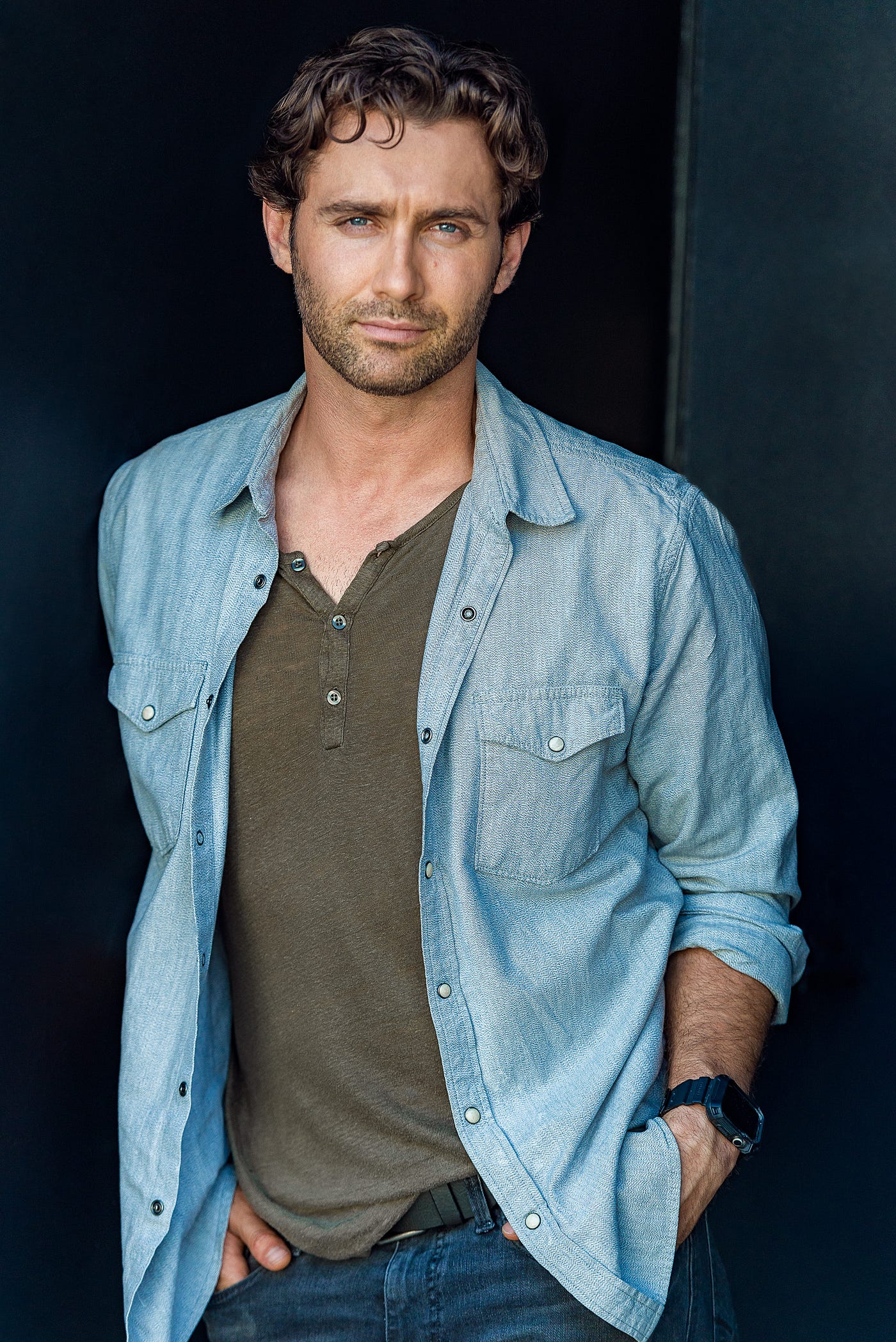
As a part of our series about pop culture’s rising stars, we had the distinct pleasure of interviewing Jonathan Stoddard.
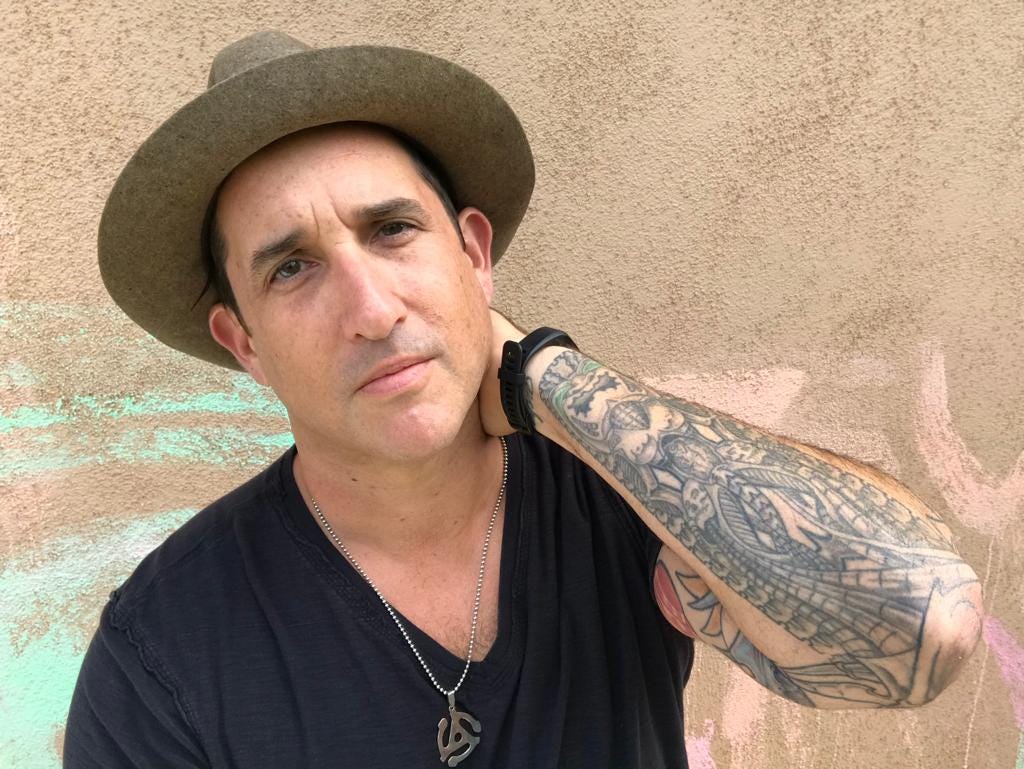
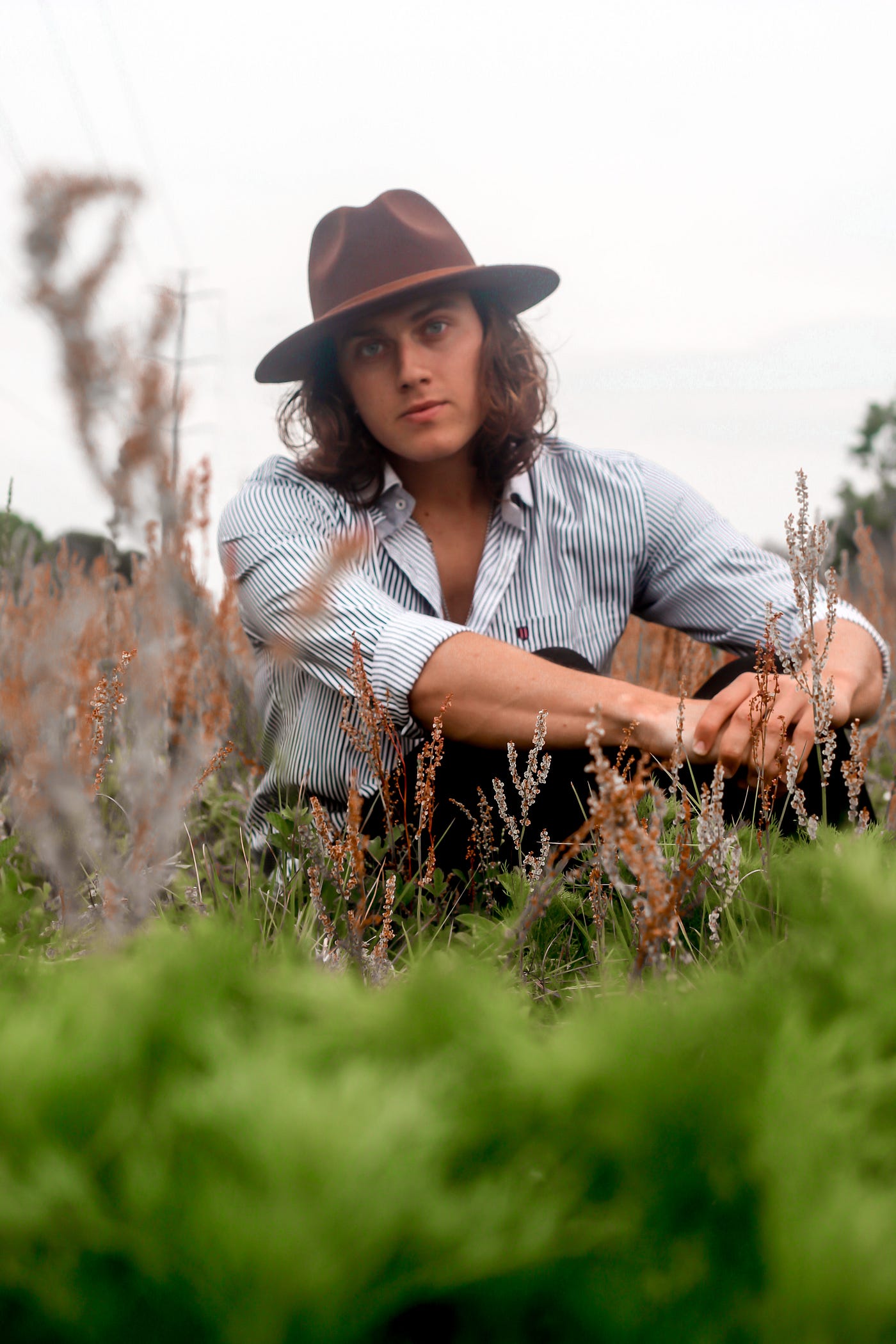
Jonathan Stoddard is an award-winning actor, best known for his leading-man Christmas rom-coms such as “A Prince and Pauper Christmas,” where he plays both Prince Alexander and Patrick, “A Royal Christmas on Ice,” and “Furry Little Christmas.”
His versatility as a cross-genre leading man puts Jonathan in high demand ranging from dramatic roles such as Spencer Chase in “Somewhere in Montana” opposite Graham McTavish, to comedic roles such as Eric in “The Plus One” opposite Cedric The Entertainer, Ashanti and Michelle Hurd, to action/thriller/horror roles such as Jon Bryant in “Bone Cold” opposite Trinity Jo-Li Bliss from Avatar 2 to Period Western Horror roles such as Quinn in “Silent Thunder,” and more.
Raised in the Bay Area, Jonathan grew up doing musical and dramatic theater in roles such as Tony in “West Side Story,” The Emcee in “Cabaret,” and Duke Orsino in “Twelfth Night.” Combining music with screen-acting has always been a dream for Jonathan, and he is rumored to be in pre-production for a music-based film in 2023.
Upcoming theatrical releases to hit Theaters, TV, and streaming platforms include rom-coms such as “The Soulmate Search” and “Love on Retreat,” and Thrillers such as “Psycho Fiancé,” “Broken Ties,” and a sci-fi mystery production titled “Saturn,” and more.
Jonathan continues to show an incredibly dynamic presence on screen and is quickly growing in both foreign and domestic territories. We’re excited to see what he does next!
Thank you so much for joining us in this interview series! Can you tell us the story of how you grew up?
I grew up in, arguably, one of the greatest places in California — Marin County, specifically San Rafael. I’m the youngest of 4 children, so by the time I came around, my parents stopped tracking my first words, and nobody remembers when I took my first step, BUT I always had someone to play tag or tickle monster with… later in my life, I was diagnosed with ADHD.
My parents were closet creatives disguised as psychiatrists, so my days were packed with piano lessons, school, and any after-school activity they could put me in, like sports and theater; they worked smarter, not harder. One thing’s for sure; nobody knew that while I was crying my way through operas, I was also learning about the most iconic stories in history, acting, compassion for all humanity, music, and emotional development.
All teasing aside, growing up always has its challenges, and I’m lucky to have survived my youth being the daredevil I was. I love my parents and siblings so much, and I couldn’t imagine it being any different. I can say nobody thought I would become an actor — that was a surprise for everyone, including me.
Can you share a story with us about what brought you to this specific career path?
Doing something for fun and doing something as a career are VERY DIFFERENT concepts and lifestyles. My path to becoming an actor was anything but a straight line. All that matters is that against all odds, I finally “made it,” which is just a fancy way of saying that I can pay my rent without waiting tables.
I went to college as a declared physics major (I’m obsessed with quantum mechanics) and a drama minor and dropped out after a couple of years to attend the CCA, Le Cordon Bleu Culinary School…as I said, not a straight line. After Culinary school, I traveled the world for a couple of years cooking in NY, Italy, and Marin County, to name a few, and then asked myself the classic, age-old question, “What would I ‘DO’ if I were a millionaire?” Meaning, what would I do for free if money weren’t a factor? The answer…acting. So, in 2006 I packed my bags, moved to LA and slept on a friend’s couch, and daydreamed about my soon-to-be blossoming career as an actor.
Well, nothing blossomed, and after being a background/extras’ actor’ for almost two years, I started learning parkour, fell off a 10 ft high pillar, and raced a full-sized brick down to the concrete sidewalk (thank you, gravity). Being the chivalrous young man that I was, I offered to break the brick’s fall with the top of my forehead; don’t worry, the brick was fine; I, on the other hand, was not; this was the first time I quit acting. To make a long story short, I got back into restaurants in Northern California, where I was then scouted years later to get back into acting. After a few commercials, I moved to Los Angeles in 2014 and started a photography company to support myself while I auditioned for everything I could get my hands on. Nothing really hit for me during those two years, and I quit more times than I can count, but in 2016, something changed — I changed. I’ve been lucky enough to be a full-time actor ever since.
Can you tell us the most interesting story that happened to you since you began your career?
Steve Jobs once said, “You can’t connect the dots looking forward; you can only connect them looking backwards.”
I mention the quote above because the most interesting ‘thing’ that’s happened to me since I began my career is the completely unpredictable chain of events that have brought me to where I am today.
From 2 am philosophical conversations at a 24hr grocery store leading to feature film bookings ten years later to booking over ten movies with a producer, only to find out that he vetted me by talking to his long-standing filmmaker friend, who I happened to live with six years prior. The most interesting story is the story of success and the unexpected people and events that make it all possible.
It’s said that there are two types of people in the world, people who believe in miracles and people who don’t. I’ve learned to believe, and maybe that’s the most interesting story of my career.
It has been said that mistakes can be our greatest teachers. Can you share a story about the funniest mistake you made when you were first starting? Can you tell us what lesson you learned from that?
Mistakes are definitely our greatest teachers, and frequently, they are not funny! We learn the most from tragedy and hardship, but having said that, I think the greatest mistake that I’ve learned to laugh at involves venting to the wrong people.
I’ve vented to my onset wardrobe stylist only to find out that they were the director’s daughter; that was no bueno. Another time, I vented to a co-star only to find out that she was a writer who was very close with the production company and EPs, and I learned very quickly my words could be funny and wonderful one day and then used against me the next.
One of my favorite quotes is, “When you speak badly about someone, it says more about you than it does them.”
To clarify, I’m not a vengeful person, and I don’t say mean things! However, venting about a situation, a hardship, or a person is always a risk, and you never really know what the person you’re venting to is truly taking away from the conversation and who they know.
The lesson I learned: Mind my own business and be like the wolf: ears open, mouth shut! This means keep your head down and keep going; everybody wants to get on board a moving train. Secondly, the industry is smaller than you think, and there’s great power in being a lockbox for others.
What are some of the most interesting or exciting projects you are working on now?
I just finished filming an 18th Century period western, and it was one of the greatest set experiences of my life; I can’t wait for it to come out! Other than that, I have a Christmas rom-com called “A Prince and Pauper Christmas” that came out Dec 11, 2022, where I play two characters who trade places…so… it’s like…a lot of me, which I don’t know how I feel about that yet! This movie pushed me in ways that I wasn’t ready for and was an absolute delight to film. I’m so lucky and grateful to the cast and crew.
Three other films that I’m really excited about are “Bone Cold” (a psychological horror that explores military PTSD), “The Soulmate Search” (a rom-com adventure movie), and “Psycho Fiancé” (a straight-up thriller).
Because all of these films cross genres, it’s going to be really fun or really devastating to see how people react when they see them.
You have been blessed with success in a career path that can be challenging. Do you have any words of advice for others who may want to embark on this career path, but seem daunted by the prospect of failure?
The first two things that tell any actor are 1) Don’t give up and 2) Start journaling EVERY night about why you deserve to be a successful working actor.
Most people give up, so your chances of being successful dramatically increase if you don’t give up. This path is going to be harder than you thought, regardless of whether you have immediate success like a one-hit wonder or you hit something big years down the road; nobody crosses the river without jumping on every stone. I can easily say that 95% of the people that I worked with and went to class with when I first started acting are no longer acting. Everything gets easier the better you become… don’t give up.
And finally, journaling at night has been one of the most powerful things that Olympians, the greatest minds in our history, and the best of the best do, so it if works for them, it’ll work for you. So stop trying to reinvent the wheel, and do things you can do that are universal action items; journal, it’s subtle but powerful.
These are two things that are easy to do, but that means that they are also easy not to do. Do them, and your life will change.
We are very interested in diversity in the entertainment industry. Can you share three reasons with our readers about why you think it’s important to have diversity represented in film and television? How can that potentially affect our culture?
I think it’s really important for the film and television industry to practice diversity because that’s the reality of our world. Whether it’s art imitating life or life imitating art, a simple and powerful conclusion is that one cannot exist without the other.
I do want to say the most challenging thing about diversity is that there is huge pressure on ‘aesthetic diversity’ instead of ‘actual diversity.’ For example, I’m Irish and Mexican, but I don’t LOOK Irish, nor do I LOOK Mexican because I’m fair-skinned and light-eyed, and I’m willing to bet that if I portrayed a Mexican in a movie, I would be met with some very disapproving opinions. This is where the industry is having a hard time; what if you’re Mexican, but you look Venezuelan, or you’re French, but you look Iranian, or you’re Indian, but you look African? And where do we draw the line between diversity vs. cultural appropriation?
I understand that diversity in film IS about showing the ‘colors of the rainbow,’ so to speak, a chance for people at home to see people like themselves represented in the cinematic world overcoming challenges, growing as characters, and accomplishing miraculous things. Our ability to relate with one another is the foundation of our humanity, and the more diversity we are exposed to, the more we unite as a people for the growth of our entire world.
To me, the intention and heart of diversity is summed up in two simple ideas, “Celebrate and recognize the beauty of the world, and “If they can do it, so can I.”
What are your “5 things I wish someone told me when I first started” and why? Please share a story or example for each.
When I first started acting, I wished someone had told me these five things:
1) Study marketing, not how to cry.
Every class I took when I was starting out as an actor was about how to cry and feel pain and pleasure deeply and believably. I spent so much time and money on classes that taught techniques that I got really good at crying at home, alone and not on set. SHOW BUSINESS is just that, a business, and every single actor has looked at the screen at some point in their life and saw someone playing a role and thought, “I could do that better.” Learn how to market yourself, and that will take you further than learning how to cry on command; besides, that’s what onions are for.
2) Journaling will get you further in your career than auditioning.
Call it manifesting, call it prayer, or call it quantum mechanics — they all basically say the same thing — the only thing that matters, is that it works and it is an important part of EVERY successful person’s weekly, if not daily, routine. Pro
Tip: Journal about why you deserve to be successful and why you’re grateful for your life.
3) Quit frequently, but never give up.
Have you ever noticed that food arrives at your table as soon as you get up to use the restroom? There is something strange in the universe, and I can’t tell you how many times I was going nowhere in acting and quit, and then the very next day or week, I got an audition or booking that changed my life. Sometimes the idea of quitting isn’t about quitting acting but quitting the version of ‘you’ that is NOT working. In order to grow and evolve, you are going to have to change. Maybe it’s time you quit who you are, especially if who you are isn’t working and making you happy.
4) Don’t just be an actor: be valuable on set.
Making a movie is a TEAM sport. Everybody is overworked, underpaid, and way too tired to deal with diva actors who only want to show up to do the scene and then leave. Find ways to support everyone on set, from the least important to the most important person. Caution: this is an art form! Every set is different, so if you try to help someone, it could be misinterpreted in a negative way, or if you’re on a Union set, people have very specific job descriptions that do NOT and will not let you help another cast or crew member. Your job is to get creative and become more valuable on set in ways that are appropriate to the set you are on.
Just like a diamond is meaningless in certain countries and rare and valuable in others, you must learn to adapt and find ways to support the project beyond just your scenes.
5) Be a lockbox of secrets, and don’t gossip; the world is smaller than you think.
This is a fickle industry where everybody knows everybody, and a lot of people like to talk about other people; don’t fall into this trap. Keep your nose clean and find only nice things to say about other people, even if other people are saying bad things. Let everyone’s secrets die with you, and you’ll be amazed at how valuable you’ll become. Trust and loyalty are so important in this industry, and the faster people realize that you don’t play the gossip game, the faster you’ll be trusted with their inner circle.
Which tips would you recommend to your colleagues in your industry to help them to thrive and not “burn out”?
The easiest way that I’ve learned to thrive and not ‘burn out’ is to practice the 80/20 principle in relation to what I call, The 4 Kingdoms. (To learn more about the 80/20 Principle, read “The 80/20 Principle”)
Here are the 4 Kingdoms:
1) Mental
2) Emotional
3) Physical
4) Spiritual
Find things to do in each of these categories every week, if not every day. These are the four wheels of your car, and if one of them is flat, you won’t be able to drive very fast, let alone accomplish as much as you want as fast as you want. Here are a few things that I do in each category.
1) Mental
- Brain games on my phone.
- Read ten pages of a book every day.
- Learn a new skill every month.
2) Emotional
- Make sure I laugh and cry every day by either watching or reading something.
- Create an empowering and exciting “WHY” (why am I pursuing acting) and read it multiple times per day.
- Meditate 5 min per day.
3) Physical
- Do a Sun Salutation every day.
- Go for a walk for 30min to an hour every day.
- Jump on a trampoline for 10 min every day.
4) Spiritual
- Go for a hike multiple times per week.
- Journal every night.
- Connect with my greater power daily.
Find things that work for you and do them, and you’ll be amazed at how much energy you have and how much creativity you’ll discover when facing problems that would normally make you anxious or depressed.
You are a person of enormous influence. If you could inspire a movement that would bring the most amount of good to the most amount of people, what would that be? You never know what your idea can trigger. :-)
If I could inspire a movement that would bring the most amount of good to the most amount of people, I would inspire a movement of economic support for the greatest socially impactful inventions on our planet. In today’s world, we have the technology to create clean water anywhere in the world, but it lacks funding. We have the technology for sustainable energy, but it lacks funding. We have the technology for free education, but it lacks funding. We have the technology… The list continues. We need to put more emphasis on ideas that matter, on ideas that fight big companies for a spot in the marketplace. These ideas need to be supported and need a financial well that can’t dry up.
None of us are able to achieve success without some help along the way. Is there a particular person who you are grateful towards who helped get you to where you are? Can you share a story about that?
I have to say that the greatest influences in my life start at home with my mother and father and my siblings. There were so many things that I loved about them and so many things that I wanted to change about them, and as I continue to grow and develop as a human in life and in my career, I am constantly updating what traits are now useful and what traits are now outdated.
Outside of my family, there have been so many people who have inspired me, guided me, supported me, and pushed me to be better, whether they knew it or not. I created my own family of peers with people like Tony Robbins, Jim Rohn, Dr. Wayne Dyer, Opera Winfrey, Jack Canfield, Louise Hay, Deepak Chopra, Tim Ferris, and more. I made a dream board of advisors, who I wanted to lead my life and career, and I looked at it every single day.
Having said this and paying homage to the people who have influenced me the most, I have to honor and recognize my agent Peter Kallinteris of Peter Kallinteris Agency. He’s someone who has always been in my corner and always pushed me to be better and reach further. Peter and I have had a very successful commercial career together, and then when I wanted to transition into film and television, he was skeptical but supportive and has always had my back, which is hard to find in this industry. He is and will forever be a part of this journey, and I owe him so much. Thank you for inspiring me Peter!
Can you please give us your favorite “Life Lesson Quote”? Can you share how that was relevant to you in your life?
My favorite ‘Life Lesson Quote’ was made popular by author James A. Michener:
“The Master in the art of living makes little distinction between his work and his play, his labor and his leisure, his mind and his body, his information and his recreation, his love, and his religion. He hardly knows which is which. He simply pursues his vision of excellence in whatever he does, leaving others to decide whether he is working or playing. To him, he’s always doing both.”
I can’t tell you how many times my friends and family have told me to slow down, or I need to rest, or I need a vacation, or I need a balance, etc. I know that it all comes from a very well-intentioned place, but why would I need a vacation from doing something that I love and that gives me life and expands my compassion for all humanity?
Jim Rohn has a great quote, “Don’t wish it was easier; wish you were better.” When managing my life and keeping these quotes in mind, I always look for ways to expand and grow instead of shrink to find balance. Life starts getting interesting when you start asking yourself more empowering questions like, “How can I become more content while in pursuit of what I want?” Or “How can I stop and smell the roses without losing momentum or taking away from my life and career?”
As I got older, I started to realize that balance wasn’t about taking a vacation but that it was learning how to integrate my life and my work so that there is no ‘balance’ because if I’m always doing both, then I’m never tipping the scales in any one direction.
These two ideas will change your life if you let them — they changed mine.
Is there a person in the world, or in the US whom you would love to have a private breakfast or lunch with, and why? He or she might just see this, especially if we tag them. :-)
I’d love to have a private breakfast with Tony Robbins because, in my opinion, he’s one of the greatest minds of our time. There are very few people in the world who have studied the mind, human behavior, and social systems the way he has, and I would love to talk to him about seasonal differences in our developing culture.
How can our readers follow you online?
The best way to follow me and my journey is on Instagram: @jonstoddardofficial
This was very meaningful, thank you so much! We wish you continued success!

Published inAuthority MagazineTop Lessons, Top Authorities · 42K Followers
Exclusive, curated interviews with the leaders and changemakers shaping tomorrow. Leadership lessons, industry deep dives, and executive profiles.