Filmmakers Making A Social Impact: Why & How Oscar & Emmy Winning Filmmaker George Stevens Jr. Is Helping To Change Our World
My father was an important influence on me. He was one of the great movie directors with films like Gunga Din, the Astaire-Rogers Swing Time, Shane, A Place in the Sun, Giant, The Diary of Anne Frank, The Greatest Story Ever Told, and many others.
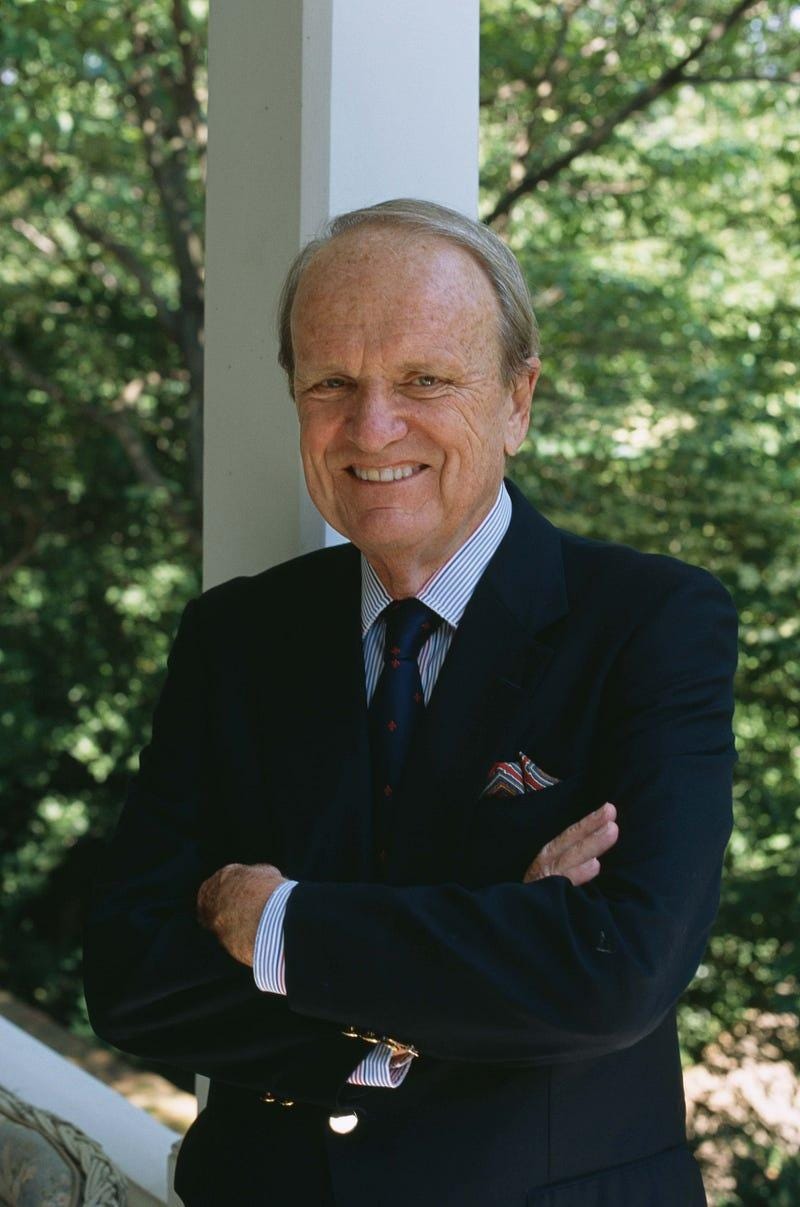
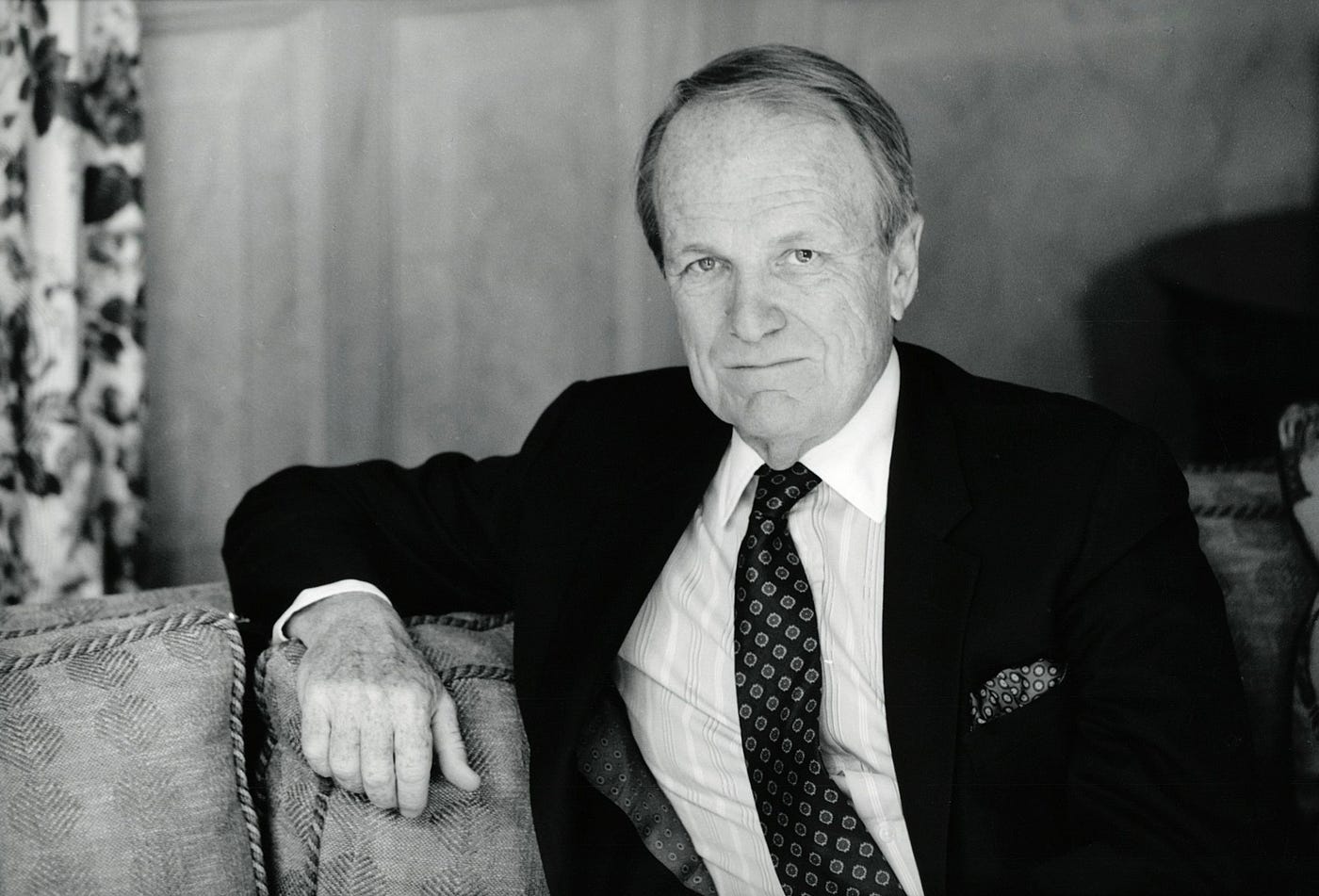
As a part of our series about “Filmmakers Making A Social Impact” I had the pleasure of interviewing George Stevens, Jr.
George is a writer, director, producer, playwright, and author. He started out as a production assistant on his father’s movies, produced documentaries for the USIA during the Kennedy Administration, was the founding director of the American Film Institute and wrote and produced award-winning films and television programs. He has earned many accolades including 15 Emmys, 8 Writers Guild Awards, 2 Peabodys and an Oscar.
Thank you so much for doing this interview with us Mr. Stevens. Honestly, it is an honor. Before we dive in, our readers would love to get to know you a bit. Can you share with us the story of your childhood and how you grew up?
Iwas born in the Hollywood Hospital. My great-grandmother, the actress Georgia Woodthorpe, launched five generations of Stevenses in show business — her daughter, Georgie Cooper Stevens being the mother of my gifted filmmaker father. He was just starting out when he married my mother. We lived in a quiet little village called Toluca Lake, not in the more glamorous Beverly Hills. I went to a small school called Rio Vista, and later attended Harvard School, now known as Harvard Westlake. My father was an important influence on me. He was one of the great movie directors with films like Gunga Din, the Astaire-Rogers Swing Time, Shane, A Place in the Sun, Giant, The Diary of Anne Frank, The Greatest Story Ever Told, and many others. He opened doors and provided inspiration that led to my early career in movies, and later expanded to a national leadership role in culture and politics.
It has been said that our mistakes can be our greatest teachers. Can you share a story about the funniest mistake you made when you were first starting? Can you tell us what lesson you learned from that?
I’m not sure it’s very funny, but when the great broadcaster Edward R. Murrow — who had joined John F. Kennedy’s New Frontier in 1961 as Director of the United States Information Agency which was charged with telling America’s story overseas — offered me the position to head the motion picture division of the Agency, I said “No,” feeling that I must remain loyal to my father and stay with him on the movie we were producing. My father’s wisdom prevailed. He advised me to accept the opportunity that transformed my life.
Who are some of the most interesting people you have interacted with?
Elizabeth Taylor, Robert Kennedy, Sidney Poitier, Orson Welles, Thurgood Marshall, Bruce Springsteen, Beyonce and Barack Obama to name a few.
Can you share with us one or two of the most interesting stories that have happened to you in your long and illustrious career?
In my memoir called “My Place in the Sun: Life in the Golden Age of Hollywood and Washington” — that is now available in bookstores and audio — I tell stories about the fascinating and talented people who were part of my life.
Can you share the most interesting story from your book?
That is difficult to select because I’ve worked with great directors, movie stars, and presidents in a sixty-year career. So, instead, I’ll tell you a story that, in retrospect, has the most meaning to my professional life.
In 1952 I went to the Academy Awards with my father. He had just made A Place in the Sun. We sat together and Joseph L. Mankiewicz, who had directed All About Eve that won the Oscar the year before, came on stage and read the nominees for Best Director. He said, John Huston for The Asphalt Jungle, William Wyler for Detective Story, Vincent Minnelli for An American in Paris, Elia Kazan for A Streetcar Named Desire, and George Stevens for A Place in the Sun. A rather distinguished list.
I was 18 years old, and it was an exciting night. My father was driving the car going home with my mother and his actress mother in the back seat, and the Oscar on the seat between him and me. I remember him looking at me and saying, “You know, we’ll have a better idea what kind of picture this is in about 25 years.”
There were no cinematheques, DVDs or streaming. Movies came and went — but he had been raised in the theater and knew that the test of time was the true measure when you judge art and movies.
He did not know, of course, that the young fellow sitting next to him would one day be the founder of the American Film Institute, where the test of time is crucial, preserving 40 thousand classic films and training new filmmakers who aspire to excellence. Or that I would be the creator of the Kennedy Center Honors which recognizes our great artists whose work stands the test of time. Looking back I realize that moment with my father had an influence on my professional life.
That’s a fantastic story. Can you share more of the backstory of what led to your creation of the American Film Institute?
I got an early start in Hollywood working with my father on Shane, Giant, and The Diary of Anne Frank, and by age 27, I was directing Peter Gunn and Alfred Hitchcock Presents. Then a huge change took place in my life when I decided to go to Washington and work in JFK’s New Frontier. It was a life-changing decision that took me into another world. As a result, I was around when they created the National Endowment for the Arts. They knew what to do about theater, opera, and symphony orchestras, but they didn’t know what to do about movies. As someone said, “You can’t give a grant to Warner Brothers.”
I proposed the American Film Institute, and I was asked to head it. And that became a very rewarding aspect of my career.
That’s fascinating. Just to clarify, did President Kennedy ask you to start the AFI or was it someone else like Mr. Murrow?
President Kennedy was instrumental in the creation of the National Endowment for the Arts, which was guided by great figures like Isaac Stern, Leonard Bernstein, Gregory Peck and Harry Belafonte. I was asked to lead the AFI, and while I did work with President Kennedy and had the honor of collaborating with him, he did not specifically ask me to start the organization.
Could you share with our readers a story about your interaction with President Kennedy? Specifically, I’m interested in knowing how he treated people, including yourself. What was his demeanor and energy like when relating to people?
When I worked for Ed Murrow, I was just 29 years old. I had only met President Kennedy once, socially. One day I was in Murrow’s staff meeting with the senior foreign service officers and the head of the Voice of America. My deputy came into the meeting and handed me a piece of paper. After reading it, I got up from my seat and walked out of the room. I came down one floor and, as I walked into my office, my secretary started dialing the phone. I picked up and heard the voice of Evelyn Lincoln, President Kennedy’s secretary: “Just a minute, Mr. Stevens, I’ll put President Kennedy on.” I had never imagined receiving a call from the President. Then I heard that unmistakable, vibrant voice. “George, I saw the film you made, The Five Cities of June, last night,” referring to a documentary that included his famous trip to Berlin where he spoke to 500,000 Berliners next to the Berlin Wall. He went on to say that he thought it was the best government documentary he had seen, and then he started asking questions. Most presidents would go through channels and call either Murrow or the Secretary of State, but not President Kennedy. He wanted to talk to the person directly involved. He asked about how many countries the documentary had been shown in, and how many foreign languages it had been translated into. You felt the curiosity and intelligence which so marked him.
I provided him with the information he requested and he said, “Alright, keep up the good work.” Suddenly, he was gone.
It reflected the nature of President Kennedy. He wanted to know what he wanted to know. He was businesslike, quick and cordial.
I went back into the meeting with Murrow and sat down with all these senior foreign service officers, and Murrow said, “George, would you like to tell us why you left the room?” So I told them about the president’s call. It was amazing to see how touched and inspired these career public servants were that President Kennedy cared about what we were doing. It was a wonderful moment at USIA.
It’s an amazing story. Do you have similar stories with other presidents?
I’m happy to share another story that involves both President Kennedy and his successor. There came the tragic day when the president was killed. It was so unthinkable. He was such a vibrant figure and we felt that he was changing the world. I had been at a luncheon and went back to my office, realizing I had to figure out what to do next. I had an idea and asked to see Murrow the next morning. I went into his office, and the atmosphere was understandably heavy. Murrow always sat across from you on a sofa, rather than behind his desk. He handed me a letter. It was dated five days earlier, from the White House, addressed to Murrow. “Dear Ed, I saw Five Cities of June last night…” And he repeated the exact same praise that President Kennedy had said to me before. It was surreal to have that letter in my hand that had been in his hand just days earlier. I handed it back to Murrow, but he put up his hand, saying, “You made the film, you keep the letter.” That’s the kind of man Murrow was. You can see the photograph of the letter my memoir, “My Place in The Sun.”
Then I told Murrow what my idea was. I wanted to make the first feature length film USIA had ever made. I told him we had 35-millimeter color cameras in eight countries abroad and we would photograph the reaction to his death, then cover the days of the funeral in Washington, and weave it together with the story of the Kennedy presidency in a two-hour film.
Murrow listened attentively, and then said, “First, make a 10-minute film about Lyndon Johnson.” He knew that our priority was to assure the world there was continuity.
So, four days later, I found myself in the Oval Office with President Johnson, making a film called “The President.” It was shown in 130 countries in 26 different languages. The film started with a moody nighttime shot of Johnson at his desk, preceded by a scene of exterior of the White House at night. Gregory Peck’s voice said, “The light in the White House window flickered, but it did not go out,” and went on to tell the story of Johnson taking over the presidency.
You have had the privilege of witnessing the evolution of Hollywood in general and the film and television industry. What changes do you appreciate that have been made, and what further improvements would you like to see moving forward?
Well, there have been changes and more change is needed because nothing influences people’s thoughts across the world more than the stories that are portrayed on screens by the movie, television, and streaming industries. The decisions made by studio heads are largely, if not entirely, based on what they believe is good for profits and the bottom line. However, I believe there is a higher calling and decision-makers should have more respect for the audience, and accept responsibility for including programs that have educational and inspirational values.
Edward R. Murrow had such great respect for the medium. Just before I came to USIA, he made a speech to the Radio and Television News Directors Association where he declared, “Television can teach, it can illuminate, it can even inspire, but it can only do so to the extent that humans are determined to use it to those ends. Otherwise, it is merely wires and lights in a box.” I believe we need to have higher aspiration for what we put on the screen.
That’s an amazing answer. In your own filmmaking, were there certain messages that you tried to convey to humanity and your audience?
Well, I learned from my father to seek quality and include human values in films. He liked to tell stories about the human condition. During my time at USIA, I had the opportunity to make films that dealt with our country’s problems of race. One of them was called Nine from Little Rock, a documentary about the nine black students who entered Little Rock High School in the face of mob violence protesting their admission. We see their bravery and how education led to productive lives for them.
We also made a documentary about the 1963 March on Washington for freedom and equality, that included Martin Luther King’s famous, “I Have Dream” speech.
Later, I made a mini-series for television called Separate But Equal about the Brown versus Board of Education Supreme Court decision to outlaw segregated schools, with Sidney Poitier playing Thurgood Marshall. I also wrote a play called Thurgood that played on Broadway, starring Laurence Fishburne. These were not preachy works, they simply told stories that expressed the truth in a way that appealed to audiences.
You made an excellent point, which is that some critics will say a particular film is too preachy, too didactic. So how does a filmmaker, address that balance of sending a positive message without preaching?
I learned from my father the importance of respecting the audience. He trusted the audience and believed they had the capacity to think and bring something to the film. So, in all the films I mentioned, as well as the play Thurgood, we weren’t telling people how to think. We were simply telling stories and letting the audience bring their own perspectives and wisdom to those stories. It’s about finding that balance of conveying a positive message without being didactic or preachy. Trusting the audience and respecting their intelligence is key.
You have so much impressive work. Can you share with our readers about the book that you’re releasing? Tell us why we should be excited about it and what we will take away from it.
“Absolutely! The book is called ‘My Place in the Sun: Life in the Golden Age of Hollywood and Washington’. It’s available in print at bookstores or wherever you get books.
I also recorded the voice version which is now available for those who prefer audio books on Audible, Amazon. I start by telling the story of my great-grandmother, who was an actress in the theater in San Francisco during the California Gold Rush. She was the first of five generations in the Stevens family in show business. I then take readers through my experiences growing up and working on films like A Place in the Sun, Shane, and Giant.
I share stories like the time my father and I went to Amsterdam to prepare for The Diary of Anne Frank, where we met Otto Frank, Anne’s father.
We went to a small office building in downtown Amsterdam, and rang the bell. A tall man with white hair answered the door — it was Otto Frank. He’d come back several years before having survived the Auschwitz concentration camp. His two daughters were killed in Bergen Belsen. But we sat with Otto Frank and he went to a little cabinet, and put something wrapped in cloth before us and unfolded it. And there before our eyes was Anne Frank’s diary. Then he took us to the secret annex, the hiding place, and showed us how they lived, and told us what it was like the day they were arrested.
The book has given me an opportunity to relay so many stories of the fascination people I’ve known and worked with. Readers seem to be absorbed by these stories.
Amazing. This is our signature question that we ask in all of our interviews. Looking back on your filmmaking career in particular, are there five things you wish you had known when you first started?
That’s a wonderful question. I’ve thought about it and I’m going to respectfully shift on you just a little bit because I realized that in my case, I had the benefit of learning so many things before I had to regret not knowing them.
You asked for five examples. Much of this I learned from my father.
- The first is to set high standards for whatever you undertake.
- Second is preparation. I know it’s true in movies, but I believe it’s true in most businesses. The more complete and thorough your preparation, the more likely you are to achieve the desired result.
- Third is leadership. Even in school, I wanted to be a leader, and I know many or most of your listeners are leaders. In movie making, I was taught to respect my colleagues. You don’t need to raise your voice as a leader. For example, on a movie set, setting a soft-spoken example draws people to you. No shouting is required.
- Fourth, in completing a project, devote whatever time and effort is required to make it the best it can be. I remember sitting with my father in the editing room, editing The Diary of Anne Frank. We’d been at it for a year, and I was young and I was becoming impatient. I said, “Why don’t we just wrap this up and put it out there?” My father said, “Just think about how many man and woman hours are going to be spent in front of screens, looking at this picture that we give them. He said, “Don’t you think it’s worth a little more of our time to make it as good as it can be for them.”
- Number five, perhaps most important of all, respect your audience and trust their intelligence and curiosity.
Which people in history inspire you the most? Why?
I was twenty-nine with eyes wide open when I came to work at USIA. President Kennedy, with his intelligence, his wit and sense of purpose influenced me in many ways. He was read widely and spoke eloquently. I remember him speaking of the Greek definition of happiness — “the full use of your powers along lines of excellence” — and realized that was the opportunity he and Ed Murrow had provided me.
Could you share with our readers the story behind creating the Kennedy Awards?
While I was living in Washington and running the American Film Institute, our office was located in the John F. Kennedy Center for the Performing Arts, which is a memorial to President Kennedy. We had just done a successful 10th anniversary event for the AFI in the Opera House at the Kennedy Center, which was broadcast on CBS. The next day, I went to see the president of the Kennedy Center, whose name was Roger Stevens (no relation), to thank him for letting us use the Opera House. I had an idea and shared it with him. I said, “The Kennedy Center should have its own show.” Then I recited the words of John Kennedy carved in the walls of the building, “I look forward to an America that will not be afraid of grace and beauty, that will reward achievement in the arts, the way we reward achievement in business or statecraft.” That became the idea behind the Kennedy Center Honors which celebrate the greatest artists from all realms of the arts each year at the Kennedy Center and on television, fulfilling President Kennedy’s vision.
As someone who has seen many actors go from struggling actors to receiving awards and Oscars, what advice would you give to a young aspiring actor? Sometimes persistence is the key to success, but sometimes you have to know when to fold your cards and find another direction. What would you say to that person?
I recently had a conversation with a young man who was our waiter at a restaurant in Florida. He was a compelling young fellow with a significant other who is a makeup artist, and he was asking whether he and she should go to Hollywood to pursue acting and makeup or stay in Florida.
My advice was that he has talent and should give it a shot. He’s young, he needs to knock on doors, study, and work hard. I also told him to be inventive and creative, that he may very well become a fine actor, or along the way, he might find that he’s better suited for another aspect of the industry, such as writing, directing, producing, or even being a stunt person. I encouraged him to persevere, and I believe that if he begins to think that he has knocked on too many doors, he will realize that he needs to look for another avenue.
None of us are able to achieve success without some help along the way. You already mentioned many stories about your father. But is there another person in particular that you’re grateful to for helping you to achieve the success that you currently enjoy?
I wonder how many of your listeners have a teacher who made a difference in their life. I took the opportunity in this book to thank my “Mr. Chips,” if you remember the movie, Goodbye, Mr. Chips, about the wonderful teacher. Wilbur Hanson was my teacher and basketball coach all through high school. One day, I wrote a paper in his class, and he came back and said, “You’re a writer.” I don’t know why he said that, he may have said it to all his students, but it made me think. And for almost every success I have enjoyed, the foundation is writing. Sometimes it’s creative, writing a script or a play. Other times it may be a persuasive letter, in which you organize your thinking and articulate what you want to do.
I wrote about Mr. Hanson in my book “My Place in the Sun,” and happily, his grandson contacted me. Although I never had the opportunity to say it to Mr. Hanson, his grandsons know what an influence he was on my life.
You’ve been blessed with success in a career that could be challenging. Do you have any words of advice for young people who want to follow a similar path but may be intimidated by the idea of the industry’s high rejection rates and mental health challenges that come with it?
I think that your readers who are in other businesses face a lot of serious challenges as well. The entertainment industry can be a difficult track, but it’s worth it if you make it. And if it’s not for you, you’ll find out soon enough. I know some very successful real estate developers who wanted to be actors, and they are really happy with their success and what they’ve been able to produce. My advice would be to stay true to yourself, work hard, and pursue your dreams. Also, it’s important to seek support when you need it.
Mr. Stevens, you are a person of enormous influence because of all your great work and the platform you’ve created. If you could spread an idea or inspire a movement that would bring the most amount of good to the most amount of people, what would that be? Because you never know what your idea can inspire.
I would urge people to listen, to listen carefully to others, and to search thoughtfully for your own truth.
How can our readers best continue to follow your work online?
For those interested in contacting me, they can visit my website at GeorgeStevensJr.com or follow me on Twitter at @officialGSJR.
Thank you so much, Mr. Stevens. I want to thank you for taking the time to share these amazing stories with us. I’m excited to share them with our readers. I wish you continued success and good health, and I look forward to reading your book. It was a pleasure speaking with you.
I would like to acknowledge your exceptional listening skill. It’s a wonderful trait for an interviewer. Your questions and responses added significant value to our conversation.