The moment you approach a difficult conversation, a defensive stakeholder or a prickly client from that starting point rather than assuming confidence or malice, the situation gets much easier to read and to handle.
Business
Ginny Follen: Why AI Has Not Rewired Buyer Behavior But Simply Accelerated The Need For Human Risk-Sharing
A behavioural scientist and global marketing leader explains why AI has solved the information problem for B2B buyers, but created a new, critical need for human-led confidence and risk mitigation.

As a part of this series, we had the pleasure to interview Ginny Follen.
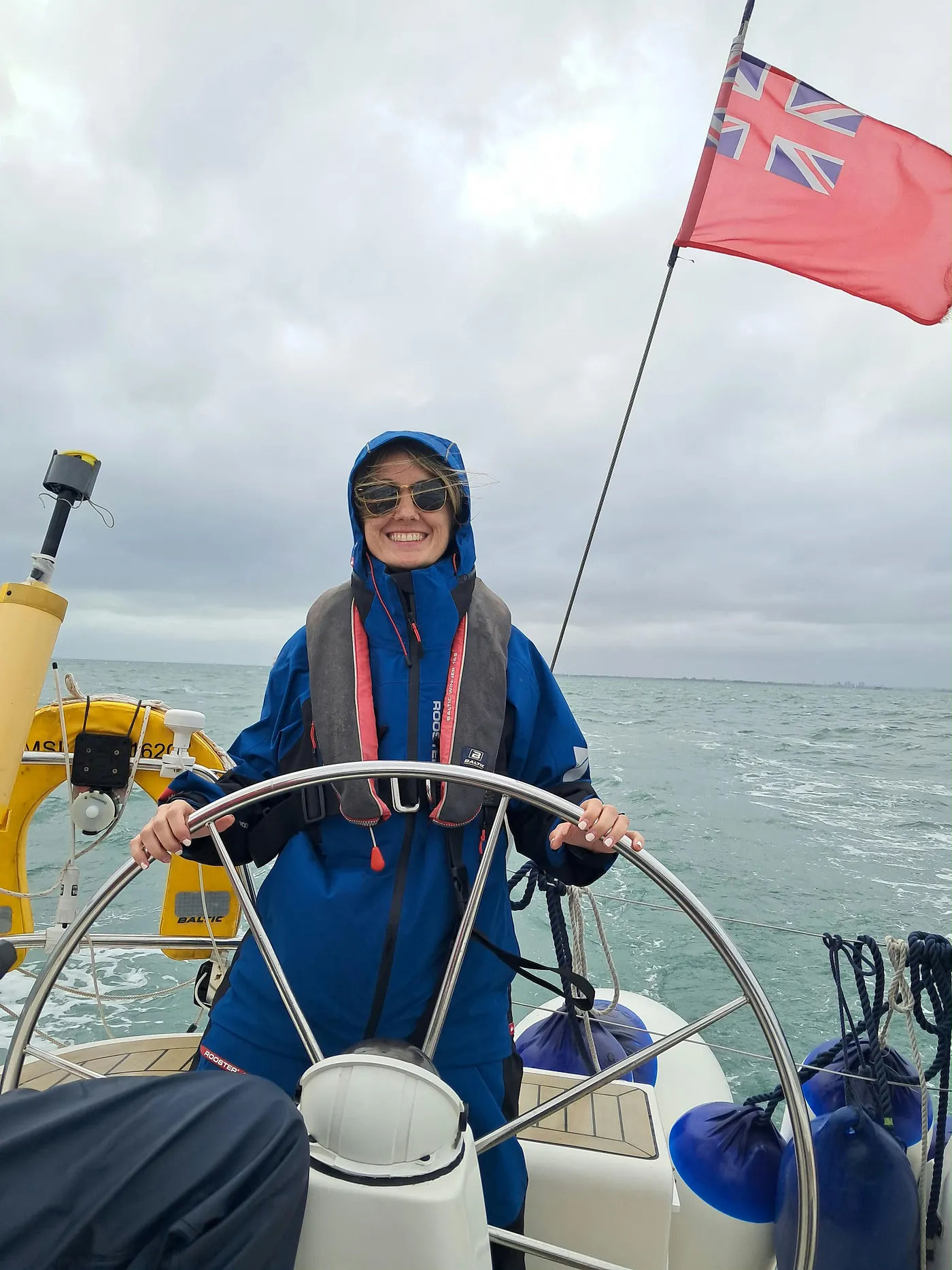
Ginny Follen is Global Head of Partner Marketing at a financial crime technology company and a GAABS-accredited behavioural scientist with an Executive Masters in Behavioural Science from the London School of Economics. Drawing on close to two decades of senior B2B marketing experience across martech, cybertech and fincrime tech, she writes and speaks on the intersection of behavioural science and B2B marketing, with a particular focus on how AI is changing buyer psychology (and how it isn’t). She is behavioural science lead at Challenge Marketing.
Thank you so much for joining us in this interview series! Can you share your personal backstory with us?
I landed in marketing almost by accident. The plan had been a law conversion course to become a barrister and marketing was meant to be a stopgap, except it turned out to suit me and I never made the switch back. What I did do deliberately, from fairly early on, was keep the career varied rather than settling into one company or one type of company, moving between US and non-US employers and across martech, cybertech and fincrime tech, because you learn more and pick up different perspectives that way than you do climbing a single ladder.
The behavioural science turn came a bit later. I’ve always found neuroscience genuinely fascinating, and I got curious enough about the “why” behind buyer behaviour that a normal course wasn’t going to satisfy it. Marketing over the last decade or so has been pushed hard toward becoming a mathematical science, with CFOs and investors wanting models that assume buyers behave rationally, and I found myself increasingly unconvinced, because we clearly don’t behave rationally. So, in fairly go-big-or-go-home fashion, I applied to LSE for the Executive Masters in Behavioural Science, got in, and that’s the lens I’ve been building my career and my thinking through ever since.
None of us are able to achieve success without some help along the way. Is there a particular person who you are grateful for who helped get you to where you are? Can you share a story about that?
A woman at the marketing agency I still work with has been the biggest support of my career by some distance. She’s championed me consistently, and when I applied for the LSE Executive Masters she gave me a reference without hesitation, which mattered more than she probably realised, because taking on a Masters alongside a full-time senior role is the kind of decision that’s much easier to make when someone whose judgement you trust is telling you it’s a good one. It’s a smaller story than a single dramatic turning point, but that’s rather the point: the help that actually gets you somewhere is usually consistent encouragement over years, not one grand gesture.
Favourite “Life Lesson Quote” — and how it’s been relevant to your life
I don’t have a single quote I go back to, but I do have a life lesson I lean on constantly: everyone is insecure. Everyone. The moment you approach a difficult conversation, a defensive stakeholder or a prickly client from that starting point rather than assuming confidence or malice, the situation gets much easier to read and to handle.
The other one, which sits closer to the behavioral science, is that life really is all the small things, both in behaviour change, the whole premise of books like Tiny Habits and Atomic Habits, and in happiness generally. It’s tempting to look for the one big lever, the one big decision, that changes everything, and mostly it isn’t there. Paying attention to the small things, consistently, is what actually moves the needle, in a career and in a life.
Three strengths, skills, or characteristics that helped you reach this place in your career. How can others build these?
Translating complexity into something a room full of stakeholders can act on is the first one. Behavioural science is an academic discipline before it’s a marketing tool, and most of my value has come from stripping the jargon out and naming the science behind what good marketers already do instinctively, not lecturing them on bias taxonomies. Anyone can build this by practising the “explain it to a smart twelve-year-old” test on their own expertise before they explain it to a client or a boardroom.
The second is a comfort with being the only person in the room who thinks about a problem from a particular angle. Partner marketing and behavioural science are both slightly niche inside B2B marketing, I am the person bringing up biases and EAST frameworks when pipelines and forecasts are more important from a KPI perspective.
The third is treating a career as a portfolio of evidence rather than a single ladder. My CV has a through-line of B2B trust and risk, which is exactly what the behavioural science angle now sits on top of. Others can build this by asking, “what’s the connective tissue in what I’ve done so far” rather than assuming each move needs to look linear to make sense.
Which skills are you still trying to grow now?
Storytelling. You can say something with identical sentiment but frame it in a completely different way and get a completely different response, and that’s a muscle I’m still building rather than one I’ve mastered. It takes real mental effort to exercise properly, and when I’m busy it’s the first thing to slip, because it hasn’t been honed into instinct the way some of my other skills have. AI helps enormously here, giving me a fast way to test a few different framings before I commit to one, but the judgement about which framing actually lands still has to be mine.
How do you perceive the current landscape of B2B marketing?
B2B marketing is going through a genuine change in what buyers do before they ever speak to a salesperson, but the framing most people reach for, that AI has rewired buyer behaviour, overstates it. AI has compressed and accelerated the research phase. Buyers still ‘satisfice’, a concept Herbert Simon named, meaning they stop searching once an option is “good enough” rather than optimal. AI just makes that happen faster, with more sources synthesised in less time. The landscape hasn’t changed in itself but it has changed in degree, and most B2B marketers are still building their strategies as though the change were more fundamental than it is.
How have recent market trends influenced your approach to outperforming competitors?
The trend I’ve built my current thinking around is the so-called confidence gap. AI has solved the information problem for B2B buyers, they can now assemble a shortlist and a rough business case largely on their own, but it hasn’t solved the confidence problem. Buyers still need to walk into a boardroom and defend a six or seven figure decision, and that requires someone willing to share the reputational risk with them, which a chatbot summary can’t do (nor can the buyer be sure the AI has shared correct information). My approach has shifted toward making sure the humans in our go-to-market motion, sales reps especially, are positioned as risk-sharers and confidence-builders rather than information-deliverers, because the information battle is one AI-native competitors will win by default.
How do you maintain engagement and nurture leads throughout a long, complex B2B buying cycle?
I think about it a bit like a confidence ladder. Loss aversion means buyers weigh the risk of a bad decision more heavily than the upside of a good one, so at each stage the job isn’t just to add information, it’s to reduce the perceived risk of moving forward. Social proof matters more the closer someone gets to a decision, not less, because that’s when the reputational stakes feel highest. Practically, this means sequencing content so that the messenger changes as the buyer moves through the funnel: analysts and content early, peers and case studies mid-cycle, and a named human who can absorb some of the risk right before the decision point.
What are some ways marketers can effectively leverage data to deliver personalised experiences?
The honest answer is that most B2B personalisation is still cosmetic, swapping a logo or a first name into a template, when the behavioural opportunity is in personalising the risk argument, not the aesthetics. If your data tells you a buyer is evaluating you against an incumbent, the right personalisation is a switching-cost reassurance, not an A/B test subject line. If your data shows a buyer is early in the cycle, the right personalisation is credibility and category education, not a demo request. Data should tell you which psychological lever to pull, uncertainty reduction, social proof, loss aversion, and also personalisation should follow the psychology, not just the demographics.
What advice would you give to fellow B2B marketers looking to adopt ABM?
Don’t mistake account selection for the hard part. Most teams spend their effort identifying the right hundred accounts and then run the same slightly tweaked nurture at them. The actual value of ABM is that it lets you personalise the confidence-building work I described above at an account level, tailoring the specific risk a named buying committee needs reassurance about, rather than personalising surface details. If you’re not changing the substance of the argument account by account, you’re not really doing ABM, you’re probably doing expensive demand gen.
5 Tips for Your B2B Marketing Strategy to Help You Beat Competitors
1. Build for the confidence gap, not the information gap. Your competitors are all racing to make information easier to find, better content, smarter search, AI chatbots on the website. That race is close to a dead heat because AI has commoditised information delivery for everyone. The gap that’s opening up is confidence, not information, so the differentiator is investing in the people and proof points that let a buyer defend the decision internally. Example: on a marketing playbook I built for regional teams, the highest-performing element wasn’t content volume, it was giving field teams a simple way to put a credible third party (a partner, an analyst, a peer) in front of a buyer at exactly the moment they needed to justify the decision upward.
2. Treat satisficing as the default buyer behaviour, and design for it deliberately. Buyers aren’t optimising, they’re looking for “good enough, with acceptable risk.” If your marketing is built around convincing buyers you’re the objectively best option, you’re fighting the wrong battle. Design instead to be the easiest “good enough” choice to defend, which is a different set of assets: risk mitigation content, clear proof points, and a frictionless path to a confident yes.
3. Use the messenger effect deliberately, not accidentally. The same message lands differently depending on who delivers it, and most B2B marketing teams leave this to chance, whichever rep happens to own the account. Map out, stage by stage, which messenger (analyst, peer, partner, internal champion, your own sales rep) has the most credibility to say the thing you need said, and build your content and enablement around getting the right messenger in front of the buyer at the right time.
4. Don’t forget businesses are made of people, and people are still who you’re marketing to. The more AI produces uncertainty and volatility over the next few years, the more people will retreat to the familiar. That means relationships become more valuable: word of mouth, networking, in-person events. Competitors pouring their budget into ever-more-automated demand gen will find themselves competing on a dimension buyers are moving away from.
5. Audit your vendor stats before you build a strategy on them. A meaningful chunk of the “AI has changed everything” narrative in B2B marketing traces back to survey data that doesn’t hold up under scrutiny once you check sample size, methodology, and who funded it. I’ve had to trace supposedly authoritative stats back to primary sources more than once and found the number quoted everywhere wasn’t what the original research actually said. Competitors building strategy on borrowed, unverified claims are building on sand. Do the source-checking work yourself and you’ll spot the real trend before everyone else is still repeating last year’s misquoted statistic.
How do you utilize data or AI to refine your B2B marketing approach, and what tools have been impactful?
I use AI most for accelerating the information-gathering and drafting work, research synthesis, first drafts, source-checking at scale, which frees up time for the part AI genuinely can’t do: judgment calls about which behavioural lever matters for a specific audience and building the trust assets that close the confidence gap. The tools matter less than the discipline of not outsourcing the judgment layer. AI is exceptional at giving you options and summaries; it’s not the thing that decides which risk a named buying committee actually needs reassurance about, that still takes a human who understands the account.
Which digital channels have you found most effective, and how do you optimize your presence to outshine competitors?
LinkedIn, used as a place for a real point of view rather than a distribution channel for gated content, has been the most effective for me personally and for the brands I’ve worked on. Most competitors treat it as a billboard; the ones who win treat it as a place to think in public, consistently, in a voice a senior peer would actually want to read. Optimising it isn’t a channel tactic, it’s a writing discipline: fewer generic industry takes, more specific, slightly opinionated ones that a practitioner could only have written after actually doing the work.
Are there any underrated skills or qualities you encourage others not to overlook?
Curiosity, specifically the kind that questions things rather than accepting them because they’re visible or because they’d look good on a slide. It’s easy to reach for the thing that’s already been done, or the metric that’s easiest to report, without asking whether it’s actually the right thing. If something is working, or isn’t, the useful question is why, not just that it is. That means interrogating your own sources as much as anyone else’s: is the data you’ve been handed, internally or externally, actually sound, who made the call behind it, and what mindset were they in when they made it. Good and done beats perfect plenty of the time, but only once you’ve checked that the “good” you’ve settled for is actually the right activity.
If you could inspire a movement that would bring the most good for the greatest number of people, what would it be?
A move away from digital connection and back toward the real world. So much of what we call connection now is mediated through a screen, and it’s a poor substitute for being physically present with people, having an unrecorded conversation, noticing someone’s actual face rather than their filtered one. If I could shift anything at scale, it would be getting people to spend meaningfully more of their time and attention in the room with each other rather than the room with their phone.
We are very blessed that some very prominent names in Business, VC funding, Sports, and Entertainment read this column. Is there a person in the world or in the US with whom you would love to have a private breakfast or lunch, and why? He or she might just see this if we tag them.
Adam Grant. He’s an organisational psychologist at Wharton rather than a traditional business or VC name, but he’s built a genuinely huge platform arguing for different ways of working and leading, questioning the assumptions companies make about productivity, motivation and who gets heard in a room, all grounded in real research rather than opinion. I’d want to talk to him specifically about where he thinks the behavioural science of work is heading next and the importance of it in the AI era.
Thank you so much for the time you spent with us today!
About The Interviewer: Tavares Beverly ( www.tavaresbeverly.com ) is the Founder and CEO of Beverly Boy Productions, a national video production company that has helped organizations tell their stories through video for more than two decades. Over the course of his career, he has worked with everyone from Fortune 500 executives and healthcare professionals to politicians, nonprofit leaders, educators, and artists, gaining a unique perspective on the role communication plays in leadership, business, and human connection. A frequent contributor on topics including communication, entrepreneurship, leadership, and personal development, Tavares believes that the ability to communicate effectively is one of the most valuable skills a person can develop. His work is driven by a passion for helping organizations connect with their audiences and helping individuals unlock their potential through mentorship, perseverance, and meaningful relationships. To learn more, connect with Tavares on LinkedIn or visit www.BeverlyBoy.com . If you’re interested in using the power of storytelling and communication to grow your organization, strengthen your brand, or inspire your audience, he welcomes the opportunity to connect.
TB
Written by
Tavares Beverly
Executive Contributor · Authority MagazineTavares Beverly is an executive interviewer and contributor covering leadership, culture, and business for Authority Magazine.

Published inAuthority MagazineTop Lessons, Top Authorities · 42K Followers
Exclusive, curated interviews with the leaders and changemakers shaping tomorrow. Leadership lessons, industry deep dives, and executive profiles.
More from Authority Magazine
See all stories →
T
Tavares BeverlyOliver Silverstein of SoaR: How Shifting From Exclusive Rosters to Talent-Agnostic Creative Strategy Scaled Our Media Business
Business8 min read

T
Tavares BeverlyKevin Gaspar of Yirl: The Principle of Manual Iteration That Drives Authentic Human Connection
Business16 min read

T
Tavares BeverlySkylar Caldwell: Why Making Mistakes Can Actually Be Your Greatest Viral Asset
Business8 min read
T
Tavares BeverlyJustin Escajeda of Escajeda Holdings: Reputation and Human Capital Are the Only Assets Worth Acquiring
Business28 min read