My job as an executive coach is to help my clients understand they do not exist to match the energy of a room but to shift the atmosphere wherever they go and to not only be in the game but to be a game changer.
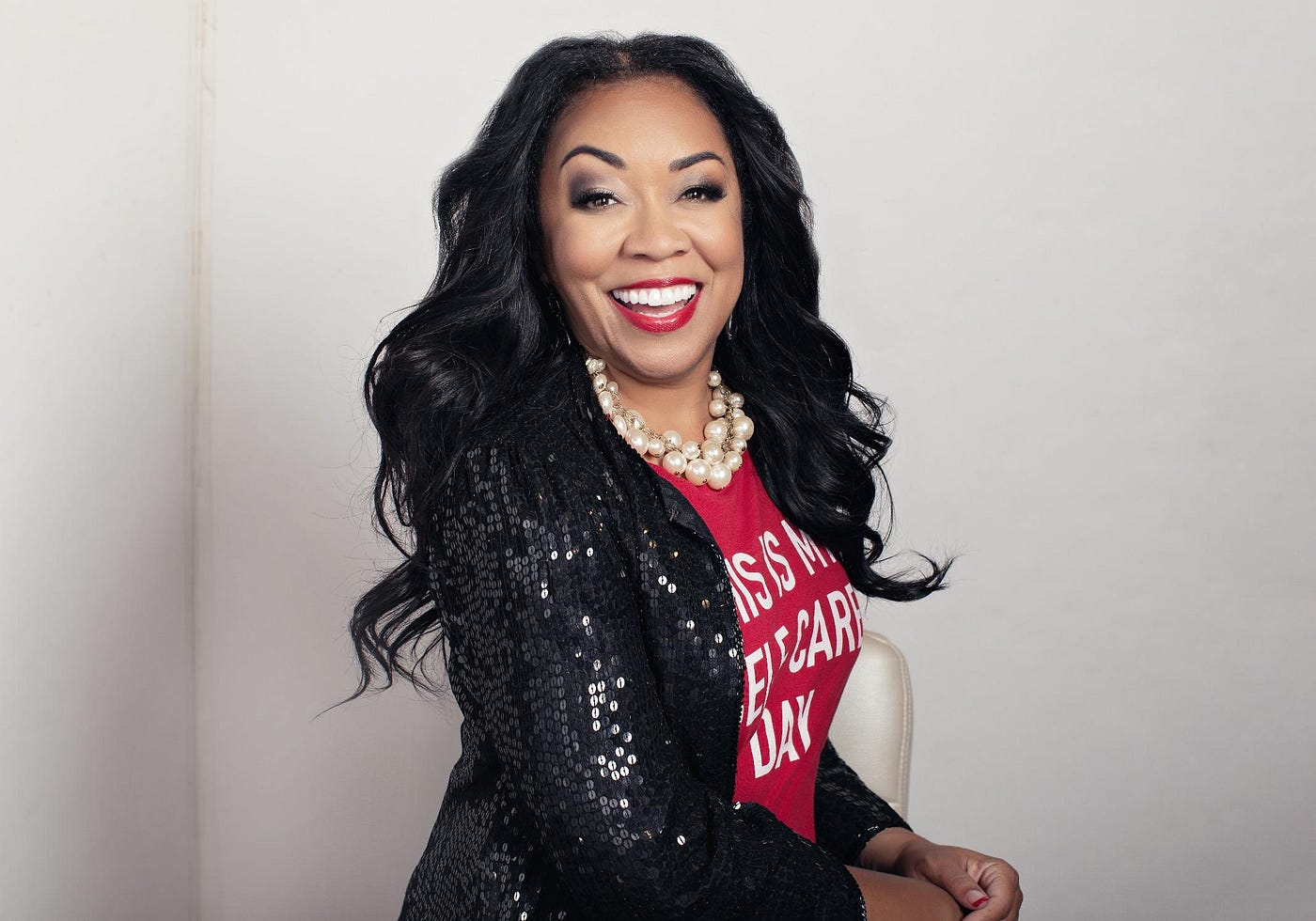
As a part of our series about women who are shaking things up in their industry, we had the pleasure of interviewing Genena Woodson Armstrong, Certified Professional and Personal Development Coach, DE&I Inclusion Consultant and Best-Selling Author.
Genena Woodson Armstrong, founder and CEO of Metamorphosis Coaching LLC, is an energetic and engaging executive, career and personal development coach. With over 25 years of executive leadership experience in human resources and talent management, Genena has dedicated her career to creating safe spaces for her clients to grow personally and professionally. With a special focus on women in leadership, Genena coaches executives, emerging leaders and small business owners from diverse industries, as well as develops and implements diversity programs designed to increase representation and retention of women and minorities.
Thank you so much for doing this with us! Before we dig in, our readers would like to get to know you a bit more. Can you tell us a bit about your “backstory”? What led you to this particular career path?
Hi! Yes, of course. I am originally from the south side of Chicago and was born into a family of 10 children—no twins! I am child number eight, so you can imagine I had to learn very quickly how to speak up for myself if something went wrong or if I needed help; however, I also like to consider myself the oldest of the youngest three kids—so I have, what I like to call, a mixture of “oldest of the youngest.” At the base of it, I’m a nurturer, but I also want what I want!
I am the first of my siblings to attend and graduate college, so self-sufficiency and breaking barriers began for me at an early age. Today, I am proud to look back and see that I chose my initial career in Human Resources because I love helping people solve problems—especially individuals who are marginalized and forgotten. My current position as an executive coach places me in a space where I am on the sidelines cheering for my clients who are in the “game” and kicking butt or need to kick butt a little bit more!
Can you tell our readers what it is about the work you’re doing that’s disruptive?
My job as an executive coach is to help my clients understand they do not exist to match the energy of a room but to shift the atmosphere wherever they go and to not only be in the game but to be a game changer. I meet my clients where they are. I help them identify their goals, and then help them to not just meet but exceed what they initially thought they could achieve. I instill courage and strength and help leaders find their power. Just this alone is a disruption to any environment as most people don’t understand their power and strength; however, once they see what is possible, the possibilities are endless. They are leaving unfulfilling jobs, starting businesses, speaking up for themselves and others, walking in and owning a room, getting that promotion, getting married or deciding to divorce from people and problems that have caused mental, spiritual and physical harm and the list goes on and on and on.
Can you share a story about the funniest mistake you made when you were first starting? Can you tell us what lesson you learned from that?
The story that comes to mind is when I was an intern at a large consumer foods products company back in the early 90s. At the time, I was very unsure of myself and didn’t have much in terms of business clothes or knowledge of professional presence. This led me to schedule a hair appointment the day before I started my internship, but I never gave my stylist instructions on how to style my hair. Instead, she did what she wanted. Usually, I was satisfied, but in this particular appointment, she decided to use clippers to draw five horizontal lines on the side of my head. Before I could stop her, the damage was done.
The next day, I went in and met the Vice President of Marketing. The only thing I could think to do was sit sideways, opposite of the lines on my head. I would turn my body every time she got up to walk so she wouldn’t see the side of my hair. As you could imagine, I couldn’t do that all day for a week straight, and I certainly couldn’t do it long enough for my hair to grow back. Eventually, she saw my hair and do you know what she said? She said, “Oh, I like your hair! What a unique style!” Since then, I vowed to always show up as my true, authentic self.
Remember, as long as you are dressed cleanly and decently, show up as yourself. Nearly thirty years later, this still holds true for me. Whether I have braids in my hair or am wearing ethnic attire, I am now known for my unique style.
We all need a little help along the journey. Who have been some of your mentors? Can you share a story about how they made an impact?
I never would have said this 10 years ago, but one of my mentors has been my husband. He has taught me, by example, the principles and values of life and how I need and want to show up everyday. He was my very first coaching client and helped me to see the potential within myself and to be confident in who God made me to be. Of course, we bump heads often and I don’t go down without a fight, but he continues to teach me how to be the best version of myself.
Another mentor that I keep close is a very dear “sister friend” who is local here in Dallas, but I only have the opportunity to speak with her about four or five times a year. She and I met while working together at a healthcare company. Today, she is a mentor to me in many aspects of my life, including business. Not only has she risen up the ranks in her corporate job, but has also been a business owner for many years. Though we are the same age, she is much wiser than her age and always has been. Whenever I need to make life altering decisions, I reach out to her. We “chop it up” and “spit it out,” and I am encouraged to keep the good fight. The impact that she has had on my life has been far reaching beyond a simple story. She is in fact the reason I even gave my husband a chance, because of her wise words: “I know a good man when I see one.”
In today's parlance, being disruptive is usually a positive adjective. But is disrupting always good? When do we say the converse, that a system or structure has ‘withstood the test of time’? Can you articulate to our readers when disrupting an industry is positive, and when disrupting an industry is ‘not so positive’?
Can you share some examples of what you mean?
The short answer is no, disrupting is NOT always good, regardless of disruption being inside or outside of any industry, company, department or just in overall society as a whole. Anytime disruption causes harm to others or is evil in nature it is not good. If disruption to a process, structure or system is for the betterment of good, like a growth mindset or systemic change for the better, then it is GOOD.
Now, some may question who gets to decide what is “good” for a system or process. Great question. I’d say the leader of that system or process is the one who defines that “goodness,” with the leader being the individual appointed or chosen by the majority within a just system.
For example, today as I am writing, Israel is at war after being attacked by enemies across the border. Rockets were launched in the midst of a holiday celebration. While their military is always prepared for this type of scenario, this came as a shock and a disruption to the people of Israel. This would be considered a disruption that is NOT good because many have been killed, and most people around the world would consider this a negative disruption, not a positive one.
Another example of negative societal disruption is the COVID-19 pandemic. In addition to the grieving of the lives lost globally to this disease, COVID-19 completely dismantled the workforce. Corporations had to suddenly figure out how to keep businesses open while workers were not able to come into the office. From my personal experience, my coaching practice was disrupted. At the time, 80 percent of my clients and I met in person for our bi-weekly sessions. When the pandemic hit, I suddenly had to coach my clients virtually. Thankfully, I had experience doing so with the other 20 percent of my clients. I was able to pivot, but from a more global standpoint, this disruption altered my coaching process and forced me to strengthen certain competencies to serve the needs of my clients—not to mention that my clients had to learn how to be vulnerable and comfortable with technology before bringing their scenarios into our time together. However, there is a light side of this: increased flexibility and work-life balance for many employees, as well as an increased focus on diversity, equity and inclusion (DEIB) initiatives. Today, companies are actively working to create more inclusive workplaces, which not only benefit employees by promoting fairness and equal opportunities, but also leads to better decision making, innovation and overall business success.
Can you share 3 of the best words of advice you’ve gotten along your journey? Please give a story or example for each.
The three best words of advice I have ever received are the following:
1. Learn how to say “no.” Every time you say yes, what are you going to say “no” to? Y
ou can’t say “yes” to everything because you won’t be able to do it all. You have to prioritize what’s important.
2. Take a nap. Take a break. Every two hours of work deserves for you to stand up and walk away from your desk. It will help reset your brain.
3. You can’t pour out and give to others what you don’t have. It’s a simple concept: How do you pour from an empty cup? How do you help others when you yourself need help? How do you serve others when you need to be served? How do you encourage others when you need encouragement? It’s almost like saying “don’t be a hypocrite.”
We are sure you aren’t done. How are you going to shake things up next?
By definition, disruption is the radical change of an existing medium. I plan to continue disrupting the way women are treated until we are all on an equal playing field with our male peers.
Currently, one of the ways I am disrupting the narrative around women in leadership is by going back to graduate school to obtain a PhD in just that, Women in Leadership! My current class is titled “Hip Hop and Gender.” My class, taught by the incredible Dr. Shahara’Tova V Dente at the Mississippi University for Women in Columbus, has expanded my thinking as it relates to respectability politics and how gendered discussions are impacted by patriarchal and societal “standards.”
I am also authoring a book! To know me is to know that I am a pastor’s wife. My husband and I are both in our second (and last!) marriage. We have a beautiful blended family, but we are unconventional in the church world because we think very differently—not to mention that my husband is married to me, this woman who doesn’t sing, doesn’t play the piano and speaks her unfiltered mind! I have a strong spiritual side, but I am a realist. I love people and am accepting of all. My upcoming book is about the theory of knowledge and the biblical story about the “Samaritan Woman.” I am so excited for this book because it is a book for women of ALL walks of life—not just the faith community. That’s why I’m writing it, to shake things up.
In your opinion, what are the biggest challenges faced by ‘women disruptors’ that aren’t typically faced by their male counterparts?
Ha! Where do I start?
How about not being considered “emotional” because of the way we show up in a room dominated by men and say the same exact things they say but because it comes from our mouths.
Let’s start there! Let’s talk about executive presence and how women feel imposter syndrome more than men because we feel we have to have ALL the credentials and experience for a job before we apply for a job—unlike men, who apply for jobs even when they only have 50 percent of the qualifications required. Now, let’s add being female AND Black to the same scenario and you are REALLY in trouble because now, I am an “angry Black woman,” not just an emotional employee. When women stick up for themselves in spaces, we are disrupting that space. Whether we are right or wrong, we end up being “emotional” and not taken as seriously as if it were a man.
Do you have a book/podcast/talk that’s had a deep impact on your thinking? Can you share a story with us?
Arianna Huffington, CEO of Thrive Global, is a Greek American author, syndicated columnist and businesswoman. She is cofounder of the Huffington Post and is the creator and author of The Sleep Revolution. Her story changed my life and made me fall in love with sleep all over again. The subtitle of her book, “Transforming Your Life, One Night at a Time,” caught my attention because when the book came out in 2016, I was doing “the most.” I was a wife, mom of teeneagers, had just started my business but still working a full time job and a leader in my community and church, all while trying to maintain a social life with my friends. Yes, I had and still have a full life, but the difference between then and now (thanks to Arianna) is that I take my sleep far more seriously than I did back then. I highly recommend reading this book and learning about her story of being in the midst of a sleep deprivation crisis and how it affected her relationships, her health, her job performance and her overall happiness. I began following her on social media and had an opportunity to hear her speak as she shared the details of what was needed in order to change her life. She took some very disruptive steps to find peace and joy in her life. This changed my thinking about how I viewed rest and has impacted every area of my life.
You are a person of great influence. If you could inspire a movement that would bring the most amount of good to the most amount of people, what would that be
? You never know what your idea can trigger. :-)
My answer to this question is equal pay for women—especially women of color. According to a report from the National Women’s Law Center this past July, Black women typically make only 67 cents for every dollar paid to white, non-hispanic men. White women earn 80 cents to every dollar. This wage gap will typically cost Black women $1,891 per month, $22,692 per year and $907,680 over a 40-year career—and the last thing you want to do is play with a Black woman’s money! We have typically been the backbone of our families and are most often single moms raising children on our own. To know this is to know that she is carrying a burden that wears on her mentally, physically, emotionally and of course, financially. Sure, there are plenty of Black women who are breaking barriers and breaking records, but the fact still remains: most women of color have this same struggle. People fail to remember that not only were women not allowed to vote until 1920, but Black women were not allowed to vote until 1965. It wasn’t until 1974 that a woman was allowed to have a credit card without her husband’s consent. I mean, really? That is only four years after I was born! I can’t imagine having to get permission from my husband to do ANYTHING, but, I digress.
My idea would be to continue the fight. Even though we have the Equal Pay Act of 1963 aimed at abolishing wage disparity based on sex, it is still happening 60 years later. One way we can continue to fight is to question hiring decisions and post salary ranges for each position posted. Transparency in wages will help, but we also need to continue to speak up. I believe in peaceful marches and protests as a disruptive way for our voices to be heard.
Can you please give us your favorite "Life Lesson Quote"? Can you share how that was relevant to you in your life
?
My favorite life lesson quote is “Always Be Yourself.” Not even kidding you. My mother, the late Vera Jones, would tell me these words every time I left the house. Whenever I left for school or whenever I had something really big I was about to do, I heard these words come out of her mouth. She could always tell if I was nervous or worried, and when she would say those simple words to me, it made me feel so much more confident. Even before the quotes like “you’re enough” or “everyone is else taken,” I knew at a young age in the 70s that there was no other option than to be me, not someone else. There was no other option than to move forward and that I was called for such a time as this.
My mother was a woman of few words. She had an eighth grade education but managed to give birth to 10 children (and again, no twins!) and raised half of us as a single parent. She wasn’t called to speak on stage, but she was often called for advice and counsel by her family and friends. I say these words sometimes to my clients—these C-suite women of power—and you would not believe how their whole countenance changes. Their shoulders instantly stand tall.
How can our readers follow you online?
The best ways to reach me are through my website, www.morph-coach.com, and LinkedIn https://www.linkedin.com/in/genenawoodsonarmstrong. You can also find me on the gram @justgenena and on Facebook at Genena Woodson Armstrong. I also love to receive personalized notes, so please reach out to me at genena@morph-coach.com.
This was very inspiring. Thank you so much for joining us!