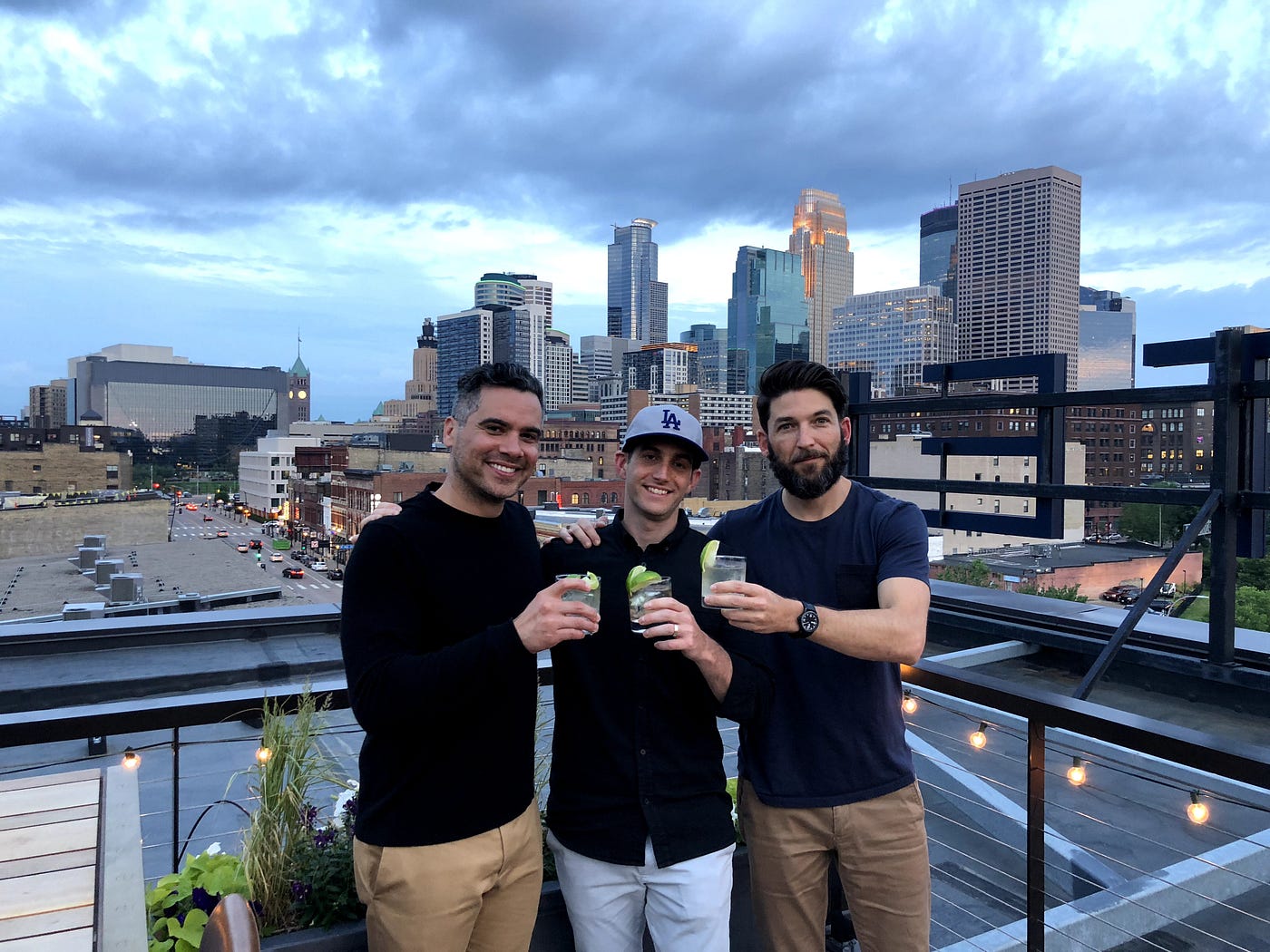
Our founding team, including me, was based in Shanghai for two-to-three months when our company was in a nascent, early phase of development in July 2017, and ending that September.
Business
Yi He of Binance on Overcoming Economic Barriers, Global Expansion, and Putting Users First
The co-founder of Binance discusses her journey from humble beginnings in China to leading the world's largest crypto exchange, navigating sudden regulatory bans, and championing user-focused innovation.
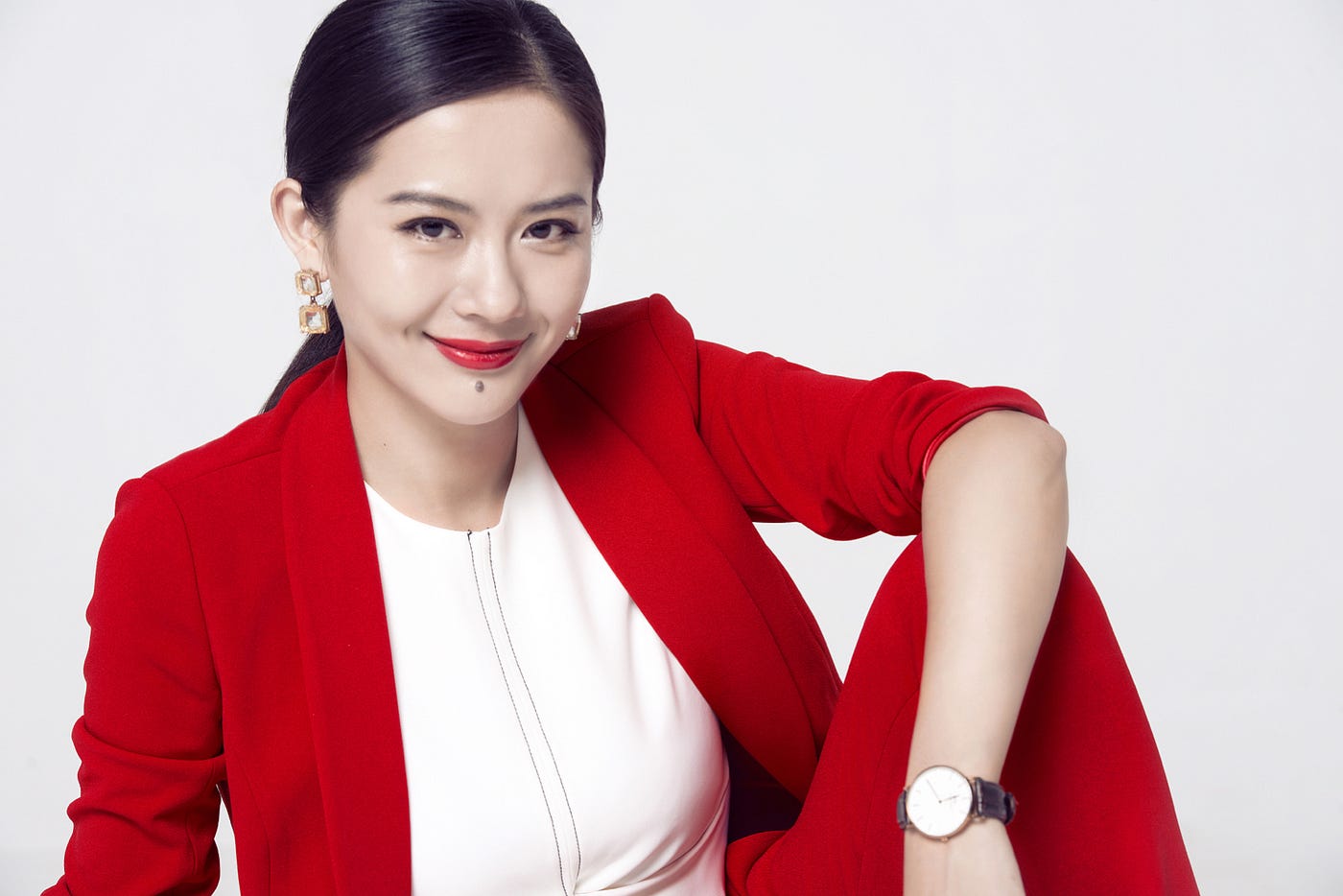
As a part of our series about Women Founders, we had the pleasure of interviewing Yi He.
Yi He is the Co-Founder of Binance, a global blockchain ecosystem behind the world’s largest crypto exchange by trading volume and users.
Thank you so much for doing this with us! Before we dig in, our readers would like to get to know you a bit more. Can you tell us a bit about your “backstory”? What led you to this particular career path?
I co-founded Binance in 2017 as someone who overcame economic barriers and saw an opportunity to help provide more financial access and freedom for others with crypto and the power of blockchain technology. Currently, I lead the business, investment, marketing and branding strategy as co-founder and the Head of Binance Labs, our incubation and VC arm. Over the last six years, I worked across many different areas and wearing multiple hats. Business units I’ve led range from marketing to customer service to M&A and investments, and now I am able to bring all of that experience and expertise to a more ‘coaching’ role as the company continues to mature. Throughout it all, the end goal has remained the same: to ensure and maintain the long-term success of the company where users benefit. We would not exist without our users and they are at the core of everything we do.
Before co-founding Binance, I served as Vice President at Yixia Technology, the leading mobile video tech company behind popular mobile apps like Miaopai, Xiaokaxiu and Yizhibo, where I led branding strategy and marketing operations and was a fundamental part of the fundraising strategy that drove the firm’s valuation to more than $3 billion. I was also a co-founder of another digital asset exchange between 2014 and 2015. Before joining the blockchain space, I was an anchor for a TV station, and earlier in my career, I was a teacher and assistant psychotherapist.
I come from very humble beginnings and was raised in a small province in China where economic access and opportunities were scarce and higher education was an exception. Most people in my hometown dropped out of school before 16 years old to work in factories. I questioned the essence of money and read a lot of books but didn’t get the answers. Not until 2013, when I was first introduced to bitcoin and saw a real path that could tangibly solve global economic barriers. This ultimately led me to decide to be a co-founder at Binance in 2017 where I’ve set my sights on changing the future of finance. As co-founder, I led the business strategy that helped Binance become the world’s largest crypto exchange within its first six months of launch. I also pivoted the company to a global blockchain ecosystem from just a crypto-to-crypto trading platform in its early years and led it to be uniquely user-focused.
Throughout my career in the industry, I’ve been passionate about increasing transparency and responsibility, and working to increase economic freedom through all of my efforts as a leader in this space. With my upbringing, I developed a passionate philosophy around creating better wealth distribution and increasing the freedom of money with crypto/blockchain as the fundamental means. The belief that I have always adhered to is to do things that provide value.
Can you share the most interesting story that happened to you since you began leading your company?
During my first month at Binance, China went through a policy change and set a ban on crypto exchanges in September 2017. Our founding team, including me, was based in Shanghai for two-to-three months when our company was in a nascent, early phase of development in July 2017, and ending that September. This led us to exit the market and turn to the global market. This also led me to leave my comfort zone of culture and language, which required me to learn English as well as different cultures and business cultures around the world.
Despite setbacks in the industry, we made a decision to continue persisting and I chose to fully commit to crypto. My belief in the potential of crypto was [and is still] unwavering, even when facing great challenges.
Can you share a story about the funniest mistake you made when you were first starting? Can you tell us what lesson you learned from that?
This is not a mistake, but rather a practice that sometimes comes with controversy. We were one of the first in the industry to help users recover lost or mistakenly sent crypto funds to the wrong address or blockchain network, going the extra mile for users and further than other players at the time. However, some people in the industry felt that we were being too involved.
As most crypto traders and people in the industry know, it can be difficult to retrieve funds that are sent to the wrong address as well as recover funds from an exit scam/rug pull project. Many rug pulls are associated with decentralized finance (DeFi) projects and listed on decentralized exchanges where governance decisions are coordinated by the community and need to be approved by its network validators. Binance is a centralized exchange and does not have control over funds in decentralized ecosystems, but we will support the community when we can by blacklisting an attacker’s address–which requires approval by network validators–and support law enforcement in investigating and identifying bad actors. We have invested a lot of time and resources in our internal security and investigations team to do this. Users come first and our priority is to protect them and the ecosystem.
Most of the time, we receive gratitude and positive feedback from users. But, in some cases, users expect fast resolutions and may blame us for not being timely or providing enough help. Looking back, these are interesting reflections and learnings on how doing the right thing can sometimes sling back. But, we always move forward from any criticisms and stick to doing the right thing, even if it comes with extra challenges. And, always upholding our core value of being user-focused.
None of us are able to achieve success without some help along the way. Is there a particular person who you are grateful towards who helped get you to where you are? Can you share a story about that?
CZ, the founder and CEO of Binance. Binance is rapidly developing and has become the world’s leading crypto platform in a short period. During this period of fast growth, sometimes I would push forward too ambitiously, and CZ has given me direct and constructive feedback. Keeping me grounded and always ensuring me, and the team, do the right thing. This has helped me grow and reflect quickly, and gradually become more mature.
Ok, thank you for that. Let’s now jump to the primary focus of our interview. According to this EY report, only about 20 percent of funded companies have women founders. This reflects great historical progress, but it also shows that more work still has to be done to empower women to create companies. In your opinion and experience what is currently holding back women from founding companies?
In many industries, you will find that the proportion of women in leadership positions is small. The fundamental reason would be the societal expectations that place limits on women’s personal and career development. People are often influenced by their environment, and shaped by the norms and values of society. Many women do not speak out or pursue leadership positions because they were not encouraged to do so by their families, schools, or friends. I suggest that women should take a more proactive approach and seize opportunities. They will never know what they can do unless they jump into it. In the tech industry or other new industries, women can be bolder and take more risks. Through education and avenues of opportunities, women should keep challenging themselves and know that they can become successful leaders. I encourage women to rise up to the challenge.
It is true that there are barriers that could hold women back, and overcoming these barriers does require immense effort. The good thing is we see more and more female leaders in the crypto industry and ones that are playing important roles.
As for Binance, we have a culture and various efforts to support women leadership and employees, including external women in tech programs (education and scholarships) to encourage more women to embrace and get involved in crypto and innovative industries.
Can you help articulate a few things that can be done as individuals, as a society, or by the government, to help overcome those obstacles?
For individuals:
1) You should cultivate your personal abilities and skills, and keep learning for lifelong growth. That’s how you can compete and make it.
2) Personality: Be assertive, and have a strong mindset. Keep moving and trying even under the pressures of life, work and being a woman in society. Don’t feel bad about your ambition, stay true to yourself, and don’t allow others to undermine your capabilities, especially yourself where your own mind can be a battlefield.
3) Don’t focus too much on your identity as a female. Focus on your output and getting things done.
As a society, we need to encourage more gender diversity in the workplace. By promoting equal access to educational resources, like fostering inclusive learning environments. As well as providing mentorship and networking opportunities for women, and challenging gender stereotypes in our everyday work. New and innovative industries like the crypto industry tend to provide more opportunities for people. I encourage more women to jump in bravely.
At Binance, we recognize the value of bridging the gender gap and have been proactively working to reduce it. More than 35 percent of all senior leaders are women including executives and managers. Our organization provides a very supportive environment for female executives and employees to succeed, including opportunities for promotion after maternity leave, as long as their ability and output are strong and able to successfully lead a team. There are many women at Binance who have experienced this and have been promoted.
This might be intuitive to you as a woman founder but I think it will be helpful to spell this out. Can you share a few reasons why more women should become founders?
True equality will be achieved when there are enough female founders in the world where there are no longer discussions and topics about “why more women should become founders.” Breaking the glass ceiling for women, in terms of ideology, is when there is a real opportunity for equality.
There is no actual difference in skills and abilities between women and men. Regardless of gender, everyone has unique talents. Women should not be constrained by society, their environments and history. Their talents should be encouraged rather than suppressed. More female founders can inspire more women to ambitiously chase their dreams. In the process, we will see a more diverse and rich entrepreneurial environment with more innovative ideas emerging, driving further global development.
Also, women make up half of the world’s population, and having a diverse team and leadership allows us to have a rounded view that is not limited to one demographic. The world is more global than ever, and diverse perspectives are essential to achieving success.
What are the “myths” that you would like to dispel about being a founder? Can you explain what you mean?
Positive myth: seeing a founder’s success and accomplishments. The reality behind the scenes is we are working hard every day, working endless hours a day to continue developing our strengths and having “quick” growth.
A taboo/myth: that successful women or founders use their appearance to gain more opportunities or that it’s a result of their achievements which is a form of discrimination. I personally do not care about people’s critique of me. Whether it’s a myth or misconception, I don’t live for others and have a clear understanding of who I am. Successful founders and leaders continuously break through the myths, misconceptions, and stereotypes they face every day.
Is everyone cut out to be a founder? In your opinion, which specific traits increase the likelihood that a person will be a successful founder and what type of person should perhaps seek a “regular job” as an employee? Can you explain what you mean?
Founder traits: Successful founders are lifelong learners. They have ambition, a bottom line and strong execution skills. They know their background (where they come from) is not as important as their skills and ability to make effective decisions, especially in the face of uncertainty. When they face the unknown, they know it’s important to persevere rather than give up. Entrepreneurship involves a lot of uncertainty, and making the right decisions in challenging situations with limited information. They know the importance of the bottom line as well as rapid iteration and execution.
Job types: Most young professionals start off their careers as “regular job” types. They should start their career by working to gain a rounded understanding of the world. This will allow them to gain experience in different avenues and understand themselves and the nature of work better. Through that, they will learn how to withstand pressure, and have foresight and strong execution skills among other qualities.
Binance has an entrepreneurial culture that encourages internal entrepreneurship and allows people to challenge themselves to start their own projects within a relatively low-pressure environment. We are willing to recruit employees with entrepreneurial experience because they are more likely to know themselves and their abilities better.
Ok super. Here is the main question of our interview. What are your “5 Things I Wish Someone Told Me Before I Started” and why? (Please share a story or example for each.)
There is just one. Not dwelling on regrets and graciously accepting negative or positive outcomes which is a part of life and provides valuable experiences either way.
I prefer to align with relevant stakeholders, maintain transparency, and accept all potential outcomes after making a decision. While some may seek more knowledge or advice before starting a project, I believe failures and difficulties are essential for personal growth, and we won’t fully understand them unless we experience them firsthand.
How have you used your success to make the world a better place?
When I co-founded Binance, we helped reshape the crypto industry to be more user-focused. For instance, we significantly lowered transaction fees which benefited more users. We were also pioneers in building a leading customer service system when the industry was still young and developing, helping users solve their problems promptly. Essentially, the crypto industry is focused on improving financial efficiency, which aligns with our mission of promoting freedom of money and our unique culture of being user-focused.
Also, I helped create Binance Labs, our VC and incubation arm, to re-invest back into the industry by supporting and investing in strong projects and startups that are building long-term growth for the larger crypto and Web3 ecosystem and widening adoption. We have invested in crypto and Web3 projects, managing over $9 billion in total assets covering over 250 portfolios from over 25 countries across six continents and incubating 50 projects. We helped many young entrepreneurs and startups build and develop their businesses, which is the motivation behind Binance Labs and Binance as a company.
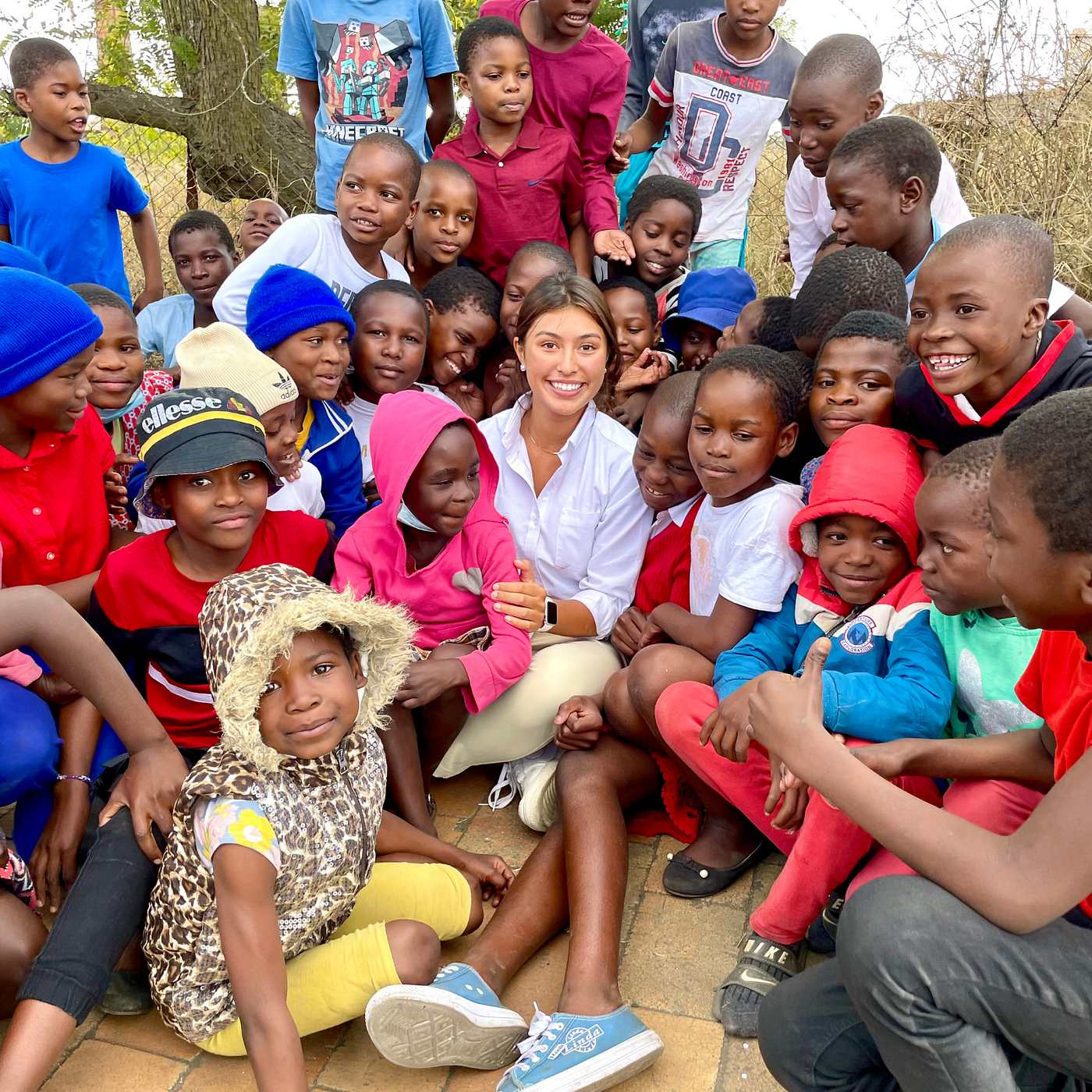
In my leadership role at Binance, I also made a commitment and effort to give back to the community, including spearheading the creation of our charity arm, Binance Charity. Binance Charity is the first blockchain-powered non-profit organization dedicated to advancing transparent philanthropy. To date, we’ve donated more than $30 million reaching over two million beneficiaries across a number of global sustainability efforts, including philanthropic efforts and donations to fight poverty and financial inequalities and increase education and opportunities for women. We launched multiple charitable campaigns like Lunch for Children, Web3 scholarships, Pink Care Project–a social impact initiative aimed at addressing period poverty–and more.
You are a person of great influence. If you could inspire a movement that would bring the most amount of good for the greatest number of people, what would that be? You never know what your idea can trigger.
Many years ago, someone asked me what kind of person I wanted to become. I said I wanted to become someone who could change the world. So far, I have achieved small efforts aimed at bringing positive change to the world, which is not enough. And I will continue to do more along this journey.
Crypto makes money more efficient, and I want to help more people, including regulators and the critical mass, see the real value behind it and how it can help improve lives across society.
Mainstream adoption of crypto will bring a great amount of good for the greatest number of people. It is an effective way to drive financial inclusion and improve lives for the greater good. I believe that in 10 years, crypto will become a standard part of everyday life, just like mobile phones or electronic payments. It will transmit under the global value chain, like how the Internet transmits information. We are just scratching the surface at Binance and in the industry, and we hope to improve more lives by furthering the freedom of money and equity through crypto.
We are very blessed that some very prominent names in Business, VC funding, Sports, and Entertainment read this column. Is there a person in the world, or in the US with whom you would love to have a private breakfast or lunch with, and why? He or she might just see this if we tag them.
Overall, I would like to have dinner with successful individuals from various fields and learn from them, especially those who are pioneers in their industry. For instance, Elon Musk, who embodies first principles and keeps pushing boundaries. Jeff Bezos, who emphasizes long-term thinking. Sheryl Sandberg, who has empowered many women in the workplace. Also, I admire Lady Gaga and Angelina Jolie, who remain true to themselves and are ambitious and independent, even when facing criticism.
Thank you for these fantastic insights. We greatly appreciate the time you spent on this.

Published inAuthority MagazineTop Lessons, Top Authorities · 42K Followers
Exclusive, curated interviews with the leaders and changemakers shaping tomorrow. Leadership lessons, industry deep dives, and executive profiles.