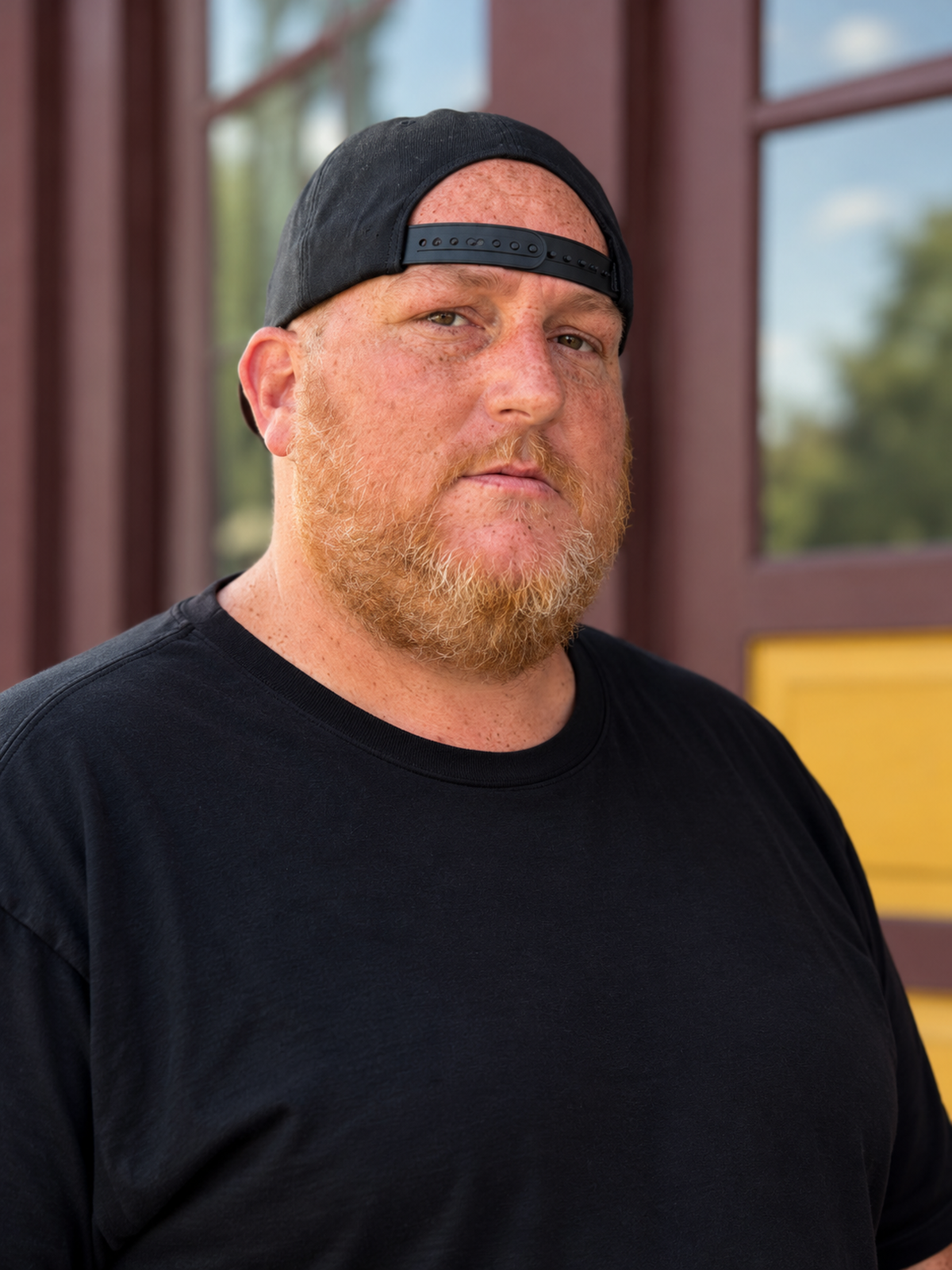
What felt like the end of one life became the beginning of another, and I have now worked professionally in comics for over 16 years.
As a part of our series about “5 Things I Wish Someone Told Me When I First Became An Artist” I had the pleasure of interviewing David VanDyke.
David VanDyke is a North Carolina-based comic artist with more than 16 years of experience in the industry. He has illustrated for major publishers including Marvel, DC Comics and Image Comics, with a portfolio that includes work for Robert Kirkman, creator of The Walking Dead and Invincible. From his home studio outside Charlotte, David also works as an independent artist, co-creating and illustrating Mercer, a creator-owned police-noir and supernatural-suspense series. His career has continued to expand across both independent and major-publisher projects, and he currently works extensively with renowned filmmaker and comic creator Kevin Smith on his Dark Horse comic book properties.
Thank you so much for joining us in this interview series! Can you tell us the story of how you grew up?
I was born and raised in Belmont, North Carolina, which was a suburb of Charlotte and is an old textile town. My father worked in a textile mill for the first part of my life while my mother was a seamstress. My father was a preacher as well, like his father before him, preaching at our family’s church. For the first part of my life I lived in an old mill house that didn’t have a floor in the back room of the home. We didn’t have a lot of money but eventually, we moved to a better mill village and home before my parents finally were given the chance to purchase our mill house.
Growing up, I played sports, rode BMX for a local skate shop, and hung out with my older cousin. He lived next door to my grandma and our family church, which my grandfather built with his own hands. When I wasn’t helping maintain the church, I was in the kitchen reading comic books or listening to music that my cousin would show me. Being 7 years older than me, he knew all the cool stuff.
One day he lays down a Spider-man comic book and tells me about the artist named Todd McFarlane and how I have to check it out. He was right, I absorbed that comic at a cellular level. I began drawing constantly. I talked my dad into buying me the How to Draw Comics the Marvel Way book and drew that book cover to cover many many times. At 12, I took my work to the Heroes Aren’t Hard to Find Convention and showed my stuff off. I got great feedback from pros including Joe Quesada, who eventually became Marvel’s editor-in-chief. What started as a way to occupy my time because notebook paper and pencils were cheap, was now what I wanted to do with my life.
Can you share a story with us about what brought you to this specific career path?
My path into comics was not conventional. In 2005, I was working as a mechanic while pursuing a career as a touring drummer. Then, one day, I saw something move out of the corner of my eye, and I turned and ended up trying to catch a 400-pound transmission in the shop. I caught it at a dead stop and it annihilated the bottom two discs in my back.
I knew immediately that I was in trouble. My left leg was basically useless, and then when I saw the doctor he said “Your life as you know it is over.”
I want to be honest about what that was like, because I think people expect the inspiring part of the story to start right there, and it didn’t. I was almost in denial. Drumming was everything I was supposed to be, so I kept thinking, What do you mean, it’s over?
Then one night, I asked myself a question: Before music, what did you want to be? The answer was a comic book artist.
I remembered how much I had loved comics and drawing as a kid, so I picked up a pencil and decided to see where it took me. That’s all it was for a long time — practicing, badly, while I couldn’t do much else. But within a few years, I had networked with artists in the industry and made enough connections that it turned into real work, first with Image, then Marvel, DC and filmmaker Kevin Smith.
What felt like the end of one life became the beginning of another, and I have now worked professionally in comics for over 16 years.
Can you tell us the most interesting story that happened to you since you began your career?
One of my most memorable experiences was attending a weekend signing event with Kevin Smith at his comic book store in New Jersey. I had created a variant cover for Quick Stops #4, which was the final issue in his Dark Horse Comics miniseries, and during one July 4 weekend, he was going to be hosting a signing event for that series.
I had already planned to see him around that time separately, but when the time came for us to meet up, he invited me to join him at the table and sign with him. The store was packed with fans. We were there all day, from 10 a.m. to 6 p.m.
As a comic artist, I spend much of my time working alone at a drawing table, so seeing readers excited about something I helped create reminded me that the work can grow beyond the page and become part of an experience shared by many people.
The real cherry on top was later that evening, I joined Kevin at his theater because he was putting on a show, and all of the original Clerks cast members showed up unexpectedly. It turned out to be the first time they had all been together since the movie came out a few years prior. That was really amazing.
What are some of the most interesting or exciting projects you are working on now?
I am currently working with writer Jason Seibel on Mercer, our creator-owned crime and supernatural suspense series. The simplest way I can describe it is if the Punisher were a demon hunter.
Earlier this year, we released issue #3 following a successful Kickstarter campaign, and we’re now working on issues #4 and #5. It has been exciting to continue to develop these characters and the world as we continue with the series.
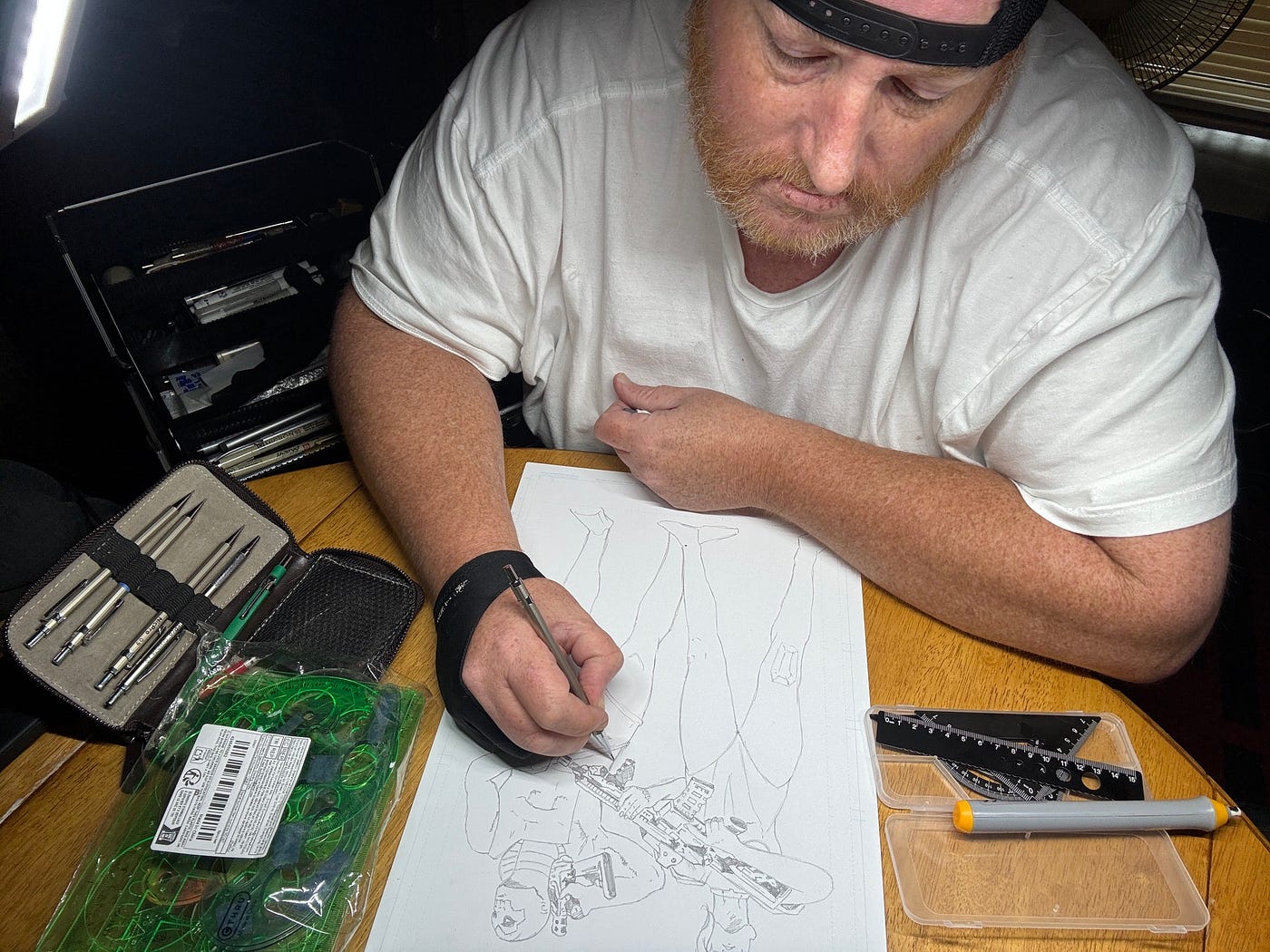
Since we produce the series independently, we have a great deal of creative freedom. That also means we’re responsible for managing the time, materials, and costs that go into making every page. Because of that, I have to be much more resourceful in my creative process. One way I’m able to do that is by buying art supplies on Temu. The affordability of the products I get on the marketplace has made it easier to keep experimenting with different tools, textures, and techniques while working within the realities of an independent production budget. Some of those discoveries have become part of my regular workflow and are helping me refine the visual world of Mercer.
Who are some of the most interesting people you have interacted with? What was that like? Do you have any stories?
I have been fortunate to work with some well-known people, but some of the most interesting people I meet are younger artists who are still finding their voices.
Their willingness to experiment is both inspiring and humbling. They’re often less concerned with how something is traditionally supposed to be done and more interested in finding the technique that produces the result they want. Experience can make you more efficient, but it can also make you too comfortable with your process. Younger artists remind me to stay curious and never assume that I have already found the best way to approach a page.
Where do you draw inspiration from? Can you share a story about that?
I draw inspiration from everywhere. I believe an artist’s job is to observe the world and then reflect it through their own perspective. I tell younger artists to read a book, take a walk, go to a store, or do anything that gets them out of their own head. Inspiration does not have to come from something labeled as art.
Sometimes the tool itself sparks the idea. I found a set of nail-art brushes through Temu because the fine, stiff bristles looked useful for textures and foliage. I also tried acrylic brush markers that would have been much more expensive to get at an art store, and they became useful for posters and sketches. Temu gives me room to try something without making every experiment a major investment. If I am terrible at it, I may be out $10, but that’s a fair exchange for learning what works, what doesn’t, and what I’ll continue to incorporate in my creative process.
How have you used your success to bring goodness to the world?
I try not to think about it in grand terms. I simply remember what it felt like when I was starting out, knowing that I wanted to work in comics but not understanding how the industry operated or what would be expected of me.
When a newer artist reaches out with a question, I try to slow down, think about what I’m going to say and give them an honest answer. That might mean explaining deadlines, professional expectations, or why talent alone is not always enough. You can be an incredible artist, but you also have to learn how to work consistently, communicate, and deliver what you promised.
I remember being dismissed when I was new, so I try not to do that to someone else. Anyone who is genuinely willing to learn and work hard is worth my time. I may not be changing the entire world, but if I can make the path a little less confusing for one person, that is one meaningful way I can use the experience I have gained.
What are your “5 things I wish someone told me when I first started” and why. Please share a story or example for each.
1. Be prepared for how solitary the work can be.
Music was my first career, so I was accustomed to working alongside bandmates, crews, and audiences. Comic art is very different. I can spend days alone at a drawing table without speaking to anyone while remaining focused and meeting the deadline. I wish I had understood earlier that maintaining relationships, routines, and a life outside the studio is not a distraction from the work, but it’s actually part of making a creative career sustainable.
2. Learn the business side of being an artist as seriously as you learn the craft.
When I started, I focused almost entirely on becoming a better artist. What I didn’t understand at that time was being a freelance artist also means running a small business. You’re responsible for your taxes, materials, equipment, schedule, client relationships, and finding the next assignment.
The traditional career route, and what a lot of people dream of, is to work for a company like Marvel or DC. That’s the point where people assume you’ve made it. In some ways it is. But in reality, freelance work is rarely that stable and you can’t assume past work with big names will leave you set for the rest of your career. Of course, talent may help you get noticed at first, but it’s the reliability, financial discipline, and the ability to deliver consistently that will help build a lasting career.
3. Your job is not only to draw the story — use your voice to help tell it.
Early in my career, I assumed my role was simply to draw what appeared in the script. Over time, I learned to speak up when a scene did not make sense or when I saw a stronger way to communicate an idea visually. An artist is not merely executing instructions; the artist is also a storyteller.
4. Create and own something of your own earlier than you think you are ready.
I touched on this a bit before, but assignments from major publishers can build your skills and reputation, but they do not necessarily provide ownership or long-term stability.
Creating Mercer taught me the value of building intellectual property that belongs to the creators. It also comes with more responsibility. We fund the production ourselves, so every page represents an investment of time and money before the book earns anything, but we’re also building a world that we control and can continue developing. I wish I had understood the value of ownership much earlier in my career.
5. Be strategic about your budget so that cost does not limit your creativity.
Professional does not always have to mean choosing the most expensive option. I do not compromise on materials such as archival paper and waterproof ink because they affect how the original art scans, reproduces, and lasts. But items such as pencils, erasers, brush markers, gloves, and storage don’t always need to carry a premium price.
While restocking my studio for the next issue of Mercer, I purchased about $42 worth of drawing tools, accessories, and experimental supplies on Temu. Beyond replacing everyday basics, the order gave me room to try products such as the acrylic brush markers and nail-art brushes that I could adapt for textures and other visual effects.
I often think, “I wish Temu had existed when I was starting out.” For an emerging artist, the cost of trying different materials can quickly become a barrier. Having access to more affordable options means you can keep learning and discover what works for you.
You are a person of great influence. If you could inspire a movement that would bring the most amount of good to the most amount of people, what would that be? You never know what your idea can trigger. :-)
I would encourage people to go a little easier on themselves. We all make mistakes, take wrong turns, and have moments when we feel that we are falling behind. When we become consumed by our problems and constantly criticize ourselves, that frustration eventually affects how we treat our friends, families, and the people around us.
I would encourage everyone to pause for five minutes and remember that doing your best does not mean doing everything perfectly. Giving yourself grace is not the same as avoiding responsibility. It gives you enough space to learn, recover, and try again. I believe that when people become a little kinder to themselves, that kindness naturally extends to others.
We have been blessed that some of the biggest names in Business, VC funding, Sports, and Entertainment read this column. Is there a person in the world, or in the US whom you would love to have a private breakfast or lunch with, and why? He or she just might see this.
I would choose Todd McFarlane, who co-created Image Comics. I’ve worked for him indirectly, but never had the opportunity to sit down with him and really pick his brain.
What interests me is not only his ability as an artist, but also the way he approaches ownership and business. He demonstrated that a comic artist could help create compelling characters, retain control of that intellectual property, and build something that lasts well beyond a single assignment.
As I continue developing Mercer, I would love to ask him how he balances creative instinct with long-term business decisions, and what he wishes he had understood when he began building something of his own. I think the conversation would be incredibly useful, and also a lot of fun!
What is the best way our readers can follow you on social media?
The best places to follow my work are Instagram and Facebook, where I share works in progress, new illustrations, and updates on Mercer and my other projects. You can also follow my professional and project updates on LinkedIn.
This was very inspiring. Thank you so much for joining us!