I grew up in Northwest Washington, D.C., near Rock Creek Park, with my twin and older sister. It was a beautiful place to grow up, steeped in history and culture.
As a part of this series, we had the pleasure to interview Ben Bonart.
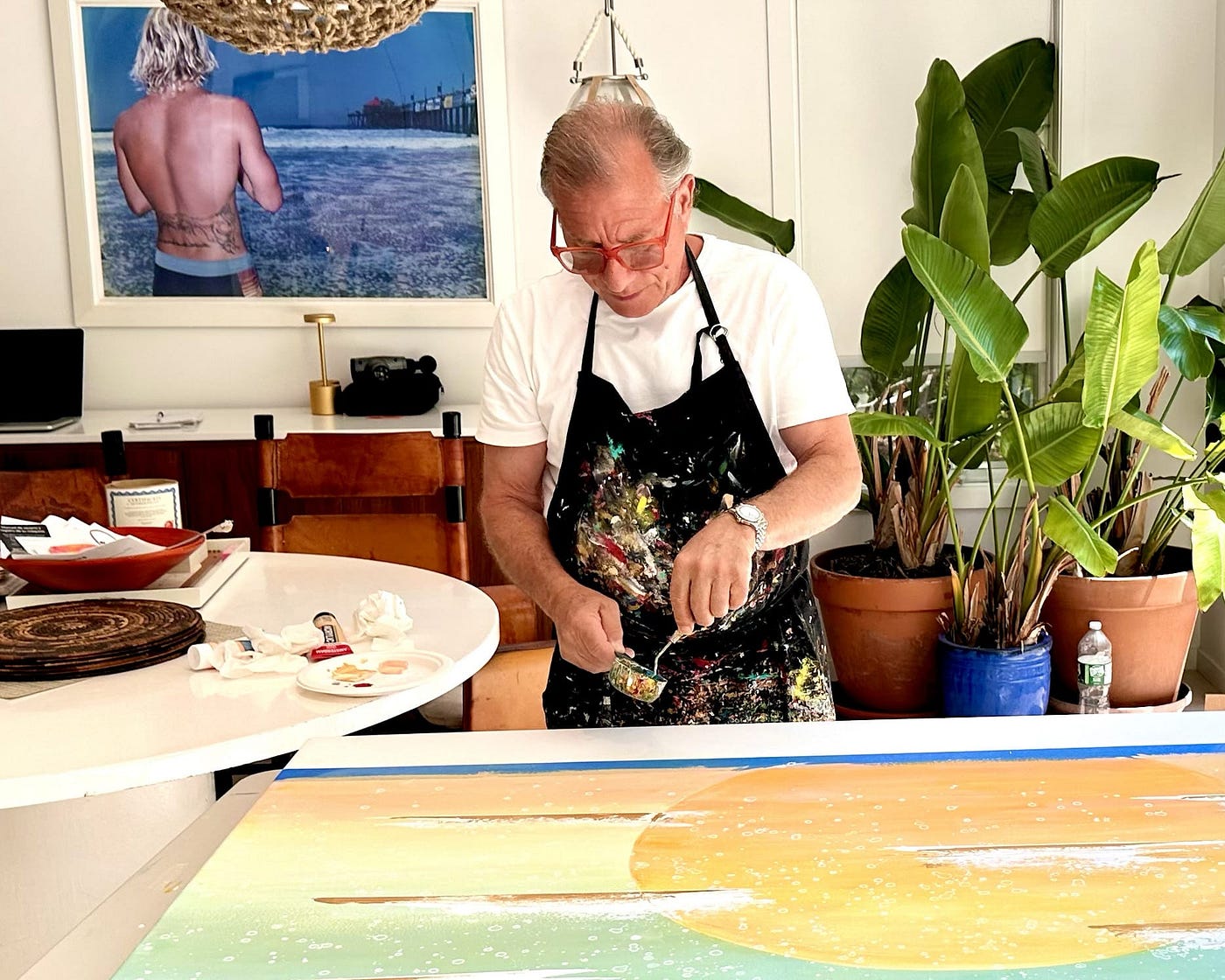
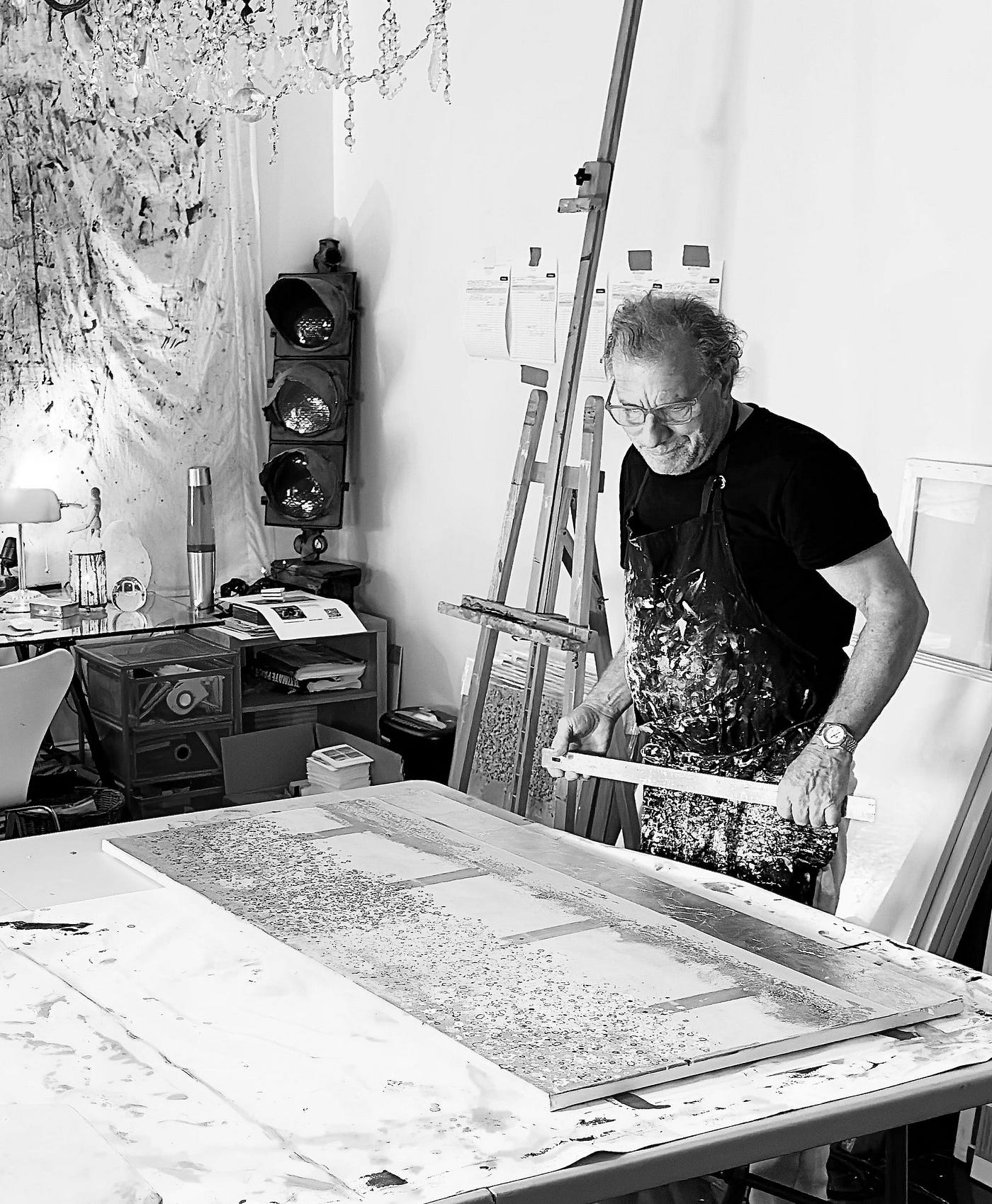
Ben Bonart is a contemporary American painter whose vibrant, energetic work blends color, design, texture, and metallic elements. After building a career in advertising and design, Bonart brought his trained eye for visual communication into his studio practice, developing a distinctive approach that combines acrylic paint, gold and silver leaf, and dynamic techniques including scraping, splattering, and pulling. His layered compositions explore light, movement, and the emotional impact of color, often creating a sense of joy and energy. Bonart’s work is held in private and corporate collections across the United States and has been exhibited through galleries, art fairs, and interior design projects.
Thank you so much for joining us in this interview series! Can you tell us the story of how you grew up?
I grew up in Northwest Washington, D.C., near Rock Creek Park, with my twin and older sister. It was a beautiful place to grow up, steeped in history and culture. There was a sense that what was happening around us mattered to the wider world. I attended private and prep schools alongside the children of diplomats and dignitaries, so those connections were part of everyday life.
The Kennedy presidency — the Camelot years — coincided with a time when I was forming my earliest impressions of the world. The optimism of that period, followed by the shock of his assassination, left a lasting impression on me.
Summers were spent at camp in Maine, where I met boys from all around the country. Some became lifelong friends, and those friendships remain an important part of my life today.
I was an okay student and a less-than-okay athlete, but I was always drawn to creative things. I loved visiting the Smithsonian museums and Washington’s many art galleries, and I took classes at the Corcoran School of Art as a young boy. Art was part of my life long before I imagined making a career of it.
Looking back, I feel fortunate to have grown up surrounded by natural beauty, culture, and enduring friendships. Those experiences helped shape my curiosity, my creativity, and my appreciation for connection.
Can you share a story with us about what brought you to this specific career path?
The most interesting part of my career as an artist is that it grew out of another creative life. I spent many years in brand advertising working alongside remarkably talented art and design creatives as well as senior marketing and business leaders. Every project was an opportunity to innovate and visually connect with people.
Over time, those experiences shaped how I see color, composition, and the stories an image can tell. When I began making art, I realized I was bringing all of that with me. I still draw on what I learned from those collaborations, but now I have the freedom to follow my own ideas and see where they take me. That makes every day in the studio interesting.
What are some of the most interesting or exciting projects you are working on now?
I’m at an exciting point in my artistic life. I’m stretching my work in a more abstract, expressive direction, and one of the projects I’m most excited about begins with paintings I’ve already made. I cut them into fragments and collage them into new works, finding unexpected ways for the pieces to come together as a whole.
I’m also exploring what happens when I build up layers of color, make marks, scrape back the surface, and push the composition in a new direction. The process is full of discovery. My hope is that people can feel the energy and passion I put into the work, then find something in it that speaks to their own lives.
Who are some of the most interesting people you have interacted with? What was that like? Do you have any stories?
Growing up in Washington, D.C., I went to school with the children of congressmen, senators, and diplomats. Through my career in advertising, marketing, and branding, I met a remarkable variety of people — artists, writers, designers, business leaders, and creative minds of all kinds. There are more stories than I could fit into one interview, but I’ve learned that everyone is interesting in their own way. I’ve always enjoyed listening and learning, and today I’m exploring another part of the creative world as an artist.
One thing I’ve noticed over the years is how often the most accomplished are also the most generous — with their time, their knowledge, and their willingness to collaborate. There’s an openness and confidence about them that allows them to focus on what matters. That has always stayed with me.
Where do you draw inspiration from? Can you share a story about that?
I draw inspiration from the feeling a place can give you. I grew up in Washington, D.C., and every spring I would go see the cherry blossoms. I remember looking up through the branches and feeling as though I were floating in the clouds. Whatever was happening in my life, those moments felt freeing and uplifting.
Years later, I kept coming back to that memory. It helped inspire my “Seasons” collection: colorful, joyful and arresting paintings shimmering light from the gold leafing. I wanted to bring some of that feeling I had beneath the cherry blossoms into my work.
There’s another memory that has stayed with me. Years ago I was asked, “If you could do anything right now, with no worries or obstacles, what would you be doing?” I answered without hesitating: “Painting in a barn.”
I didn’t know then where my career would lead, but I think I already knew what I loved.
How have you used your success to bring goodness to the world?
I draw inspiration from the feeling a place can give you. I grew up in Washington, D.C., and every spring I would go see the cherry blossoms. I remember looking up through the branches and feeling as though I were floating in the clouds. Whatever was happening in my life, those moments felt freeing and uplifting.
Years later, after exploring pop art, flowers, sailboats, and other subjects, I kept coming back to that memory. It helped inspire my Seasons Collection: colorful, joyful paintings with gold and silver leaf that shimmer as the light changes. I wanted to bring some of that feeling I had beneath the cherry blossoms into my work.
Someone came to visit years ago and asked, “If you could do anything right now, with no worries or obstacles, what would you be doing?” I answered without hesitating: “Painting in a barn.”
I didn’t know then where my career would lead, but I think I already knew what I loved.
What are your “5 things I wish someone told me when I first started” and why. Please share a story or example for each.
1. Your point of view has value. Trust it.
When I started out, I was surrounded by talented people in advertising and design. I learned a great deal by listening and watching, but I wish someone had told me sooner that my own eye mattered, too. The way I see color, composition, and possibility is something only I can bring to the work.
2. Your path doesn’t have to be a straight line.
When I first moved to New York, I was representing commercial artists and building a career in the creative world. I was asked, “ What would you do if I had no worries or obstacles?” I said without hesitation, “I’d be painting in a barn.” It took time for painting to become my life, but those years in between instilled in me a thought process and visual language I use every day.
3. Pay attention to what stays with you.
Growing up in Washington, D.C., I loved looking up into the cherry blossoms each spring. I carried that feeling of freedom and joy with me for years. When I began my Seasons Collection, I realized I was trying to bring some of that feeling into the paintings. Inspiration doesn’t always announce itself. Sometimes it waits in a memory.
4. You can make something new from what you’ve already made.
Right now, I’m cutting up some of my earlier abstract paintings and collaging the fragments into new works. It’s exciting to discover relationships between pieces that were never meant to be together. I wish I’d known earlier that revisiting old work could open up an entirely new direction.
5. Let people find their own meaning in your art.
When someone stops in front of one of my paintings at a show, I can’t know exactly what they see or feel. They bring their own memories and experiences to it. I make work with joy, energy, and optimism, but the connection becomes theirs. Learning to leave room for that has made sharing my art one of the most rewarding parts of being an artist.
I didn’t know then where my career would lead, but I think I already knew what I loved.
You are a person of great influence. If you could inspire a movement that would bring the most amount of good to the most amount of people, what would that be? You never know what your idea can trigger. :-)
I’d love to inspire a movement that encourages everyone to make something and share it. You don’t have to call yourself an artist. You can paint, write, cook, plant a garden, or simply come up with a new way to brighten someone’s day. We all have a creative side, and I think we feel more connected when we use it.
My own work is rooted in joy and optimism. If something I make gives one person a moment of happiness, and that feeling carries into how they treat someone else, that matters to me. Imagine what could happen if more of us made a little room for creativity and what came of it.
We have been blessed that some of the biggest names in Business, VC funding, Sports, and Entertainment read this column. Is there a person in the world, or in the US whom you would love to have a private breakfast or lunch with, and why? He or she just might see this.
Paul McCartney. His music has a room in my head- it is a part of my everyday thought process. I grew up with those songs, and so many bring me right back to a particular moment in my life, remembering exactly where I was and how I felt.
What moves me is how that music continues to touch lives across generations, including young people who never first saw the Beatles on The Ed Sullivan Show. That ability to create something that stays with people is deeply inspiring to me as an artist.
I’m not sure what I’d say over breakfast. I might just sit there for a moment, taking it all in, before saying, “Thank you.”
What is the best way our readers can follow you on social media?
Instagram @benbonartgallery
Linkedin — Ben Bonart: https://www.linkedin.com/in/ben-bonart-5800511/
Facebook: https://www.facebook.com/ben.bonart
Website: https://www.benbonart.com
Thank you for sharing these insights!