I had partners who brought decades in the industry with them, so I was never the only person in the room having to figure things out.
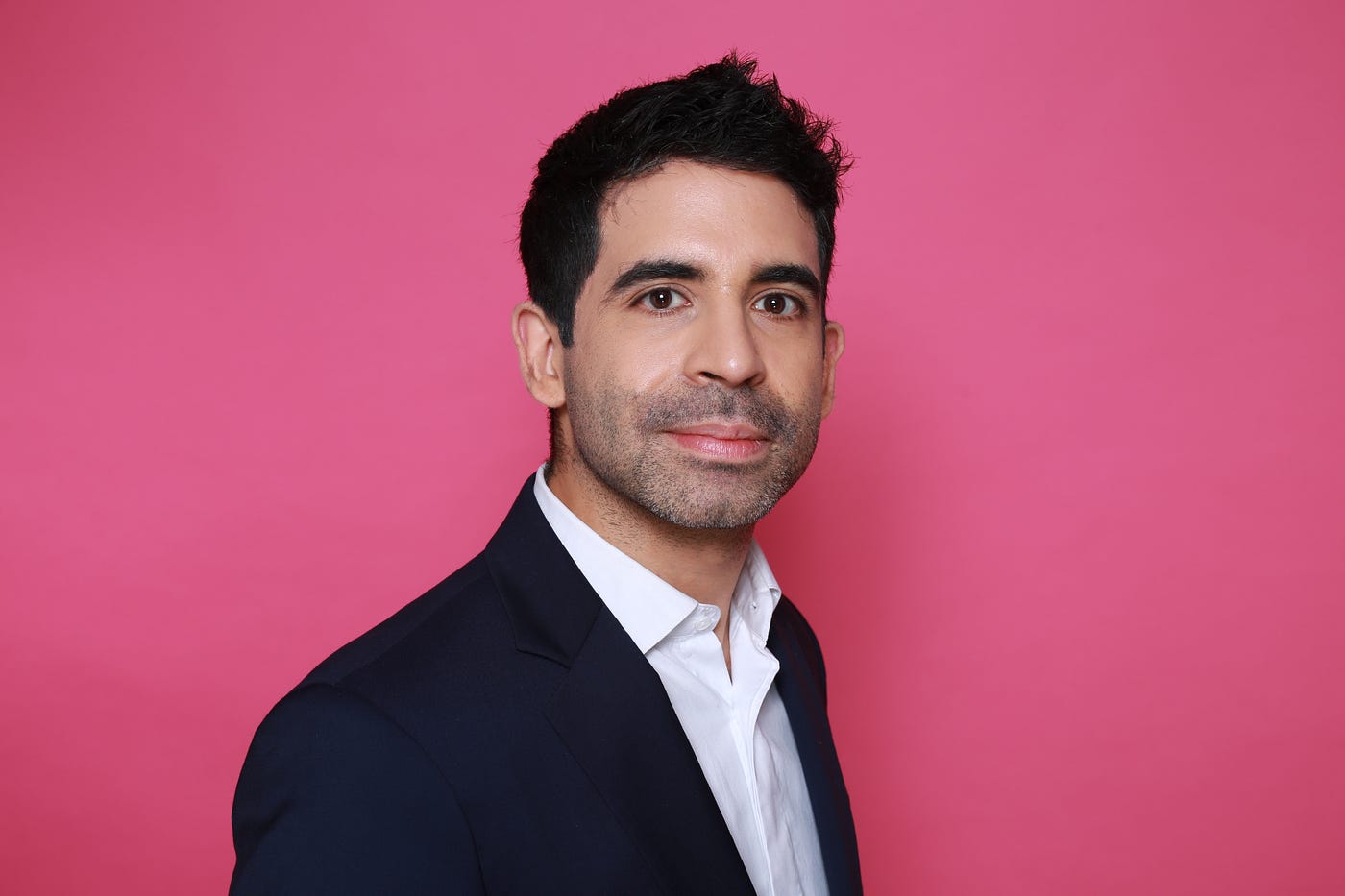
As a part of this series, we had the pleasure to interview Aaron Primero.
Aaron Primero is co-founder and CEO of The Type Founders, which launched in 2021 to give the world’s leading independent foundries a home to grow and prosper. At The Type Founders, Aaron pairs his financial and commercial expertise with a lifelong dedication to craft, tradition, and the creative arts. Aaron’s path to the type industry is an unusual one: a classically trained musician and student of the classics, he sang professionally before turning to economics and finance — first as a Fulbright Scholar, then earning a Master’s in Financial Economics from the University of Oxford, followed by several years at Goldman Sachs across investment banking and firmwide strategy. As CEO, Aaron focuses on building the platform and long-term business strategy that enable type designers to focus on their craft while their foundries thrive. He lives in New York City with his wife and young daughter.
Thank you so much for joining us in this interview series! Can you tell us a story about what brought you to this specific career path?
It was serendipitous. In late 2019 I left finance to go back to graduate school — I missed the atmosphere of libraries, critical, deep and iterative thinking, and writing in prose instead of bullet points. Then the pandemic arrived in 2020 and I deferred a year. During that deferral, someone put a question to me: how do you raise capital to build a business around exceptional foundries and their libraries they had spent their careers building? I had no idea, so I went and found out.
Type turned out to be a real business sitting inside a craft.
It’s a small world of artisans making work that everyone reads daily and very few notice. And the stakes are larger than the anonymity suggests. A typeface is working on the reader before a single word registers, setting whether a thing feels careful or cheap, official or friendly.
That gap was interesting enough to keep pulling at, and it turned out to be an unusual dovetail. Classics, classical music, finance — parts of my life that had always run on separate tracks. Type pulls on all at once, the intellectual and the creative and the professional, and that’s much of why I’m energized by it.
And I never did make it back to graduate school…
Can you tell us a story about the hard times that you faced when you first started your journey?
In some ways starting was the easy part.
I had partners who brought decades in the industry with them, so I was never the only person in the room having to figure things out. What I had to do was get fluent quickly, and build credibility on two fronts at once. To foundries, a finance background reads closer to a warning than a credential. To investors, type was an asset class almost nobody had invested in and there were very few analogs to point at. Two rooms, two lexicons, and the thing that made me useful in one made people wary in the other. Getting proficient enough took about a year before we started the company.
But the question maybe suggests a curve, where you really struggle at the outset and then things get easier. My experience is that they just change rather than ease up. I don’t worry about making payroll anymore. I worry about decisions that won’t reveal themselves for another five, ten years — ones where you find out you were wrong long after you could have fixed it cheaply.
It’s a little like parenting (which I say as the father of a two-year-old who has no idea what’s coming for either of us!). Toddler problems are exhausting; they’re also small, immediate, and resolved by bedtime (mostly). I’m told they grow up into teenagers who, I shudder to think, have teenage problems. So do companies.
I’m nostalgic for some of my old problems, which could be captured in a 2x2 matrix I thought through while in the shower. I can’t do that now, and getting comfortable with not being able to has been its own piece of work.
So it’s a journey of constant reinvention. The company that worked at five people doesn’t work at ten and so on, and the way I spent my day four years ago would be close to malpractice today. The recurring hard part is noticing, early enough, that whatever had been working has stopped without announcing itself.
Where did you get the drive to continue even though things were so hard?
A few places: wanting to create, and to build something that endures, hopefully outlasting me. Doing well by the people who signed up to do this alongside me. Taking care of my family and my partners, foundries among them. That’s most of it.
I work pretty hard, but I’m not grinding, and that’s by design. I chose the category deliberately: stable enough to survive my blunders, niche enough that we could have an impact in it, competitive enough to keep me on my toes and stimulated — but not so punishing that I’d be running on fumes and adrenaline every day, perennially in survival mode.
So, how are things going today? How did grit and resilience lead to your eventual success?
An entrepreneur I admire, congratulated on his success, called it “endlessly climbing the wall of worry”, which felt very relatable. I’m a worrier and always have been; though every so often I get reminded of what we’ve been able to do over the past five years, and for a second I see the broader arc of it and think: yes, we’re in a good place, on firm ground; we did what we said we were going to do. By some measure I suppose that’s success.
We have a very patient and long view of success, and celebrate both company milestones and those of our foundries. We have brought together around 40 inspiring, incredible foundries, supporting them with technical resources and commercial infrastructure. We have helped to preserve their integrity, their legacies. We have also created a business with like-minded investors to elevate the craft. Those are measures I’m proud of.
Grit and resilience may play a part (maybe a big part, though luck abounds and is responsible for a great deal), and perhaps it’s the recognition that success isn’t a binary, that you’re never out of the woods. You’re always refining, tinkering, adjusting, perennially replacing shingles and pipes.
So it really has to do with embracing the process, growing comfortable within it, and (if you’re lucky!) delighting in it.
Can you share a story about the funniest mistake you made when you were first starting? Can you tell us what lesson you learned from that?
One of my rookie mistakes was probably assuming every problem needed a sophisticated solution. I came from banking and strategy, so my instinct when I encountered something I didn’t understand was basically: build a model, make a spreadsheet, create a framework.
I learned pretty quickly that type doesn’t always work that way. It’s a wonderfully idiosyncratic business, and a lot of the most important knowledge lives with the people who have been designing type, selling fonts, and working with customers for decades. Sometimes I’d spend hours trying to engineer the perfect answer to something and then talk to a foundry owner who would explain in five minutes how they made it work.
I think the lesson was to retain a little more beginner’s mind: ask the obvious question first, listen to the people who know the business, and only then decide whether you really need the spreadsheet. I still make plenty of spreadsheets, though.
What do you think makes your company stand out? Can you share a story?
Type design is a solitary craft in many ways. A typeface can take years to develop, drawn one stroke at a time, mostly by one person, and the reward is that millions of people read it without ever noticing it was designed at all. That solitude produces extraordinary work. It can also leave the people doing it exposed.
Spend any time in the field, though, and it turns out to be one of the least solitary I know. I had lunch a while back with my business partner Sam Berlow and the legendary Matthew Carter (Georgia and Verdana are his, to name two you’d recognize). Between them they’ve seen most of the modern history of this business, and they spent the whole meal on the old days — not on their own work, but on the people who taught them, most of them now gone.
Matthew learned to cut steel punches by hand in Haarlem in the 1950s, at the last commercial printer still doing it, from a man who had learned it from someone before him. Follow that chain back far enough and you reach Gutenberg. Not many fields let you do that.
But a chain like that is fragile in a specific way — every link is one person, working mostly alone, and when that person stops, the work tends to stop with them. Which is where we come in. We think of ourselves as a link, and the job is to keep the ones around us intact: champion the craft for the craftspeople, help it prosper, find its moment, find some semblance of permanence. Part of that is practical — taking the backstage legwork and rope-pulling off people’s plates so they get their time back for the thing they actually love.
Which tips would you recommend to your colleagues in your industry to help them to thrive and not “burn out”?
Find a creative outlet that has nothing to do with work. Make real time for nature — on the calendar, treated like a meeting, or it likely won’t happen! (I go fishing with my high school Latin teacher twice a year which keeps me balanced and reminds me of the wider world.) Keep up with your childhood friends; they knew you before any of this and (hopefully) will be entirely unimpressed by it!
The harder one to put on a to-do list: hold onto some cosmic perspective. This is type. It matters, yes, we take it seriously, yes, and it is also not a hostage negotiation or open heart surgery. Keeping those in view at once makes the work more enjoyable and, in my experience, the decisions sounder.
None of us are able to achieve success without some help along the way. Is there a particular person who you are grateful towards who helped get you to where you are? Can you share a story?
My wife, Cassidy. She keeps the equilibrium, and I mean that specifically rather than sentimentally.
I need to think across a few altitudes, at a high level and down to minutiae. In other words, I can worry a lot. A worrier running a company can very easily let the worry set the temperature of the whole household. She doesn’t allow it. She has an unusually good read on which of my concerns are real and which are the endless climb doing its thing, and she’ll tell me candidly which one she’s observing. That has saved me from a fair number of headaches and probably a few decisions I would have made badly at eleven at night.
Everything I’ve been able to build sits on top of that steadiness.
How have you used your success to bring goodness to the world?
I’d be careful about claiming too much here (again, cosmic perspective!). We’re a boutique company that designs and licenses fonts.
What I will say is that there’s a real good in shining a light on people of exceptional craft and then giving them the support to keep making things. A great deal of the world’s best type was made by people who were undercapitalized, uncredited, and maybe one bad year from stopping. Some of them did stop. If we can make it so fewer of them have to (so the work continues, gets attributed, and gets paid for) that seems worth doing.
There’s a preservation piece alongside it. Typefaces are cultural artifacts, and plenty of important ones remain in dusty specimen books. Bringing those back into circulation and relevance is a small good, and I’m glad it’s part of the business rather than a side project.
What are your “5 things I wish someone told me before I started leading my company” and why. Please share a story or example for each.
1. Consistency is king. Most of the best business and life advice is out there and has been for a long time. The hard part is operationalizing it: making it part of the daily reps, and then continuing to improve it, tinker with it, and bastardize it into something that fits the need, every day, over a very long run. That takes a commitment to consistency and discipline. What that looks like for us is undramatic — this process gets shorter, that report gets crisper, do this every week or month and don’t skip it.
2. Trust but verify. This industry is very relationship oriented, and we’re fortunate to receive a lot of opportunities and talent through referrals — people vouching for each other. I like starting from trust and I don’t want to undercut that. But a referral is an anecdote, and anecdote only carries you so far. When someone tells me a person is terrific, they mean it, and they’re describing a handful of experiences rather than a pattern. So the real work is agreeing up front on what we’re going to measure and monitor — which few numbers actually matter, who owns them, how often we look at them, and what good and not good look like. Done well, that lets me extend more trust rather than less, because I’ll know early if something is drifting instead of finding out a year later. A mantra I come back to often: “Delegation without information is abdication.”
3. Find the right partners. Business partners, investors, advisors — everyone has to be aligned with the thesis, the vision, the timeline, the risk. If you can converge on all of that before you turn the lights on, it’ll save you a lot of headache. Timeline is the one that gets people. We’re becoming custodians of font libraries that are somebody’s life’s work, and the deals that go well tend to have long tail, royalties flowing back to the designer for years, commitments that run a decade, structures that only make sense if you plan on owning the thing forever. If your investor needs to be out in five years, none of that reads as a feature. Much better to find that out in the first couple conversations.
4. Stay healthy! These are my mother’s words ringing in my ears. Pretty self explanatory — and yet it’s something I have to remind myself about often. Part of it is just sustaining yourself for the long run, which is very important. The bigger part is that making sound and prudent decisions relies on having a certain degree of mental serenity and calm. Mine doesn’t get there on its own. It requires all the basics — sleep, nourishing food, sweating it out, taking in great music and literature, building and nurturing relationships. On a week where I’ve done those things, my decisions are better. On a week where I haven’t, I can feel it, and I’d guess the people around me can too.
5. Be a good friend and coach to yourself. I don’t love making mistakes and I tend to beat myself up. I know people in my own life who are similar, and as their friend I take a much healthier approach — I try to help them replenish rather than pile on. So sometimes I just have to remind myself to be a good friend and coach to myself, the way I try to be with other people. It helps.
Can you share a few ideas or stories from your experience about how to successfully ride the emotional highs & lows of being a founder?
Sleep, find a peer group, balance business with personal (I am a father of a 2 year old).
You are a person of great influence. If you could start a movement that would bring the most amount of good to the most amount of people, what would that be? You never know what your idea can trigger. :-)
I’d want people to notice the made world, to know that everything around them was drawn, decided, and argued over by somebody.
Type is the obvious example because it’s the most-read design on earth and the least-observed. You’ve read tens of thousands of words today set in something a person spent years drawing, and you almost certainly couldn’t name it. That anonymity is part of what makes type good; oftentimes, it’s supposed to get out of the way. It’s also why the people who make it are so easy to underpay, undercredit, and forget.
So if I had to name a movement it’s credit (not fame but credit). Knowing who made the thing. It’s the cheapest possible intervention and it compounds: attribution leads to attention, attention leads to work, and work lets somebody keep doing the thing they’re exceptional at.
You could start tonight. Next time something you read feels authoritative, warm, trustworthy, ask why. Someone made that choice on your behalf (and most of them would be delighted you asked).
How can our readers further follow your work online?
You can follow our journey on LinkedIn and Instagram, or explore our website, thetypefounders.com, where each of our foundries has its own corner to wander into. Some of the best type being made anywhere is in there, by people who have given their working lives to it. I’d recommend it over doomscrolling, though I concede I’m not impartial.
This was very inspiring. Thank you so much for joining us!