I was furloughed from my job during the pandemic, and Jerry was a chef for the Tennessee Titans. He’s always been in culinary, and I’ve always been in sales and marketing.
Embarking on a business venture is challenging, but doing so with your significant other brings a unique set of dynamics. While many couples find great success and fulfillment in this arrangement, they will inevitably encounter unforeseen difficulties that can test both their professional and personal relationships. From communication hurdles to balancing work-life harmony, the journey of couples in business together is filled with both triumphs and trials. As a part of this series, I had the pleasure of interviewing Jennifer “Jenn” Cheung Cline.
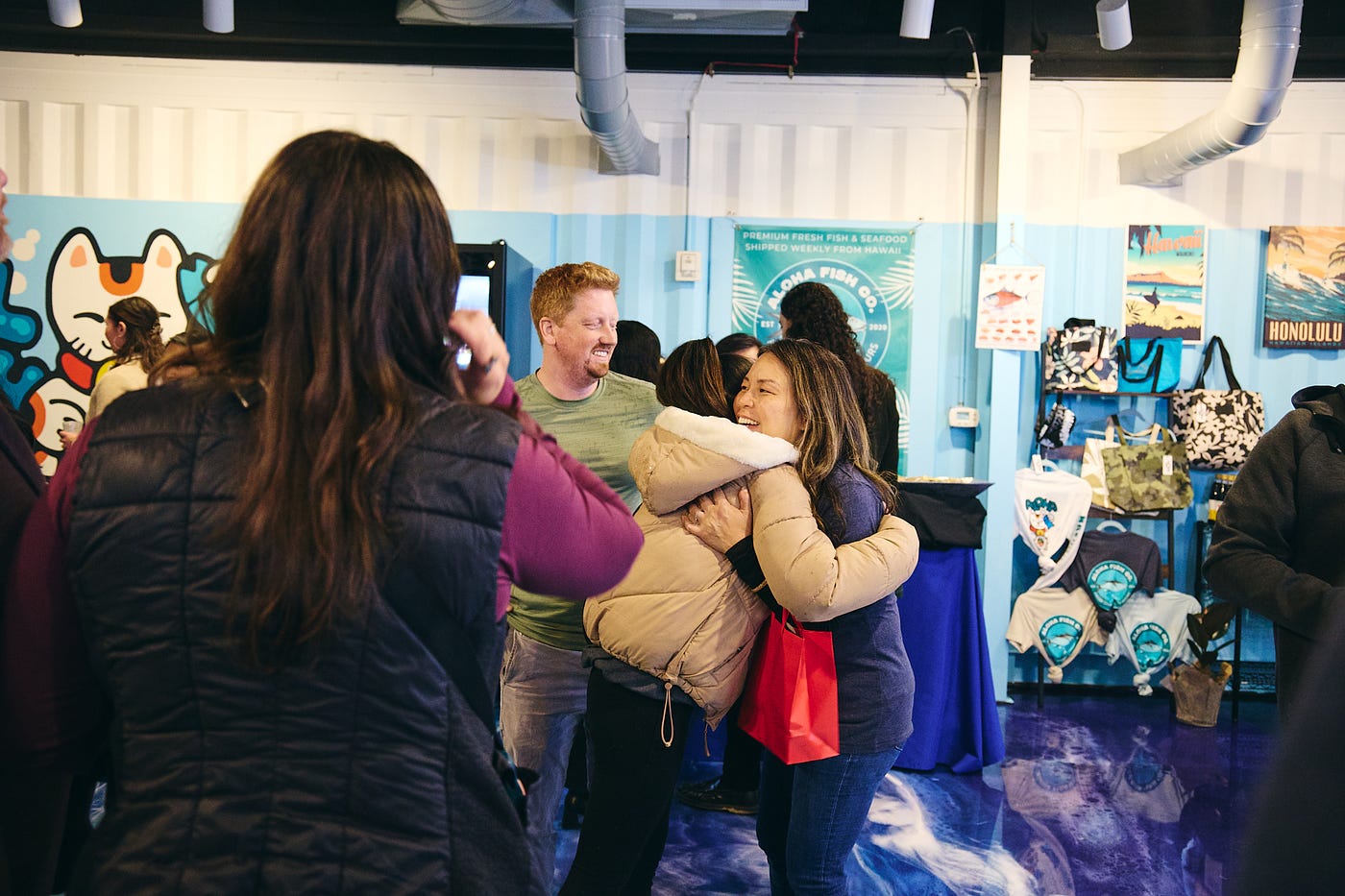
Jenn is the CEO and co-founder of Aloha Fish Co., a Nashville-based culinary destination known for bringing responsibly sourced seafood and the aloha spirit to Tennessee. In 2020, Jenn and her husband Jerry officially launched Aloha Fish Co. and today, the business serves as a seafood market, Hawaii-inspired eatery, catering company and culinary education destination offering sushi-making classes, meal kits and prepared foods.
Thank you so much for joining us in this interview series! Before we dig in, our readers would like to get to know you a bit more. Can you tell us a bit about your “backstory”? What led you to go into business as a couple?
Jerry and I have both worked in the food and beverage industry. I was furloughed from my job during the pandemic, and Jerry was a chef for the Tennessee Titans. He’s always been in culinary, and I’ve always been in sales and marketing.
We thought it was the perfect combination because I had the sales and marketing background, while he had the culinary and operations background.
Can you share the most interesting story that happened to both of you since being in business together?
We’ve always been great partners because he does the side of the business that he really enjoys, and I do the part that I really enjoy. He would never want to do sales and marketing, and I would never want to get stuck doing all the cooking and preparation. Our strengths really complement each other.
Jerry also gives really good feedback. I enjoy listening to what he has to say because he often has a different perspective. I like being challenged in that sense because it makes me consider his point of view. We give each other great feedback, and we’ve been able to grow the business because of that.
An experience that has stayed with us: We’ve always loved tasting new foods and experiencing new things. One of my fondest memories was when Morimoto opened at the MGM Grand in Las Vegas, and we were invited to the grand opening.
They had a tuna-cutting demonstration, and it was our first time seeing something like that in person. This was before we started Aloha Fish Co., and we were already married at the time.
They also made what I remember being a Guinness World Record attempt for the longest sushi roll. That whole experience became one of our core memories and it’s something we still bring up all the time.
Can you share a story about the funniest mistake you made when you were first starting? Can you tell us what lesson you learned from that?
I can’t think of a funny mistake…but I’d say that Jerry’s learning curve is navigating Pidgin English when someone from Hawaii comes to the shop. He’s better now, but many times he’ll ask me what we were talking about or what they ask for.
None of us are able to achieve success without some help along the way. Is there a particular person who you are grateful towards who helped get you to where you are? Can you share a story about that?
One of the people we’re both most grateful for is my cousin Stephen in Hawaii. He was the one who originally said, “Well, I can ship you fish if you want fish from Hawaii.”
At the time, it was just for my own consumption. It wasn’t even a business. He was very open to helping and said, “Yeah, it’s no problem. Let me ship you some fish.”
Since then, he’s been a great mentor, guiding us through this business. We ran with that opportunity and created Aloha Fish Co.
Ok, thank you for that. Let’s now jump to the primary focus of our interview. Most of our readers — in fact, most people — probably don’t have an idea of what it is like as a couple to be in business together. In just a few words can you explain how being in business with your romantic partner is different from other business partnerships?
I would love to say it’s all roses, but it’s not. Sometimes we see things differently and when those disagreements carry into our home life, things can get a little dicey.
You’re working with that person and also living with that person. We have two kids as well, so being able to separate business from home life is important.
It’s about always communicating and remembering that no matter what happens in the business, we’re still partners in life. That’s really important to us.
What are the “myths” that you would like to dispel about being a couple running a business? Can you explain what you mean?
I think a lot of people shy away from working together or running a business with their spouse, but I would actually say the opposite. I would 100% do it all over again.
I think we’ve grown so much together and have so much more respect for each other because of the business. I don’t think we would have discovered as much about each other so quickly otherwise.
We’ve been married for 14 years, and I feel like we’ve grown more together in the past six years of running the business than we did in the previous eight years.
I would definitely encourage couples to consider it. Two people working together are still one unit. You want to figure things out until they work for both of you and for the business.
If you’re just friends and business partners, you might end up losing that friendship when things get difficult. But when you’re married, there’s an additional commitment to working through those challenges together.
What are the most common mistakes you have seen couples make when they start out in business together? What can be done to avoid those errors?
I think one of the biggest mistakes is thinking you know it all. It’s always good to have an open mind because there’s always a learning curve.
Jerry and I learned together. We had never done this before. He had his culinary experience and I had my sales and marketing experience, but we had never put those two pieces together to run a business.
Another learning curve was separating business from home life.
I’m the one who tends to bring business home. Jerry has had to tell me, “Can we talk about that later?”
I’m so grateful for that because I could talk about business all the time. I love it and sometimes I don’t even see it as work.
But Jerry will remind me, “Let’s chill. Let’s eat dinner together as a family before talking more about work,” or he’ll ask if we can just not talk about business at that moment.
I think that mutual respect is really important. Some people might continue pushing, but there’s a time and place for those conversations.
You have to respect each other’s boundaries, keep an open mind and be willing to learn together.
What are your “Five Things You Wish You Had Known As A Couple Doing Business Together”? If you can, please share a story or an example for each.
1. We would have to learn from each other’s different leadership styles.
I’ve learned a lot from Jerry. He has a lot of empathy, sometimes more than I do, and I’m so grateful for that. It takes a lot of empathy to run a business, especially when you’re building a team. When we were interviewing prospective employees, I would usually conduct the initial interview and then pass that person along to Jerry for a second interview. He often saw something different in that person. I trusted his perspective. Even if I liked someone after the first interview, if Jerry didn’t have a good feeling about that person, I usually wouldn’t hire them. A lot of times, I would start something and he would complete it. That’s how well we worked together.
2. Building a community in a new city would take time.
When we started the business, we were still very new to Nashville. We had only been here for about a year and we hadn’t established much of a community. We had to go out and develop those relationships. Because of my sales and marketing background, I was used to networking. I enjoyed meeting people, learning about them and teaching them about our products. Jerry wasn’t as accustomed to that side of the business. There wasn’t really anybody doing what we were doing, so that was a curveball for us. People would ask, “What are you doing? Why are you shipping fish? Who’s going to buy it?” It took time to introduce people to the concept. Even today, we’re still meeting people who have never heard of what we do. We’re continually trying to find new customers because we haven’t reached everyone who might be interested in our products.
3. Sometimes we would have to rely entirely on each other.
Finding good team members was difficult, especially after the pandemic. There were times when we had to rely on each other for almost everything. I would help Jerry as his sous chef and assist with food preparation, while he handled most of the cooking. Then I would go home and take care of the accounting, finances and other business responsibilities. That was rough, especially because we were still new to Nashville and didn’t know many people. I’ve been very grateful for the community we’ve developed since then, including finding a wonderful local bookkeeper whom we still work with.
4. Introducing unfamiliar seafood to a new market would require patience and education.
One of the biggest challenges was introducing premium seafood, especially raw seafood, to customers in Nashville. Some people had traveled to Hawaii or other places where they had tried poke or similar dishes. Others had moved away for college and returned to Nashville with more exposure to different foods. Those were some of the customers we initially connected with. But the demand for raw seafood wasn’t very strong when we started. It was a huge chance we were taking. I’ve always believed that if you have quality products, you have to find the people who appreciate that quality. We weren’t selling inexpensive seafood, so finding the right customers was difficult, and it continues to be something we work on. Some customers had never heard of the fish species we carried. They would ask, “What is this?” Those conversations became an important part of our business. People enjoy hearing the stories behind the seafood and we enjoy teaching them. The other day, someone left us a wonderful Google review saying they had never cooked lobster before. They spoke with Jerry, followed his instructions and had a great experience. They specifically mentioned Jerry in the review. That’s exactly why we wanted to build this business. We wanted to share our love of seafood and help people feel comfortable preparing it themselves.
5. Balancing quality, service and the financial realities of a small business would be challenging.
I’ve learned that running a food business is hard and the margins are tight. You really have to watch everything. Jerry comes from a larger hotel and culinary background, where service and having enough product available were especially important. From my perspective, because I handle the finances, cost control and margins are incredibly important. In a small business, if you over-order one week, it could mean you don’t have enough money for rent, utilities or labor. That balance between our different perspectives has been difficult and we’re still learning. I’ve had to learn to be more flexible, while Jerry has learned to be more mindful about preparation and ordering. When you’re preparing for large banquets in Las Vegas, you’re accustomed to making a lot of food. But we’re a small business, and if we don’t sell something, there’s not always another way to use it, especially because seafood has such a short shelf life. We’ve learned a lot about finding that balance.
In your opinion, what are a few ways that couples can ensure they are successful in business with each other? Can you share a story or an example?
Have an open mind, listen to each other and, ultimately, have respect for one another. That respect is so important.
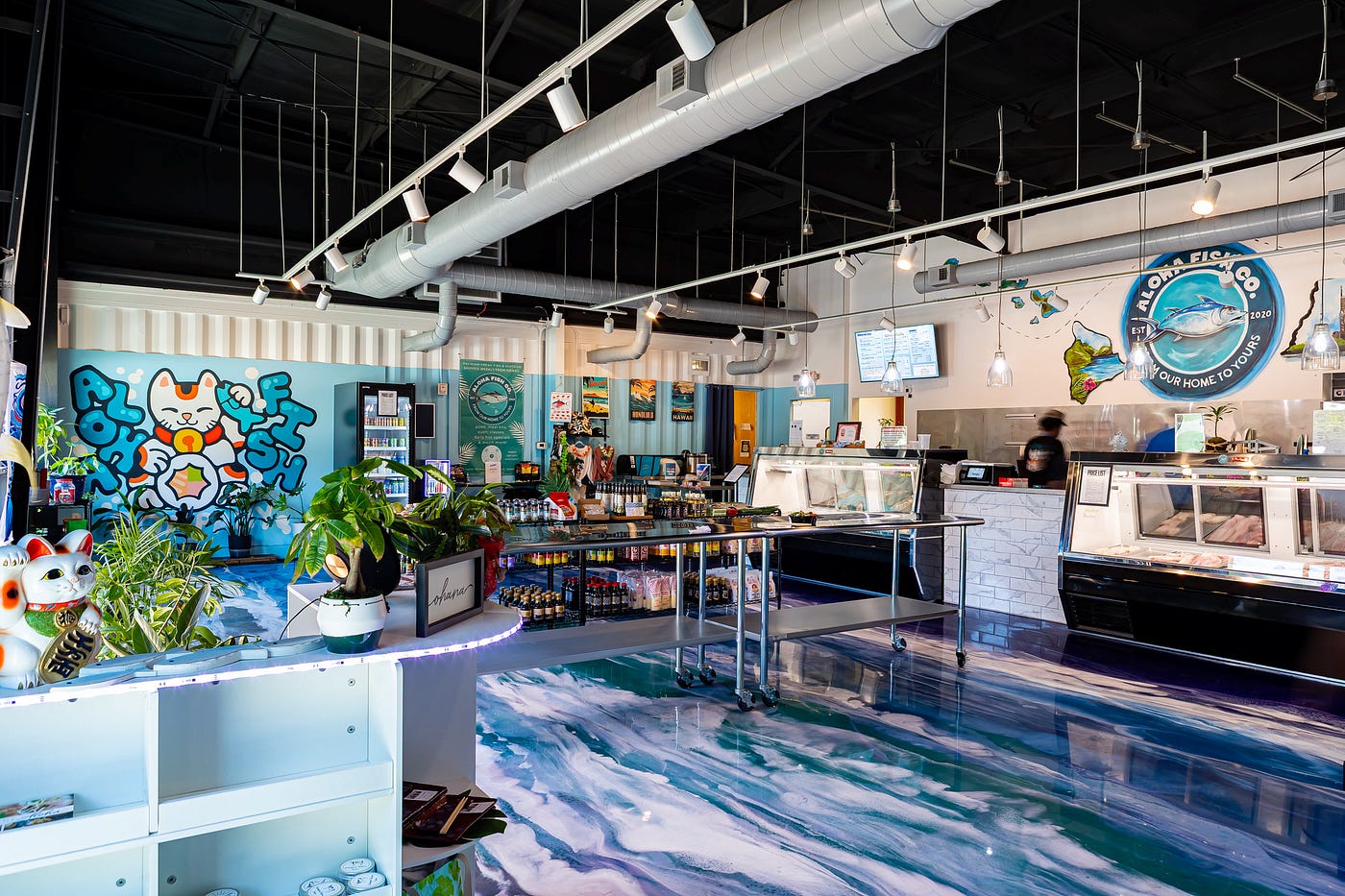
When we moved into our new location, Jerry started drawing the floor plan. With his operational background, he understood how the space should function and what would make things run more smoothly.
We went back and forth quite a bit. There were times when I would question something or ask whether we could do it differently. But I would also step back and let him think through the operational side.
For example, I might ask, “Can we put an extra sink here?” If the answer was no, then it was no. But we were both open to asking questions.
Sometimes we’re quick to say, “No, that can’t be done.” But we’ve learned to listen to each other and try to understand the other person’s perspective.
It’s the same with merchandise. Sometimes I’ll say, “I don’t think we should order 500 hats,” while Jerry wants every color and every size available on the shelves. We sometimes clash because I’m trying to dial him back, but there are also times when he has to dial me back. It’s a constant balance.
We also make our major decisions together. I like Jerry to be involved in the financial side so he understands those considerations, even though he often trusts me to handle the numbers.
Whether we’re discussing our next location or another important business decision, we always come back together and ask, “Is this what we both want?”
We talk through the challenges together because we’re life partners, too.
You are a couple of great influence. If you could start a movement that would bring the most amount of good to the most amount of people, what would that be? You never know what your idea can trigger. :-)
We only have one ocean, and I think it’s important to understand how everything works together and how we can help protect that life cycle for the future.
I’ve never worked so intensely in one industry as I have in the seafood industry over the past several years. Coming from Hawaii, I’ve recently had opportunities to learn more about the fishing industry, including the processes involved and the fish auction.
It’s fascinating to me how much people sacrifice and how much work goes into bringing quality seafood to others.
Learning about that has made me appreciate the food even more. It gives me the drive to continue doing what we do because I know the quality of the products we’re offering and the people behind them. It makes me proud of the business we’ve created.
I’m also fascinated by the ocean and sustainability. For example, learning about shellfish like oysters and the role they play in filtering water has been really interesting to me.
There’s so much about the ocean and the seafood industry that I still want to learn.
How can our readers further follow you online?
Website: alohafishcompany.com Instagram: @alohafishcompany
Thank you so much for joining us. This was very inspirational.