Having lots of AI built into your organization isn’t necessarily going to improve performance, it’s just going to make everything move faster.
As a part of this series, we had the pleasure to interview Andrew Lopianowski.
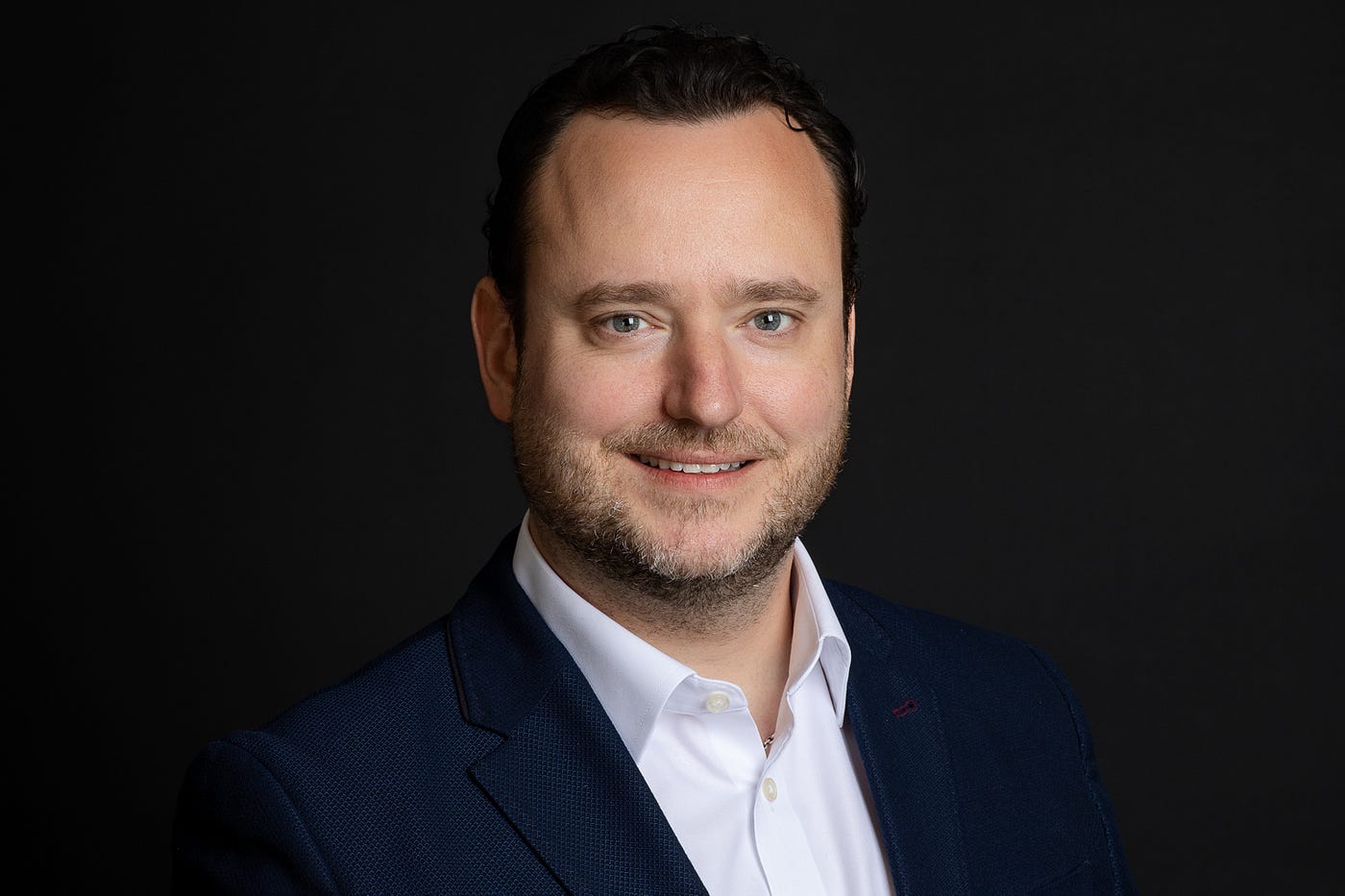
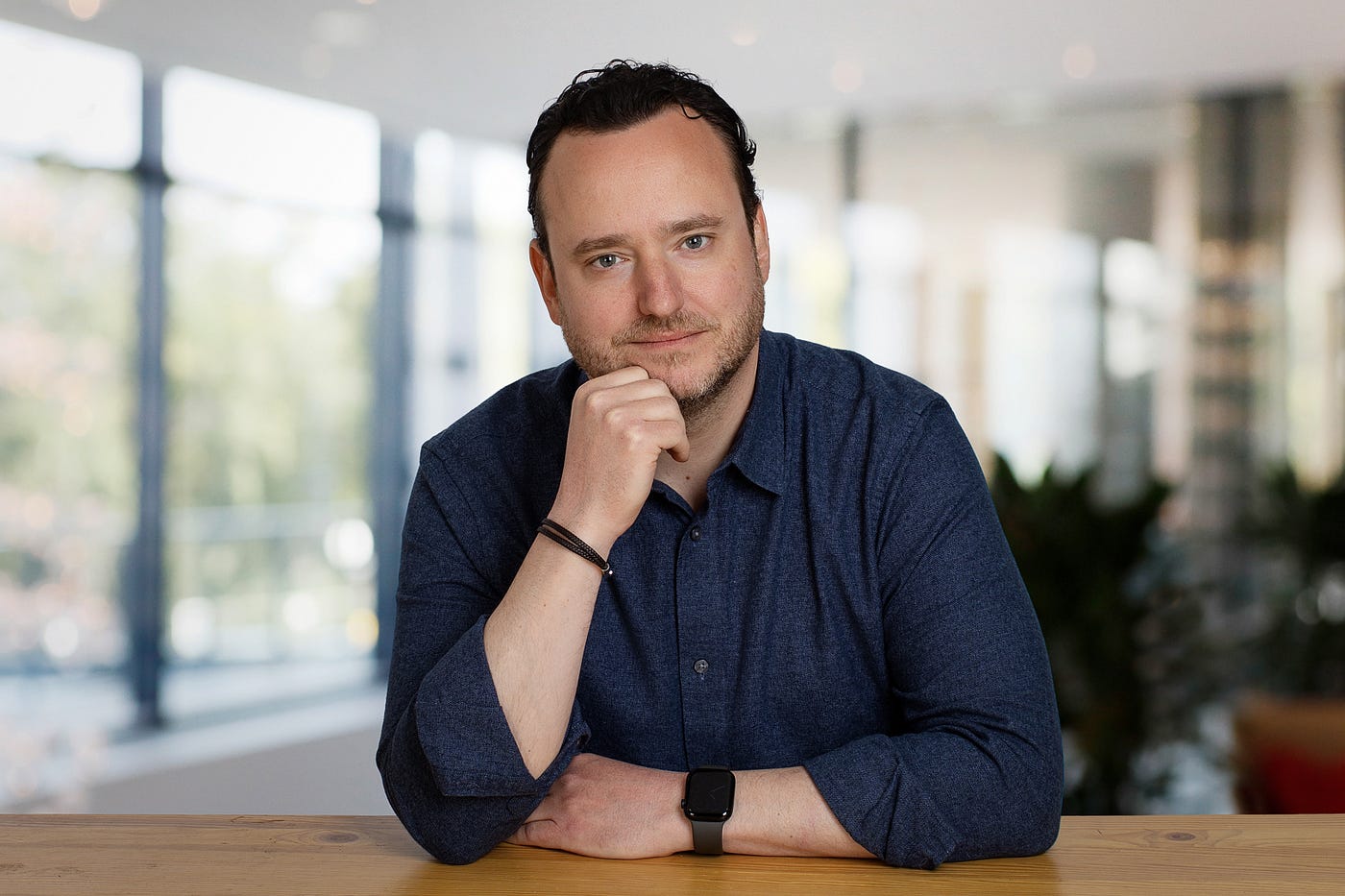
Andrew Lopianowski is Founder and CEO of HumanCorps, where he works with leaders to redesign organizations for an age in which human and artificial intelligence increasingly work together. He is co-author with Mike Pino of HumanCorps: Redesigning Organisations for the Wisdom Age (Routledge, 2026), which explores how organizations can combine the capabilities of AI with distinctly human judgment, agency and wisdom. His work focuses on the leadership, governance and organizational conditions needed for humans and AI to flourish together.
Thank you so much for joining us in this interview series! Before we dive into our discussion, our readers would love to “get to know you” a bit better. Can you share with us the backstory about what brought you to your specific career path in AI?
Since my school days I have been fascinated by human behavior in the workplace, which led me to study psychology and later into business consulting. Over the last 25 years of my career, I became increasingly troubled by the fact that organizations seem to be so poorly designed for getting the best out of people and about 10 years ago I began research into why that’s the case, which led me to some interesting answers around the history of organizations as they currently exist and why they are not fit for human performance and thriving. There’s a lot of complexity here, but part of it is that humans are not evolutionarily designed to work in the kinds of organizational systems that have now emerged. But with the emergence of AI, I started to see that technology could be the solution we’ve been looking for because it can overcome many of the human limitations whilst actually freeing us to do those things that make us uniquely human — namely creativity, judgment, decision-making and value creation — in short, wisdom.
Can you share the most interesting story that happened to you since you started working with artificial intelligence?
Last month I launched the new book I co-authored with Mike Pino — HumanCorps: Redesigning Organisations for the Wisdom Age at King’s Business School in London. Instead of a conventional launch, we decided to build an agent that was trained exclusively on our book, source references, and our conversations regarding the book that could then engage in conversation with the audience during the event. The Vice-Chancellor of King’s College London was hosting the Q&A with us and would ask Mike and me a question and then ask the book agent the same question. It really impressed us and the audience how consistent our answers were. Of course, you might expect that considering how we built it, but the fact that it worked and gave answers that were slightly different and offered another lens to ours was striking.
You are a successful leader in the AI space. Which three character traits do you think were most instrumental to your success? Can you please share a story or example for each?
Abundance Mindset It sounds odd but it’s something I’ve held for a long time, a mindset of abundance. I don’t think that things are a zero-sum game and that value can be created through exploration and collaboration. I find this often in my work, where people hoard knowledge or ideas or clients…whatever, because they fear losing it or being somehow diminished. Apart from disagreeing with that philosophy fundamentally, I further think that it reflects the Knowledge Age that is now behind us — the idea that what you know is your competitive advantage and must be defended.
Experimentation I don’t think of myself as an early adopter because I’m often someone who comes late to new innovations, but when I look at how people are resisting AI, I have found myself regularly challenged by others who wonder why I work with it so much. The short answer is because I’ve played with it and, through effort of experimentation, I’ve made it incredibly valuable in my work. I’m struck at the moment by how many parents tell me their kids refused to touch AI and chastise them for using it. I’m not sure where this narrative is coming from, but I’m already seeing the effects on young graduates entering the workplace with no knowledge of using AI and employers being dumbfounded that they have to teach them it’s ok to use AI.
Willingness to Challenge Assumptions I’m very much driven by the idea that we all make so many assumptions about how things should work, often towards the negative, and I don’t have all the answers, but I like to challenge people to test their assumptions. I want to disrupt their conventional thinking and really ask themselves why they think what they think — they may conclude where they started, and that’s fine, but what matters is that they’ve tested it. When I meet people who tell me that AI is dangerous, I ask them how they’ve used it and it surprises me how often they say they haven’t touched it. Of course there are legitimate social, ethical, and operational concerns about AI, but informed scrutiny is more meaningful than reflexive rejection.
Let’s jump to the primary focus of our interview. Can you share a specific example of how you or your organization used AI to solve a major business challenge? What was the problem, and how did AI help address it?
One illustration we use in our work involves an online retailer facing a fast-moving cyberattack. One Tuesday at 2:17pm, an IT security technician noticed the dashboard going from green to red as their system started warning of an attack that seemed to be moving at machine speed. The tech was alarmed and quick to act, she followed the required procedure and wrote a ticket about the event and tagged her manager. The manager, however, was in a meeting and didn’t see the ticket until over an hour had passed and when he did, he wasn’t sure it was an attack but wondered instead if it might be a database issue. The manager passed the ticket to the database team who duly investigated and concluded that it was most likely an attack, and they should take the system offline. However, they weren’t sure they had permission to do this, so they went to the legal team who advised that they needed the CEO, CTO and one other executive’s permission to take the system offline. Over 6 hours had passed by the time a war room was convened with the CEO informed of the situation at 8:40pm. Infuriated, he asked the obvious question “Why didn’t anyone do anything sooner?” When they asked the tech, she said “I thought someone else was deciding.” And she was right. She had followed procedure to the letter, but the problem was that it was a human process designed to move at human speed, which proved hopeless against something moving at machine speed. And thus there were two breaches that day: one at 2:17pm when the attack happened, but then another in the decision chain that failed the organization from taking appropriate action fast enough. Moving forward, they changed the procedure to involve a governed agent coupled with a clear human owner being defined so that if this happened again, action would be taken within moments rather than over 6 hours.
What are some of the common misconceptions you’ve encountered about using AI in business? How do you address those misconceptions?
- AI will fix the organization, when in fact it amplifies whatever already exists. As we’ve seen so many times in previous technology-driven transformations, leaders assume that simply investing in the tech is the solution. The reality is that plugging AI into industrial age models can accelerate their failure rate. So, what is necessary is to redesign the organization so that it can make the most of AI. Move from a control model to an accountability model where the organization encourages information flows and clear decision rights rather than being hamstrung by policies and procedures designed for human rather than machine speed.
- A human in the loop is a human in charge. A human in the loop is not the same as a human in charge. Clicking “accept” on something you don’t understand isn’t oversight. Control means someone set the agent’s purpose and limits before it started, and a person answers for what it does.
- The firm with the most AI wins, when everyone can buy the same models. This is another illustration of where quality trumps quantity. Having lots of AI built into your organization isn’t necessarily going to improve performance, it’s just going to make everything move faster. It’s like strapping jet engines onto the cars in a busy city without changing anything else about the road, layout, crosswalks or lights — very quickly everything will crash. Those organizations that redesign the way they are structured and operate to best incorporate AI will be better placed to outperform those who simply bolt it on to their existing ways of working.
Ok, let’s dive deeper. Based on your experience and research, can you please share “5 Ways AI Can Solve Complex Business Problems”? These can be strategies, insights, or tools that companies can use to make the most of AI in addressing their challenges. If possible, please share examples or stories for each.
1. Climb the Autonomy Ladder deliberately, one rung at a time, and treat the jump to acting as a governance decision AI can sit on one of four rungs of what we call the Autonomy Ladder. At the lowest rung, it can assist, drafting and summarizing while a person decides. At the next rung, it can recommend, proposing an action without taking it. At the next rung, it can act within bounds, doing things on its own inside limits someone set in advance. At the highest rung, it can operate with full agency, starting work and coordinating across systems, and possibly other people, with no one prompting it. The first two rungs are about productivity. From the third up, they’re about governance, because the AI is doing things, not suggesting them. Most organizations treat the step as a software upgrade. It should be a decision that someone signs.
2. Give every agent a Purpose, a Boundary (a risk envelope) and an Owner before it goes live. Before an agent touches a live system, it needs three answers. Purpose: what outcome is it for? Boundary, which we call a risk envelope: what may it do, what may it not do, what must it never do, and when does it have to stop and ask? Owner: which named person answers for what it does and can reverse it?
3. Move decisions to where the context lives, and use AI to give everyone the same shared picture. At 2:17pm, the technician had the context; the people with the authority didn’t get it until 8:40pm. Moving the decision to her only works if everyone else can see what she sees, so the AI’s job is to put the same live picture in front of her, her manager, and the CEO at the same moment.
4. Use Decision Journals: record the AI’s suggestion, the human override and why. That’s how judgment compounds. A journal entry takes two minutes: what the AI suggested, what you did instead, and why. Over a year, it becomes a record of where your people’s judgment beat the machine’s. It also becomes usable as better training for junior colleagues as well as context awareness more broadly.
5. Keep intentional friction where the stakes are high, and remove it everywhere else. Most organizations have their friction in the wrong places: three signatures to stop a cyberattack, and none for an algorithm to, for example, turn down a loan application. Keep second opinions and human review where a decision is hard to undo or changes someone’s life, and strip them out of everything routine.
How can smaller businesses or startups, with limited budgets, begin to integrate AI into their operations effectively?
Small firms have a structural advantage: they’re under the scale where demosclerosis sets in. This is one of the human biological limitations I mentioned earlier where we struggle to deal with complexity beyond a certain point. For instance, if there are 5 people sitting around a table and a basket of 10 pieces of bread is placed in front of them, they can quickly discern that there’s enough for 2 pieces each. But place a basket of 500 pieces in front of 200 people and it’s too complicated, we would need to count out the pieces, count the number of people and do the math. The same is true in organizations that are more than 150–200 people, known in the research as the Bernard-Killworth number. We struggle to understand the complexity of how it all works and who does what, so we organize ourselves into teams and departments, largely isolated from one another, because we can manage that. So, the advantage for smaller businesses and startups is that they are generally less complex and they have less of the structural baggage (i.e., policies, processes, procedures) to overcome. They are therefore in a position to ‘start by starting’ — pick one decision pathway, name an owner, and run the 6–8 week scale-or-stop rule so they don’t end up with a pile of pilots that never scale. In this way they can outpace a larger competitor with relative ease by taking advantage of their smaller scale and simpler operations.
What advice would you give to business leaders who are hesitant to adopt AI because of fear, misconceptions, or lack of understanding?
Waiting is no longer a neutral choice. If you wait and see while a competitor starts, even in a small way, they aren’t just ahead on technology. They’re ahead on experience: their people have made the early mistakes, learned what works in their business, and built the confidence to go further.
That doesn’t mean bolting AI onto everything. As I said earlier, that just speeds up whatever is already broken. Start with one decision, such as how refunds get approved, agree what the AI may and may not do, and see what you learn. You find out what AI is good for in your organization by using it there, not by planning for it.
You don’t need a perfect plan. You need a named human for every decision your AI makes, and you can start with one this month.
In your opinion, how will AI continue to shape the business world over the next 5–10 years? Are there any trends or emerging innovations you’re particularly excited about?
Over the last few years AI has moved from helping us, to making recommendations, to acting by itself. Until now our tools did nothing until someone picked them up. These ones don’t wait.
That breaks the way most organizations stay in control, which is by having someone approve things before they happen. When an agent acts in seconds, approval arrives too late. Control has to come from accountability instead: limits agreed in advance, and a named person who answers for the result.
I expect firms to split in two. Some will be AI-native, built around what their agents can do. Others will be judgement-native, built around what their people decide well, because as information gets cheaper, good judgement gets scarcer. It remains to be seen which will win over time.
The risk is what Torsten Slok, chief economist at Apollo, has called an “agentic bank run”: millions of agents each making a sensible decision for their owner, adding up to something nobody decided. That’s the other half of what we call the agency gap. The technician in the earlier example owned the outcome and couldn’t act. Here, millions of agents act and nobody owns the outcome.
How do you think the use of AI to solve business problems influences relationships with customers, employees, and the broader community?
At the core is the question of trust — the subject of our next book, because in a world of AI, the critical currency will be trust, and it will be at multiple levels, not just between individuals, but between individuals and groups, as well as with AI itself. Therefore, across these relationship, organizations will need to consider how they preserve and grow trust:
Customers: AI may make services faster and more personalized, but customers need a clear route to a human with the authority to rectify mistakes. This means that for most organizations the human touch at the customer point of contact will become even more important and must be prioritized.
Employees: Organizations must re-imagine how less-experienced colleagues learn judgment without relying solely on the traditional route of gaining years of experience. As AI absorbs a lot of the junior work where development traditionally happened, organizations will need to invest more consciously in other means of developing their talent for the future or risk as serious capability gap in the near term.
Communities: Organizations cannot externalize the consequences of automated decisions. Someone must remain accountable for cumulative effects on access, opportunity, trust, and social legitimacy. Brand and relationship with the community will matter ever more as organizations will need continued support from the communities around them if they are to thrive.
You are a person of great influence. If you could start a movement that would bring the most amount of good to the most amount of people through AI, what would that be? You never know what your idea can trigger. :-)
If I could start a movement, it would be this: put a human name on every consequential decision AI makes.
As AI starts acting for us rather than just advising us, it becomes too easy to say “the system made the decision”, as though that lets the organization, and everyone in it, off the hook.
At our book launch we tried out what we called a Decision and Owner card. It set out what the AI was allowed to decide, the limits it worked within, and the person who owned the outcome. That person needs more than their name on a card. They need enough information to see what the AI is doing and the authority to stop it, because accountability without authority simply creates a scapegoat.
I’d like that to become normal everywhere. If an AI system turns down your loan, rejects your insurance claim or filters out your job application, you should be able to ask, “Who owns this decision?” There should always be a human answer.
How can our readers further follow you online?
Humancorps.ai is where we publish all of our thought papers and blogs and build on the concepts in our book. We also share these through our LinkedIn page: https://www.linkedin.com/company/humancorps
I share my own thinking directly on LinkedIn: https://www.linkedin.com/in/alopianowski
Our book, HumanCorps: Redesigning Organisations for the Wisdom Age, is available on Amazon or directly from Routledge.
This was great. Thank you so much for the time you spent sharing with us.
About The Interviewer: Chad Silverstein is a seasoned entrepreneur with 25+ years of experience as a Founder and CEO. While attending Ohio State University, he launched his first company, Choice Recovery, Inc., a nationally recognized healthcare collection agency — twice ranked the #1 workplace in Ohio. In 2013, he founded [re]start, helping thousands of people find meaningful career opportunities. After selling both companies, Chad shifted his focus to his true passion — leadership. Today, he coaches founders and CEOs at Built to Lead, advises Authority Magazine’s Thought Leader Incubator. Learn more at www.chadsilverstein.com