In a high-growth company you are constantly leading teams you’ve never led, making decisions you’ve never made, at a size you’ve never operated.
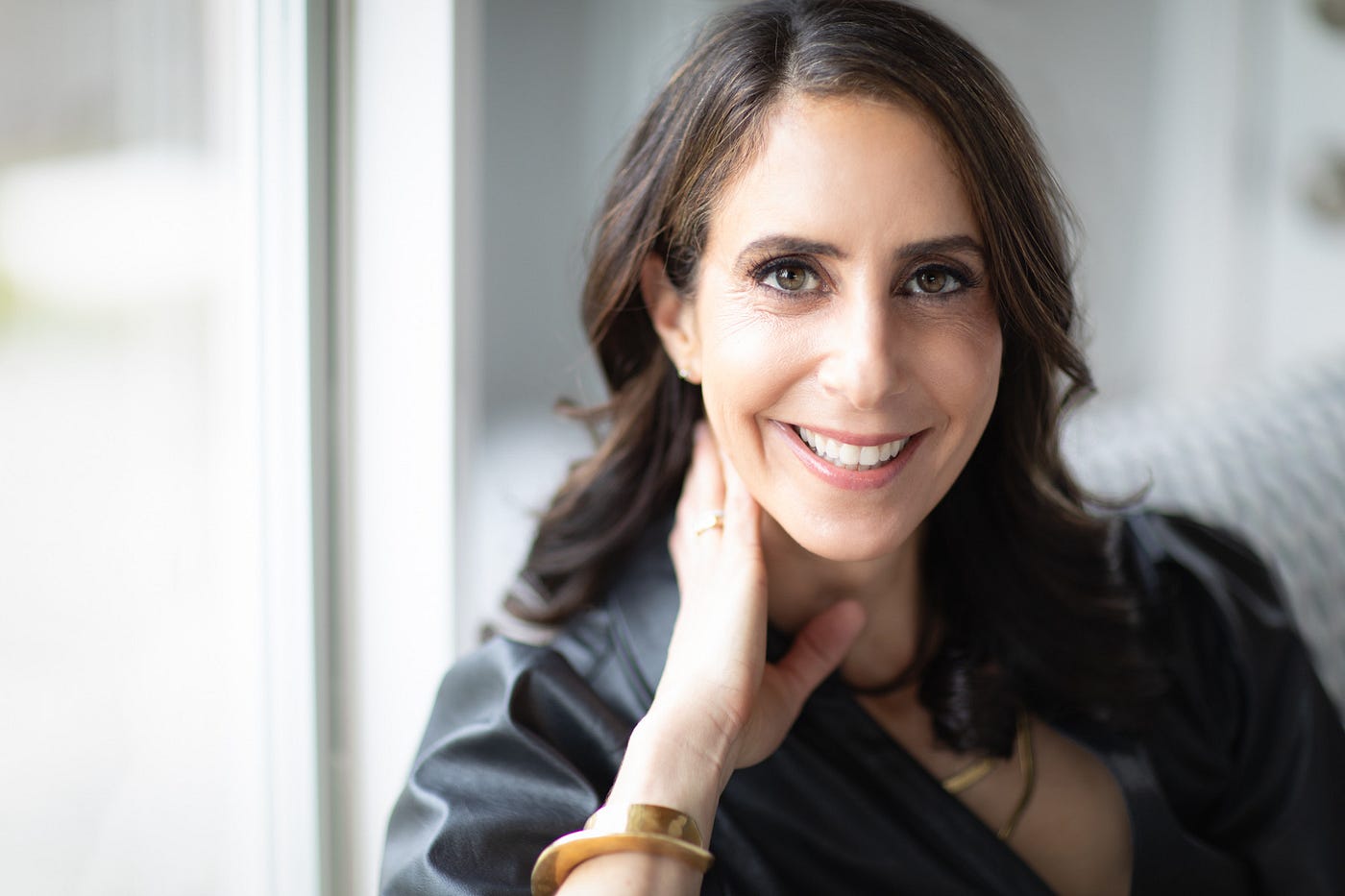
As a part of this series, we had the pleasure to interview Lindsay Levin.
Lindsay Levin is the founder of Tandem, an executive coaching practice that serves as a trusted advisor to bold CEOs, founders and leadership teams navigating growth, change and transition. As the former CMO of RXBAR, she helped scale the company from $6M in revenue to its $600M acquisition by Kellogg’s. She has since coached 100+ executives and supported management teams through roughly $3B in exits. Lindsay is also a Venture Partner at Bluestein Ventures, sits on four company boards, and teaches at Northwestern’s Kellogg School of Management.
Thank you so much for joining us in this interview series! Could you share your “origin story”? How did you begin your coaching journey, and what challenges did you face in the early days?
Many paths can lead to coaching. After college, I spent a few years in economic consulting and four years designing and leading global educational programs for Stanford. I earned my MBA at Kellogg and went into brand management at PepsiCo. In 2015, I joined RXBAR as CMO when the company was seven people, and we scaled it from $6M to a $600M acquisition by Kellogg’s. From there, I became Chief Marketing and Sales Officer at a vertically integrated cannabis company, before turning to coaching full time.
What RXBAR taught me is that scale is as much a human challenge as a business one. In a high-growth company you are constantly leading teams you’ve never led, making decisions you’ve never made, at a size you’ve never operated. The strategic questions are hard. The personal ones are often harder: who do I need to become, what do I let go of, and how do I keep myself and my family intact along the way.
I remember working on a forecast with no idea what I was doing, throwing myself on my bed and crying, “I have NO idea what I’m doing!” (My husband very calmly assured me, “It’s fine. You’ll be fine.”) At PepsiCo, I’d been tagged “high potential” and given a coach for three sessions to debrief an assessment. At RXBAR, our CEO hired a coach for all of us, individually and as a team, and for the first time, I understood what coaching could really do. Having a dedicated space to work through the business and the personal was fundamental to our success. It gave our leaders somewhere to think before acting, and it made us a stronger team.
This is what pulled me into coaching. I’ve always loved the intersection of business and humanity. The emotional side of leadership (fear, confidence, ego, trust) shapes how a company actually runs: how decisions get made, how teams fight, who stays and who goes. I received my coaching certification through Northwestern and earned my PCC through the International Coaching Federation. Honestly, my clients don’t care about the letters, but the training keeps me learning. I spent five-plus years in an established coaching practice, and then founded Tandem to be that space for leaders going through growth, change and transition. At this level, coaching isn’t a luxury. It’s a necessity.
My biggest early challenge was unlearning my operator reflexes. For twenty years I’d been paid to have the answer. As a coach, my job is to help leaders find their own, and to know when my operating experience helps and when it gets in the way.
Which three character traits do you think were most instrumental to your success? Can you share a story or example for each?
Curiosity. Everyone is infinitely more interesting to me than I am to myself! I honed that muscle in my twenties, leading Stanford educational trips around the world and spending weeks at a time asking incredible people about their lives. Today it’s the most important tool I bring to coaching. What a client brings in the door is usually the starting point, and rarely the whole story. If I jump to advice, I solve the wrong problem. If I stay curious and keep asking, we get underneath it… to the fear, the old pattern, the thing they haven’t said out loud yet. Curiosity also keeps judgment out of the room. When people feel explored instead of evaluated, they tell you the truth.
Experimentation. My career has not been a straight line… consulting, high-end travel, PepsiCo, RXBAR, cannabis, and now coaching, ventures, boards and teaching all at once. Every move was an experiment, and honestly, a lot of them were anxiety-producing. I left a stable career at PepsiCo for a startup when my son was ten months old. Later I walked away from operating, the only thing I’d ever been paid to do, to start over as a brand-new coach. Each time I wondered if I was making a huge mistake, and each time it stretched me in ways I couldn’t have planned. I’m still experimenting. Right now I’m going deep on mindset coaching and building new sessions at Kellogg, and some days I still feel like a beginner. That feeling is the point.
Love. Unconventional, I know! I always find something I love about the people I work with and the work I’m doing. It keeps me open. Very few issues are black and white, and when I genuinely care about someone, I can sit with the nuance and tell them the hard thing at the same time. I’ll always tell a client when they have spinach in their teeth, and they know it comes from care. My clients can feel that, and it’s what makes hard conversations land.
Can you share your favorite “Life Lesson Quote”? Why does that resonate with you so much?
“Between stimulus and response there is a space. In that space is our power to choose our response. In our response lies our growth and our freedom.” — Viktor Frankl
I love this quote. So much of coaching happens right in that space. An email lands, a board member pushes back, a kid melts down… and we have a split second before we react. The work is making that split second a little bit bigger and understanding when our natural reflex is right and when it needs some work.
In that space, I ask myself two questions: what do I want to do, and who do I want to be?
A few examples:
At home: I yell at my kids sometimes. I hate it. My chest gets tight and I feel sick afterwards. Who I want to be is a mom who repairs… so I go back, own it, and tell them it’s not their fault.
A CEO: “Should I just fire them?” Maybe. But who do you want to be as a leader? We started with a real feedback conversation instead.
A founder: When she gets flooded, her reflex is to grab for whatever she can fix, right now. So we built a ritual. Before she reacts to anything big, she sits down with pen and paper and gets every thought out of her head first. Who she wants to be is the steady one in the room, and the pause is how she gets there.
We are the authors of our own stories, but oftentimes we need an editor to help us see ourselves from a different perspective. With my clients, I get to be that editor, helping them find the space and choose what comes next.
What are some of the most interesting or exciting projects you are working on now? How do you think that might help people?
My clients span CPG, aerospace, construction tech, private equity, AI, sexual wellness… the list goes on. The industries couldn’t be more different, but the people and scaling challenges are remarkably similar: the team that stops trusting each other, the founder who can’t let go, the leader who has outgrown their own job. Scaling is scaling, whatever you’re selling.
One project I’m loving right now is coaching the entire C-suite of a fantastic food company. I always say the company growth curve moves faster than the individual growth curve. Every time the company doubles, each leader has to become a different version of themselves. I coach each executive one-on-one, and I work with them together as a team.
The team work started with trust. Before we touched strategy at their first offsite, each leader shared their personal story — where they grew up, the moments that shaped them, their highs and lows. Vulnerability-based trust is what lets a team debate hard and still land on the relationship. We also talked openly about the stages of team formation. Every team forms, storms, norms and performs, and in a scaling company you storm over and over again. Naming it takes fear out of it. They wrote their own operating norms, like a 48-hour rule for raising friction, and walked out lighter, more open and genuinely energized. I take my role in partnership with a team’s journey very seriously.
At Kellogg, I’m building a session on how executives can deepen real human connection at work in the age of AI. As more of our work runs through technology, being able to truly see and know the people around you becomes a competitive advantage.
I also teach a Kellogg session on what’s off LIMITs in leadership: Letting go, Inner critic, Managing anxiety, Integrated identity and a Trusted table. It’s the stuff leaders carry and rarely say out loud, and it sits at the heart of my coaching. So much of what clients bring me is off limits everywhere else… team dynamics, their own anxiety, the edges of their leadership. Coaching is the place to say the unsaid.
Without saying any names, could you share a particularly memorable success story from your coaching career?
Some of my favorite moments are when clients look back and realize they’ve surpassed their own expectations of themselves as leaders. I love when I get to know their full selves outside of work, too.
A few success stories come to mind.
The first is a CFO. Technically brilliant and deeply committed, but buried in reactive work. He doubted his own judgment, deferred to senior partners and took on too much for his team. We worked on trusting himself, delegating with clear expectations, speaking up directly with senior leaders, and redefining his job from getting everything right to driving strategic value. He rebuilt his team’s systems, and today he has a strong sense of agency and leads, mostly from calm and clarity.
The second is a founder and CEO who was still running her brand like a scrappy startup long after it had outgrown that. She was doing the admin, the hiring, the vendor fights… all of it. We worked on delegating, building real scorecards and owning the hard conversations herself. Today she’s recruiting with confidence, holding firm lines on tough negotiations, and running the company like the big business it is.
Now we’re working on her next leap: from where she is today to a CEO running a company five times the size. Those are two different jobs. We mapped what the 5X version of her does every day and honestly rated where she is today. Three big shifts came out of it: building the team that runs the business, resourcing ahead of growth before something breaks, and telling the company’s story over and over to her own team and not just her investors. Plus a few things to let go of, like frugality as a reflex and jumping into every customer escalation. She gave herself a 1 out of 5 on storytelling. I love that she was that honest. Honesty like that is where growth starts.
The third is a founder who was in a total twister over fundraising and constantly comparing himself to other CEOs. His inner critic was loud and he was in every decision. We worked on trusting his own style of leadership, giving clearer feedback, and getting out of the weeds. He took a multi-week vacation and came back to the team’s best sales month yet. Within a year the company grew from 35 enterprise customers to 120 and he describes himself as more grounded and far less second-guessing.
How has your approach to coaching evolved over the years, and what personal learnings have you applied to your own development?
When you’re a fresh coach, there are a few traps. You follow the rules of coaching to a tee. You get stuck in the advice game. Or you get caught up in whether your client likes you. I fell into all three.
My style now is much more fluid. I read where the client is and decide in the moment whether we need to go deep on a topic, get to the emotion at the root, challenge their thinking, or lift them up. It’s a total dance. At Tandem, I describe it as combining the science of how people grow with the art of how leaders thrive. I’ve also learned when to bring in my operating, investing and board experience. I try to stay pure coach, but sometimes a client needs a thought partner on a sticky issue, and staying in one lane would be a disservice.
People tell me all the time that I remind them of Wendy from Billions or a CEO whisperer. I’ll take it! A lot of my work is being the space where leaders say what they can’t say anywhere else. It also gets very tactical. One day I’m helping a CEO find the real issue underneath the one they walked in with (it’s almost never the first thing they say). The next I’m prepping a management team to present to buyers in a sale process, or pulling from my CMO days on a go-to-market problem. Sometimes I match a client’s energy, and sometimes I figure out what energy they actually need. On a recent trip to New York, one session was drinks and french fries with a client going through a really hard stretch, reminding her of everything she’s built. And I share a lot of my own stories, the embarrassing ones included, because it helps people feel less alone.
A few things I come back to over and over:
Lowering the stakes. Clients get so caught in the situation in front of them that they lose the bigger picture. I do this for myself too. When the stakes feel lower, I’m more myself and I have more range.
What you want. Our brains slip into fear mode so easily, and fear narrows our options. When we shift from “what I don’t want” to “what I want,” a much bigger range of possibilities opens up. Negativity never helps.
Confidence. Clients often say they want to be “more confident,” which on its own doesn’t mean much. Usually it’s about confidence around certain people or in certain situations. Their capabilities are exactly the same in every room. So we work on carrying what they can do in one room into the next.
I live this, too. I recently facilitated an offsite for three aerospace companies rolled up under one private equity firm. A few years ago that would have terrified me. All I know about aerospace I learned from Star Wars movies. Once I realized my job was helping the team synthesize what they were seeing, and that I didn’t need to out-expert them, I could relax. By the end of the day, three separate breakout groups had landed on the same strategic direction on their own.
And honestly, I learn as much from my clients as they learn from me. It’s a two-way street. Watching a founder finally have the conversation she’s been dreading gives me the courage to have mine. A CEO who fiercely protects time to think reminds me to stop filling every quiet minute with a podcast. I walk out of sessions a better coach, and usually a better mom too.
Being a mom has taught me so much about this work. My son is 11 and my daughter is 9, and every few months they become slightly different people, which means I have to become a slightly different parent. Executives in scaling companies go through the same thing. What worked at the last stage stops working. They want more independence and still need to know someone’s in their corner. And just like with kids, growth spurts are messy, setbacks are part of it, and you can’t do the growing for them.
How do you incorporate feedback into your coaching practice to continuously improve?
Sometimes things are just off with a client. We may not be meeting often enough, our sessions are staying on the surface, or we’ve gotten into a rut of talking about the same things. When I feel it, I say it. Then we brainstorm together on what to do differently and reset.
With one founder, our sessions had gotten scattered, and the biggest issues weren’t making it into the room. So we added a short framing doc before each session and a real look at the business and her leadership. Our conversations got so much sharper. I also build a formal check-in around the mid-point, where either of us can say what’s working, what isn’t, and whether to change course.
It’s the same as any relationship. Things can get off. Instead of making up stories or letting it fester, it’s always better to say the hard thing and figure out what’s next together. It’s also exactly what I coach my clients to do. So many of them come to me frustrated about someone and I’ll ask, “Did you say something?” And they’ll say, “Well, I sent a Slack.” A Slack! The drama in your head disappears once the real conversation happens.
Can you discuss an innovation in coaching that you believe is currently underappreciated but has the potential to significantly impact the field?
Coaching the whole system. Most coaching still happens one leader at a time, in a bubble. But leaders don’t work in a bubble. A CEO can make huge personal progress and still walk back into a leadership team where the same patterns play out every Monday.
What I’m seeing work is combining individual coaching for each executive with team coaching and offsites for the group. In one-on-ones, each leader works on their own growth edge. Then in the team setting, we make the dynamics visible: who over-functions, who goes quiet, where trust is thin, how decisions actually get made. The team writes its own norms and holds each other to them.
The individual work and the team work feed each other. When the CFO is working on speaking up and the CEO is working on stepping back, and the whole team knows it, the change sticks so much faster.
In what ways can coaching address the evolving mental health needs of diverse populations in a digitally connected world?
There is no replacement for human connection and presence. I use LLMs to help me with all sorts of problems I’m working through. But sitting across from a real human (live or on Zoom) who knows so much of the fabric of who you are, while you work through sticky issues around growth, can’t be replaced. We need to feel seen and validated. An LLM can imitate that, but it isn’t real.
The theme I see most with founders and CEOs is loneliness. They may have a great team, but they can’t share what’s really inside their heads with them. The hardest problems land on their desk precisely because nobody else can solve them. A coach can be the place to put all of that, and someone who both challenges and supports you, which is so needed in a hyper-connected world where everyone is reachable and so few people feel known.
I’m also really clear on the line. Coaching is forward-looking and goal-oriented. It isn’t therapy, and part of a coach’s job is recognizing when a client needs a clinician and helping them get there.
How do you foresee artificial intelligence and machine learning transforming the coaching industry in the next decade?
AI will become a basic coach and a really useful tool for so many people. It can teach a framework, help someone prep for a tough conversation, or talk through a problem at 11pm. I use it every day to prep for sessions and pull themes from my notes, and it frees up more of my time for the actual coaching.
But can AI be a live, trusted companion? I don’t think so. AI’s answers get cheaper, feeling seen gets rarer. We can communicate more than ever and still feel less known.
I’m building a Kellogg session for executives on exactly this: connection in an AI world. Here are a few ideas from it:
- Make people feel seen. The best leaders leave people feeling bigger and clearer. The worst leave them feeling invisible.
- Listen without fixing. In one exercise, one person talks and the other can only ask questions. No advice, no “that happened to me too.” People are always shocked by how rare it feels.
- Catch your inner judge before it drives the reaction.
- Protect the in-person moments: the hard feedback, the reset, the celebration, the offsite.
I think we’ll see a lot more demand for dinners, offsites, retreats and cohorts, and for coaches who are deeply human. When AI can produce the answer, the leadership advantage is helping people feel seen, safe, challenged and connected enough to do their best work.
What role do you believe ethical considerations and privacy concerns will play in the future of coaching, especially with the increased use of digital platforms?
A huge one. Trust is the whole product. My clients tell me things they haven’t told their board, their co-founder, sometimes even their spouse. If they ever wonder where that’s going, the coaching stops working.
It gets even more important when I coach several people on the same team. Each relationship has to be its own vault. I’m really explicit about that up front, and I never carry what one person shares into a conversation with another.
The harder question is how to be open, vulnerable and real when you suspect everything might be recorded. Every meeting has a notetaker now. Every message can be forwarded. People are getting more careful and more polished, and honesty pays the price. Coaching has to be the exception: a confidential space where a leader can say the half-formed thought, the fear, the thing they’d never say in a board meeting, and know it stays in the room. If they can’t be real with me, we can’t do the real work.

Could you list and briefly explain “Top 5 Trends Shaping the Future of Coaching”? If you can, please share a story or example for each.
1. Presence is premium
As AI takes on more of the information and advice, people will pay for a human who is fully with them. Most leaders are booked meeting to meeting with zero space to think. A coaching session is one of the few hours in their week built for stillness and real thinking. One founder I worked with was going through a co-founder split, a personal divorce AND a Series A raise, all at the same time. Our sessions were the one place to slow down, untangle what was business and what was personal, and decide what to do next. Nobody needed another app in that moment. They needed a human sitting across from them.
2. Group connection
Team offsites, peer cohorts, intimate dinners. There’s a kinetic energy when people are actually in a room together, and it builds on itself. You can feel the room shift when a leader tells a story they’ve never told their team, or when a group finally says the thing everyone has been thinking. The realness people experience together is hard to get on a screen, and teams carry it with them for months.
3. Friction is the point
We expect everything to be frictionless now: same-day delivery, AI meeting notes, an answer in seconds. And we’re starting to expect people to be frictionless too. Always on, always optimized, no bad days, no learning curve. Humans aren’t machines, and pretending we are is dangerous. Growth IS friction. Resilience gets built in the hard conversation, the failed launch, the decision that keeps you up at night. Smooth all of it away and you get leaders who have never been tested, and teams that crack the first time something goes wrong. Some of my best work with clients is helping them sit in the discomfort a little longer instead of rushing to make it go away.
4. Experimentation
The best leaders I work with treat decisions as experiments. One founder was spinning about a fundraising decision. Once we named it as a normal stage of working through a big choice and set up a few small tests, the dread turned into data. Coaching is becoming a lab for trying things, and less about finding the one right answer.
5. The pace of change
Organizations are scaling faster than ever, and people rarely scale at the same speed. A leader who was perfect for a $10M company has to become someone else at $100M. And now AI is speeding everything up. Products ship faster, competitors move faster, and humans are expected to learn, adapt and decide faster too. All of it puts real pressure on people’s judgment, their nervous systems and their sense of who they are at work. Coaching is moving from a nice-to-have perk to the way growing companies keep their leaders ahead of the business, and grounded enough to keep up.
How do you envision the integration of coaching within organizational cultures changing the landscape of leadership and employee development?
At RXBAR, culture was a catalyzer. We didn’t just talk about what to do. We talked about how to be. It was some of our secret sauce, and coaching is how you build the “how to be” muscle across a whole company.
I’m seeing three shifts, and I see all three in my own work.
First, coaching is showing up earlier, at the moments that matter. After one company was acquired and restructured, its senior team brought me in to rebuild trust, agree on a shared 12-month vision and write a handful of operating agreements they check in on every six weeks. Private equity and venture firms are bringing in coaches right after a deal or a raise, instead of waiting for things to break. Founder/C-Suite execs are realizing on their own that they need a confidante.
Second, it’s moving from the individual to the whole team. At one food company, every senior leader gets one-on-one coaching informed by 360 feedback, and each leader shares their 360 themes and what they’re working on with their own team. The individual sessions stay confidential, and the patterns across the team shape our offsite agendas.
Third, coaching behaviors are becoming management behaviors. At one fast-growing snack brand, we made feedback a standing part of every one-on-one: feedback for the manager, for the company and for the employee. The best leaders are learning to ask better questions, give direct feedback in person (and not over Slack!), and grow their people before deciding to just fire them.
When coaching is woven into the culture, it stops feeling remedial. It becomes how great people get even better.
What do you see as the biggest challenge facing the coaching industry today, and how might we overcome it?
Anyone can call themselves a coach. There’s no barrier to entry, quality is all over the map, and a leader who has one bad experience often writes off coaching entirely. A few more challenges stack on top:
The flood of cheap, always-on AI coaching. It will help a lot of people. It will also convince some that a chatbot is the same as a coach who knows them, challenges them and notices what they aren’t saying.
Coaching as a fix for a problem leader. Too many companies still bring in a coach only when something’s wrong, which makes coaching feel remedial. The best leaders get coached before the hard moment arrives.
Coaches who’ve never been in the seat. Leaders at high-growth companies want someone who understands the board meeting, the burn rate and the 2am worry.
Skipping the chemistry check. I always tell prospective clients to talk to at least three other coaches before they choose one. Chemistry and connection matter SO much. The best coach on paper won’t help you if you don’t trust them enough to tell them the truth.
The way through is simple: do great work and let clients do the talking. When the work is real, they feel it… and they tell their friends. A founder who finally stops second-guessing every decision, a team that actually trusts each other, a CEO who calls a friend and says “you HAVE to talk to my coach.” Nothing builds this industry faster.
What is one long-term goal you have for your coaching practice, and how are you working towards it?
I want Tandem to be the partner high-growth executives and companies call for their biggest moments: scaling fast, raising capital, getting acquired, building a new leadership team, and the personal and professional complexity that comes with it.
What drives me is the ripple effect. When I help a CEO lead better, or even just have a better day, it reverberates through the whole company. Their team gets a calmer, clearer leader. The team brings that home to their families. One great session can travel a LONG way. A client recently asked if I’d talk to his sister just to have a chat. Of course, I said yes!
I love being the space where leaders work through the personal and the professional together, because they’re never really separate. My hope is that every leader and team I work with walks away stronger than when we started, and passes some of it on.
I coach men and women (I once thought about focusing only on women, but I love my male clients way too much). I also want to build something for women leaders specifically. Small retreats where they can step out of the noise, let their nervous systems actually settle, and sit in a room with other women carrying similar weight. So many of the women I coach are holding a company and a family at the same time, and rarely get to put any of it down. I don’t have it all figured out yet, but I know the room I want to create.
How can our readers continue to follow your work?
Come say hi! You can find me at thetandem.co and on LinkedIn, where I share what I’m seeing in coaching, venture and the classroom. And if you want to hear more about being a working mom through all of it, I talked about career, motherhood and trade-offs on the We’ll Sleep When We’re Dead podcast.
Thank you so much for the time you spent on this. We wish you continued success!
About The Interviewer: Chad Silverstein is a seasoned entrepreneur with 25+ years of experience as a Founder and CEO. While attending Ohio State University, he launched his first company, Choice Recovery, Inc., a nationally recognized healthcare collection agency — twice ranked the #1 workplace in Ohio. In 2013, he founded [re]start, helping thousands of people find meaningful career opportunities. After selling both companies, Chad shifted his focus to his true passion — leadership. Today, he coaches founders and CEOs at Built to Lead, advises Authority Magazine’s Thought Leader Incubator. Learn more at www.chadsilverstein.com