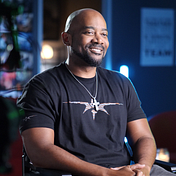
My name is Erica Martin and I started my entrepreneurial journey working in our family business, a martial arts school, at the age of 14.
Onboarding is a crucial but often overlooked step in the employee lifecycle. A successful onboarding process will make the new hire feel part of the team, provide further clarity around the role and responsibilities, and get them up to speed and performing fast. In this series, we are talking to prominent HR and business leaders about how they seek to create exemplary onboarding experiences. As a part of this series, we had the pleasure of interviewing Erica Martin.
Erica Martin is a seasoned entrepreneur who has founded and led 9 successful businesses over 17 years. She gained national recognition for growing her first business, a martial arts school, to the top .01% of the industry. She went on to become one of the top consultants in the martial arts industry where she helped school owners add over $10 Million in revenue through her systems. Today, she helps small business owners, of all kinds, grow sustainably and profitably. www.TheWinnersCircleStPete.com
Thank you so much for your time! I know that you are a very busy person. Before we drive in, our readers would love to “get to know you” a bit better. Can you tell us a bit about your ‘backstory’ and how you got started?
Thank you for having me, it’s an honor to be interviewed! My name is Erica Martin and I started my entrepreneurial journey working in our family business, a martial arts school, at the age of 14. My dad was a world champion martial artist. He built our family home attached to our business, a martial arts school, so I literally grew up in the family business. My mom’s parents and grandparents were also entrepreneurs. You could say entrepreneurship is in my blood.
When I was 15 I told my dad I wanted to own a martial arts school, just like him. This inspired him to seek out a martial arts business consulting group to help him grow the business, and create an opportunity for me.
By the time I was 16 I was giving up my weekends to be able to go with him to the consulting meetings, so I could learn how to grow a martial arts business. As you can imagine, I was the youngest person in the room by about 30 years, and one of the only females.
I implemented what I learned from the meetings in my dad’s business. Our student base increased dramatically and our revenue skyrocketed! When I turned 18, I pitched the idea of skipping college to open my own martial arts school to my dad. He supported me and I opened our first branch location.
My first year in business my school grossed $350,000 which was 3x the national average for martial arts businesses. I won Tampa Bay Business Journal’s Top 30 Under 30, and I was the youngest recipient at 20 years old.
By the time I turned 25, we’d outgrown our 3,000sq/ft retail space, and my dad and I decided to purchase a commercial building closeby so I could expand my school. A year later I was featured on the cover of 3 industry magazines. My school grew to be in the top .01% of martial arts schools worldwide. I managed 26 employees and sponsored 7 local elementary schools through their Commitment to Character Program.
I’d hit all my business goals by the time I turned 26! I had martial arts school owners from all over asking me how I’d grown my school successfully. I wanted to help them and expand my impact, so I decided to turn the school over to my dad and start a consulting company that specialized in helping martial arts school owners run profitable After School and Summer Camp programs.
There were a lot of naysayers at the time, but within 2.5 years it became the top consulting company in the industry. My clients added a collective $10 million in additional revenue to their businesses, and were able to serve thousands of families in their communities.
I was invited to speak on stage at MGM Grand in Las Vegas for the Martial Arts Supershow, the largest trade show event in the industry.
In 2017 I sold my equity to my business partner, so I could focus on working with small business owners outside of the martial arts industry. I was flown all over the world for speaking engagements. I had the opportunity to work with 6,7 and 8 figure business owners.
I am proud to say in the past 9 years I have helped thousands of business owners implement systems which have helped them increase their revenue, scale their businesses and serve more clients.
It has been said that our mistakes can be our greatest teachers. Can you share a story about the funniest mistake you made when you were first starting? Can you tell us what lesson you learned from that?
When I opened my karate school in 2006 digital marketing didn’t exist, and print advertising was expensive. I needed to find a cost effective and efficient way to make a personal connection with my ideal clients, which were families.
I knew if I could get in front of parents with kids, I would be able to get the kids excited about martial arts training, in hopes the parents might agree to give it a shot. So, I printed my business cards with a 30 Day Free Trial pass on the back, which I called a “VIP Pass.”
I scheduled time every day to find places in the community where parents would be hanging out with their kids, like parks, or the local library. I carried a notepad and pen, and I tried to collect the name and phone number of the parents so I could invite their kids in to try their first karate class.
One day, I had a stroke of genius… or so I thought!
My martial arts school was located in a strip mall with a Publix grocery store. Everyday after school I’d see moms with their kids go into the Publix to do their shopping. I decided Publix would be the perfect place to hand out my VIP passes!
The next day I gathered up my cards, pen and notepad and walked into Publix. I combed the isles talking to anyone I could see who had a child with them. I probably collected 10 people’s phone numbers that day! The next day, I did the same thing and collected another 10 phone numbers.
I thought I’d hit the motherload!
Eventually, I started to see the same people over and over again at my “home Publix” so I decided to expand my reach and try a different Publix.
I drove down the road to a Publix I’d never gone to. I started my usual plan, going up and down the isles talking to parents with kids, and collecting phone numbers. I had just finished writing down a lady’s name and phone number when I felt a presence behind me followed by a big booming voice, “Erica…”
I turned around and found myself looking up at the father of one of my former high school basketball teammates, who happened to be the General Manager of the store.
“Erica, please don’t solicit my customers.” He said with fatherly authority in his voice.
My face flushed immediately. I had no idea what I was doing was wrong. I was only 18 at the time. I apologized and left the store, but not without a few names and numbers on my notepad!
This is when I learned the lesson that it’s better to ask for forgiveness than to ask for permission. I also learned that building a relationship with employees of complementary businesses gives you more freedom to bend the rules.
Why did one store let me solicit their customers while the other store kicked me out?
It was probably because the employees in my “home Publix” me in the store buying groceries, multiple times per day. I would always say, “Hi!” to everyone and they liked me, so they looked the other way when I solicited their customers.
Even though I never went back to the Publix I got kicked out of, I was still able to sign up some new students, who trained with me for years, from that embarrassing day!
None of us are able to achieve success without some help along the way. Is there a particular person who you are grateful for who helped get you to where you are? Can you share a story?
I am so grateful for the support my dad gave me when I was 18 and dreaming of opening my own martial arts school. I remember being in the car with him while he was first scoping out the vacant retail space that would eventually become my school.
He was really excited about it, and so was I!
When we got home, he sat on our couch and started thinking hard.
I heard him say to himself, “It’s a perfect location, but we don’t have anyone who’s ready to run a school.”
“I can do it. I can run the school.” I replied.
He looked up at me, thought about it for a minute and replied, “You could do it. You could run a school.”
His faith in me gave me confidence. He also gave me permission to skip college so I could get a head start in business. I will always be grateful to him for believing in me and supporting me when I was first getting started.
Can you please give us your favorite “Life Lesson Quote”? Can you share how that was relevant to you in your life?
My all time favorite life lesson quote is from Zig Ziglar. He said, “You will get all you want in life, if you help enough other people get what they want.” I keep this quote top of mind in every business endeavor.
If I get too focused on the numbers, goals or strategy I can find myself overwhelmed and burnt out. Those metrics are important, but I need to look at them as the result of successfully serving my clients and community. If I focus on helping others and keep myself in a mindset of service, find myself more fulfilled and more successful.
Thinking back on your own career, what would you tell your younger self?
I love this question! I’d say the most important thing I could share with my younger self is, it’s ok to change your mind and it’s ok to fail.
I grew up with a father who started his own business and has successfully run that business for over 40 years. When I was young I put a lot of pressure on myself to model what I saw from my dad. I thought I was going to run a martial arts school forever, just like him.
When it came time for me to turn the karate school over to him because I wanted to explore new business endeavors I felt like a complete failure. My confidence shattered. I really beat myself up because I thought success meant running the same business forever.
When I look back on that time, 10 years later, I realize that was my first lesson in learning to pivot. Since then, I’ve founded and led 9 businesses. Some have been more successful than others. For a long time, I felt guilt and shame when I wanted to move onto a new endeavor, no matter how successful my businesses had become.
Today, one of my greatest skill sets is knowing when to hold ‘em, and knowing when to fold ‘em. I couldn’t have developed that intuition without allowing myself to try different things, and fail sometimes.
Let’s now move to the central part of our interview. What does the onboarding process consist of at your organization?
Over the years I’ve developed a 5 Step Onboarding System that I use in my business, and I teach my clients to use in theirs. I’ll share it with you today:
Phone Interview - We always conduct an initial interview over the phone. The purpose of the phone interview is to get a feel for the applicant. I respond to their application with an email and book a time for them to call me. I want to know, do they call on time, or are they late? What does their energy sound like over the phone? Is the background noisy or quiet? Do they sound focused or distracted? The phone interview is only 5-10 minutes. If I get a good feel for them, I’ll invite them in for an in person interview.
In Person Interview - I will typically give a simple task like, “bring in your driver’s license, social security card, and 2 copies of your resume” for the in person interview. What I’m looking for here is attention to detail. Did they bring in 2 copies of their resume? During the in person interview we get down to the nitty gritty of what’s involved in the position. I always ask, “does this sound like the type of work you’d be excited to do every day?” If they respond with a simple, “Yes!” I dig deeper and ask what aspects of the position do they feel like they can excel at the most. The key to employee retention is to put the right people in positions where they can excel. I want to weed out anyone who is “just looking for a job to pay the bills.”
Audition - If all goes well in the in person interview, I schedule their audition. This is a time where I give them a trial task and have them complete it. I don’t coach, train or mentor during the audition. I want to understand their approach to completing the work. If their approach is different from mine, I’m 100% ok with it. I just want to assess their ability to work autonomously, and see where their natural strengths are.
90 Day Probation Period - If I’ve determined I want to hire someone, we always start with a 90 Day Probation Period. During the 90 Day Probation Period we put them on the schedule and begin training. The probation period gives both me and the new employee time to decide if we want to move forward in working together. I think of it like dating, before you get married.
Hiring Meeting - At the end of the 90 Day Probation Period we have a hiring meeting. If someone is not working out for us, we thank them for their time and kindly let them go. If all is going well, we offer them a permanent position. The hiring meeting is also a great time to get feedback from your new employee. Find out what’s been working for them, and anything that’s not working. New employees are great for fine tuning your systems, if you’re willing to receive feedback.
How have your onboarding practices evolved over time and why?
Well, when I first started in business my onboarding system consisted of 3 steps:
Find a warm body
Offer them the job
Micromanage training until they quit
I would be overwhelmed and reactive, so I hired anyone willing to help me. Unfortunately, because I didn’t take the time to get to know them, I didn’t trust them to do a good job. I would end up micromanaging and causing both of us a significant amount of stress until they quit, and I had to start over again. This became an excruciating and expensive lesson in hiring slowly and ensuring there are systems and structures to support successful onboarding and training.
Could you share a successful onboarding story and what made it successful?
Several years ago, I placed an ad for a personal assistant. My consulting business was growing rapidly and I was feeling increasingly stressed trying to manage my household at the same time. I wrote an ad and posted it. I got several responses and even some personal recommendations from friends.
I was conducting in person interviews at Starbucks and one of the interviewees showed up with homemade Indian food and naan bread for me. It was still warm, and she brought me utensils so I could eat right there. I was super impressed. I broke my own rule and hired her on the spot.
She was amazing and a perfect fit for the position. But, what made the onboarding experience successful was the binder full of systems and processes I had created. Everything from how I like the laundry done, to what drawers each item went in. She was able to be successful in her role from day 1, with little training from me, because I had taken the time to clearly document my systems and expectations.
She went on to work with me in my business and was a tremendous asset to the company.
Based on your experience and success, what are your top five tips for a successful onboarding process? Please share a story or an example for each.
1 . See one. Do one. Teach one. - This one comes from my karate school days! Frequently, we would hire instructors from other martial arts schools. They had experience teaching but didn’t know our specific martial arts style. We found that the best way to get them up to speed on our curriculum was the see one, do one, teach on method. We would show them how to do a technique. Then, we would ask them to perform the same technique. Next we would ask them to explain how they did the technique and why they did it that way. This engaged all three learning modalities, audio, visual and kinesthetic. Listen, watch, do. I continued to use this method for the non-instructor positions in my school, from admins to bus drivers. It works because it keeps employees engaged in their learning and increases comprehension when they have to teach it back to me.
2 . View Mistakes as Opportunities - Intrinsically, people want to do a good job and be recognized. If you want long-term employees who are self-motivated and able to work autonomously you need to approach training with the mindset that mistakes are opportunities. The only way humans grow is by making mistakes, and learning from them. If mistakes are met with grace, and understanding from an authority figure your new employee is able to learn from those mistakes without feeling shamed or punished. This leads to increased trust, and self-motivated employees who are invested in their work, and your company.
3 . Lookout for Triple Failures - Onboarding a new employee is a fertile time for business owners if they know what to look for, and have the right attitude. New employees come in with a fresh perspective and can be a great resource for innovation and optimization. If an employee makes the same mistake 3 times during the onboarding process it’s a sign that there is a problem with the system, not the person. These “triple failures” are indicators that there is a hole or an inefficiency in your system. Something is unclear. Perhaps a step is missing. Use this opportunity to evaluate how the system could be optimized to prevent these types of failures in the future.
4 . Take a Personal Interest - When you are onboarding a new team members, it’s important to take some time to get to know them. Take a genuine interest in the human who is going to be dedicating a significant portion of their life to helping you grow your company. Find out what’s important to them. Ask questions to understand what makes them tick. People light up when they talk about things that are special to them. The better you can get to know your employees, the better you can understand what motivates them. There’s a saying I love, “People don’t care how much you know, they just want to know that you care.” The best way you can show a new employee that you care about them is by taking time to ask questions and actively listen to their answers.
5 . Follow the 4T’s: Train, Trust, Track, Train - One of the biggest mistakes made by employers is micromanaging their employees. This indicates to me a lack of training, a lack of trust, or both. It’s important to take the time necessary to train a new employee until they are proficient in their responsibilities. They need to be able to complete their tasks under your supervision, before being asked to complete them on their own. Once they have shown that they have the knowledge and capability of completing those tasks, leave them alone. Don’t look over their shoulder or check in with them multiple times per day. Instead, trust them to do their work and track their results. You should establish and communicate with them the key performance indicators (KPI’s) you will be looking for to determine if they are effective in their position. It’s extremely important to make sure the KPI’s you are tracking are achievable for the average employee. For example, we don’t let the phone ring more than 3 times before answering. We always greet someone with a “hello” and a smile within 3 seconds of walking in the door. Lastly, it’s important to remember that training is an ongoing effort. Continue to offer opportunities for training and cross-training so your employees can continue to learn and add value to the company.
Can you share 3 or 4 of the most common mistakes you have seen businesses make during the onboarding process? What should one keep in mind to avoid that?
Micromanaging - Nobody likes to be micromanaged. So why is it that most business owners micromanage during the onboarding process? There are several reasons… they really need help and they want things to work out, they are afraid of losing money, they had a bad experience with an employee in the past. I could go on, but I think you get the point. To avoid micromanaging I recommend following the 4T’s. Make sure you have systems in place that your new team members can follow on their own. Allow them the time and space to prove themselves.
Being Unavailable - This is the opposite of micromanaging. Some business owners know they need help and they are looking for a hero to save them. They want someone to come in and “just do the job.” Unfortunately, this is a recipe for disaster. I once worked with the CEO of an 8 figure company. She had some systems and processes in place, enough to get by, but her retention for sales people was dismal. She couldn’t scale the business because she couldn’t keep her sales people. When she hired me, it quickly became apparent why this was happening. When her sales people would quit she would take over the sales role, and burn herself out. Then, when she’d hire a new sales person she would spend little time onboarding them, and expect them to close at 80%. She was always “busy” so instead of looking to her for support and guidance, her sales people would quit, and she’d start the cycle all over again.
Unrealistic Expectations - It takes at least 90 days for a new employee to “know the ropes.” There is so much transition happening during that time. They need to get to know their coworkers, learn new technology and acclimate to the company environment in addition to learning their role. Slow and steady is the best way to approach the first 90 days with a new team member. It’s hard for most business owners to get on board with this but… the key is to move at your employee’s pace. If you have high quotas, and unrealistically high expectations during the first 90 days it creates unnecessary stress, and can lead to burn out. Do you want to retain employees? If you do, slow down. Remember you’re in this for the long haul. Give your new employees bite-sized goals that they can accomplish with ease. Then, praise them for it. It’s important to understand that most people want to do a good job. If people feel like they are winning they will keep striving to improve their performance.
How does or how would your approach to onboarding remote hires differ from those who will work onsite?
When working with remote hires I’ve found it’s important to start with a small test project. This gives you an opportunity to experience how this person takes direction, accepts feedback, and meets deadlines.
It’s not about whether they complete the task perfectly, it’s about assessing their approach and evaluating if it works for you and your company. Did they ask any clarifying questions, or did they just take the project and run with it? Did they complete the project on time? What was their communication like as they progressed? Was there any collaboration with other team members? If so, what was the experience like for your current team member?
I recommend setting aside dedicated time each week for training and question answering, in addition to utilizing a project management software like Slack so they can stay in close communication with you and your team.
How do you measure the success of your onboarding program?
I measure successful onboarding in 5 areas:
Punctuality - do they arrive to work on time, and do they complete tasks on time?
Conscientiousness - do they pay attention to the details?
Performance - Are they hitting their KPI’s and demonstrating proficiency in their roles?
Communication - Do they ask for help when they need it? Do they feel safe to communicate their needs?
Attitude - Do they have a can-do attitude, and are they receptive to feedback?
I rank these areas on a 1-10 scale with the greatest possible total of 50 points. I’m looking for an average of 35 points (or an average score of 7 in each category) to consider onboarding successful.
If I find that someone is ranking high in all areas except performance, this indicates either a hole in my training system or unrealistic expectations on my part.
Which tools do you use or recommend for your onboarding?
One tool that we are currently loving for onboarding and SOP creation is called Tango. It’s an AI chrome plugin which automatically creates systems and turns any process into a shareable how-to guide. It’s much more streamlined than creating loom videos, which is what we have done in the past.
We are very blessed to have some of the biggest names in Business, VC funding, Sports, and Entertainment read this column. Is there a person in the world whom you would love to have a private lunch with, and why? He or she might just see this.
I would love to have lunch with Sir Richard Branson! I’ve always admired how he’s prioritized creativity, innovation and inclusion in his companies. Not to mention we share a mutual love for the British Virgin Islands!
How can our readers further follow your work?
The best way to connect with me is through social media or email. You can find me on Facebook, LinkedIn and Instagram.
Facebook: www.facebook.com/EricaMartinConsulting
Instagram: @EricaMartinConsulting or @TheWinnersCircleStPete
LinkedIn: www.linkedin/com/in/EricaMartinConsulting
Thank you so much for sharing these important insights. We wish you continued success and good health!