The biggest challenge is not falling in love with our product(s). Instead, we have to stay laser-focused on the problems. We should be problem-led businesses!
In the realm of business, particularly with regard to tech products, growth is the key to success. However, navigating the journey from ideation to expansion presents its own unique set of challenges. How does one devise a strategy to ensure sustained growth of a product in a competitive marketplace? What are the best practices, strategies, and methodologies to accomplish this? In this interview series, we would like to speak to experienced professionals who have successfully driven product growth. As part of this series, we had the distinct pleasure of interviewing Conni Francini.
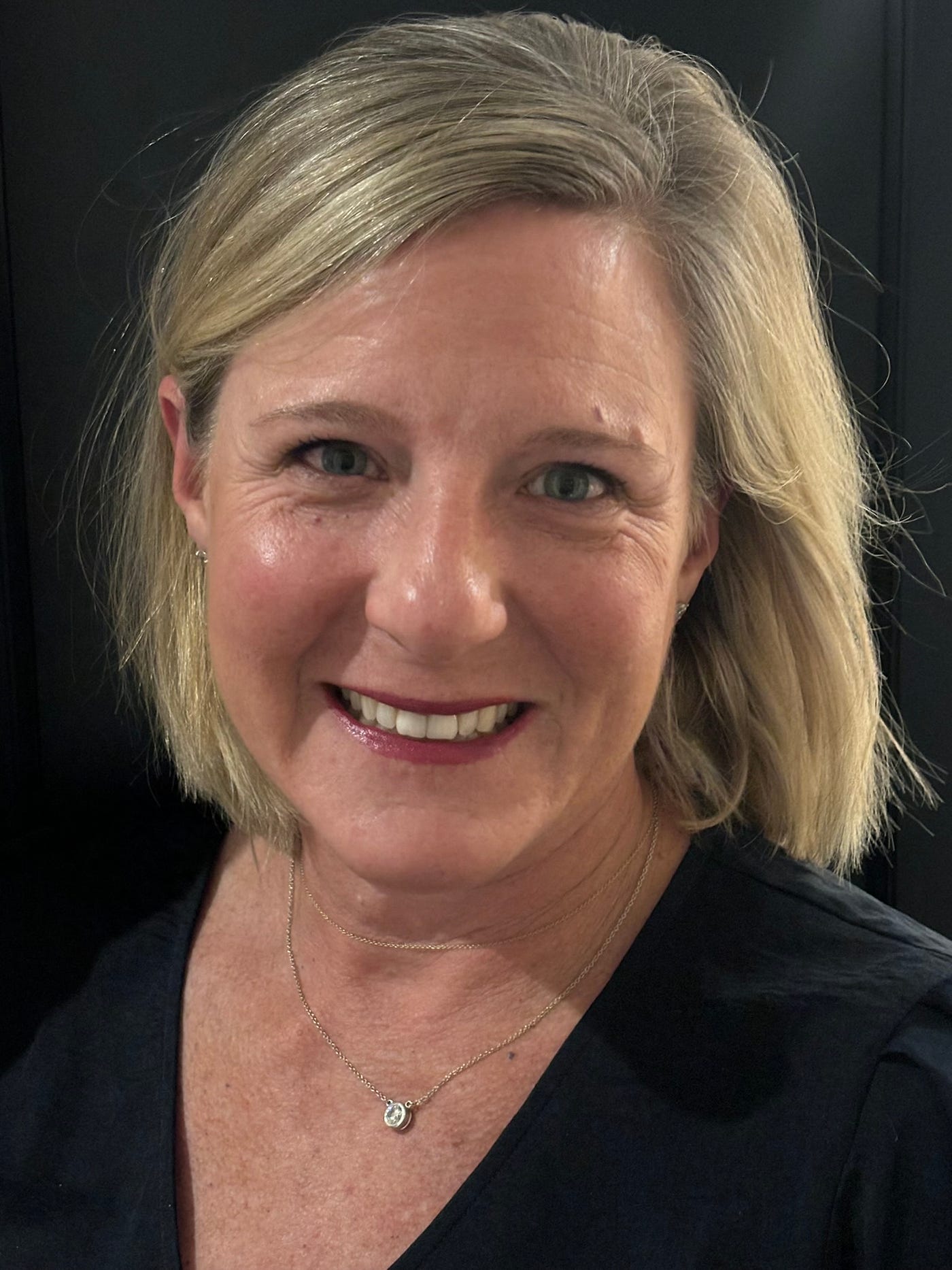
Conni Francini is a proven, results-oriented strategist, with over 25 years of leadership and consulting in K–12 education. She's developed (or improved) thousands of products at the heart of tens of millions of dollars in revenue, partnered with trusted brands such as The Smithsonian and TIME For Kids, and won dozens of education industry awards. In her current role as CEO of Clarity Consulting (www.clarityconsultinginc.com), she guides K–12 education companies on their most confident path to more successful products and services.
Thank you so much for joining us in this interview series! Before diving in, our readers would love to learn more about you. Can you tell us a little about yourself?
As a strategic K–12 education product leader, my passion is creating products that your customers love–the products that build your reputation, make a greater impact, and drive business growth. At Clarity Consulting, we work with K-12 education companies that aren’t satisfied with the performance of their products and services. So I get to roll up my sleeves and help clients capture market opportunities, stand out from the competition, and foster long-term partnerships with their customers.
Clients think of me as a “devoted big sister.” I’m able to create an instant connection with their team and company, guide them with practical wisdom and lessons learned, and am devoted to their success. I’m proud that 4 of 5 clients choose to work with us again.
What led you to this specific career path?
After an early start in communications, I moved into education, which is a big family value. I was a classroom teacher and literacy specialist in Los Angeles Unified, and professional development trainer for the state of California. Wanting to make a bigger impact, I moved to an education solutions provider, with the last 7 years as the C-suite executive for product development. Seeing the unique challenges of product development in education, I launched Clarity Consulting to elevate K–12 education companies striving to do more.
Can you share the most exciting story that has happened to you since you began at your company?
My favorite part about teaching was those “lightbulb moments.” If you’re an educator, you know what I mean! It’s that moment when students finally “get it,” seeing their hard work come to life and knowing what to do next. In my work as a consultant, I see these same moments with my clients.
One of these “lightbulb moments” happened recently. Last year, I worked with the wonderful leadership team of a service provider. We developed a strategic plan to improve their core service, and had gotten them off to a good start implementing the action plan. A few weeks ago, I got an out-of-the-blue message from my client, saying, “We’re crushing it! And, we couldn’t have done it without you.” That’s why I do what I do.
What are some of the most interesting or exciting projects you are working on now? How do you think that might help people?
K–12 education is always changing, and that’s what keeps my work interesting. With the shift toward Science of Reading, we’re looking at how established literacy companies can evolve their products and services. In some cases, it’s about sunsetting products, or repackaging or repositioning existing products. Or–one of my favorite projects–creating a strategy and product roadmap to help them become a stronger market leader.
There are also enormous challenges around teacher burnout and retention, as well as school culture and social emotional learning (SEL) needs. We’re working with growth-minded companies with their much-needed solutions. These newer companies come to us for guidance to make their products better and their messaging more compelling.
You’re a successful business leader. What are three traits about yourself that you feel helped fuel your success? Can you share a story or example for each?
I believe values–how we think, speak, and act–are at the heart of our success. So, my personal values help shape the values of my company. I just can’t do something I don’t believe in or stand behind.
I’ll start with integrity: doing what’s right even when no one is looking. I think it’s the older sister in me: a sense of responsibility to set an example for others, whether at home, in school, or at the dance studio. In my professional life, it’s what made me a trusted team member and product leader. It’s what’s behind our long-term client relationships.
The second trait or value behind my success is commitment: the sheer will and determination to get something done. My friends would tell you about when I ran a full marathon with just 13 weeks of training. On the professional side, I think about facing challenges head-on and finding a way forward.
A third trait is wisdom, or perhaps being a lifelong learner who shares with others. More than academic or technical knowledge, I share what’s behind my successes and–more importantly–my failures. This helps put my clients at ease, as they can count on me to share lessons learned.
Do you have any mentors or experiences that have particularly influenced you?
Hmmm…one product experience comes to mind. I developed a product that opened up a new line of business for the company–and had a purchase order waiting from a long-time customer–so there was a ton of pressure to get it right and finish on time. Once we saw it in classrooms, I remember the kids’ faces, so confident in expressing themselves. And, one teacher hugged me, saying the product had changed her teaching and sparked something in her students. I stood in the back of that classroom and cried. I felt so proud of what we’d created because it helped transform those classrooms and schools. And the new market drove multimillion dollar growth for the company.
What have been the most effective tactics your organization has used to accelerate product growth?
Successful education products make a difference for students, teachers, administrators, and parents. In our work with clients, it’s really less about making and more about listening (and observing). We pay attention to what’s happening in education. We ask their customers questions. We go into classrooms to see what’s going on. We sit it on professional development to hear what teachers are talking about. What we hear and see helps make products customer favorites and tells us exactly how we should talk about the product.
What do you see as the biggest challenge with respect to scaling a product-led business?
The biggest challenge is not falling in love with our product(s). Instead, we have to stay laser-focused on the problems. We should be problem-led businesses! If we’re solving problems in education, we’re going to win the hearts (and the business and the trust) of our customers.
What, in your view, is a good litmus test to screen for a skilled and effective growth manager?
An effective growth manager can excel in three important areas: assessment, strategy, and implementation. First, they can determine what’s working and what isn’t, and what opportunities are on the table. Second, they can create a picture of what success looks like, that vision that tells us where we want to go. Finally, they can see how to get from here to there and guide the team or organization to that destination.
Can you describe a product growth tactic you or your team has used that was more effective than you anticipated? What was the goal, how did you execute, and what was the outcome?
One super-successful education product was born from customer partnerships, as a sort of custom product. Customers said, “We love what you do, and we wish you had a product to meet this statewide initiative. Can you create something?” It was a bit of a leap for the company, but we felt confident we could make a product educators in that state would love. So, we worked with customers as partners, letting their feedback and wish lists guide our product team. In the end, we far exceeded our expectations for market share. And, we strengthened our trust with educators in that state because of how we’d worked together.
Thank you for all of that. Here is the main question of our interview. Based on your experience, what are your “5 Best Ways to Drive Product Growth”? If you can, please share a story or an example for each.
1 . Understand the market. If we want to drive product growth, we have to address market needs. Understanding the education market means knowing the major changes in frameworks, standards, and pedagogy. Certainly funding plays a role. It also means understanding what’s happening in schools and districts-–what’s keeping educators up at night. All of this research can help us see the most important problems that need solving.
2 . Listen to customers. Listening to customers has helped me to turn product ideas into customer favorites because customers really see and feel themselves in the product and its messaging. There are a few key ways to listen. Focus groups with thoughtful questions can reveal a ton of insights and can be done throughout the development process. One-on-one conversations, even informal ones, can reveal important information or new ideas. And, observations on campuses, in classrooms, and in professional development settings can help us understand day-to-day experiences or see our products in use.
3 . Lean into what makes your company unique. There are so many companies out there, so it’s important to stand out. One of your best paths to product growth is to stay true to what makes your company unique. Your story and your “why” can serve as a compass for growth, helping you connect with the right customers. Your core strengths can give you direction to build where you can excel.
4 . Be the “easy” button. I’ll share a great story about developing a multi-year product roadmap. As part of my research, I asked the sales team to name the company’s best products and why. Every best product was described with a single, consistent word: easy. Easy to explain. Easy to understand. Easy to sell. Easy to implement and use. In my work with clients, we always look for ways to “Be the easy button” for their customers. This makes product development faster and more profitable, and it makes marketing and sales more effective.
5 . Leverage your content. If you’re looking to scale, a great strategy is to build on what’s working. A great place to start is to look at your current product(s). Look for content that can be repackaged into new products, repositioned for a new audience, or even sold into a new market. In this way, you can get more out of the content you’ve already created.
What is the number one mistake you see product marketers make that may actually be hurting their growth outcomes?
Hands-down, the biggest mistake is being too product focused. I know that sounds ironic, when we’re talking about product marketing. But a list of features or components or screenshots of the products just looks like “stuff” to an educator. We’re getting better when we talk about features and benefits, but it’s usually very heavy on the features and kind of fuzzy on the benefits. If we want to grow, our product marketing has to focus on the problem and the outcome our products create. That’s compelling. That’s what helps customers see themselves in our marketing.
It has been said that our mistakes can sometimes be our greatest teachers. Can you share a story about the funniest mistake you made when you were first starting? Can you tell us what lesson you learned from that?
Oh, yes. I was presenting my first product concept to a customer focus group. I was very attached to my idea and deeply steeped in the research behind it. I’m sure my presentation sounded like an academic “word salad.” Not surprisingly, they didn’t understand the product or why they might purchase it for their districts. I felt like a failure. That was when I learned that the way we talk about a product is just as important as the product itself.
We are very blessed that very prominent leaders read this column. Is there a person in the world or in the US with whom you would love to have a private breakfast or lunch, and why? He or she might just see this if we tag them :-)
Interestingly, someone who’s inspired me and my approach to creating market-leading education products is actually outside of education. Sara Blakely, the founder of Spanx, is a great model of understanding customers to drive product growth. She deeply understands her customers because she shared their same problem. She was right there in stores, talking about her product and listening to the reactions and feedback. Sara, if you’re reading this…I’d love to treat you to a coffee!
Thank you so much for this. This was very inspirational, and we wish you only continued success!