
I started out in advertising when agencies focussed on broad marketing strategy and the full mix of Ps, not just the ads, moving between agencies to gather experience across different brands and team sizes.
As a part of our series about the “Five Things You Need To Be A Highly Effective Leader During Turbulent Times”, we had the pleasure of interviewing Nick Smith.
Nick is one of the founding partners of Manifesto and has spent more than three decades helping organisations unlock customer-led growth. Working across both B2B and B2C businesses, he combines the strategic rigour of consulting with first-hand experience of leading customer and commercial transformation inside major organisations. Prior to Manifesto, Nick was a Managing Director at Accenture, where he led the Marketing Sciences division, building its media, digital and consumer analytics practice before becoming Global Managing Director of CRM Marketing Transformation. Before moving into consulting, Nick held senior client-side leadership roles at British Gas and Alliance & Leicester (now Santander), where he served as Director of Marketing and Strategy and Head of Marketing respectively. Having worked on both sides of the table, he understands not only how to develop strategy, but how to build alignment and deliver lasting change within complex organisations. Nick is Chair of The Marketing Group of Great Britain and an Honorary Fellow of The Marketing Society.
Thank you so much for joining us in this interview series! I know that you are a very busy person. Our readers would love to “get to know you” a bit better. Can you tell us a bit about your ‘back story’ and how you got started?
I started out in advertising when agencies focussed on broad marketing strategy and the full mix of Ps, not just the ads, moving between agencies to gather experience across different brands and team sizes. After about six years in advertising, I made the jump into the client world when Sekonda asked me to come in and help turn the business around. It was a big change, a very steep learning curve and an experience I’m not sure I enjoyed but which taught me a great deal about what you need to do to navigate successful change in a resistant environment.
Then I was lucky to join Alliance and Leicester and work with an extraordinary group of people who were leading a customer value-driven, post de-mutualisation transformation of a very traditional, yet disparate financial services business. Another huge learning experience.
From there, I moved to British Gas but this time to lead a major transformation — customer value thinking, brand delivered through customer service, supported by data and new technology platforms. True enterprise-wide re-invention.
The next chapter saw me transition into consultancy to support organisations in customer-led value creation.
I’ve been fortunate that every step of my career, one thing led to the next, giving me opportunities to keep learning and adapting. Manifesto Growth Architects is the result. We’re now 14 years in, and I couldn’t be prouder of the team we’ve built and the outcomes we deliver for clients.
Can you share a story about the funniest mistake you made when you were first starting? Can you tell us what lesson you learned from that?
At the very first advertising agency I worked for, we were making a TV advert for a small brand as part of a regional test. We got a little carried away with the creative and produced something rather more suggestive than perhaps we should have. Unfortunately, we hadn’t thought to involve some of the more experienced leaders, internally or on the client side, before presenting it. Needless to say, it didn’t go down particularly well, and we were given an entirely appropriate dressing down. It was an early lesson in the importance of bringing people on the journey with you. Enthusiasm and creativity are wonderful things, but there’s a reason experienced people are there. Getting their perspectives and support early on can save you a whole pile of trouble later.
Is there a particular person who you are grateful towards who helped get you to where you are? Can you share a story?
A few have stood out and each has shaped me in some way. Dave Trott was an early creative influence, whose clear and simple frameworks and memorable mantras have always stood out to me. Advertising doesn’t have to be overly complicated and good strategy lies at the heart of successful brand and product communications.
Another early influence would have to be Tim Pile, who really taught me about the change mindset and whose mantra “truth is repeated propaganda” has shaped my own thinking when it comes to my work today. The need to tell a clear, believable story throughout a company, connecting people of all levels to one shared truth, is a cornerstone of leadership and one I still apply to this day.
Extensive research suggests that “purpose-driven businesses” are more successful in many areas. When your organisation started, what was its vision, what was its purpose?
Manifesto Growth Architects is the sum of all the experiences I’ve had along the way, designing the good ones in and the bad, out. We knew we wanted Manifesto to have the customer focus of the transformational jobs that I’ve done, giving customers solutions that worked for them; not a one-size-fits-all answer. It needed to recognise that clients have smart people who more often than not already know the answers to their problems but needed help articulating their thinking, aligning colleagues and turning it into a plan. And we needed to work hard and have fun too.
Our purpose was to show that through Growth Architecture, “customer centricity” isn’t just a philosophy, it can work in practice. We created a new methodology, simple and pragmatic, which could connect customer needs to commercial value. We proved it worked with our brave early clients, which enabled us to develop a track record of commercial outcomes and successful relationships. It’s a huge privilege to earn the trust of people and businesses who matter to you.
Can you share with our readers a story from your own experience about how you lead your team during uncertain or difficult times?
Leading when things are going well is fun but not very instructive.
The pandemic was the biggest challenge most businesses had faced in the last 50 plus years. And we were no exception. In March 2020, around 80% of the company’s revenue disappeared. To say it was uncertain is an understatement. But from change comes opportunity. We focussed on the people inside the organisation as well as our clients. We took the opportunity to rethink what was really distinct and differentiated about us. We spent time rebuilding the foundations of what Manifesto meant, the new capabilities and ways of working we needed to embrace, and reinvested in the culture that supported the changes that were needed.
Wherever I’ve worked, change has been a given, so normalising the sense that the ground will always be shifting has been important. Change is not to be feared; I’ve always encouraged the team to embrace it and be excited by it. Of course, when you’re in the middle of a pandemic, your focus is on survival. But we came together and reassessed our plan, identified what we needed to change within our business, and thankfully, physician, heal thyself, took our own advice.
Did you ever consider giving up? Where did you get the motivation to continue through your challenges? What sustains your drive?
If you genuinely enjoy what you do, if you’re excited by seeing people learn and develop, seeing the success of the businesses you serve, and have a purpose, then you can get through anything. The good times will always look even better when you’ve experienced the less good times. I knew we wanted to be more than just a boutique consultancy; we wanted to create a sustainable commercial model and to build a methodology that worked. It sounds clichéd, but to get through tough times you need to be working with people who are aligned with your mission and can weather the storm with you.
The heart of any business is its people and purpose. If your company’s purpose is just words on a page, it’s easy to give up. With Manifesto we’ve worked hard to build a team of curious, capable people who unite during challenges, so it’s easy to find motivation to continue.
What would you say is the most critical role of a leader during challenging times?
Be adaptive. It’s not the leader’s job to have all the answers but to create the conditions for the organisation to make good choices. The leader is the conductor whose role is to set the direction, get buy-in, assemble the right capabilities and empower the team. The least helpful thing you can do during a difficult time is to micromanage your team and insist on visibility of all decision making.
It’s also important to be honest with yourself. We’ve recently conducted some research that found that 78% of leaders have avoided asking a question because they think they should already know the answer. In times of crisis, the worst thing you can be is insecure. It’s about having confidence that your role is to build the frameworks for success, not to hold all the answers yourself. Ultimately, leaders need to remind themselves that leadership isn’t about becoming indispensable; it’s about creating the conditions for your business to adapt and succeed.
When the future seems so uncertain, what is the best way to boost morale? What can a leader do to inspire, motivate and engage their team?
When the future feels uncertain, people need something to believe in and a clear sense of where they’re heading. As a leader, your job is to ensure there is a compelling picture of the future, what it could look like for your customers, how their needs are changing and what that means for your business. Keep it simple enough that everyone can understand it and get behind it. But don’t just present the vision and expect people to follow. Involve your team in shaping the path to get there. When people believe in the direction, have a say in how you achieve it and understand the part they play, they’re far more likely to feel motivated and committed to making it happen.
What is the best way to communicate difficult news to one’s team and customers?
Openly, honestly and with clarity. Never duck a difficult conversation. Be straight. People can handle difficult news, but what undermines trust is feeling that information has been withheld or that they’re being kept in the dark. Be upfront about what’s happening, explain what it means and, where you don’t have all the answers, be honest about that too. The same principle applies to both employees and customers. You may not always be able to tell people what they want to hear, but you can always treat them with honesty and respect.
How can a leader make plans when the future is so unpredictable?
You can’t plan the future with absolute certainty, and the reality is that you’ve never been able to. Instead, it’s always been about committing to a destination, and not the route. Build out a bold, long-term goal so your team can see where you’re headed and why, but within that have a plan that allows for flexibility, course corrections, testing and learning.
Adaptability should not be confused with a lack of direction. And a plan that has an expectation that you will test your hypotheses and learn on the way actually builds confidence.
Is there a “number one principle” that can help guide a company through the ups and downs of turbulent times?
Successful leadership relies on an aligned team that believes in what they’re trying to achieve. The strategy needs to be clear and repeatable. The plan needs to be joined up, across functions, with clear accountability, connected to measurable outcomes. Everyone needs to know their role in delivering the plan.
Can you share 3 or 4 of the most common mistakes you have seen other businesses make during difficult times? What should one keep in mind to avoid that?
One of the biggest mistakes I see businesses make is trying to do too much. When the pressure is on, it’s tempting to see everything as critical, to tackle everything at once, rather than making the difficult choices about what really matters. The second is over-engineering the solution. Businesses can spend so long designing the perfect transformative solution with the underlying capabilities to match, but they lose momentum before they’ve even started. The era of the J-curve has passed. And the third is mistaking activity for progress. Being busy doesn’t necessarily mean you’re making a difference. What matters is the quality and impact of what you do, not the volume. My advice is to be ruthless about priorities. Be clear on your long-term ambition, then identify the few things that will make the biggest difference in getting you there.
Based on your experience and success, what are the five most important things a business leader should do to lead effectively during uncertain and turbulent times?
1. Show up Leadership isn’t something you can do from behind a desk. Be present, have the difficult conversations and listen to your teams. And when things don’t go to plan, be there to help course-correct and provide air cover. Your team needs to know you’re alongside them, not aloof, sitting in the corner office.
2. Put yourself in the shoes of your customer What does it really feel like to be a customer of your business or consumer of your brand? What does the actual experience look like? How well do you treat them when things go wrong? You need to understand what’s happening on the front line, particularly from those dealing directly with customers.
3. Root every decision in customer need Often we assume we know what customers want. At Alliance & Leicester, a senior leader wanted to advertise our fixed-rate mortgages, believing customers were worried about interest rates rising. But our research revealed they were just as concerned about rates falling and being locked into a higher rate. We used the customer insight to argue for leading our marketing with our capped-rate product instead. It protected customers if rates rose, but allowed them to benefit if they fell. That year, we doubled our share of the mortgage market. It’s a powerful reminder that the best commercial decisions start with understanding customers, not assumptions made around the boardroom table.
4. Don’t do it if you can’t measure it If you can’t demonstrate the impact of what you’re doing, it’s difficult to make the case for it. Every action needs to earn its place.
5. Truth is repeated propaganda Stories are learned and retold through repetition. You can’t communicate your strategy once and expect everyone to remember it, let alone act on it. As a leader, you need to keep reinforcing where you’re going, why it matters and the role everyone plays in getting there. Tell a clear, consistent story and keep telling it. Repetition isn’t a failure of communication; it’s what makes communication work.
Can you please give us your favorite “Life Lesson Quote”? Can you share how that was relevant to you in your life?
A lesson I come back to is that life isn’t a dress rehearsal. It reminds me not to default to the safest option just because it feels comfortable. In business, we have options and we often choose the one that’s the least scary. In our work, we help clients create the circumstances to make good decisions.
How can our readers further follow your work?
You can keep up to date on all our good work on our website: https://www.manifestogrowth.com/
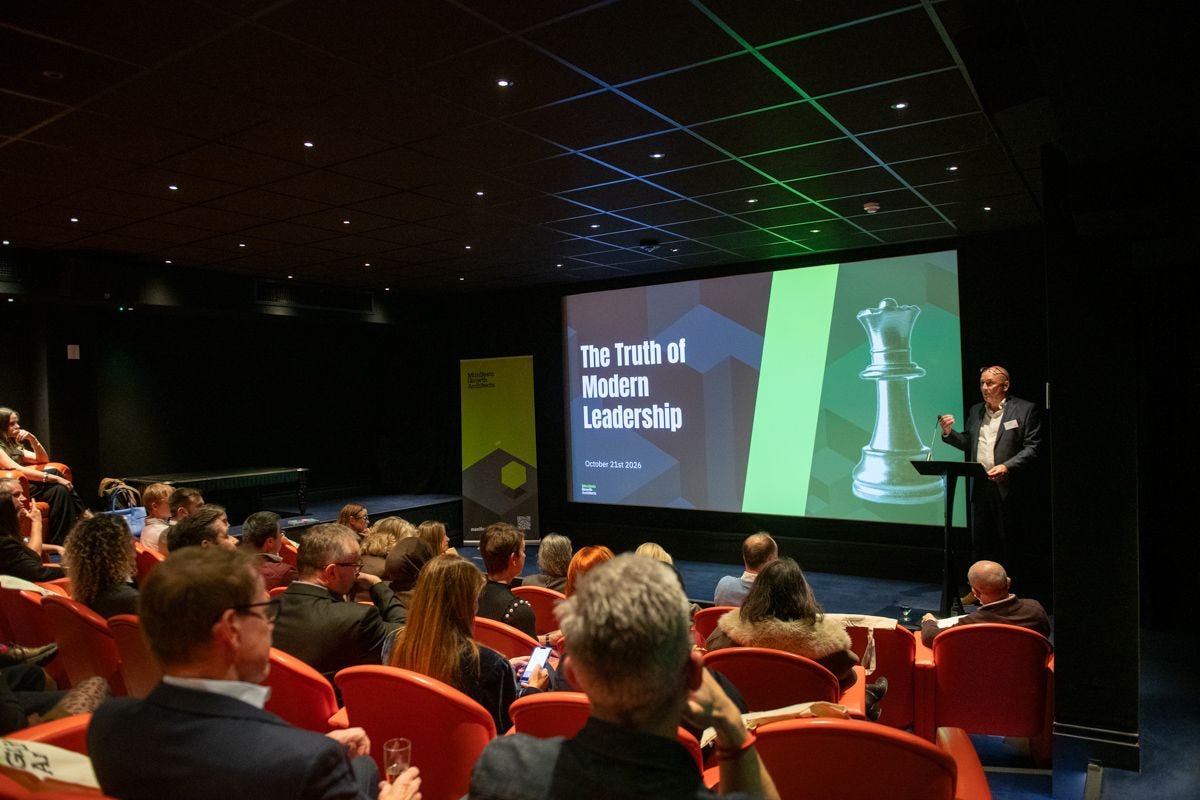
We’ve recently launched our Truth of Modern Leadership report, which is an excellent read for any leaders looking for guidance on good leadership in 2026 and beyond: https://www.manifestogrowth.com/our-thinking/#TruthofModernLeadership
Thank you so much for sharing these important insights. We wish you continued success and good health!
About The Interviewer: Tavares Beverly ( www.tavaresbeverly.com ) is the Founder and CEO of Beverly Boy Productions, a national video production company that has helped organizations tell their stories through video for more than two decades. Over the course of his career, he has worked with everyone from Fortune 500 executives and healthcare professionals to politicians, nonprofit leaders, educators, and artists, gaining a unique perspective on the role communication plays in leadership, business, and human connection. A frequent contributor on topics including communication, entrepreneurship, leadership, and personal development, Tavares believes that the ability to communicate effectively is one of the most valuable skills a person can develop. His work is driven by a passion for helping organizations connect with their audiences and helping individuals unlock their potential through mentorship, perseverance, and meaningful relationships. To learn more, connect with Tavares on LinkedIn or visit www.BeverlyBoy.com . If you’re interested in using the power of storytelling and communication to grow your organization, strengthen your brand, or inspire your audience, he welcomes the opportunity to connect.