When I began my business, I thought that what mattered was what I did and how I did it. I quickly discovered that only some people were interested in what an anthropologist could do or do for them.
Female Founders: (Andrea “Andi” Simon, PhD, Simon Associates Management Consultants) On The Five Things You Need To Thrive and Succeed as a Woman Founder
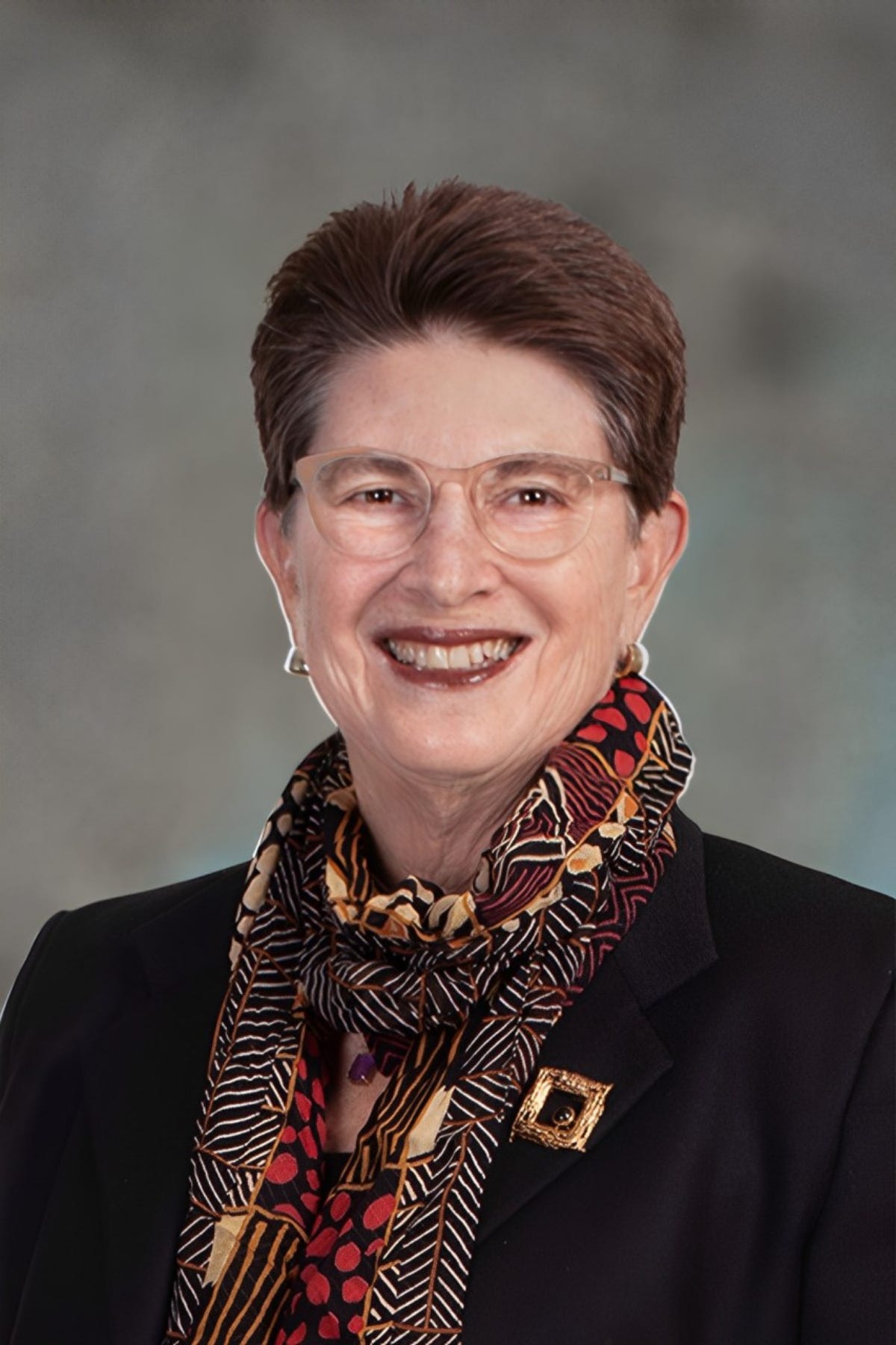
As a part of our series about Women Founders, we had the pleasure of interviewing Andrea “Andi” Simon, PhD.
Andi Simon, PhD, is a corporate anthropologist and CEO of Simon Associates Management Consultants, a twenty-year-old company that applies anthropology’s methods, theory, and tools to help organizations and their leaders change. She is an award-winning author of two best-selling books, On the Brink: A Fresh Lens to Take Your Business to New Heights and Rethink: Smashing the Myths of Women in Business, and has a new book published in September 2023 entitled Women Mean Business: Over 500 Insights from Extraordinary Leaders to Spark Your Success. An accomplished podcast host, coach, and consultant, Dr. Simon is a culture change expert and an explorer at heart and has become the architect of a global thought leadership platform that blends academic perspectives, depth and breadth of business experience, new media expertise, and proven success in changing organizations and the people who are the key to their success. www.simonassociates.net
Thank you so much for doing this with us! Before we dig in, our readers would like to get to know you a bit more. Can you tell us a bit about your “backstory”? What led you to this particular career path?
I want to discuss my journey as an anthropologist who helps organizations do something people hate to do, namely, change, and how that led me to be a business founder over twenty years ago.
The two are closely connected. Let me explain. I discovered anthropology in college. I had no intention of becoming a social scientist. I just loved how anthropology pulled together so many areas of thought, particularly why and how people have done things over the thousands of years we have evolved. It did not take me long to realize that I was an anthropologist in the making, and I took my major year at Columbia University to focus intently on anthropology. Columbia had some of the incredible faculty. Their insights were transformative. My mind kept expanding, and so many questions emerged as I wondered what this academic field could open for me as a career. Of particular interest was how people change, whether immigrants moving into new cultures or new generations growing up in different times.
Over the years, I began my professional career as an academic, gaining tenure at Ramapo College, now Ramapo University in New Jersey. With post-doc fellowships and research to expand the scope of my field, I was studying how women in Greece changed, how American society was changing, and how the world was evolving. With several TV CBS Sunrise Semesters on these topics under my belt, I was invited to work as a consultant at Citibank, N.A. It was a perfect application of the research I had done. I came into banking to help them change and stayed for 14 years, first as a Senior Vice President at Poughkeepsie Savings Bank and then as an Executive Vice President at First National Bank of Highland, a Division of M&T Bank.
Slowly, banking became increasingly commoditized. I moved into healthcare and spent seven years as an executive in two hospital systems. After 9/11, it was time to launch my business, and Simon Associates Management Consultants was born. That was 2002, and we have been growing the company for over two decades, helping organizations of all types “see, feel, and think” in new ways to adapt to fast-changing times.
One outgrowth of my business work was a program my husband, a successful serial entrepreneur, and I launched at Washington University in St. Louis. Called “The Simon Initiative in Entrepreneurship,” we worked with budding entrepreneurs to help them take their observations and turn them into innovations. Many of those engaged in the program were women searching for role models to learn from and mentors to help them craft the correct type of company to thrive as young businesses. My second book, Rethink: Smashing the Myths of Women in Business, emerged from our work with them.
As both a business founder who has remained successful during fast-changing times (think of the pandemic and afterward) and an anthropologist who enjoys situations that are betwixt and between “stable” times, I was very interested in sharing the lessons learned and critical wisdom that other women could benefit from. Our 2023 book, Women Mean Business: Over 500 Insights from Extraordinary Leaders to Spark Your Success, co-authored with Edie Fraser and Robyn Spizman, two outstanding leaders in the women’s movement, has over 500 pieces of wisdom from 102 women. As I have done book tours, I am discovering women's pent-up demand for celebrating and elevating their success alongside their challenges as they move up through business or try to grow their own.
Can you share the most interesting story that happened to you since you began leading your company?
The most exciting story has been how business has come to us in neither linear nor predictable ways. Founders often want to know how they should grow their business. We found growth coming to us. We launched, and there were customers. Is that how it usually happens? We don’t know, but we felt fortunate. Referrals were bringing in new clients, and the problems were exactly the type we wanted to solve.
We built a consulting, coaching, and advising company by helping business leaders see opportunities often right in front of them. If they were stuck or stalled, we were the perfect solution, as I write about in our first book, On the Brink: A Fresh Lens to Take Your Business to New Heights. We used anthropological methods to help our clients see things in new ways and then help them make the changes happen. We took them out exploring with us. We worked with their staff to listen and hear what their customers or clients were struggling with. And we ended up helping them build new sandboxes, not just think outside the box.
Can you share a story about the funniest mistake you made when you were first starting? Can you tell us what lesson you learned from that?
When I began my business, I thought that what mattered was what I did and how I did it. I quickly discovered that only some people were interested in what an anthropologist could do or do for them. I often laughed when I realized people did not understand what I did. They had a problem and wanted to see if I had a fresh approach to solve it.
I often remember taking long walks to think through what was happening and how to cope with the frustration of trying to sell something people had little interest in buying. Then I had that “ah ha” moment when everything turned around. One client said it so well: “Andi, we really don’t care how you do this; we just must change what we are doing, or we can’t survive. Can you help?” My lesson learned is not to think about your business from the inside out. Always look at it from the outside in. What does someone need, and how can you help them solve their problem?
Now, I can laugh a lot about it. Was it funny, then?
None of us are able to achieve success without some help along the way. Is there a particular person who you are grateful towards who helped get you to where you are? Can you share a story about that?
I am still convinced that of all the people I have come across and worked with or for, my best advisor, mentor, coach, and companion has been and remains my husband, whose name is also Andy. We have been married for over 50 years and remain confidantes and best friends, often laughing a lot about our lives, businesses, and family. He was a corporate executive and a serial entrepreneur. Over the years, we have both walked around the house sharing nightmares about business or life situations that needed the morning to go away. Somehow, in the morning, the solutions had greater clarity, and we had better focus.
My favorite story is when I met Andy; we talked on a beach about what we wanted to be when we grew up. I shared with him that I would either be an attorney or an anthropologist and why they each had appealed to me. His response was memorable: "Oh, be an anthropologist, and I will always be here for you." He has, and I knew then that I would not "do" anthropology. I was an "anthropologist." It was far more of a calling and an identity than a job to be done.
Ok, thank you for that. Let’s now jump to the primary focus of our interview. According to this EY report, only about 20 percent of funded companies have women founders. This reflects great historical progress, but it also shows that more work still has to be done to empower women to create companies. In your opinion and experience what is currently holding back women from founding companies?
We know that women face various challenges when forming their own companies. While these challenges can vary, here are five common obstacles that I believe are major roadblocks that hold women back:
Access to Capital:
Women often need help accessing the necessary funding to start and grow their businesses. This difficulty can be due to various reasons, including gender bias among investors, limited access to venture capital, and a lack of collateral or assets to secure loans. However, I must add that the challenges of accessing capital often come from women themselves. They don’t come at the funding problem with confidence and experience. When we have worked with emerging companies founded by women, they are still determining how to find the right capital at the right time for the proper purpose. Several times, women have told me they were proud of how they had funded their company through cash flow or family funds. They needed more confidence and experience to support growth with other resources. Nothing is simple. Yet access to capital and the knowledge of how to use it properly is a major roadblock holding women back from success.
2. Gender Bias, Racial Bias, and Stereotypes:
Gender bias and stereotypes can affect how the business world perceives women. These biases can impact women's ability to network, secure partnerships, and gain the trust of potential clients and investors. It can also hinder their self-confidence and ambition. Furthermore, it limits their ability to market their company to the right customers effectively. Bias remains a severe challenge. And those women of color who are growing successful, innovative companies come to us to find ways to break through barriers society has created all around them. They called it that “brick wall,” not a glass ceiling.
3. Work-Life Balance:
Balancing the demands of entrepreneurship with family and personal responsibilities can be incredibly challenging for women. Societal expectations often burden women with managing caregiving and household responsibilities, making it more difficult to dedicate time and energy to their businesses. I often speak about blending a life, not balancing it. One woman had a successful social media company but hated what she did because she wanted to be at home with her young children. Another woman had the opposite problem--she wanted to be in business and was home caring for her children. There are no easy answers. At times it feels like the paradox of choice overwhelms women in business.
4. Lack of Role Models and Mentorship:
As Marian Wright Edelman once said, "If you cannot see it, you cannot be it." This is a problem I repeatedly heard when running our Simon Initiative for Entrepreneurship program at Washington University in St. Louis. The women wanted to see someone else who had achieved what they were trying to create. The absence of role models and women to mentor other budding entrepreneurs is serious. We know that taking an idea and turning it into a business takes work. Doing it without knowing anyone else who has is terrifying. As we mentor women entrepreneurs, we have difficulty staying honest with them about their dreams. We believe as they do, but the execution is a tough “row to hoe.”
5. Networking Opportunities and the Skill to Build a Great Network:
One successful woman at our events said something profound. She knew she had to build her network. She seemed to build a fine one. But then, one day, she realized that a social network of friends imparted no advantage or assistance to her in the business world. No one was helping her to move up in the organization or was concerned with why she wasn’t. She said, and we agree, that women need more access to networks and opportunities that can help them grow their businesses. Male-dominated industries and business events can create an environment where women may feel excluded or undervalued, making it harder to build crucial connections. Another woman we coached told us she always felt like an outsider when attending networking events. She had to prepare herself with role-playing to have the right things to say. As she walked into the room, she had to plan her strategy for getting past the door and then create her plan to build a network from the people she had just met.
It's important to note that these barriers are not insurmountable, and many women have successfully overcome them to establish and grow their own businesses. But a woman looking at the world outside a corporate environment might see great opportunities or only roadblocks and challenges. The choice is in her mind’s eye, and only she can create the right story to propel her forward as an entrepreneur. No one is holding her back but herself.
Can you help articulate a few things that can be done as individuals, as a society, or by the government, to help overcome those obstacles?
Let me start with the challenges described in the previous section. Women can take various steps to overcome hurdles when starting and succeeding in business. Here are some strategies to address each of the five common barriers, and with the right mindset and effort, these can and do work:
Access to Capital:
One pathway is for women entrepreneurs to seek grants, loans, and crowdfunding platforms that may be more accessible than traditional investors or venture capital.
Another is to consider angel investors that focus on supporting female-led startups. Networking with women-focused investor groups and organizations can help connect you to potential investors committed to promoting gender diversity.
Finally, study the emerging research identifying ways for women to present their ideas in ways that male investors find more compelling. Don’t assume your idea and your business model will fit the mindset of those investors with the capital you need.
Gender Bias and Stereotypes:
This is a challenge. You must recognize the bias that is in the culture you are tackling. Rather than succumb to it, build a solid personal brand and highlight your expertise in your industry to help counteract gender bias. Share your knowledge through speaking engagements, articles, and public appearances.
Be proactive in addressing gender bias when you encounter it. Advocate for yourself and other women in your industry and educate others about the importance of diversity and equal opportunities.
Work-Life Balance:
Try this: Be bold and delegate tasks and responsibilities in your business and personal life. Outsourcing or seeking help with childcare and household chores can free up your time. Don’t try to do it all.
Establish clear boundaries between work and personal life to ensure you have time for both. Prioritize self-care and time management to maintain balance.
Explore flexible work arrangements, such as remote work or flexible hours, to better accommodate your commitments while running your business.
Lack of Role Models and Mentorship:
Look for successful women entrepreneurs or leaders in your industry and contact them for mentorship or advice. Many successful women are willing to help and share their experiences.
Join women-focused business organizations, local or online groups, and associations that support women in business. These networks often provide mentorship and networking opportunities.
Build bonds with other women. Try to attend women-focused entrepreneurship events and conferences, participating in events designed for women entrepreneurs to connect with potential mentors and role models.
Networking Opportunities:
Attend industry events and conferences, join professional organizations, and actively engage in networking opportunities to build connections.
Intentionally create your network. Consider forming a network or group of women entrepreneurs in your field or area. Collaboration and support from peers can be valuable. Make sure you choose the right network partners.
Leverage social media and use social media platforms to connect with other professionals in your industry, share your expertise, and expand your network.
Overcoming these hurdles may require determination, resilience, and perseverance, but women can start and succeed in business with the right strategies and support. Additionally, advocating for gender diversity and equal opportunities in entrepreneurship can contribute to long-term change in the business world. Last, there is no easy way for a man or a woman to build a business. Regardless, women have the talent and the smarts to make it happen.
This might be intuitive to you as a woman founder but I think it will be helpful to spell this out. Can you share a few reasons why more women should become founders?
I love this question. There are numerous reasons why women should consider founding their own companies, but here are three major ones:
Empowerment and Independence: Entrepreneurship allows women to take control of their professional lives and pursue their passions. By founding their own companies, women can create their path, make decisions on their terms, and build businesses that align with their values and goals. This empowerment and independence can be incredibly fulfilling and provide a sense of autonomy that may not always be available in traditional employment settings. One woman for whom I have enormous respect is Theresa Harrison. She founded GEORGESTREET SERVICES to take her talent and build a business around software development, cybersecurity, and the application of IT to human problems.
Capitalize on Women’s Creativity and Innovation: Women continue to be underrepresented in leadership positions and the business world. Founding their own companies allows women to actively take their talent and their ideas and turn them into successful business ventures. By becoming entrepreneurs, women can serve as role models and pave the way for other aspiring female leaders.
Economic Impact: Entrepreneurship can significantly impact the economy. More than 12 million women-owned businesses now contribute to job creation, economic growth, and innovation. By founding their own companies, women can tap into their unique perspectives and experiences, potentially leading to the development of products, services, and solutions that create new markets or better serve existing ones. They are a growth engine at a time when consolidation and roll-ups are changing the business landscape.
It's important to note that while there are numerous advantages to women founding their own companies, entrepreneurship can be challenging, and individuals should carefully consider their goals and resources.
What are the “myths” that you would like to dispel about being a founder? Can you explain what you mean?
Several myths and stereotypes about female founders persist in society and the business world. These myths can perpetuate gender biases and limit opportunities for women entrepreneurs. Here are some common myths about women founders that need to be challenged and debunked:
1. Myth: Women lack ambition and drive.
Reality: Here is the research: Research shows that women-led startups outperform their male counterparts, generating 63% more value and twice as much per dollar invested. The Rogue Women's Fund also found that women-led startups are five times more likely to become billion-dollar companies than male-led businesses. (Time Magazine, March 20, 2023). Given the chance to grow a business, women can turn an idea into a successful innovation, demonstrating their ambition and tenacity.
2. Myth: Women are less innovative than men.
Reality: Not true. This is a complex myth. What defines “innovations?” Too often, it appears that men are more innovative because the standards are based on technological creation. On the other hand, women might not be as innovative in technological areas but are creative problem-solvers in others. Research published in October 2023 suggested that “…female-led firms were less likely than the male-led firms to have introduced product or process innovations; they exhibited an equal likelihood of implementing marketing or organizational innovations.” Innovation knows no gender. Women founders have created groundbreaking products and services across various industries, contributing significantly to technological advancements and business innovation.
3. Myth: Women struggle with leadership and decision-making.
Reality: Well, men and women may lead differently, and gender bias can often hold women leaders back from moving into senior positions. However, the research clearly states, “Female leadership tends to be more collaborative and relationship-oriented, while male leadership is more task-oriented and focused on making quick decisions. They tend to be more inclusive and democratic in their approach, while male leaders often focus on setting goals and achieving results.”
Women possess strong leadership skills and excel in decision-making. They bring diverse perspectives and problem-solving abilities to their roles as founders and CEOs. They may lead differently but can engage with their staff, clients, and markets to push ideas forward and build better businesses. You may listen to them debate, discuss, and develop ideas more collaboratively and creatively. These are often exactly what a business needs to thrive.
4. Myth: Women cannot balance work and family.
Reality: The assumption that women cannot balance their entrepreneurial endeavors with family life needs to be updated. Many female founders successfully manage both career and family responsibilities, proving that it's possible to have a fulfilling personal and professional life. We have worked as professionals and mothers, raising our children and watching our daughters raise them. Clients have juggled the work/life balance successfully. “Cannot” is far too definitive. It is a challenge, but it can be done, and it often is.
5. Myth: Women only start small businesses.
Reality: Women founders are involved in ventures of all sizes, from small businesses to large corporations. Women have founded or co-founded some of the world's most successful companies – think about Gloria Bohan, who founded Omega Travel and grew it into the largest woman-owned travel management company in the U.S. Or consider Roseann Sunwoo and her mother Clara Sunwoo, who started their clothing business with $1000 and have grown it into a major player in women’s attire.
6. Myth: Women are less competitive than men in business.
Reality: Well, maybe! However, the research on this myth is complex. A great deal of the research suggests that women are less competitive than men. On the other hand, research that added a variable to the challenge presented to women where they could share the results increased women’s competitiveness significantly. “The number of women who chose the more competitive option nearly doubled when they had the option to share their winnings. Researchers found that about 60 percent chose to compete under that option, while only about 35 percent of women chose to compete in the winner-take-all version of the tournament.” On the other hand, “Just over half of the men in the study chose the winner-take-all option, and 52.5 percent chose the format that allowed them to share with the losers.”
Women may not be just as competitive as men. Yet, they successfully compete in sports, in the full range of industries and markets, at all organizational levels, striving to excel and outperform others. They are also excellent collaborators, often seeking new ways to address problems that propel them and their companies forward through innovative solutions.
Challenging these myths and supporting women founders in their entrepreneurial journeys is essential. Promoting diversity and gender equality in entrepreneurship benefits women and the business community by fostering innovation and economic growth.
Is everyone cut out to be a founder? In your opinion, which specific traits increase the likelihood that a person will be a successful founder and what type of person should perhaps seek a “regular job” as an employee? Can you explain what you mean?
Success as a startup or entrepreneur founder can depend on personal traits, skills, and circumstances. There is no one-size-fits-all answer to this question, as successful founders come from diverse backgrounds and possess various qualities. And an entrepreneur is not the same as a small business owner. Entrepreneurs see something that a market needs and want to create an innovative solution to solve a problem. Small business owners have a "business" and can run and grow it effectively to make a living, not necessarily solve a problem innovatively. Both differ from that person in a larger corporate setting with more structure and controls.
Having said that, a woman’s life journey is not a straight line nor very predictable. Women founders often talk about their time in a corporate career when they ran out of steam. They turn to founding a business to take their talent and experience and use it in other ways. In my second book, Rethink: Smashing the Myths of Women in Business; we wrote the story of several women who were tired of not being heard in meetings or being overlooked when it was time for a promotion. Instead of competing in the corporate environment, they moved out and built great businesses.
I did the same. I spent a decade in academia, twenty years as a consultant, and an executive in banks and healthcare institutions. After 9/11, I leaped to create my own new business. Simon Associates was not just another marketing agency or consulting firm. I wanted something that reflected my skills, expertise, experiences, purpose, and passion. It also had to offer a new approach to an old problem: how to help companies or organizations adapt to fast-changing times. I was an anthropologist. Creating something barely known at the time, corporate anthropology, was a perfect way to open a new market space and capture clients needing change. I could show them how and did. Twenty-two years later, we are still positioned to help organizations change, and the times are changing faster than ever.
What would I say about the traits of successful founders? Here are my favorites:
Resilience: Startups can face numerous challenges, setbacks, and failures. Being able to bounce back from adversity and learn from mistakes is crucial.
Vision and Creativity: Successful founders often have a clear vision of what they want to achieve and the ability to think creatively to solve problems and identify opportunities.
Persistence: Building a successful business can be a long and challenging journey. Persistence in the face of obstacles is a valuable trait.
Collaborative Leadership: Founders need to lead and inspire their teams. Effective leadership and communication skills are essential. We urge our clients, however, to lead through communication, collaboration, and common goals. Command-and-control, rules-driven organizations are good for some companies but rarely work for entrepreneurs who need risk-takers and self-starters.
Network Building: A solid network of mentors, advisors, and contacts can provide valuable support and resources. Choose your network carefully. Make sure each part has a role to play.
Purpose, Passion, and Motivation: A strong passion for the business idea and the motivation to see it through can be a driving force. Entrepreneurs are opening new markets and require an overload of purpose, passion, and motivation.
Ultimately, deciding to become a founder or to seek a “regular” job should be based on an individual's interests, goals, strengths, and circumstances. It's important to assess one's personality and preferences and choose to align with one's values and long-term objectives. Additionally, entrepreneurship is not an all-or-nothing proposition, and many people explore entrepreneurial ventures while maintaining traditional employment. Or, as I did, keep your day job as you develop your plan for your own entrepreneurial business.
Ok super. Here is the main question of our interview. What are your “5 Things I Wish Someone Told Me Before I Started” and why? (Please share a story or example for each.)
1. Just because you know what you are selling, don’t assume others will know how you can help them. Don’t tell them. Show them. I picked up clients quickly when I launched in 2002. One of my first clients, Centenary College, was stalled and sagging and needed a boost. A new president, with whom I am still in touch, needed a fresh perspective to help invigorate the organization, from students to staff to faculty to the community. He was smart but told me right at the beginning that he had no idea what an anthropologist could do to help him grow his college. So, we began our journey with him. Rather than survey students, we used observational research to hang out and learn about what made the college unique. As I slowly became part of the campus, I started to apply my ethnographic research tools to capture the essence of the organization and craft a new story for them to project into their markets and build their student population. We found new ways to expand his student base and build a credible story to attract adults to his programs.
2. Serendipity is my favorite strategy to expand our business. From the beginning, my marketing strategy was to “hang out.” You never know when someone will say something that sparks your ideas and success. To illustrate, one day, I took a client to listen to Renée Mauborgne speak at the Harvard Club in New York about her then-new book, Blue Ocean Strategy®. Unexpectedly, Renée was in the elevator with me. I told her how much I liked her thinking. Blue Ocean Strategy was grounded in some very good anthropology. She turned to me and said, “You should be a Blue Ocean Strategist.” I asked what that was, and her response was, “I have no idea. Let’s make it up.” And off we went to create an approach to apply the theory of Blue Ocean thinking to actual client situations. I have conducted over 500 workshops for CEOs on the topic and have had dozens of clients who needed to create new blue ocean markets and add value innovatively.
3. Think fast, and act fast. One of the women in our new book, Women Mean Business: Over 500 Insights From Extraordinary Leaders To Spark Your Success, Kay Koplovitz, co-founder and chairman of Springboard Enterprises, said you should always “Think fast and Act fast.” I couldn’t agree more. My heart, eyes, and gut were the best decision-makers. Overthinking something never got me to a good conclusion and often led me to no decision. Trust your feelings. Your eyes and your heart decide.
4. Clients have a problem to solve. Listen carefully so you know what that problem really is. This wisdom came to me rather quickly but with some pain. I realized that clients come with something to ask for. Whoever they send to find a solution tells you their impression of the problem and what type of solution would be the right one. As I learned, they often tell you “their own problem,” not the one their organization faces. Listen carefully. Probe deeply. And let the client show you what they mean. Try not to jump to your conclusion with a solution that might not be even close to what is needed.
5. Always have fun. Running a company of any size is a challenge. Smile often. Laugh as much as you can. Try not to take life too seriously, although it is serious to run a company. My daughter once gave me a lovely quote that I keep by my computer: “In the course of a lifetime, focus on what really matters?” It has guided me through the ups and downs. Perspective is difficult to have, much less keep in front of you.
How have you used your success to make the world a better place?
I have been running leadership academies for clients in different industries for several years. While the training and development of their emerging leaders have made them better organizations, the individuals I touch, work with, challenge, and embrace are the ones who come away as better people. They write me those lovely emails with great praise about how I help them find their purpose and way forward. One at a time takes time. In the end, however, it is what really matters to me and them.
My research and writing about women in business is another area that is of great importance to me. Women are talented and ready to craft brave solutions to the world’s problems. They are anxious to learn how to break out of the bias traps and roadblocks to success. I love to work with women and help them change the story holding them back. They need those role models and the confidence to push forward, regardless of the limitations others create for them. And we must celebrate the steps forward, even if they are not fast enough.
You are a person of great influence. If you could inspire a movement that would bring the most amount of good for the greatest number of people, what would that be? You never know what your idea can trigger.
My biggest wish is that the world sees women and men as equals, showing women the respect they deserve and enabling them to collaborate with men, with equal pay, position, and power, to solve those problems that undermine peace and prosperity. Together, we can go farther, faster.
We are very blessed that some very prominent names in Business, VC funding, Sports, and Entertainment read this column. Is there a person in the world, or in the US with whom you would love to have a private breakfast or lunch with, and why? He or she might just see this if we tag them.
Indra Nooyi, the former CEO of PepsiCo. One of the biggest challenges for women is to get to the top of an organization like PepsiCo and lead it forward. Indra Nooyi did just that. I would love to listen to her story and better understand how her pathway could lift other women seeking to achieve senior roles in major companies.
Thank you for these fantastic insights. We greatly appreciate the time you spent on this.
About the Interviewer: Douglas E. Noll, JD, MA was born nearly blind, crippled with club feet, partially deaf, and left-handed. He overcame all of these obstacles to become a successful civil trial lawyer. In 2000, he abandoned his law practice to become a peacemaker. His calling is to serve humanity, and he executes his calling at many levels. He is an award-winning author, teacher, and trainer. He is a highly experienced mediator. Doug’s work carries him from international work to helping people resolve deep interpersonal and ideological conflicts. Doug teaches his innovative de-escalation skill that calms any angry person in 90 seconds or less. With Laurel Kaufer, Doug founded Prison of Peace in 2009. The Prison of Peace project trains life and long terms incarcerated people to be powerful peacemakers and mediators. He has been deeply moved by inmates who have learned and applied deep, empathic listening skills, leadership skills, and problem-solving skills to reduce violence in their prison communities. Their dedication to learning, improving, and serving their communities motivates him to expand the principles of Prison of Peace so that every human wanting to learn the skills of peace may do so. Doug’s awards include California Lawyer Magazine Lawyer of the Year, Best Lawyers in America Lawyer of the Year, Purpose Prize Fellow, International Academy of Mediators Syd Leezak Award of Excellence, National Academy of Distinguished Neutrals Neutral of the Year. His four books have won a number of awards and commendations. Doug’s podcast, Listen With Leaders, is now accepting guests. Click on this link to learn more and apply.