Standardization — Having a consistent way of measuring something helps to increase confidence in processes and improves how stakeholders work together/ can rely on information. For example, Future Fertility’s tools bring a standardized approach to measuring egg quality where there is no approach at current.
Tech
Christy Prada Of Future Fertility On How To Use Digital Transformation To Take Your Company To The Next Level
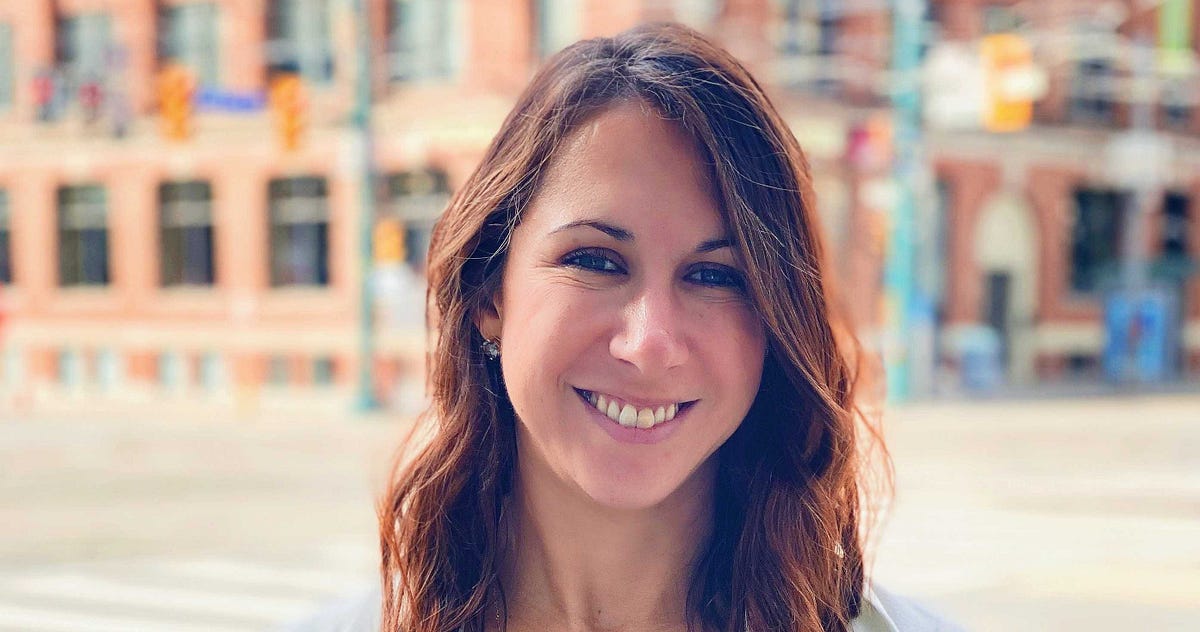
Digital transformation has become a crucial component for businesses striving to stay competitive and relevant in today’s rapidly evolving landscape. As technology continues to shape industries and redefine business models, companies must adapt and leverage digital tools and strategies to unlock new opportunities for growth and innovation. In this interview series, we aim to explore various aspects of digital transformation, including best practices, challenges, success stories, and expert insights. We are talking to thought leaders, industry experts, entrepreneurs, technology innovators, and executives who have firsthand experience in driving digital transformation initiatives within their organizations. As part of this series, we had the pleasure of interviewing (Christy Prada).
Christy Prada is the CEO of Future Fertility, a Canadian med-tech startup that developed the first non-invasive AI tool to provide much-needed clarity in the fertility planning process. With over a decade of experience in healthcare, Christy leads Future Fertility’s mission to close critical information gaps in fertility care through AI. Her previous leadership roles at Maple and KPMG have prepared her to grow a global company that is reshaping the standard of care in reproductive medicine. As a mother of two daughters and a passionate advocate for women’s health, Christy is dedicated to helping to improve the experience and access to fertility care for patients around the world.
Thank you so much for joining us in this interview series. Before we dive in, our readers would love to “get to know you” a bit better. Can you tell us a bit about your ‘backstory’ and how you got started?
I consider myself to have had some amazing luck in my career- both Maple and Future Fertility were not opportunities I was actively seeking out — they fell into my lap thanks to my amazing network. For my current role at Future Fertility, I was on maternity leave with my firstborn (who is now 3!) from Maple and I was not looking to make a career change. I was connected to a recruiter who was searching for a CEO for the business and fell in love with the team, the technology and the industry. The business was solving an extremely important problem within a fast-growing and innovative industry, and I felt like I had to be a part of it.
Can you share a story about the funniest mistake you made when you were first starting? Can you tell us what lessons or ‘takeaways’ you learned from that?
I thought I could start working as a half-time CEO. As I transitioned back from mat leave, I wanted to kick things off with a slow transition into the role to allow me to adjust to coming back to work (which was happening about 5 months earlier than I’d originally planned). Working half-time as a CEO is a fallacy in general, let alone when you are learning a new industry, team and business!
None of us are able to achieve success without some help along the way. Is there a particular person who you are grateful for who helped get you to where you are? Can you share a story?
I think the bigger challenge is often finding strong female mentors or sponsors. Earlier in my career, I didn’t always have the most supportive or positive female managers. I find that women are sometimes not great at propping each other up, and often feel in competition with each other. This is why I am passionate about identifying and mentoring women and advocating for creating spaces for women to help each other advance in their careers. It’s not just up to the men to change behaviours that can propel women forward; women need to do so as well! I’m fortunate that as I’ve advanced in my career I’ve had many strong, positive and supportive female leaders I’ve worked for/with and am proud to have many female sponsors, mentors and leaders I’ve worked with in recent years.
Is there a particular book, podcast, or film that made a significant impact on you? Can you share a story or explain why it resonated with you so much?
One newsworthy story (vs book or podcast) is the story of Joanna Griffiths fundraising for Knix while pregnant with twins. This was very top of mind for me as I recently went through my own fundraising journey, raising our Series A extension round while pregnant with my second child. It was a difficult and long process, and recalling Joanna’s story, closing a $53Mil round days before giving birth, was a constant source of inspiration for me as I worked through my process.
Are you working on any new, exciting projects now? How do you think that might help people?
Future Fertility has a vision to bring AI to every stage of the fertility journey — and as such we are thinking about many innovations along the journey. Our next focus area has been on evaluating if we can improve the process by which embryo transfer decisions are being made by looking at the endometrium. Currently, there is a general standard of care that is a bit inconsistent and subjective, so we see an opportunity to use AI to evaluate ultrasound images and improve decision-making for clinicians and patients. We are hopeful that this could further reduce time to pregnancy for patients undergoing IVF.
Thank you for all that. Let’s now turn to the main focus of our discussion about Digital Transformation. Digital transformation can mean many things to many people, from your perspective, how do you define digital transformation in your industry?
The entire fertility industry is going through a pretty major digital transformation. While demand for IVF services is growing dramatically, supply is relatively constrained and there is a need for clinics to optimize their processes, creating more throughput, efficiency and consistency.
There are a plethora of new tools being developed and rolled out across the industry, from patient management and engagement to lab process optimization and decision support tools. There is also a need to improve outcomes, and technology, particularly AI, is seen as a potential tool to do so, given the ability to make sense of large amounts of diverse clinical and biological data.
Which companies can most benefit from a Digital Transformation?
In our industry, I’d reframe to instead think about who benefits the most. If applied correctly, patients should benefit the most, from improved access to fertility services, improved outcomes from IVF, egg freezing etc, and improved patient experience.
I also believe that conversely, the stakeholders working in the clinics will also benefit, from both job satisfaction (functioning at a higher level of scope of practice, as technology can remove/reduce the more mundane elements of the work) as well as monetary benefits of a more productive and profitable clinic business model.
Has integrating Digital Transformation been a challenging process for some companies? What are the challenges? How do you help resolve them?
While there are clear benefits to digital transformation, integrating technology is extremely difficult in a clinical setting and takes time. It is challenging for clinics to think about how/where to prioritize efforts when they are already overwhelmed in their day-to-day practices, it is hard to integrate into workflow, and it is challenging to keep new approaches top of mind. Our focus at Future Fertility ishelping clinics see how integrating our AI provides value for all stakeholders, including the competitive advantages it offers through a differentiated patient experience.

Based on your experience and success, what are “Five Ways a Company Can Use Digital Transformation To Take It To The Next Level”? Please share a story or an example for each.
In the fertility context, I’ve listed 5 ways digital transformation can help to take things to the next level to illustrate all the ways this has the potential to impact a specific field of medicine. This can be broadened and applied to other industries as well (replacing patient with customer in general for example).
1. Standardization — Having a consistent way of measuring something helps to increase confidence in processes and improves how stakeholders work together/ can rely on information. For example, Future Fertility’s tools bring a standardized approach to measuring egg quality where there is no approach at current.
2. Efficiency — Technology can be used to create more efficient ways of doing things by reducing errors, streamlining efforts, and making processes generally more efficient. For example, the time-lapse incubator offers a way to improve the efficiency of the IVF process by automatically recording videos of the embryos as they develop, instead of embryologists having to manually record this.
3. Optimization/personalization — With the use of AI, personalized medicine is becoming a reality, which is particularly compelling for the IVF industry given all the nuanced set of variables that go into reproductive medicine. For example, our tools for egg assessment mean that instead of relying on general statistics around outcomes for oocyte retrievals, egg-freezing decisions can be guided by personalized predictions of success based on an individual’s egg quality.
4. Patient experience — Improved patient engagement and experience is a huge opportunity area. In many areas of medicine, patients are left in the dark concerning information about their healthcare. Particularly in a private pay field like IVF, there is an increasing demand for information and patient involvement in decision-making, and technology makes this a reality through patient management/ education tools, personalized reporting on health information/outcomes and patient engagement.
5. Decision support — Physicians and embryologists have millions of decisions to make on a day-to-day basis. Access to more standardized, consistent, objective information, framed up in the appropriate context, can provide huge benefits to these individuals, not only in terms of patient throughput and better decision-making, but also job satisfaction.
In your opinion, how can companies best create a “culture of innovation” in order to create new competitive advantages?
As the leader of a fast growing technology company, I am always trying to find ways to optimize the trade-off between staying focused and moving fast with current technologies, and not losing the innovative spirit/ fostering new idea development. I think the best way to do this is to have a clear set of priorities to anchor the core business on while maintaining a minimum of 10–20% of corporate focus on new ideas/ initiatives/product roadmap items.
Can you please give us your favorite “Life Lesson Quote”? Can you share how that was relevant to you in your life?
I always say to my team, “If it were easy, everyone would do it”. I’m sure it drives people up the wall, but I think it’s a helpful reminder that building a company is extremely challenging work, and it is supposed to be. This mindset can help us keep perspective when times get tough, that this is part of the whole experience.
How can our readers further follow your work?
Follow us on LinkedIn @futurefertility to see news about our scientific advancements and clinic partners around the world.
Our Instagram @futurefertilityai is a great resource for patients going through fertility and who want to learn more about oocyte quality and other related areas as we grow our product portfolio.
Thank you so much for sharing these important insights. We wish you continued success and good health!
About the Interviewer: Cynthia Corsetti is an esteemed executive coach with over two decades in corporate leadership and 11 years in executive coaching. Author of the upcoming book, “Dark Drivers,” she guides high-performing professionals and Fortune 500 firms to recognize and manage underlying influences affecting their leadership. Beyond individual coaching, Cynthia offers a 6-month executive transition program and partners with organizations to nurture the next wave of leadership excellence.
CC
Written by
Cynthia Corsetti
Editor & Journalist · Authority MagazineEditor and journalist at Authority Magazine, sharing in-depth executive interviews, leadership insights, and empowering stories from world-class founders and creators.

Published inAuthority MagazineTop Lessons, Top Authorities · 42K Followers
Exclusive, curated interviews with the leaders and changemakers shaping tomorrow. Leadership lessons, industry deep dives, and executive profiles.
More from Authority Magazine
See all stories →A
Authority Magazine Editorial StaffBrandon Wade & Dana Rosewall on Why ‘Yes’ People are a Liability and the “Painful” 180-Degree Redemption Story
Tech27 min read

Y
Yitzi WeinerAmazon’s Lauren Stovall Talks AWS Nonprofit Programs, Enterprise AI and the Push for Unrestricted Funding
Tech22 min read
G
Gabriel Borden, Managing Partner at Arrow FundGuardians of AI: Kerstin Woods of Toshiba America Business Solutions On How AI Leaders Are Keeping AI Safe, Ethical, Responsible, and True
Tech17 min read
A
Authority Magazine Editorial StaffFrom New York Wild Child to Bali Wellness Queen: Inside Meghan Pappenheim’s Spiritual Empire
Tech20 min read