
Growth mindset. I'm never satisfied doing the same thing over and over again. I always want to learn new things, get into new areas, and face new challenges.
(If you are unable to download it, please click File-Download)
INTERVIEW QUESTIONS:
Today, more than ever, new products and software are under attack by a host of malicious actors. This makes the role of a C-Level Cybersecurity officer or a Chief Product Security Officer one of the most important lines of defense against cyber threats. What do you need to know to be a successful cyber executive today? To address this, we are talking to C-Level cyber executives who can talk about "What It Takes To Become A Cyber Executive, Today." As a part of this series, I had the pleasure of interviewing Dr. Chenxi Wang.
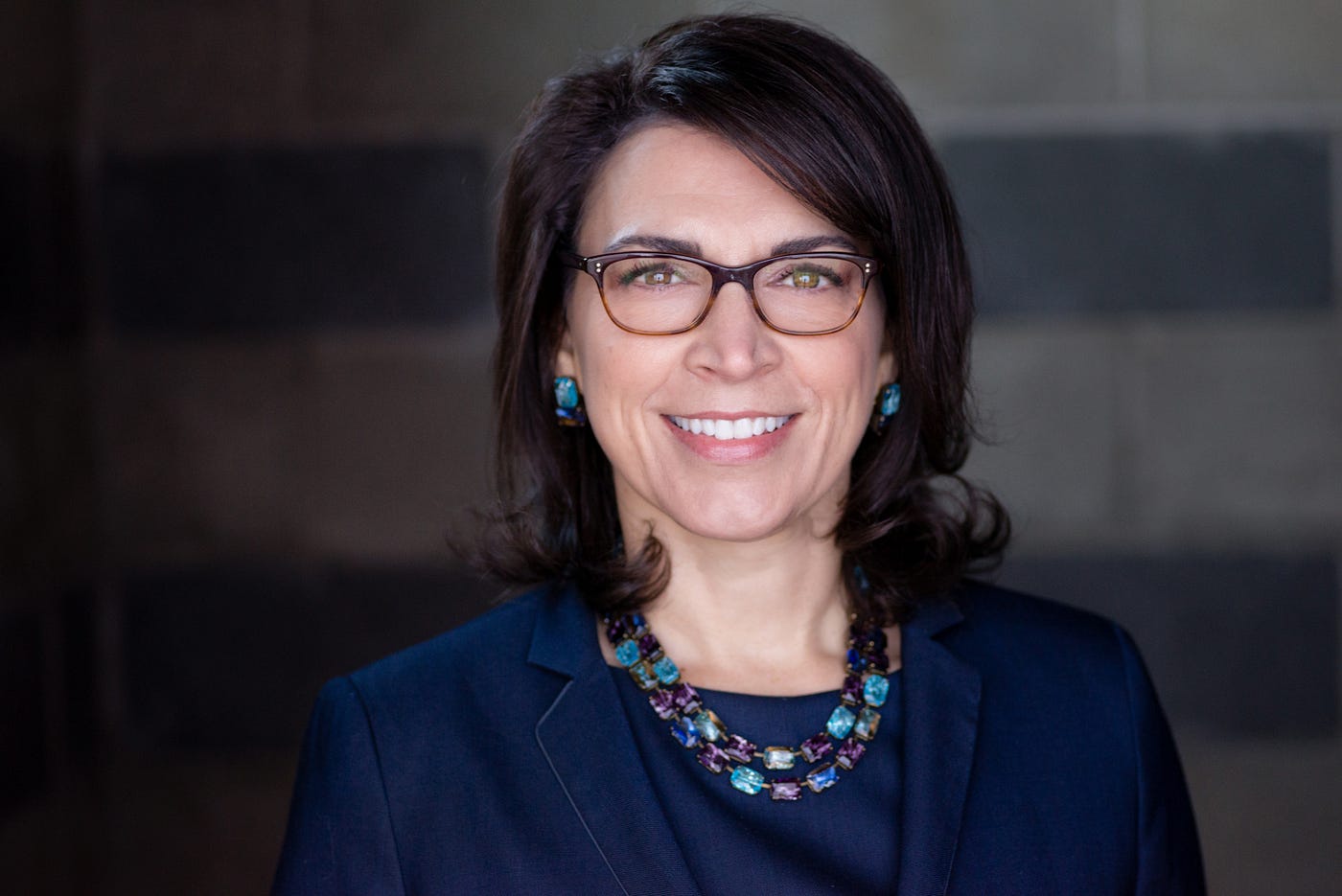
A leading venture capitalist in the Bay Area, Dr. Chenxi Wang is the founder and general partner of Rain Capital, a Silicon Valley-based venture fund. She previously held leadership positions at top companies including Twistlock, Intel and Forrester, and currently serves on the Board of Directors for MDU Resources, a Fortune 500 company. Wang is also a Forbes contributor and writes a column for Dark Reading.
Thank you so much for joining us in this interview series! Before we dig in, our readers would like to get to know you. Can you tell us a bit about how you grew up?
I grew up in China in the 1970s, a single child in a very academically-oriented family. Both my parents are teachers and prioritize academic excellence over a lot of other things. So academically, I ranked fairly high in my grade school, junior high, and high school. I graduated in the top five of my high school class and got early admission to college in China, which is very rare. Usually, everybody has to take the entrance exam, but I was lucky enough to get early admission without it. I got into computers in college in the late 1980s and got a secure scholarship to come to the US for my undergraduate studies. I finished my bachelor's degree in two years, with a year and a half in China. Then did my Ph.D. in computer science at the University of Virginia, specializing in computer security. I went into academia, and my first job was teaching computer science at Carnegie Mellon University. I was one of the founding faculty members of their cybersecurity lab. I was very engaged – entrenched, I would say – in cybersecurity research.
After five or six years, I left academia to try my hand at startups and industry and took executive operator positions in several companies, including Intel, TrustLock, and Forrester Research. I was a principal analyst and VP of research there. But cybersecurity has always been my home, my background. After a tour of the startup world, I became interested in investments, and I established Rain Capital as an early-stage fund that I founded and manage today. We've been lucky to partner with very innovative companies and groundbreaking entrepreneurs. I'm also a big advocate for women and diversity in tech. I'm a founder of the Forte Group, an executive network for women in tech and cybersecurity.
Is there a particular story that inspired you to pursue a career in cybersecurity? We’d love to hear it.
I was always interested in science and technology, math included. I went into cyber in the beginning because I was interested in the combination of deep tech, such as Applied Crypto, with the social implications of the technology, which allows us to protect not only corporations but also everyday citizens’ lives, data, and privacy. The combination of these two – social implications and the interes in the technology – got me into cyber.
Can you share the most interesting story that happened to you since you began this fascinating career?
In 2016 I was the chief strategy officer at a startup, and we had a booth at RSA. We were a small startup without a large team of people, so each of us had booth-manning duties, and we took turns. One day, I was the only one at the booth, and I was there for two or three hours and one gentleman came by and started asking me about the product. I was taking him through it, and he started saying, “Oh, this question might be too technical for you, but I'm going to ask anyway.” He did this three or four times. While I wasn't the one who engineered the product, I knew it very well and was technical enough to answer all his questions. Instead of getting upset, I gave him the technical answers he was looking for, and he was very satisfied at the end of the conversation. Then I think a day later, I ran into him at the conference again, and he said, “I looked you up, and now I know who you are, and I was very sorry for assuming you were not a technical person.” That was a good experience for him because he learned there are people like me around.
You are a successful leader. Which three character traits do you think were most instrumental to your success? Can you please share a story or example for each?
Growth mindset. I'm never satisfied doing the same thing over and over again. I always want to learn new things, get into new areas, and face new challenges. If you look at my career, I had done the same thing for five or six years a few times, and by the end, I was ready to move on, even though it had become a very successful and comfortable place. But I was yearning for new challenges and new learning.
Independent thought. Don’t always follow the same doctrine or the same teaching. I've done a few unexpected things, and people have asked, “How come you were able to do this?” Many people told me I could never raise a fund because I had never done investment before. I was not a fund manager, but I was able to raise one even though it was small. I was thinking outside the box and trying things in my own way instead of taking what had happened in the past as a given.
Collaborative spirit. I like to build networks. I'm not an empire builder, I'm a network builder. That means I want to build something with many people doing it together with me, as opposed to, “I'm the single leader, and everybody's following me.” That contributed to some of the success I've had today in unexpected ways.
Are you working on any exciting new projects now? How do you think that will help people?
We just published the Open Source Security Index, a project we've been working on for the last few months. My partner Andrew Smyth and I have been working on this. We needed help finding economical sources for the top open-source security projects on GitHub. People talk about it here and there, but there isn't a comprehensive list. So we said, “Why don't we build it ourselves?” So, using the GitHub API to pool out the metadata of different projects, we gave a model of our scoring and methodology. This list is the top 100 based on our process, which shows the popularity, the growth, the number of contributors, and the number of commits and releases. So this is a free resource for everyone in the community who's interested in learning about the latest and greatest open-source security technologies. We will refresh it monthly to keep it current and look at what type of open-source technologies are emerging quickly as one of the gauge points for where the community and industry are moving. I wrote an article for Dark Reading about it, which talks about when I was the victim of a phishing attack.
Ok super. Thank you for all that. Let’s now shift to the main focus of our interview. The Cybersecurity industry seems so exciting right now. What are the 3 things in particular that most excite you about the industry? Can you explain or give an example?
Boundless innovation. There's so much room for innovation ahead of us because cloud computing and the disruption to traditional computing have come into full force. That means the way people manage their environments and develop their applications is evolving, and security should be no exception. However, security is still run mainly by traditional technologies designed for on-premises and traditional environments, so innovation is needed to redo some of the security functions for this new cloud-native environment, which is continuously developed, refreshed, updated, and managed. The opportunity for innovation is immense, so that's very exciting.
The evolving threat landscape. The evolution of AI technologies and the amassing of data are two aspects of a perfect storm that will make it necessary to rethink how we do cybersecurity. That means we, as security practitioners, have a lot of data to play with, and we have more sophisticated analysis tools at our disposal. We should be able to do analysis, defense, and response better. But, at the same time, the dark side has access to these tools too, and they may be able to design better and more effective attacks with them. So the arms race is still there, and the threat is constantly evolving, but that is also what makes this space engaging and extremely interesting.
Supply and demand. Cybersecurity remains an industry severely behind the curve in terms of talent. We still have a lot more open positions than we have people to fill them. The demand for cyber talent has risen quickly, and cyber is still a somewhat new industry. In the last five to ten years, we had a massive boom in digital technology and environments, leading to people needing to secure those environments. We need more training and filling of the pipeline as we traditionally would have for other high-tech areas. Because of that, I think the talent piece is exciting, and the DNI piece is fascinating. We have an opportunity to do things differently in cybersecurity, to bring in talent from different walks of life.
What are the 3 things that concern you about the Cybersecurity industry? Can you explain? What can be done to address those concerns?
Noise. Because it has been such a fruitful industry for innovation and startups, we've seen an overzealous influx of new capital and startups in the last two or three years. Some of them may not have needed to be independent businesses. There's a lot of noise in the industry, and that's a challenge for practitioners who have to wade through it all to find the right thing. It's also a challenge for investors like me, who make a lot of calls to find the right thing. With the downturn in the market, some of that noise will get filtered out by economic forces, and some of them will have to consolidate. Then when things cool down a little bit, some of the more fringe projects will fade away. So that may just take care of itself. Still, those on the investment side should be more deliberate in finding sustainable innovations versus marginal ones.
Geopolitical threats. The Russia-Ukraine war, the frosty relationship between China and the US, and those kinds of threats all lead to activities in cyberspace. I'm not sure that we, as an industry or a country, are entirely prepared for the worst-case scenario. That's concerning to me. I think some of the regulations in the US are a step in the right direction. The SEC has proposed rules to add cyber expertise to the executive ranks of large public companies. That will help spotlight the issue, bringing additional focus and investments and hopefully leading to a collectively higher posture of security.
Ability to automate. Our ability to scale up security operations is still a concern. We're still doing many things manually, leading to filling up the team instead of automating specific processes. We have to get better at automating the low-hanging fruit and potentially only use human efforts for things that are hard for machines. To fix it, look more broadly into innovations in other fields, such as AI and data science, and bring them more proactively. I've seen them trickle into the cybersecurity industry four or five years after those technologies became known in these different fields. We have to shorten that time and bring innovation into this field more and apply them more for cyber initiatives quickly.
Looking ahead to the near future, are there critical threats on the horizon that you think companies need to start preparing for? Can you explain?
Data collection is one of the critical threats people have yet to begin to address very actively. Everyone's storing data ad hoc, and there isn’t much of a concerted effort to manage it end-to-end across its life cycle. Any company should have a framework saying, “This is this type of data, we're collecting it, and we know how long we're going to keep it. We know which applications can touch this data and where it will go, including going to a third party.” Companies today need a better handle on this whole life cycle, and there is very siloed use of data that may or may not be governed by data protection guidelines. A deeper knowledge of the risk that data brings to a company should be entrenched across the executive ranks, the operational teams that manage the data, and the developers that handle data. That needs to be ingrained, and we need better metrics to measure how data protection is done – beyond operational compliance metrics – to tell people how well you are protecting your data as part of the business metrics.
As you know, breaches or hacks can occur even for those who are best prepared, and no one will be aware of it for a while. Are there 3 or 4 signs that a layperson can see or look for that might indicate that something might be amiss?
It's not always possible for a layperson to detect that something's wrong because some attacks can be very under-the-radar, especially if they're targeted. But if an application takes longer to respond than usual, or a piece of data should be accessible but isn’t, or something looks out of whack, it could be a network glitch or a denial of service attack. Also, if your business partners or whoever you deal with every day start to interact with you in a way that doesn’t sound quite like them, that’s a red flag. A layperson, for example, might start getting inbound receipts or invoices that they don't recognize, which often happens during the holidays. I kept getting Symantec emails saying my antivirus bill was due, and McAfee was sending me the same thing. Of course, none of them were from Symantec or McAfee. They were all from fraud addresses.
I once had a Google support issue which was very interesting. I got an email from Google support that pointed to an issue that I had reported to them, but then I looked at the address, and it was “supportgoogle.com,” not “google.com.” I was like, “I don't think Google would have ‘supportgoogle.com’ as a domain address.” So be aware of those subtle differences.
What are the most common data security and cybersecurity mistakes you have seen companies make that make them vulnerable to ransomware attacks?
Many ransomware attacks target the control systems of the company’s infrastructure. If you think about a hospital or an oil & gas company, they will often have a control infrastructure that's outdated. I went to an OT security conference back in October, and one of the prominent manufacturers’ heads of security was saying that he still has Windows 10 running on some of his control systems. They can't replace it because it's critical infrastructure, and they don't know the impact of taking them offline. Because of those business reasons, some of these out-of-date control infrastructures are still out there. Running outdated software systems as part of the control infrastructure for your environment will lead to susceptibility to ransomware attacks. A lot of ransomware attacks look for that kind of thing, in fact.
In today's environment, in addition to computer systems, hackers break into the software running many products, such as cars or robotics, for malicious purposes. Based on your experience, what should manufacturing companies do to uncover vulnerabilities in the development process to safeguard their products?
They should ask themselves if they know where all the software comes from. Do they have vulnerabilities? Are they coming from a trusted source? Being able to answer these three questions effectively will get you to a very good place to start regarding software security and reliability. Beyond that, if you are developing your own software, you need consistent controls across your software development lifecycle. The more sophisticated shops are using CICD pipelines, so you need to integrate within these pipelines to have testing done across the different stages and potentially gating them. But if you are running older procedures, having software security measures run on the built server, the repository, and the staging environment across those PO touchpoints will give you additional protection.
Ok, thank you. Here is the main question of our interview. What are the "5 Things You Need To Create A Successful Career As A Cybersecurity Officer Today" and why? (Please share a story or example for each.)
https://youtu.be/MHA1wa8n33I
Understand the technology landscape. If you’re a cyber officer, you need to have a good understanding of the cyber technology landscape. You don’t necessarily need to be a technical expert, but you should understand the implications of the technology that you deploy as well as the technology trends in the market.
Pay attention to policies, regulations and geopolitical threats. Government policies, regulations and geopolitical threats can greatly impact the cyber outlook. As a leader, you need to have a good handle on current policies, regulations, as well as the ones that are coming down the pike. Knowing the relevant geopolitical threats is also critical to setting the right security strategies for your operations.
Have a risk-centric mindset: Cyber ultimately is about risk management. A good cybersecurity leader understands how to manage risks, how to accept risks and when to transfer risks. Not everything is a top-priority risk that needs to be dealt with right away. Knowing the spectrum of risks and adopting a risk-centric approach to security operations and strategies is important for a cyber leader.
Build a community: Cybersecurity is not an island unto itself. Rather, it's about working with the legal department to understand what's possible and what's not. It's about working with the company's risk function to understand what its risk tolerance level is so you can properly manage cyber risks. It's also about working with marketing to communicate to customers and the market whether the company has effective measures to manage cyber risks. The most effective leaders are big network builders that bring all these adjacency functions along for the initiative.
Tell the cyber story. Many security leaders have told me that cybersecurity is half about communication and half about operations. “Communication” in this context means being able to tell the story of the cyber operation effectively. Knowing how to communicate the value of security operations and security investments in the context of business metrics and success is critical to the success of your role and your operations.
You are a person of great influence. If you could inspire a movement that would bring the most amount of good to the most amount of people, what would that be? You never know what your idea can trigger. :-)
I would like to teach children cybersecurity, starting in first grade. I want to teach kids how to have safe online behavior and have that knowledge baked into them when they're just beginning to understand some of the technologies. Once you know how to turn on an iPad, I want you to know that some things out there are bad. How do you protect yourself? How do you look out for that kind of behavior? Online safety is something I would like to see our education system do earlier in a child's life. If I ever get the time to start an educational nonprofit later in my life, I would love to go around to schools and build a cyber awareness curriculum for school kids.
How can our readers further follow your work online?
https://twitter.com/chenxiwang
https://www.linkedin.com/in/chenxiwang88/
This was very inspiring and informative. Thank you so much for the time you spent on this interview!
About The Interviewer: David Leichner is a veteran of the Israeli high-tech industry with significant experience in the areas of cyber and security, enterprise software and communications. At Cybellum, a leading provider of Product Security Lifecycle Management, David is responsible for creating and executing the marketing strategy and managing the global marketing team that forms the foundation for Cybellum’s product and market penetration. Prior to Cybellum, David was CMO at SQream and VP Sales and Marketing at endpoint protection vendor, Cynet. David is a member of the Board of Trustees of the Jerusalem Technology College. He holds a BA in Information Systems Management and an MBA in International Business from the City University of New York.