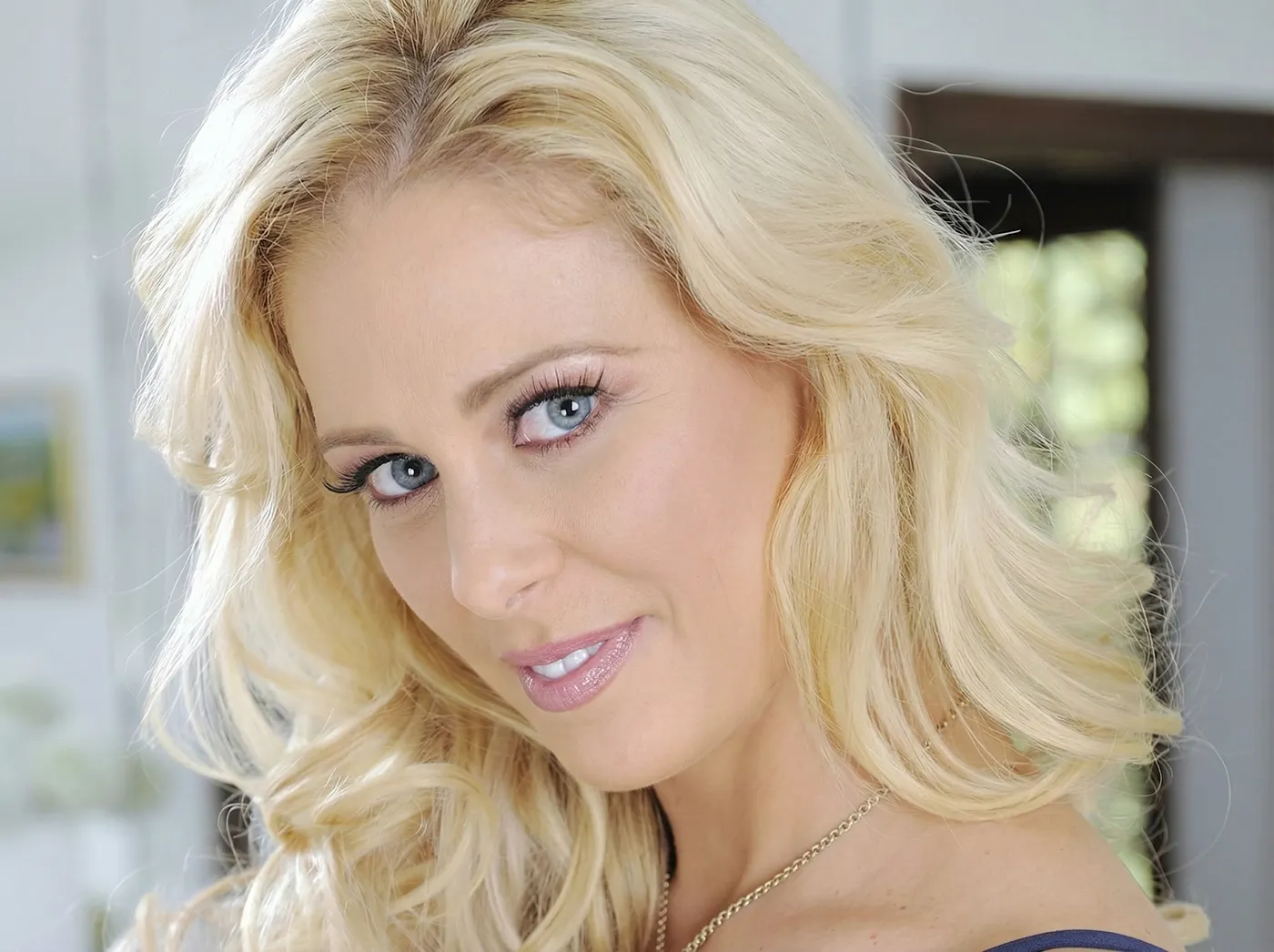
I never thought that any type of modeling, nude modeling, pornography, any type of film work, or acting, would be in my future.
The veteran adult film performer and former physical therapist discusses her career transition, consent protocols, and the critical importance of protecting creative likeness in the age of AI.
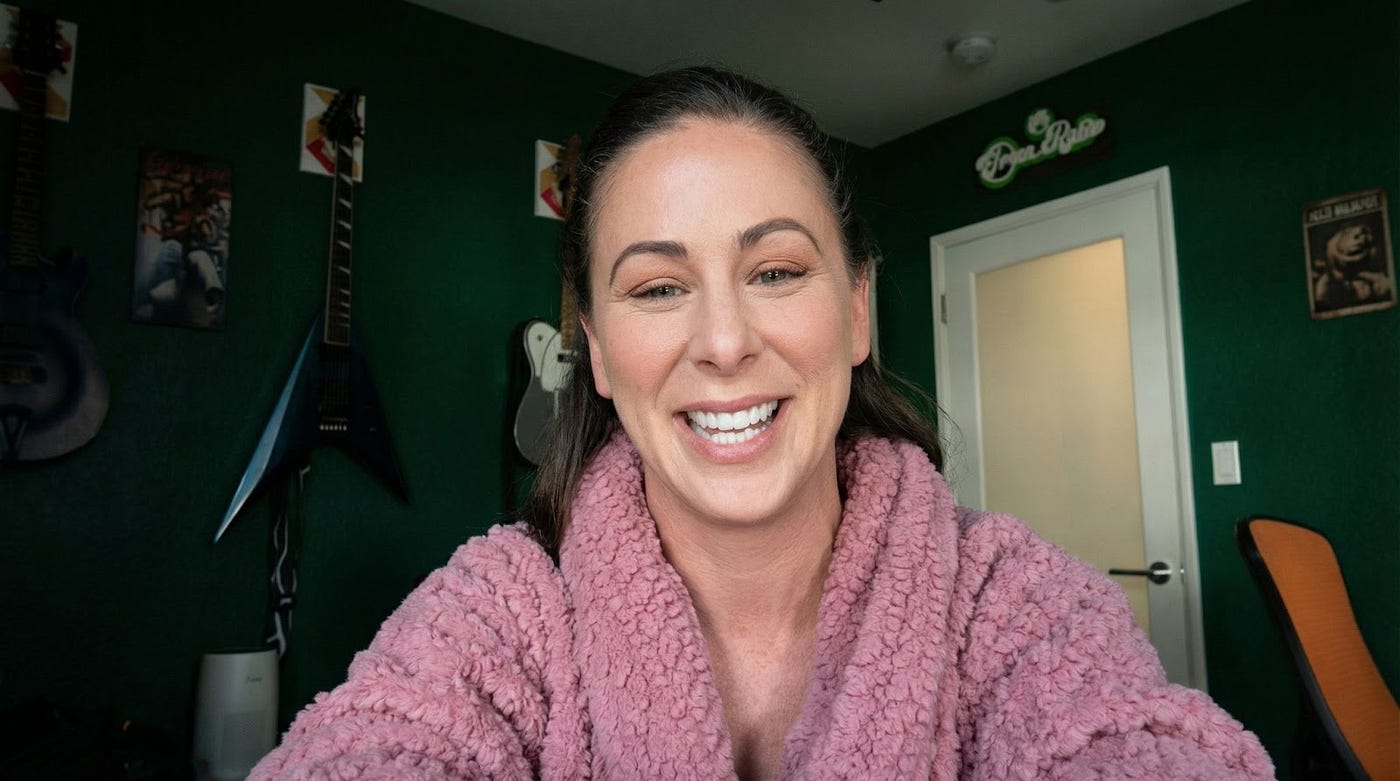
I never thought that any type of modeling, nude modeling, pornography, any type of film work, or acting, would be in my future.
We had the pleasure of talking with Cherie DeVille in a conversation that felt like a masterclass in career pivoting and the technicalities of a misunderstood industry. DeVille doesn’t fit the tired clichés of the adult film world. She is articulate, highly educated, and possesses the kind of practical wisdom you’d expect from someone who spent a decade working in healthcare.
Her story doesn’t begin in a neon-lit club or a grainy webcam room. It begins in the world of medicine. “I spent my 20s going to school and becoming a physical therapist,” she says, noting how unusual this is for her field. “I actually didn’t start this endeavor until I was in my mid-30s.” Most performers are seen as being in their “prime” a decade earlier, but DeVille was busy helping geriatric patients and athletes recover from injuries.
The transition was a slow burn that started with a local swing dancing club. A few pin-up calendars to raise money for the club led to a suggestion from a photographer to try amateur modeling sites. Eventually, a talent agent from Los Angeles came calling with a proposition that sounded more like an adventure than a career move. “I just thought, whether I love this or hate it, this is a weird bucket list moment,” she explains. “It’s like someone inviting you to go skydiving… I’m going to just have it and be like, ‘Look what Nana did.’”
But what was supposed to be a one-time “bungee jump” turned into a thriving business. DeVille realized she was being booked every time she flew to LA. The physical therapist from the South eventually “took the plunge,” moving to California and slowly phasing out her medical practice until she was a full-time performer. Today, she is one of the most recognized names in the industry, having won “MILF Performer of the Year” at the AVN Awards more times than anyone else.
Despite the accolades, DeVille is quick to dispel the myths about what happens when the cameras are rolling. To her, it is a technical job involving geometry and performance, not just pleasure. “You actually angle out at a 45-degree angle in this super awkward way because it’s not about the performers; it’s about the performance,” she notes. She recalls a funny, albeit embarrassing, mistake early in her career where she didn’t realize the importance of the “visual spectacle.” After she finished a scene without showing the “pop shot” to the camera, the director was visibly upset. “I just ate it up,” she laughs. “If the camera didn’t see it, as I found out the hard way, it didn’t happen.”
This professionalism extends to safety and ethics. DeVille speaks about “consent checklists” that would make most HR departments jealous. Performers go over every detail — from hair pulling to specific acts — before a scene starts. “It takes a lot of the awkwardness and guesswork out,” she says. “Open conversation is such a beautiful thing.”
However, the glitz of award shows and the clarity of her work environment are often overshadowed by what she calls the “social stigma.” For DeVille, the hardest part of the job isn’t the long hours; it’s the way the outside world reacts. She describes a landscape where performers are de-platformed by banks and harassed by neighbors. “Lots of people lose their bank accounts,” she says. “They don’t allow adult film people to use their banking services… It’s terrifying.”
She sees the adult industry as the “canary in the coal mine” for broader issues like freedom of speech and government overreach. Recent legislation regarding age verification, she argues, is less about protecting children and more about chipping away at the First Amendment. “If you let people legislate your pornography away, they’re coming for something you love next,” she warns. “It is crazy to have the government regulating what adults can see instead of actually protecting children.”
Now in her 15th year in the industry, DeVille maintains a sense of self that is separate from her screen persona. She hits the gym four days a week, attends therapy, and spends time with her dogs. She advises newcomers to have a solid business plan and to tell their loved ones before they start. “Don’t let work or success be the all-consuming force in your life,” she says, “because that’s not going to keep you satisfied when you retire.”
As she looks toward the future, including a revised website for 2026 and ongoing work with the studio Brazzers, DeVille remains a figure of contradictions: a doctor of physical therapy who became a pornographic icon, and a performer who spends her free time advocating for the very rights that allow her industry to exist.
Cherie, it is so nice to meet you. Before we dive deep, our readers would love to learn about your origin story.
Cherie: I feel mine is a little more unusual for mainstream adult film. A lot of people, especially women, start pretty early, usually in their 20s. Most people consider that a prime time for a porn model. However, I spent my 20s going to school and becoming a physical therapist. I actually didn’t start this endeavor until I was in my mid-30s.
I never thought that any type of modeling, nude modeling, pornography, any type of film work, or acting, would be in my future. But I was doing a little bit of pin-up modeling, mostly to raise money for a local swing dancing club I was in. I’m a big Lindy Hopper and swing dancer. We did some promotional materials for sale, a couple of pin-up calendars, and things like that. A photographer I worked with for the calendar said, “You’re good at this. If you wanted to make money doing this”, which I was not; I was making money for other people, “if you’d like to make money doing this, you should try these websites.
So I did. I logged onto those sites and uploaded the very few pictures I had. Both are not professional sites; it’s amateur models and, for the most part, almost exclusively amateur photographers trying to build their portfolios. Occasionally on the weekends, I was taking modeling jobs, primarily nude modeling jobs. I did that for maybe a year or so until my current agent, Sandra, or one of her headhunters who scours cam sites and Model Mayhem, found me.
Sandra asked if I wanted to come to Los Angeles and shoot porn. I was like, “What?” I knew porn existed. I had watched porn. But I never thought about where it was filmed or who the people were that filmed it. I had no information at all about that world. I just thought, whether I love this or hate it, this is a weird bucket list moment. It’s like someone inviting you to go skydiving, travel to New Zealand, or do any other unusual or exciting thing.
So I said, “You know what? I’m going to go. I’m going to film this film. And I’m going to just have it and be like, ‘Look what Nana did.’ Look at this: I went bungee jumping, I went skydiving, I traveled the world, I shot a porn.” Just an almost hilarious list of things I did in my life. That’s what I thought it was. The only due diligence I did before shooting was contacting a lawyer to make sure I couldn’t lose my physical therapy license, because again, that was my job. This was just one film, or so I thought. I told a couple of close friends and family members because you can’t keep online porn a secret.
I went to LA, and I loved it. I thought it was so fun. It broke a lot of my personal stereotypes, the ones we all see in films and movies. Especially 15 years ago, it was still considered underground or seedy. It just wasn’t. It was fun, professional, and such a joy that I thought, “This is great. Maybe a few times a year I’ll sneak away to Los Angeles and shoot a porn.”
Every couple of months I was going for maybe a week, getting booked fully. Then I started going once a month, and then for two weeks out of every month. Eventually, I realized I wasn’t spending time with my dogs, and being in both places wasn’t great. Spoiler: I was getting booked every time I went. This was not just a lark anymore. I realized I could create a business plan, create a business model, have goals other than blowing off steam, and maybe give this a try. To do that, I needed to move to LA. So I did. I took the plunge, signed up with a home healthcare agency here in Los Angeles, and only did physical therapy twice a week. I spent the rest of my time available for bookings. Slowly, I completely transitioned from physical therapist to part-time, to barely part-time, to retired, although I maintain my license. And that’s it. Here I am in Los Angeles doing it.
Is your story unique? Is that trajectory very unique, to get discovered and then all of a sudden turn that into a full-time career? Or is that typical?
Cherie: I feel there’s almost no typical story, other than it’s easier to have a career when you’re younger. It’s just an easier market to be in as a model. I think a lot of people that end up “MILFs” start young and transition into MILF. There aren’t quite as many of us that start older, as the “cougar” or “hot neighbor next door” in that older trope role, and then continue on. That part is maybe slightly unusual, although not unheard of.
The whole game changed when the internet became easier to manage, where you didn’t have to have a crazy level of website building knowledge and access to payment processors. Once there were sites that helped with website building and payment processing, it really opened up the world to all kinds of people in all walks of life as part-time and full-time employment. So who knows, if you’re talking about content creators, what the typical origin story or age is. I know that over the pandemic, that blew up with people of all ages and genders.
I’m sure this is hard to single out, but you probably have some amazing stories from the different parts of your career. Nothing salacious, but could you share with our readers one or two stories that stand out most in your mind from your professional life?
Cherie: I have so many joyful stories, silly stories, and on-set bloopers. I’ve met some of my best friends in this industry. At this point, they are the stories of life. My very best friend in the world is Dani Daniels. When models are out of town, a lot of agencies have condominiums where they have multiple apartments. That’s how I met my best friend; we were staying in the OC Modeling Model House. I’ve traveled the world through working with so many different companies. I got to go to Europe multiple times, Germany, Budapest, New Zealand, Costa Rica, Mexico, Canada, and all over the place in ways that I wouldn’t have been able to afford as a physical therapist.
I love my job, but it has also opened up this whole other world for me to allow me to experience so many parts of life that I wouldn’t have been able to do in that job. Your vacation time is so limited when you work for other people. Now, instead of spending my two weeks of PTO just doing Christmas, Thanksgiving, and family stuff, I can do all of that and have more time off to travel for pleasure as well. It’s been pretty freaking awesome. The cherry on top would be that somehow all my peers also enjoy my work. I’ve won MILF Performer of the Year at AVN more times than anyone else. I just couldn’t have a more blessed career, honestly. It’s been surreal.
When you say your peers, is the way the awards work that your peers vote? Is that how it works?
Cherie: Different awards work in different ways. The Pornhub Awards, for example, are analytics-based awards based on views and traffic. XMAs and AVN have some performers on the panels, but it’s a group of people in the industry, movie reviewers, directors, all different types of people, that sit in a room, literally watch the submitted videos, and then choose. Every award show does it differently, but two of our main ones involve people you know voting.
There’s a saying that sometimes our mistakes can be our greatest teachers. Do you have a story about a funny mistake that you made, nothing embarrassing, when you were first starting and the lesson that you took away from it?
Cherie: I do have an embarrassing one. I’ve made so many mistakes, so this certainly isn’t the only one. But I find this one embarrassing and funny, so I’ll tell you anyway.
My first few years were girl-girl only. Then, several years in, I transitioned to boy-girl. One of my very first scenes was with one of my best friends at the time, Aaliyah Love. We were so excited. She had never done a three-way before, even in her real life. We flew to Vegas. We did our scene. They always tell you what the pop shot is going to be, where the guy is going to come. The plan from the director was that he was going to come in her pussy and then I was going to eat it out. That felt clear to me.
That happens. I eat it out. I swallow it. Rejoice. And the director is really, visibly upset. I thought we crushed it. The scene was perfect. Boom. Everything happened.
He said, “You didn’t show the pop shot.” My brain wandered back to thinking about other porn, and it’s true. In real life, you might do this, that, or the other thing. But in porn, the people are always eating it, dribbling it out, and playing with it. There are all these shenanigans that you see on set. Even though you saw the action happen, I just ate it up. The poor male talent had to go cool down in the pool, wait 20 minutes, and come back to do the last part of the scene over so that we could show it.
Sometimes there are on-camera versus off-camera differences that are obvious to me now. Of course, on camera, you’re going to make this thing a visual spectacle. But as a brand new person, I just followed the directions literally. I think a lot of those funny things for new content creators coming into mainstream are things you might not realize. You don’t have sex like normal people do facing each other. You actually angle out at a 45-degree angle in this super awkward way because it’s not about the performers; it’s about the performance. It’s about the camera seeing it. If the camera didn’t see it, as I found out the hard way, it didn’t happen.
It’s a fascinating point you bring up that it’s different from real life. I think a lot of people expect real life to be like that.
Cherie: Yes, it’s a performance. It’s even why the male performers have such big penises. It’s not some random female performer preference. It’s because if you’re having sex at a 45-degree angle and you have the person’s butt in the way, you need three inches for the butt, three inches because you’re angled out weird, and then you need something left for the camera to see. You’re not even getting penetrated in a way that uses the whole eight inches. It’s for the camera, so you have something left over for the camera to see.
That’s fascinating. I think another obvious difference is that there’s no foreplay.
Cherie: In 2025, it’s changed even in the 15 years that I’ve been in it. But off-camera foreplay would be considered inappropriate, actually. You’re supposed to treat each other kindly and with respect, have a great conversation, and all that stuff. But ethically, if you’re off-camera, there’s no talent liaison there, there’s no one checking to see if you’re safe, and you haven’t necessarily consented to anything or gone over your consent checklist, we keep all of the action on camera for compliance, for safety, and because you want all of your physical and emotional energy to go to the scene. You don’t want to spend 20 minutes of emotional and physical energy off-camera; you might be more exhausted and less energetic for what you’re getting paid to do.
That’s fascinating. There’s another saying that “No is not rejection but redirection.” Do you have a story where that happened, where you got a “No,” but it led to an unexpected success or discovery or blessing?
Cherie: In porn, “No” actually does mean cut, stop, and completely redirect. What we do is, I think it’s really helpful and I do this in my private life in a less thorough way because it leads to better opportunities in sexual experience, we have what we call a consent checklist. We go through the things you do, you love, and you don’t love so that you get to really know what your partner is into before you start. You can mentally design a scene and an experience for yourself and your partner that really aligns with what you’re both into.
It takes a lot of the awkwardness and guesswork out. Say you really love something, but your partner doesn’t want that. You could rearrange it, do something else, do more kissing, or other kinds of foreplay so that you’re led to success. If you have a conversation and are willing to continue that conversation during the sexual experience, you’re going to have so much less discomfort and more pleasure. You’re not going to do the things your partner doesn’t like. It sets you and your partner up for success. Open conversation is such a beautiful thing.
Not that I didn’t talk about things like that in my private sex life, but often I would wait for something to happen and be like, “Oh, actually, I don’t like that.” It’s great to have open communication, but putting that all out there before you start makes things that much better because you’re off to the races on the same page with less concern about, “Oh, is he going to want me to lick his asshole?” You already know. If it’s your favorite thing, then you’re going to really go to town. Or, if that is not something you enjoy, then you’re going to do other things without putting someone in a situation where they’re going to be turned off or self-conscious.
Regarding those decisions, do the performers make those decisions? Or I always assumed there was a scriptwriter or the director.
Cherie: There’s a scriptwriter for the theme, and you get the script ahead of time so you can say, “Hey, these are the parts of the script I like, but I’m not comfortable with this part.” By the time you get to set, the script is kind of nailed in. Right before sex, you go through a thorough consent checklist: from basics like kissing, spanking, penetration, rough penetration, toys, hair pulling, to things like feet. Although no list can be comprehensive, we have as many things as you can think of that might relate to the scene on the list. If something happens during the scene that makes you say, “Oh, wow, that was unexpected, but I think I need to call cut and pause for a minute and talk about it,” that’s great too.
What’s been the most challenging project or role you’ve taken on so far and why?
Cherie: For me, a lot of the “features,” which are movies that are more about the dialogue than the sex, are challenging. A lot of our movies get made in one or two days; they’re pretty simple. But sometimes you have weeks or more of dialogue. I didn’t do acting in school. This isn’t my wheelhouse. I was here for the sex. But it turns out I really do enjoy that increased level of storytelling woven into the sex.
Honestly, some of the most challenging things are doing 12 hours of dialogue that you have to memorize for two weeks in a row, and then at 2:00 AM you finally get to the sex. You’ve had a whole day, maybe you’ve had fight scenes, and you’ve had all of these things going on. To have the sex almost be tertiary in the movies is interesting. Trying to find a way to save your energy for all of the important parts is really challenging for me. It takes a few days for me to memorize scripts if they’re 50 pages long. Finding the time to do your due diligence and not waste your co-worker’s time by not knowing what you’re supposed to be saying has been an unexpected challenge because those aren’t the type of movies I watched. Going in, I didn’t realize that you could spend days on end just doing script with no sex.
Occasionally, in traditional acting, cast members will fall in love with each other or form relationships. Does that happen in your industry?
Cherie: There are tons of people dating other performers. A lot of them met on set. But I think that’s true of any workforce. If you work with the same people every day, you get to know them. Some people you like more than others. Some people end up on your “no” list and some people end up as your romantic partner. There are all different types of people in this industry. I’d say an easy 25% of mainstream performers’ romantic relationships are with other performers. Marriages, kids, the whole thing.
Wow. How does having children work? Forgive me if this is a funny question, but when the kids go to school, how do they not get singled out?
Cherie: Well, I don’t have kids and I never wanted kids. However, I think what that really points to is how truly unfortunate the social stigma still is around the job. I have such a chill, easygoing family that’s so accepting and sex-positive. Sex wasn’t shamed in my household, so I was kind of insulated. As an adult, I went to swingers clubs and all of these things, I don’t do it anymore because our testing protocols are so strict, but I felt really at home in a sexually liberated environment.
When I became a pornographer, I understood lots of people didn’t like porn; that wasn’t a surprise to me. But the level of societal stigma is the hardest thing any of us have to deal with in our jobs. It’s not the job itself, it’s not the marketing, it’s not the sex. Every performer, I believe, would put repercussions of societal stigma at the top of their list of challenges. It’s sad that other people’s problems are our biggest problem.
We just exist in this ethical, consensual environment as entertainers for adults to be consumed by adults. Yet, I’m sure there are performers with kids who send their kid to school and get teased because those kids have been taught by their parents to shame sex and sexual expression. Whether you do or don’t have kids, the stigma is difficult. When I was house shopping in Los Angeles, people recognized me and gave other people the houses. People lose their bank accounts. People lose access to certain healthcare professionals. People are kicked out of the PTA. One of my friends was harassed by her neighbors. She didn’t do anything but existing as a human in her neighborhood. It can be really hard to deal with other people’s misconceptions or their reflections of their own sexual shame, which is so strong in themselves that they project it out at you.
Recent legislation on age verification is another example. I’m sure your magazine goes out to all the states, and half of them have wild age verification laws in place. The proponents of these laws are aware that these laws protects not a single child. A big part of the reason for that is that only sites operating legally will play ball. Legal, ethical porn sites where everyone is over 18, consenting, and doing this of our own free will are the only types of sites that will comply with these laws. Porn is worldwide and illegal sites often based out of other countries we will never be able to police will still be flooding Google with their images. The legal porn sites will follow the law, and all you’re left with on line will be millions of pieces of illegal content. the type of content the legislators say they wanted to curb will be all thats left. Rape content, people that are underage, and people that aren’t consenting is now all you can find in a lot of states since the legal content is behind an age verification wall. Additionally statistically less than one percent of adults are willing to supply their personal ID to access materials on line. Leaving the illegal horrible materials the only ones not behind age gated wall.
Even if that weren’t the case, anyone who knows how to use a VPN, which is everybody, can just use a VPN and say they’re in some other country to access materials. There’s no efficacy. The actual solution to protecting all children is device-based access to the internet. With ONLY vetted sited alowed on a childs device. it would be a miracle because we really don’t have anything to protect kids from the internet, not just porn, but violence, people dying on film, and inappropriate speech. If you’re three, you should only have Blue’s Clues etc. If you’re 17, you should have access to a little more. But most of the internet is just for adults. This interview should not be heard by anyone under 18, but what is your magazine doing to prevent that? It’s an internet problem.
The biggest part of the problem is since everyone knew while passing this legislation it wasn’t going to protect kids, it’s only going to harm the ethical porn industry. So you think, “What could they be trying to do?” I think the answer came in the big Supreme Court case: it is chipping away at freedom of speech. We’ve always been the canary in the coal mine for freedom of speech. Now there are Supreme Court rulings with no definition on what porn is that is going to police everyone, including journalists like you. They talk about porn and everyone says, “Yeah, that feels right,” but they don’t define it.
They are going to legally be able to take adults’ IDs and personal information even if the site has no way to protect that information. Sites like yours will eventually be mandated to do that because you have adult content on your site. You will have to find a very expensive way to provide age verification and protect those IDs. It is crazy to have the government regulating what adults can see instead of actually protecting children. I don’t believe it was ever about porn because it hasn’t gotten rid of porn. Maybe it’ll get rid of legal porn, but it won’t get rid of porn. What it did do is set a legal precedent to let the government control freedom of speech in a very powerful way. I don’t think we’ve seen all the ways that that’s going to play out yet, music lyrics, journalism, mainstream television shows. If you let people with strong, specific religious ideals control the government, which it isn’t supposed to do, you end up with a puritanical government with control over everything they consider immoral without letting adults choose what adults can see. They want to be everybody’s nanny. It’s going to be interesting how they weaponize what they’ve done in the guise of protecting children.
You mentioned something that struck me. You said somebody was recognized and then they got kicked out of their bank?
Cherie: Oh, that happens all the time. They weren’t kicked out of the physical branch, but lots of people lose their bank accounts. Many big chains have morality clauses for using their accounts. They don’t allow adult film people to use their banking services. If you go to any big bank, which is all most of us have access to, you have to pray they don’t find out what you do or you will lose your bank account and they will hold your money for a time they feel is appropriate until they give it back to you. It’s mostly the huge banking chains. Within this past year, it’s been brought to mainstream attention that this is going on because it’s not just adult industries; there are other industries they say no to. I think there will be some legislation to try and prevent that. But I’ve had so many friends lose their bank accounts. It is really hard. I don’t keep a bunch of cash around. While you’re waiting for your money to appear, you still have your mortgage to pay, bills, and groceries. You have to live your life. It’s terrifying. De-platforming in banks is super common.
Do you have to walk around with a bodyguard?
Cherie: Some people do, but I’m not at that level. If I go to a convention for porn where everyone is there for porn, I always have security, but not in my real life. When people recognize me thus far, they’ve been very polite and excited. Nothing scary in my life yet.
Interesting. But you’re saying that it’s not a common occurrence that people recognize you in the grocery store?
Cherie: LA is super chill because there are celebrities everywhere. It’s more when I’m at the airport or out of state that people are willing to come up to me. You’re going to see real mainstream celebrities in LA. I don’t think some random porn girl is of interest. Half of all the musicians, actors, and famous people live here. Seeing someone you’ve seen on TV happens constantly in LA. It’s considered uncool to bother a celebrity.
Do you have any exciting new projects or announcements that you’re working on now? Anything that you could share with our readers?
Cherie: I’m always working on new stuff. I post 12 new scenes every month on my OnlyFans. I have all my Christmas and New Year’s stuff queued up already. I’ll be at AVN and X3 conventions signing for Brazzers, the company I’m contracted with for all of my studio work. The big things are finishing the holiday season content and then going to our two huge award shows and conventions in January, where I get to meet all of my fans and sign for the best company ever, Brazzers.
This is our signature question. Cherie, you’ve been blessed with a lot of success and you must have learned a lot from your experiences. Looking back when you first started your career, can you share five things that you’ve learned over the years that would have been nice to know when you first started?
Cherie: Everything is ever-changing, but I’d say some of the things that have been consistent are:
AI is now a buzzword, and I’m sure they have AI in your industry as well. Are you or your colleagues concerned about the rise of AI and how it may replace people? Have you heard conversations about that?
Cherie: I feel all Americans are worried about AI. They say it’s going to replace all middle management, writers, and anyone in the arts. Unless you’re an in-person worker, like I was as a physical therapist, I think AI is coming for a lot of jobs. It’s not really there yet, but it’s coming.
In terms of my field, one of the keys to protecting yourself is: read your contracts. If you want to sign up with an AI studio, or even your regular contracts, check for AI clauses because a lot of mainstream studios are slipping them in. Cross that shit out. Don’t let anyone own your likeness. Do not sign up for any of these big AI companies unless you have a lawyer read your contract. Under no circumstances should you sign away the likeness to your voice, or your physical likeness. Really keep a tight chokehold on that legally because I believe we’re going to need it. AI is here to stay. It’s hard to say what forms it’ll take in my particular industry, but at least you can own your own likeness and voice. Every AI contract I’ve read so far, I have rejected because it wants to own me. Be careful.
Can you share some of the self-care routines that you do to help your body, mind, and heart to thrive?
Cherie: I love exercise. I try to hit the gym at least four days a week. Not just for my physical body, that’s something I did as a physical therapist where aesthetics weren’t important, but because I want to be able to get off the ground when I’m 95. I want to be able to move, walk, and be healthy.
I have therapy. My therapist is awesome. I’m always trying to become better as a person, become more connected to myself and the people I love, and get out of my own way. We all have things we’re working through. Therapy is vital.
Having a self-care routine is so important. We all get overwhelmed some days. Discover what things downgrade your nervous system from that heightened level to a relaxed level, whether it’s having coffee with a friend or taking a hot bath, and put that in your back pocket for days you feel overwhelmed.
Especially for people that work for themselves, have busy jobs, and feel pressures, you need firm personal and professional boundaries for your own peace. In America, it’s easy to get overwhelmed with work, money, deadlines, and success. These things are wonderful and will help me live when I’m 90 and retire, but most people don’t want to be 90 and just say, “Damn, I worked hard.” You really need to put aside time for the joys in life at all ages. Spend time with your family and friends. Don’t let work or success be the all-consuming force in your life because that’s not going to keep you satisfied when you retire. We all will retire. Having our whole identity wrapped up in “I’m a football player,” “I’m a pornographer,” “I’m a journalist,” or “I’m a podcaster” isn’t healthy. Those are great things, but they’re not who we are. Have a sense of self outside of your job.
This is our aspirational question. Cherie, because of the platform that you built and your amazing work, you’re a person of enormous influence. If you could spread an idea or inspire a movement that would bring the most amount of good to the most amount of people, what would that be?
Cherie: That’s what I consider my advocacy work to be. It makes me no money; in fact, it definitely loses me money because it is highly unsexy. I’m always talking about very unsexy things. But to spread the most good, at least in the United States, we are a freedom of speech country. We depend on that for our democracy itself. I wish people could open their eyes, put aside the stigma they have for porn, and look at it as an art form. You don’t have to watch it or consume it. You never have to look at it a day in your life. But if you let people legislate your pornography away, they’re coming for something you love next. Keep your eyes open. Don’t let the government take away the things you love just because you don’t love us.
Amazing. Cherie, how can our readers continue to follow your work? How could they support you in any possible way?
Cherie: Since it’s an ever-changing landscape, cheriedeville.com has all of my current social media, all of my current projects, and links to different articles. Everything you want is there. And a new revised site is coming soon in 2026!
Cherie, it’s been such a delight to meet you. I wish you continued success, good health, and blessings. I hope we can do this again next year.
Cherie: Thank you. Yes, it’s been an absolute pleasure. What a lovely interview. Thank you so much.
The Authority Magazine Editorial Desk produces, verifies, and edits long-form primary-source interviews with executives, innovators, clinicians, creators, and social impact leaders across Business, Tech, Pop Culture, Wellness, and Social Impact.

Exclusive, curated interviews with the leaders and changemakers shaping tomorrow. Leadership lessons, industry deep dives, and executive profiles.

 Yitzi Weiner
The young neuroscientist and Zeta Technologies co-founder explains how non-invasive EEG technology and targeted neurofeedback are transforming the future of hearing healthcare.
John Deere leader Julian Sanchez shares how human factors engineering, relentless curiosity, and embracing dissenting colleagues shape the future of agricultural technology.
The co-founder and chief science officer at Altana AI shares how federated systems and advanced machine learning are transforming global trade, resilience, and supply chain security.