When you think of resilience, which person comes to mind? Can you explain why you chose that person?
My dad exemplifies the traits I described above. His favorite subject was physics, and when I was growing up (in high school and college) I would seek his help with difficult physics problems.
There was never a problem that overwhelmed my dad. I would observe his demeanor as he absorbed the problem, walked away from it for a little while and then started to work it. This was something that struck me at a young age. I realized that his success wasn’t that he knew everything — it was in having a calm and confident demeanor in the face of a tough problem.
This same approach was prevalent in other aspects of his life — and after many years of watching him, I began working to apply it to all aspects of my life. Don’t panic, absorb the problem and start working it.
Has there ever been a time that someone told you something was impossible, but you did it anyway? Can you share the story with us?
There is always someone who tells you “it’s impossible,” no matter what you are about to try. I’ve learned that when you set out to prove that person wrong, you are unlikely to succeed, and even if you do succeed, it’s not very satisfying.
I’ve learned to instead take the feedback that something is “impossible” as data to better work the problem. If you assume good intentions, someone telling you something is impossible is actually pointing to a challenge you will likely have to deal with. Don’t let it discourage you or make it emotional — use it as information. People on the “this is impossible” camp are actually helping you identify challenges and achieve the impossible!
Did you have a time in your life where you had one of your greatest setbacks, but you bounced back from it stronger than ever? Can you share that story with us?
In the first semester of my master’s degree, I was taking a programming course where we were learning a new software package to develop websites. While I enjoy programming, I admit it has never been one of my strengths. The final exam, which made up more than half the grade, was to build a website using this program. I managed to do it, it compiled, and then I decided I had a little more time to make a few cosmetic changes to my code. To date, not sure what I screwed up, but when the professor came around to check it, nothing was working.
I failed the course, which put my scholarship at risk. I ended up retaking the course and was able to retain my scholarship, but the lesson I learned was more important. I spent my holiday break becoming proficient in this program, as I told myself I never wanted to let that happen again. In learning the program, I became interested in other applications, which at the time were very popular in the web development world. This eventually gave me the idea for my master’s thesis. My thesis connected me to a professor who suggested I get a Ph.D. and put me in contact with the person who would eventually became my Ph.D. advisor.
So, this terrible moment, which I still dread thinking about, actually opened doors for me. But it happened because I decided I wasn’t going to let it happen again, and I ran toward it, rather than away from it.
Did you have any experiences growing up that have contributed to building your resiliency? Can you share a story?
When I was 11 years old, my parents, my brother and I moved from Colombia to the U.S. I didn’t speak English. On the first day of school, my parents dropped me off, and for several weeks I didn’t understand much or anything being said around me. I remember every morning a lady used to come to the classroom and she would say words and different kids would raise their hand at different things she said. By the second week I recognized the word “nuggets,” and I realized she was the lunch lady coming to get a count of what kids wanted for lunch that day. I raised my hands at “nuggets” for a while until I learned other names of food.
Resilience is like a muscle that can be strengthened. In your opinion, what are 5 steps that someone can take to become more resilient? Please share a story or an example for each.
Rather than five steps, I have three:
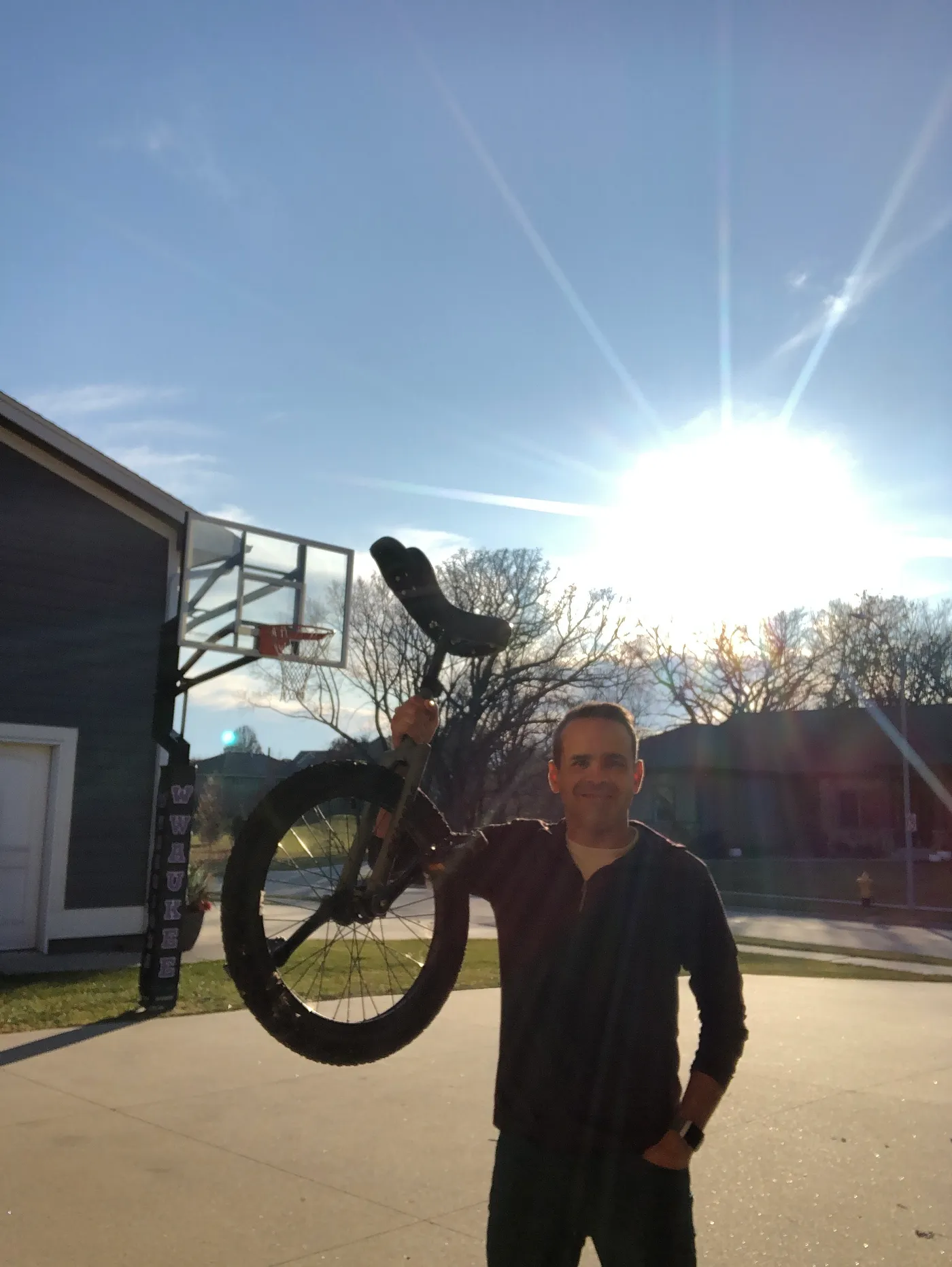
1) Become comfortable with failure. Failure is not fun, so we shy away from it, even in our personal lives. We stick to what we know and seldom try new things because it reduces the probability of failure. So, practice “safe failure.” This could be simple things like, try to take a new route to work, or try to learn to play an instrument, or try to learn a new language. The key is don’t go into everything you try with the ultimate expectation that you are going to “succeed.” Give it a fair effort, but be willing to fail, which sometimes means giving up on something. I guarantee you will still grow, and you will become a little more comfortable with failure. For example, I purchased a unicycle about two years ago. I tried to learn, but after about a month of falling, I decided it was ok to fail at it. Again, it’s about trying things that stretch you, but being comfortable walking away from them.
2) Surround yourself with dissenting views. This prepares your brain and your emotions to handle tougher problems and deal with them in a resilient way. The idea for my very first patent emerged out of a dissenting view, where a colleague disagreed with me on my idea to help operators of agricultural equipment stay fully attentive in self-steering vehicles. Embracing that dissenting view led to us patenting several methods to detect whether they were paying attention.
3) Find those around you who will support you when you do fail. Part of being resilient is being able to bounce back, and that is a team sport. You can’t always carry the weight of tough failures on your own, so find those around you who are willing to help you through those moments and place added value on those relationships. My first boss at Deere, nearly 15 years ago, showed me what it’s like to provide support for those who take risks. As we were building up our research tools I saw the need for an eye-tracker to allow us to better understand how our technologies were impacting operator behavior. It meant asking for an unbudgeted sum toward the end of a fiscal year. After being told no numerous times, I decided I would just wait a while. He pressed me on it and asked if I truly believed it was something we needed, and if so, told me not to stop pushing for it. He made clear he would keep supporting me. So I did keep at it, and soon after, succeeded in getting the purchase approved.
You are a person of great influence. If you could inspire a movement that would bring the most amount of good to the most amount of people, what would that be? You never know what your idea can trigger.
I would try to get everyone in the world to spend 15 minutes per day learning a new language. Our ability to find common ground amongst each other is a matter of communication. There is something tremendously powerful about being able to talk another language that immediately builds a bond between people. I recently spent some time living in Germany, and even when a German person spoke English, the ability to communicate even at a basic level in German built trust and appreciation for each other. If this feeling could be propagated at scale, I think the human race could elevate its conversation about real problems.
We are blessed that some very prominent leaders read this column. Is there a person in the world, or in the US with whom you would love to have a private breakfast or lunch with, and why? He or she might just see this, especially if we tag them :-)
David McCullough (author)
Sara Blakely (entrepreneur)
Greg Popovich (NBA Coach)
Ninja (e-sports extraordinaire)
Thank you for all of these great insights!