When I started to speak to other moms about this, they said ‘oh me too’. This really affirmed my mission and passion to help other moms, as I realized the need for everyone to share their stories and struggles to get support so you don’t feel so guilty.
Wellness
Boram Nam: The Radical Commitment to Maternal Recovery That Is Transforming American Postnatal Care
The co-founder of Boram Postnatal Retreat discusses her challenging postpartum journey and why building a dedicated physical sanctuary for new mothers is essential for fixing modern healthcare.
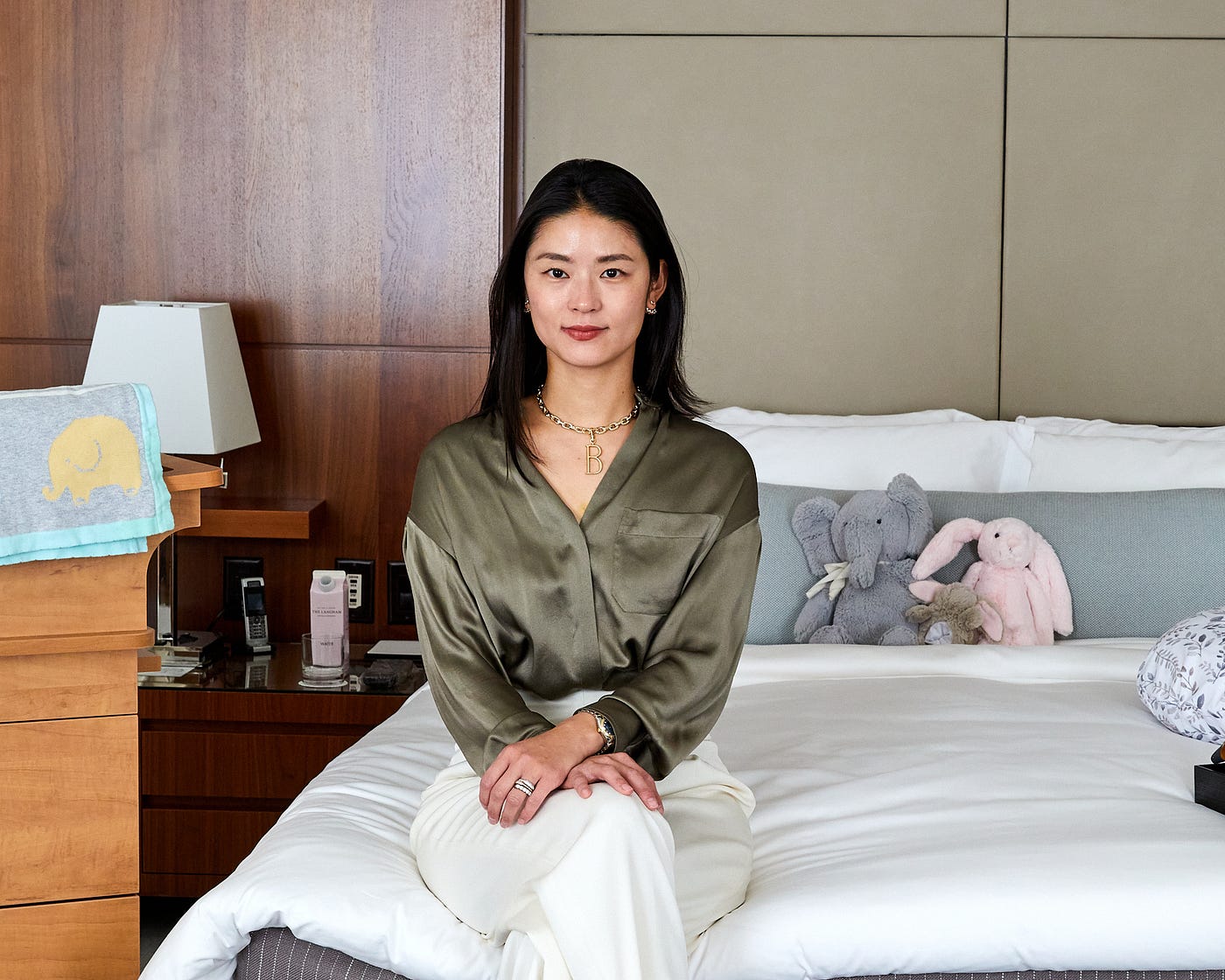
As a part of our interview series called “5 Things We Must Do To Improve the US Healthcare System”, I had the pleasure to interview Boram Nam.
Boram Nam is an entrepreneur with proven experience building innovative start-ups — prior to co-founding Boram in 2022, Boram was an integral part of the founding team of DramaFever, a leading video on demand streaming service that became the largest destination for premium international movies and TV shows in just 5 years (acquired by telco giant Softbank), where she oversaw content acquisition and licensing operations. Boram holds vast hospitality and travel experience, having worked in sales and operations at some of the top hotels in the world: The Four Seasons, The Plaza and the Shilla Hotel in Seoul; and also has a Ph.D. in behavioral marketing, MBA from Yonsei University and a BS from the Cornell University School of Hotel Administration. Boram has two children with her husband and business partner Suk Park and lives in New York City.
Thank you so much for joining us in this interview series! Before we dive into our interview, our readers would like to get to know you a bit. Can you tell us a story about what brought you to this specific career path?
After the delivery of my second child in 2014 in New York City, I had to deal with a tough c-section and depression and this journey took me two years to recover. In this time, I realized the absence of any kind of postnatal care services or systems here in the US, compared to the treatments my friends were getting in Korea with sanhujoriwon (postnatal care facilities) and other countries, where the mother is not put on the backburner after the baby arrives. This challenging experience convinced me of the necessity to bring a service to the US to make postnatal care essential, offering a serene and supportive retreat where mothers can recover with their baby and partner. This was how Boram Postnatal Retreat was borne, which means the ‘fruits of one’s labors’ in Korean.
Can you share the most interesting story that happened to you since you began your career?
I would say the most interesting story since I began my career was finding out that a lot of other moms have gone through the same journey as I have with all the difficulties and challenges. I had such a rough recovery time after my planned c-section with my son. After he was born, I was feeling the postnatal blues with this beautiful baby. When I started to speak to other moms about this, they said ‘oh me too’. This really affirmed my mission and passion to help other moms, as I realized the need for everyone to share their stories and struggles to get support so you don’t feel so guilty. Everyone goes through these things and it’s important to know these issues are normal, and that you are not alone.
Can you share a story about the funniest mistake you made when you were first starting? Can you tell us what lesson you learned from that?
Probably the funniest mistake I’ve made since opening the Boram Postnatal Retreat, is that thinking everyone is going to like or want the seaweed soup we offer on the menu! It is a traditional Korean dish and very nutritious for new moms, which is one of the main reasons why we offer it, however I had to accept that it’s still not for everyone’s tastes! So we’re now looking at expanding our soup menu to offer different things that meet our restorative menu guidelines, like broth and more.
Can you please give us your favorite “Life Lesson Quote”? Can you share how that was relevant to you in your life?
My favorite quote is that “today will never come back”. This is something I want to instill in my children, it means to focus on everything today presents you with and to make it count. Lean into the day with a full purpose and meaning. I think this also ties into another mantra or area of focus for me, which is that ‘we serve others’ — and this is definitely the case if you run your own business, for instance if you see something on the ground pick it up yourself, instead of asking someone else to do it. Both of these are important to me when I think of the work we do at Boram Postnatal Retreat.
How would you define an “excellent healthcare provider”?
I would define an excellent healthcare provider as empathetic, and who can ‘hold hands’ with their patient and be in the process with them together. It’s about relating to your patient even if you haven’t been through what they are going through and getting to know them — ask how they are feeling, rather than just doing the technical things — such as taking their temperature. I think an excellent healthcare provider also goes out of their comfort zone to do something differently or looks to make improvements on what’s always been done before because there’s a need, this is being dedicated to the cause.
What are your favorite books, podcasts, or resources that inspire you to be a better healthcare leader? Can you explain why you like them?
I really enjoy listening to the ‘How I Built This’ podcast by Guy Raz on NPR as I’m an entrepreneur, and this inspires me for Boram Postnatal Retreat, my new healthcare focused offering for new moms. Similarly, I enjoy watching TED Talks online — this allows me to understand other industries and gain leadership tips and success mindsets that I can apply to healthcare and our mission to put postnatal care on the map here. Because postnatal care is our focus, I read a lot of research and studies in this area, and parenting sites to keep on top of the latest trends and findings. Rick Wartz is a great resource for me to get information on nutrients and postnatal diets as well.
Are you working on any exciting new projects now? How do you think that will help people?
Yes, I am the Co-Founder of the new Boram Postnatal Retreat, which just opened in New York City last month in time for Mother’s Day. The research is clear: dedicated postnatal care improves the health and well-being of mothers and their babies. So our model of care — including nourishing foods, spa therapy and recovery support — is built on evidence-based practices and modern research to help new mothers and parents in their transition from hospital to home.
We opened Boram Postnatal Retreat at The Langham New York hotel, where we offer 3, 5 and 7+ night stays for families, including 16 luxe rooms, a baby room, community-building mother’s lounge and a postnatal food and beverage space featuring broth, traditional Korean seaweed soup and a wide variety of healing tea. We provide 24/7 baby care, including certified IBCLC nurses, nursing assistants and postpartum doulas. The staff assists with baby monitoring/recording vitals, feeding, diapering, bathing and sleeping, rounded out by offering a plan for moms, with postnatal massages, lactation assistance, sitz baths and foot baths.
We offer a first-of-its-kind retreat-style experience focused on caring for mother and baby that aims to be ‘the village’ that is difficult to find in today’s world. We are here as people with a trained team of doulas, nurses and more to support new moms and families at Boram Postnatal Retreat, to answer any questions, to demonstrate baby and mommy care in-person so you feel supported.
Ok, thank you for that. Let’s now jump to the main focus of our interview. According to this study cited by Newsweek, the US healthcare system is ranked as the worst among high income nations. This seems shocking. Can you share with us 3–5 reasons why you think the US is ranked so poorly?
As this study highlights, one of the main reasons is the limited access to healthcare — there is no universal healthcare offered in the US like in other countries, which means those with a lower income can struggle to get insurance cover and therefore basic services. The other two reasons, which are linked to the above is that the insurance system here can be both very overwhelming and costly because there is no universal, streamlined system in place, rather it’s a complex system with many different insurers, plans and caveats. This can prevent people in underserved communities from seeking the care they need, which has an impact on the healthcare system later.
As a “healthcare insider”, If you had the power to make a change, can you share 5 changes that need to be made to improve the overall US healthcare system? Please share a story or example for each.
- Making postnatal care essential — firstly, if I had the power, one change to improve the US healthcare essential would be to make postnatal care essential here like in other countries around the world. There’s a wealth of research that shows the benefits of postnatal care for moms and babies in the six weeks after birth, and I found with my two children that this education and services were lacking — the focus was more on what to do leading up to the birth rather than immediately after, when the mother is put on the backburner. That is part of my goal with Boram Postnatal Retreat to put this on the map for the US. We’re starting to see changes hopefully too — NY State just began a service to pair moms with doulas for example.
- Offering healthcare alternatives and resources for underserved communities — this could be achieved by the government working to offset costs of services for those without insurance or who might not be able to afford. In our instance in regards to postnatal care, it would be so great to offer a version of our Boram Postnatal Retreat at a reduced cost or for free for the communities in need, offering postpartum doulas or lactation assistance.
- Maternal leave standard — encourage employers to reconsider the standard three-month maternal leave timeframe, in line with other developed nations around the world, so that moms aren’t racing their recovery and overwhelmed to set themselves up as a new parent and get back to work, all in the short span of three months.
- Maternal leave benefits — in tandem with the above, encourage employers and society to recognize the greater support that new mothers need and to build this into healthcare cover offerings, such as offsets for postnatal retreats to help new moms recover faster, or for midwives to make more frequent visits like they do in Europe, versus the standard one postnatal visit in the US.
- A universal healthcare system — similar to what was outlined above, creating a universal healthcare system everyone could access for essential services would help improve the situation in the US, through helping to streamline and offering a guaranteed basic level of care for everyone in the country.
What concrete steps would have to be done to actually manifest these changes? What can a) individuals, b) corporations, c) communities and d) leaders do to help?
This a complex challenge that would require efforts from all parties to succeed — ideally, it would need to be led from a government level to regulate the healthcare insurance system in creating a free universal healthcare option, reviewing best case practices from other countries globally, as well as healthcare practitioners and experts to feed into what the essential services being covered should include. At a community and individual level, advocacy for healthcare cover and individual needs would also help raise awareness and encourage reform.
The COVID-19 pandemic has put intense pressure on the American healthcare system, leaving some hospital systems at a complete loss as to how to handle this crisis. Can you share with us examples of where we’ve seen the U.S. healthcare system struggle? How do you think we can correct these issues moving forward?
As postnatal care is my healthcare focus, I know this area has been especially affected by the pandemic, as new mothers and pregnant women were under additional stress navigating pregnancies and births with all the unknowns that COVID-19 has presented over the last two years or so. For example, this research found that 1 in 3 mothers experienced postpartum depression at the onset of the pandemic. And with postpartum depression on the rise even before COVID, maternal care/mental health awareness is really at the forefront for healthcare professionals, especially with the current baby formula shortage, where a lack of resources and education for new mothers has become abundantly clear. New mothers need instruction and support, so to correct these issues moving forward, prioritizing postnatal care is critical — both in terms of healthcare plans and investments into more education and services.
How do you think we can address the problem of physician shortages?
Improving the benefits for physicians could improve in the way of looking at things like working hours, scheduling, prioritizing the right tasks for them, offering care resources for them to avoid burnout, and a greater recruitment drive.
How do you think we can address the issue of physician diversity?
Greater physician diversity in healthcare could be addressed starting at the undergraduate and graduate level, offering grants and scholarships to diverse applicants, encouraging greater diversity in hiring, and offering greater access to education and role models in various communities.
How do you think we can address the issue of physician and nurse burnout?
This ties into what I said earlier about physician shortages — as physician burnout and shortages are really linked. Therefore setting systems in place to recognize when a physician or nurse is on the brink of burnout can help prevent shortages — this includes offering greater incentives to retain physicians and nurses in terms of better pay, sick leave, scheduling to reduce excessive overtime, as well as mental health / physical services to support healthcare practitioners, as it can be a grueling, demanding job at times and they need care as well in order to give back.
You are a person of great influence. If you could inspire a movement that would bring the most amount of good to the most amount of people, what would that be? You never know what your idea can trigger. :-)
The movement I’d love to inspire would be raising awareness of the lack of postnatal care in the US, and ultimately helping to problem solve and create solutions to address this. With this movement, there would be no more putting new moms on the backburner straight after their delivery, and instead help them have a smooth transition to parenthood. My movement would aim to help relieve the pressure that the US healthcare system and even society overall puts on mothers here, and show them that they are supported and cared for. As a healthy mother equals a healthy baby! And of course, I am really passionate about making postnatal care essential for everyone — this would be a big focus of my movement to bring this to underserved communities as well (and this is a big goal of mine in reality for expansion of our Boram Postnatal Retreat).
How can our readers further follow your work online?
By visiting the Boram Postnatal Retreat’s website and Instagram.
Thank you so much for these insights! This was very inspirational and we wish you continued success in your great work.
About the Interviewer: Luke Kervin is the Co-Founder and Co-CEO of PatientPop, an award-winning practice growth technology platform. PatientPop is Kervin’s third successful business venture. Prior to co-founding PatientPop, Kervin co-founded and was President of ShopNation (acquired by Meredith Corporation) and was the first executive hire at StarBrand Media (acquired by POPSUGAR).
LK
Written by
Luke Kervin, Co-Founder of Tebra
Columnist & ContributorAuthority Magazine Columnist & Contributor

Published inAuthority MagazineTop Lessons, Top Authorities · 42K Followers
Exclusive, curated interviews with the leaders and changemakers shaping tomorrow. Leadership lessons, industry deep dives, and executive profiles.