I am deeply convinced that hypnosis is the fastest way to change behaviors and emotional triggers, and it deserves more attention than it has now.
As a part of our series about Mental Health Champions helping to promote mental wellness, I had the pleasure to interview Bernhard Tewes.
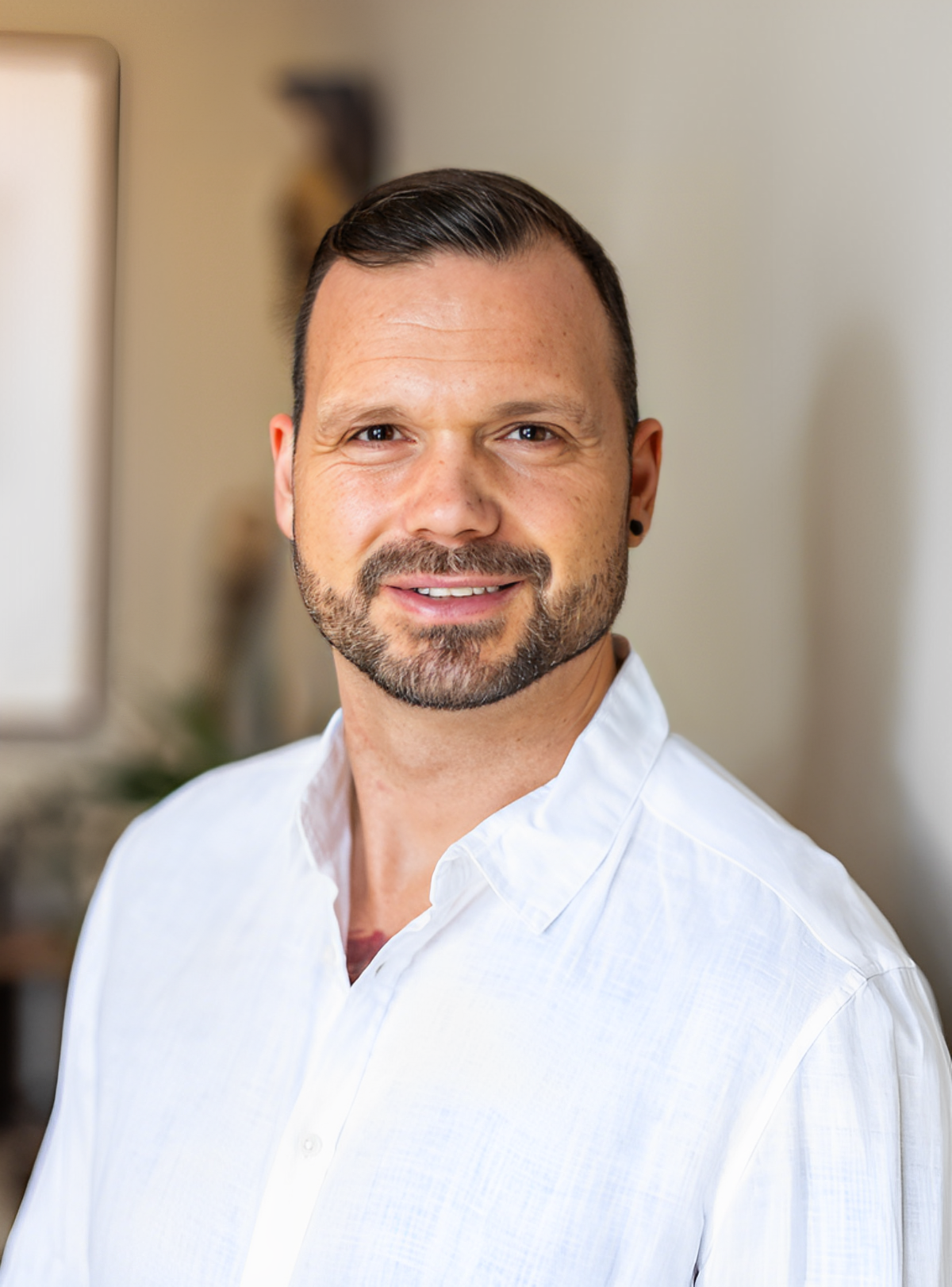
Bernhard is a licensed hypnotherapist, practice owner, and keynote speaker on hypnosis from Berlin. He is a certified member of National Guild of Hypnotists, Institute of Clinical Hypnotherapy & Psychotherapy, and the German Association for Hypnosis. In his desire to make hypnotherapy more available to everybody Bernhard founded HypnoBox—an app providing self-hypnosis sessions for mental and physical health issues.
Thank you so much for doing this with us! Before we dig in, our readers would like to get to know you a bit. Can you tell us a bit about how you grew up?
My name is Bernhard Tewes. I work as hypnotherapist and run a hypnotherapy praxis in Berlin since 2013. I was born in 1980 and grew up in Osnabrück, Germany. Before finding my way in hypnotherapy I worked as Senior Event Manager at Stuttgart’s Mercedes-Benz Museum. After a few years of climbing the career ladder in event management, I found myelf suffering from smoking addiction. I was only able to get rid of it through hypnotherapy. This was a turning point, when I decided to become a hypnotherapist myself and help others improve their wellbeing with hypnosis.
Ever since then, I have undergone training on hypnotherapy all over the world. I’ve been working as a hypnotherapist, alternative practitioner for psychotherapy and hypnoanalyst in my practice “Kiez Hypnose” in Berlin. After a few years of practice, I founded HypnoBox, a self-hypnosis app that offers over 600 self-hypnosis sessions for issues like sleeping disorder, stress management, anxiety, and many more.
You are currently leading an initiative that is helping to promote mental wellness. Can you tell us a bit more specifically about what you are trying to address?
As a hypnotherapist and adherent of hypnosis, I see my main goal in bringing hypnotherapy into this world. I am deeply convinced that hypnosis is the fastest way to change behaviors and emotional triggers, and it deserves more attention than it has now. Unlike other popular mindfulness techniques, such as yoga, meditation, and spiritual practices, hypnotherapy is aimed at bringing quality changes where they are needed. The desire to make hypnosis better known and to give other people access to it has driven me in developing HypnoBox.
Can you tell us the backstory about what inspired you to originally feel passionate about this cause?
It was my own healing experience. I stopped smoking after one hypnosis session, and that was so fascinating for me that I said “Hey, what else is possibly there?” As a former event manager, I’ve been through a lot of stress, burn out, depression and panic attacks, and I solved it all with hypnosis. I realized that hypnotherapy could help many people affected by mental and physical problems, and I decided to make it my life’s work.
Many of us have ideas, dreams, and passions, but never manifest them. They don't get up and just do it. But you did. Was there an “Aha Moment” that made you decide that you were actually going to step up and do it? What was that final trigger?
I tried to stop smoking for five years and I always started again and again when I was in a stressful situation. Then 60 minutes of therapy was enough for me to never have a craving for a cigarette again. That was the point where I was absolutely convinced that hypnosis is the best tool for change, and I wanted to learn everything about it.
Can you share the most interesting story that happened to you since you began leading your company or organization?
I’ve had many interesting stories during my practice, but there’s one that I find really impressive. I worked with a woman who suffered from severe social anxiety. She didn’t leave the house for almost four years because of it. We worked together for five sessions, and after these five sessions, she had a live interview in front of five million people on German TV. Now she has not only gotten rid of her anxiety, but she became a hypnotherapist herself helping others getting rid of their anxiety. That was the best thing I did, by far.
None of us can be successful without some help along the way. Did you have mentors or cheerleaders who helped you to succeed? Can you tell us a story about their influence?
Surely, I had mentors on my way, people I learned from and looked up to. I had trainers who helped me a lot to get in the right mindset to change. And for me, it was important to learn how to model myself on the people I look up to, like my mentor Dr. Norbert Preetz from Germany or Melissa Tears from New York. My father supported me in starting my new practice in Berlin which was really important.
According to Mental Health America's report, over 44 million Americans have a mental health condition. Yet there's still a stigma about mental illness. Can you share a few reasons you think this is so?
There’s still the belief that physical illness is more severe than mental illness or that physical illness is something normal while mental illness is a weakness. But the truth is that most of us have had or will have a depressive episode or irrational anxiety at some point in our lives. And for some of us these issues are bigger than just a stressful situation and require intervention. Therefore, asking for professional help for mental health issues should become something normal. At the same time, I must admit that the acceptance to have a therapist or a coach is becoming more popular and accepted, and I have a feeling that as a society we are moving forward with it.
In your experience, what should a) individuals b) society, and c) the government do to better support people suffering from mental illness?
From my prospective, the first thing the government should do is make sure there are enough therapists in place who get paid by the system. They should also support digital therapy so it’s available to everyone; it would also cost the government less money if they chose more effective methods of action, like digital health. Of course, the optimum is seeing a therapist face to face.
Speaking of individuals, I think it’s important to understand that mental illness is often just something temporary that can be healed like a physical injury. It means individuals and society should realize that asking for help with a mental health issue is a sign of strength, not weakness, and that we have mental problems the same way we have physical problems. In the end physical and mental health are connected, and there’s barely anyone who can live their entire life without having any problems with both.
What are your strategies you use to promote your own well-being and mental wellness? Can you please give a story or example for each?
My concern with my own mental wellness had actually led me into hypnotherapy back in the day. Today, as a practicing therapist myself, I master a lot of techniques for self-control and regulating my emotions. Here are the top five well-being techniques that I use in my daily life.
If I realize I get triggered by something, I can do some breathwork; it helps me put the brakes on acute stress and manage my emotions. In my experience, doing some breathing exercises is a great “emergency tool” for stressful situations.
Another great way to reduce stress and get back to the flow state quickly is acupressure tapping. It is a faster alternative to EFT—Emotional Freedom Technique—which is a form of counselling intervention that stimulates acupressure points. Acupressure basics are easy to learn, and this is an effective tool that may help you reduce both emotional stress and physical pain.
Flow State hypnosis is my favorite wellness technique I use on daily basis. For this I use the HypnoBox app with audio hypnosis sessions, which I initially developed for myself back in 2017, because I wanted to have a self-hypnosis tool I can access anytime and work with regularly. So, I do a session of Flow State Hypnosis every morning while I exercise on a trampoline. Going into trance through a regular movement is another way to go into hypnosis. At night I do a session to fall asleep. Even if your conscious mind is sleeping, your subconscious can absorb suggestions. It’s not as effective as in hypnosis, but it’s still doing its work if you do that regularly. Just to falling asleep with the sentence “Tomorrow will be great” will have an amazing effect on you the next day.
Besides flow state hypnosis, exercising itself is an important part of maintaining your inner balance. Aerobic exercises are not just good for your physical health, but they reduce levels of adrenaline and cortisol which are the body’s main stress hormones. From my experience, nothing helps to release stress and energy after a full day with clients as well as swimming.
Lastly, the fifth wellbeing practice I’d love to share with you is the sauna. Several studies have shown that regular sauna use can improve your mental health through lowering cortisol and helping your body relax and produce more endorphins.
What are your favorite books, podcasts, or resources that inspire you to be a mental health champion?
In the beginning, I was really into Tony Robbins’s Unlimited Power. It is a good book to get in the right mindset to be successful and work with beliefs. I also like the podcast of Tim Ferriss, “The Tim Ferriss Show.” He’s very honest with himself. And I also like the podcast of Mike Mandel, my fellow hypnotherapist, which is called “Brain Software.” He discusses hypnosis, NLP and strategies for peak performance and self-improvement in a very engaging way.
If you could tell other people one thing about why they should consider making a positive impact on our environment or society, like you, what would you tell them?
For me, the meaning of life is to give life a meaning. I’m pretty sure that doing something for society, leaving something good in the world, is the best you can do. And to be honest, to make a living from it, it’s one of the best most fulfilling ways to live your life.
How can our readers follow you online?
My website is www.bernhard-tewes.com/en
This was very meaningful, thank you so much. We wish you only continued success on your great work!