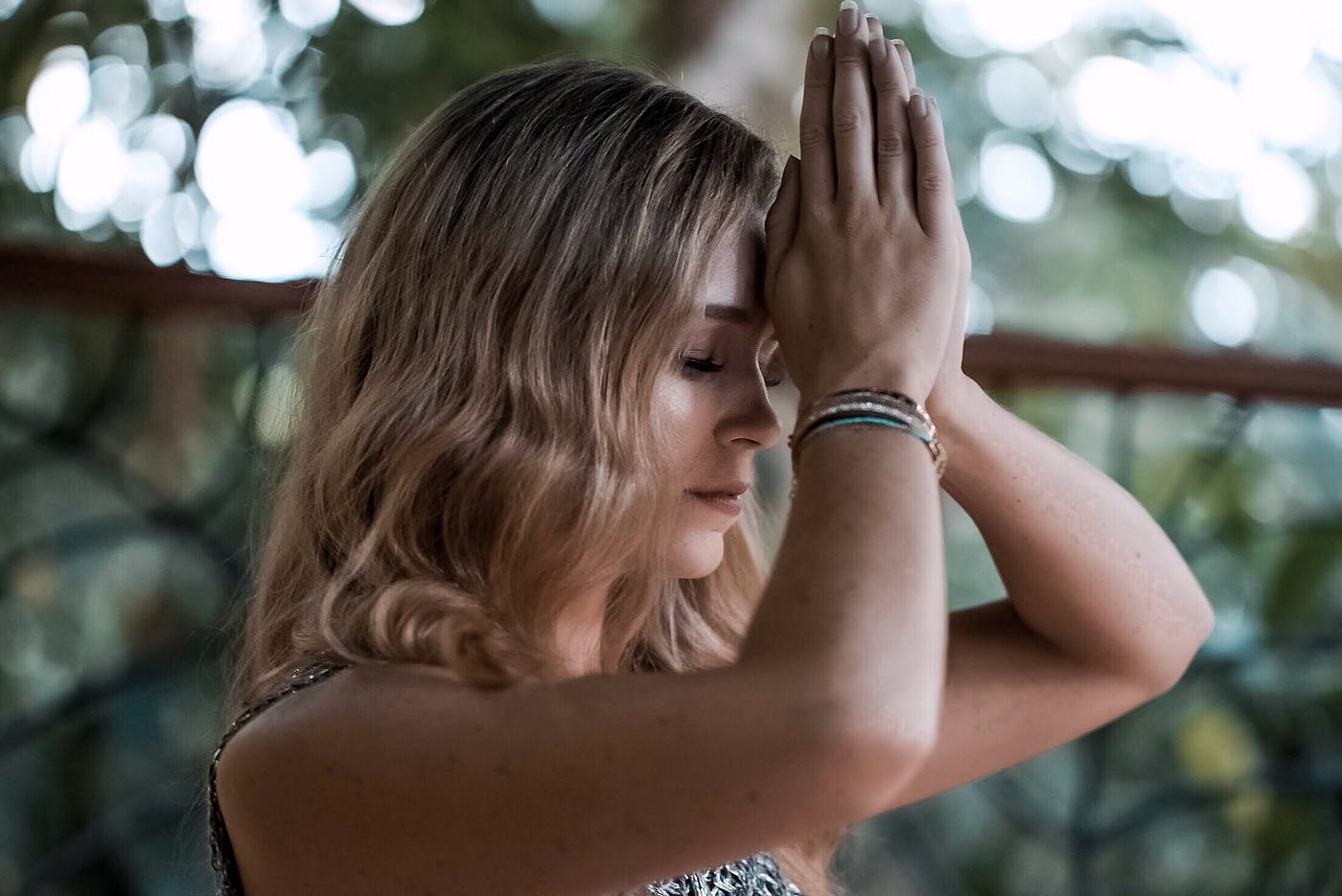
Changing my career was a very interesting time in my life because everyone always used to say to me, 'you’re so smart, you should become a medical doctor.' I woke up one day and thought, 'if I’m so smart — I should be able to do anything I want.
Wellness
Dr. Tara Swart of MIT Sloan School of Management: The Neuroplasticity Framework That Restructures Limiting Beliefs And Transforms Career Trajectories
As we all know, times are tough right now. In addition to the acute medical crisis caused by the Pandemic, in our post COVID world, we are also experiencing what some have called a “mental health pandemic”.
What can each of us do to get out of this “Pandemic Induced Mental and Emotional Funk”?
One tool that each of us has access to is the simple power of daily gratitude. As a part of our series about the “How Each Of Us Can Leverage The Power Of Gratitude To Improve Our Overall Mental Wellness” I had the pleasure of interviewing Dr. Tara Swart.
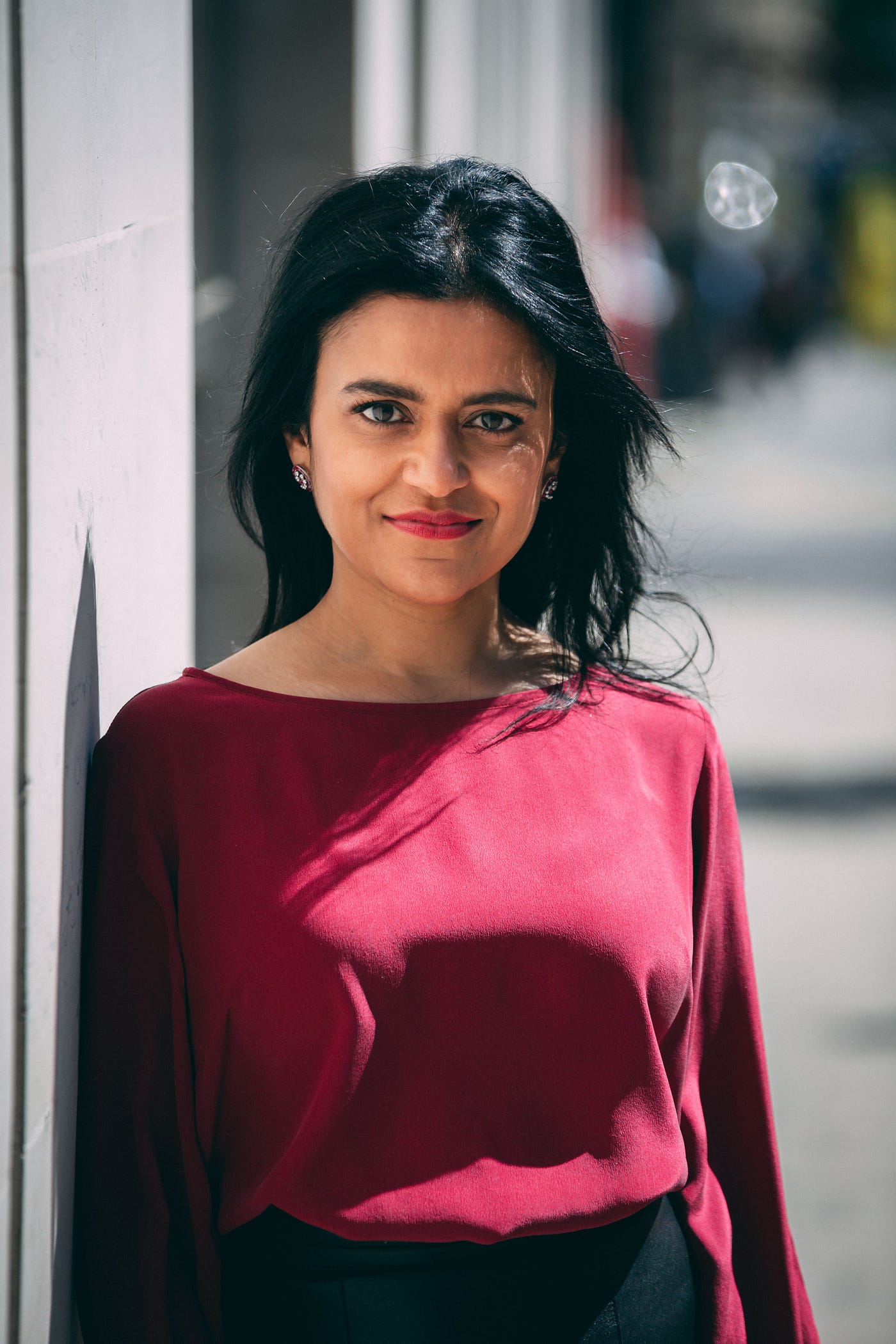
Dr. Tara Swart is an award-winning author, neuroscientist, medical doctor and Senior Lecturer at MIT Sloan. She is the author of the best-selling book, “The Source,” the first to marry universal truths with scientific rigor for a persuasive, innovative exploration of ‘The Law of Attraction,’ which has translations, worldwide, in 36 languages. Throughout her myriad professional endeavors, Dr. Swart teaches how to apply lessons from cognitive science and neuroplasticity to help get one’s brain out of autopilot, reprogram limiting beliefs, and live fully and authentically.
Thank you so much for doing this with us! Before we dive into our discussion, our readers would love to “get to know you” a bit better. Can you share with us the backstory about you and about what brought you to your specific career path?
During my childhood in London, my first passion was studying English and drama, with a penchant for public speaking and acting. Being a child to first-generation Indian parents, there was a strong expectation to attend medical school to become a doctor. I received a Bachelor of Science in Biomedical Science and a PhD in Neuropharmacology from Kings College in London as well as a MD from Oxford University.
In 2001, I got married and began working as a psychiatrist. Six years later, I found myself at my lowest point, the emotional, professional and spiritual foundation I once had was rocked by an unexpected divorce. All this inspired me to start fresh and, for the first time, I truly began living my life on my own terms, without familial or societal pressures primarily guiding my path. In the same year, I changed my career to become a business coach with a burgeoning interest in applying the principles of neuroscience and neuroplasticity to my new work.
I have always had a personal interest in the principles of the so called “Law of Attraction,” the New Age philosophy that concentrates on certain thoughts and beliefs which can bring positive experiences into one’s life. With that said, I later recognized the potential neuroplasticity has on a human, i.e. the ability to rewire one’s brain to “manifest” new and improved changes in one’s behavior, relationships and general life outcomes. I personally experienced the power of transformation in my life through simple reinforcement tools — namely raised awareness, focused attention, deliberate practice and accountability. It inspires me to share these simple, pragmatic, neuroscience-based messages to help substantiate New Age thinking, and with the drive and belief that neuroplasticity should be for everyone.
Can you share the most interesting story that happened to you since you started your career?
Changing my career was a very interesting time in my life because everyone always used to say to me, “you’re so smart, you should become a medical doctor.” I woke up one day and thought, “if I’m so smart — I should be able to do anything I want.” The most interesting thing I have done since starting my career as a physician, was to take time to think and soul search whether or not this was my true purpose and the reason why I was put on this earth. . I thought about it for two years before I finally left the field. Having become a senior doctor, only to then start at the very bottom of a new industry makes you have to understand a lot more about your internal resources. Through soul searching, I thought about the things that would make me successful (resilience, ability to ask for help, gratitude) etc.
Can you please give us your favorite “Life Lesson Quote”? Why do you think that resonates with you? Do you have a story about how that was relevant in your life?
My favorite “life lesson quote” is by Marianne Williamson — “Our deepest fear is not that we are inadequate. Our deepest fear is that we are powerful beyond measure. It is our light, not our darkness that most frightens us. We ask ourselves, ‘Who am I to be brilliant, gorgeous, talented, and fabulous?’ Actually, who are you not to be? You are a child of God. You’re playing small does not serve the world. There is nothing enlightened about shrinking so that other people won’t feel insecure around you. We are all meant to shine, as children do. We were born to make manifest the glory of God that is within us. It’s not just in some of us; it’s in everyone. And as we let our own light shine, we unconsciously give other people permission to do the same. As we are liberated from our own fear, our presence automatically liberates others.”
If you truly know what your passion is, it’s easier to follow that path, even in the tough times, rather than going against it, and doing what you think is the “right” thing to do.
Is there a particular book that made a significant impact on you? Can you share a story about why that resonated with you?
The Master Key System by Charles Harnel. I first read this book when I was young, married and happy, so I didn’t do any of the exercises. Five years later, I found myself divorced and directionless, so I went back to do the exercises and it completely changed my life. It is a very old fashioned and rather dogmatic book, in a religious way and not based on science. I thought to myself — if there was a non-secular book out there that uses modern language and is backed by science, it would be amazing. That is what led me to write my book, The Source.
Are you working on any exciting new projects now? How do you think that will help people?
I have a few new exciting projects coming up, equally fusing science and spirituality together, which I’m excited about. I’m working on a meditation app, Spark Up (mediation using neuroplasticity to boost your brain), new concepts called Thought Shrine and Sci-Spi (science and spirit) which will include either an online course or monthly membership, and my new 6 week, self-paced online program at MIT Sloan called Neuroscience for Business.
None of us are able to achieve success without some help along the way. Is there a particular person who you are grateful towards who helped get you to where you are? Can you share a story about that?
I completely agree that no one is successful without getting a lot of help along the way. I myself have had so much help along the way and couldn’t name a particular person, but having mentors, sponsors, champions, coaches, therapist in your life is very important. Having good people around you, like your friends and family, who support you is important, even when they don’t really understand why you are making the changes you are!
Ok, thank you for all that. Now that we are on the topic of gratitude, let’s move to the main focus of our interview. As you know, the collective mental health of our country is facing extreme pressure. We would like to explore together how every one of us can use gratitude to improve our mental wellness. Let’s start with a basic definition of terms. How do you define the concept of Gratitude? Can you explain what you mean?
Gratitude is appreciating and acknowledging how privileged you are, rather than taking it for granted. Proactively thinking of those things and listing them out so you are continually rewiring your brain to appreciate the things you have in your life to be grateful for, is helpful. Being content with yourself allows optimism to grow in your brain, and drives resilience. I would say it’s much more about being content with yourself and your life than always striving for the next thing.
Why do you think so many people do not feel gratitude? How would you articulate why a simple emotion can be so elusive?
I think gratitude is a complex emotion. It is a feeling made up of several basic human emotions, but can be quite complex. The attachment emotions I discuss in my book are love, trust, joy and excitement — and gratitude derives from a combination of those. Society sets us up to expect a certain lifestyle and standard of living, so we’re more likely to focus on the things we don’t have, rather than what we do have. Gratitude practice is about being content, turning those thoughts around and focusing on what’s good in your life rather than what’s not. If you’re always wanting more, it’s much harder to be happy.
This might be intuitive to you but I think it will be constructive to help spell it out. Can you share with us a few ways that increased gratitude can benefit and enhance our life?
Gratitude leads to happiness by making you focus on what’s good in your life, rather than wanting more. Repeating the practice of making gratitude lists or pausing to express gratitude for everything that happens, as well as your innate resources, cultivates abundance rather than lack mentality in your brain.
Let’s talk about mental wellness in particular. Can you share with us a few examples of how gratitude can help improve mental wellness?
Mental wellness is very connected to having an optimistic outlook, and focusing on positives more than negatives. Mentally being able to cope with something that happens in your life and expressing gratitude despite that, is important. It actually builds your resilience for the next challenge.
Ok wonderful. Now here is the main question of our discussion. From your experience or research, what are “Five Ways That Each Of Us Can Leverage The Power Of Gratitude To Improve Our Overall Mental Wellness”. Can you please share a story or example for each?
- Write out a list of 10 things you’re grateful for to cultivate that way of thinking.
- If something good happens, say “I’m so grateful this happened” rather than “I can’t believe this happened.” Overwriting the normal narrative in your head with a gratitude narrative can help you leverage the power of gratitude.
- Celebrate your successes. Sometimes we strive so hard for something that when it actually happens, we just move onto the next thing. Marking it in a special way, even if it’s just marking it down in your journal, is important.
- Create an “accomplishments” list. If someone sends me a nice email or message, I write it down in my journal so I can go back and look at it later.
- Celebrate other people’s successes. Envy is the enemy of gratitude. Seeing other people’s successes and being happy for them rather than being envious will improve your mental wellness and inspire you to perform at your best.
Is there a particular practice that can be used during a time when one is feeling really down, really vulnerable, or really sensitive?
If you are feeling down or vulnerable and have these recurring thoughts, try to distill the thoughts you have about yourself and what the underlying sub-conscious belief is in your brain. Then, create the opposite thought in your brain, and go after that. For example, rather than saying to yourself, “I want a partner,” you should say, “I’m lovable and loving,” etc. Make this your mantra!
Do you have any favorite books, podcasts, or resources that you would recommend to our readers to help them to live with gratitude?
- Book: The Source by Dr. Tara Swart
- Podcast: Gold Digger with Jenna Kutcher
- Resource: To Be Magnetic, curated by Lacy Phillips
You are a person of great influence. If you could start a movement that would bring the most amount of good to the most amount of people, what would that be? You never know what your idea can trigger. :-)
Definitely combining science and spirituality. As a former psychiatrist, I am incredibly concerned about the mental health aspects of COVID-19, like confinement and loneliness. A mental health crisis like this can lead to mental health issues, or spiritual revelation. I believe that a spiritual revelation, if backed by science, can change humanity.
What is the best way our readers can further follow your work online?
- My Instagram, @drtaraswart
- My website, https://www.taraswart.com/
- Keep an eye out for my new site, Sci-spi.com, coming soon!
Thank you for the time you spent sharing these fantastic insights. We wish you only continued success in your great work!
PP
Written by
Parveen Panwar
Mr. Activated · Authority Magazine ColumnistAuthority Magazine Columnist & Contributor

Published inAuthority MagazineTop Lessons, Top Authorities · 42K Followers
Exclusive, curated interviews with the leaders and changemakers shaping tomorrow. Leadership lessons, industry deep dives, and executive profiles.