My best friend had decided she wasn’t going to a party, all because she felt bad about the way she looked. I wanted to make her feel better and I believed giving her a new look would do the trick, so I convinced her to let me perm and cut her hair.
Wellness
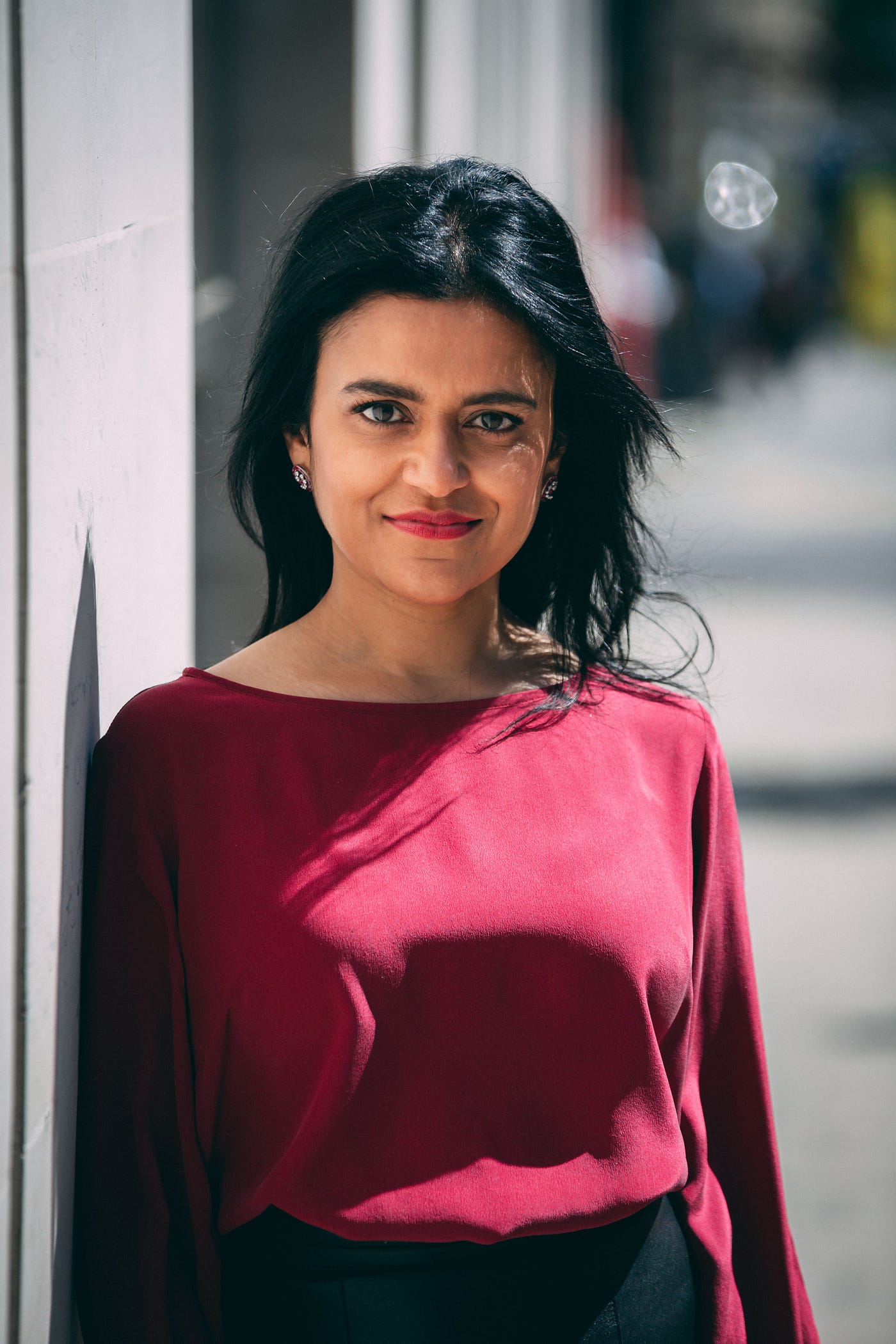
Maria McCool of Calista: Key Lessons in Wellness and Building Lasting Impact
Maria McCool, founder and CEO of Calista, shares how daily gratitude and self-acceptance can transform our mental health and help us embrace our unique beauty.
As we all know, times are tough right now. In addition to the acute medical crisis caused by the Pandemic, in our post COVID world, we are also experiencing what some have called a “mental health pandemic”.
What can each of us do to get out of this “Pandemic Induced Mental and Emotional Funk”?
One tool that each of us has access to is the simple power of daily gratitude. As a part of our series about the “How Each Of Us Can Leverage The Power Of Gratitude To Improve Our Overall Mental Wellness ” I had the pleasure of interviewing Maria McCool.
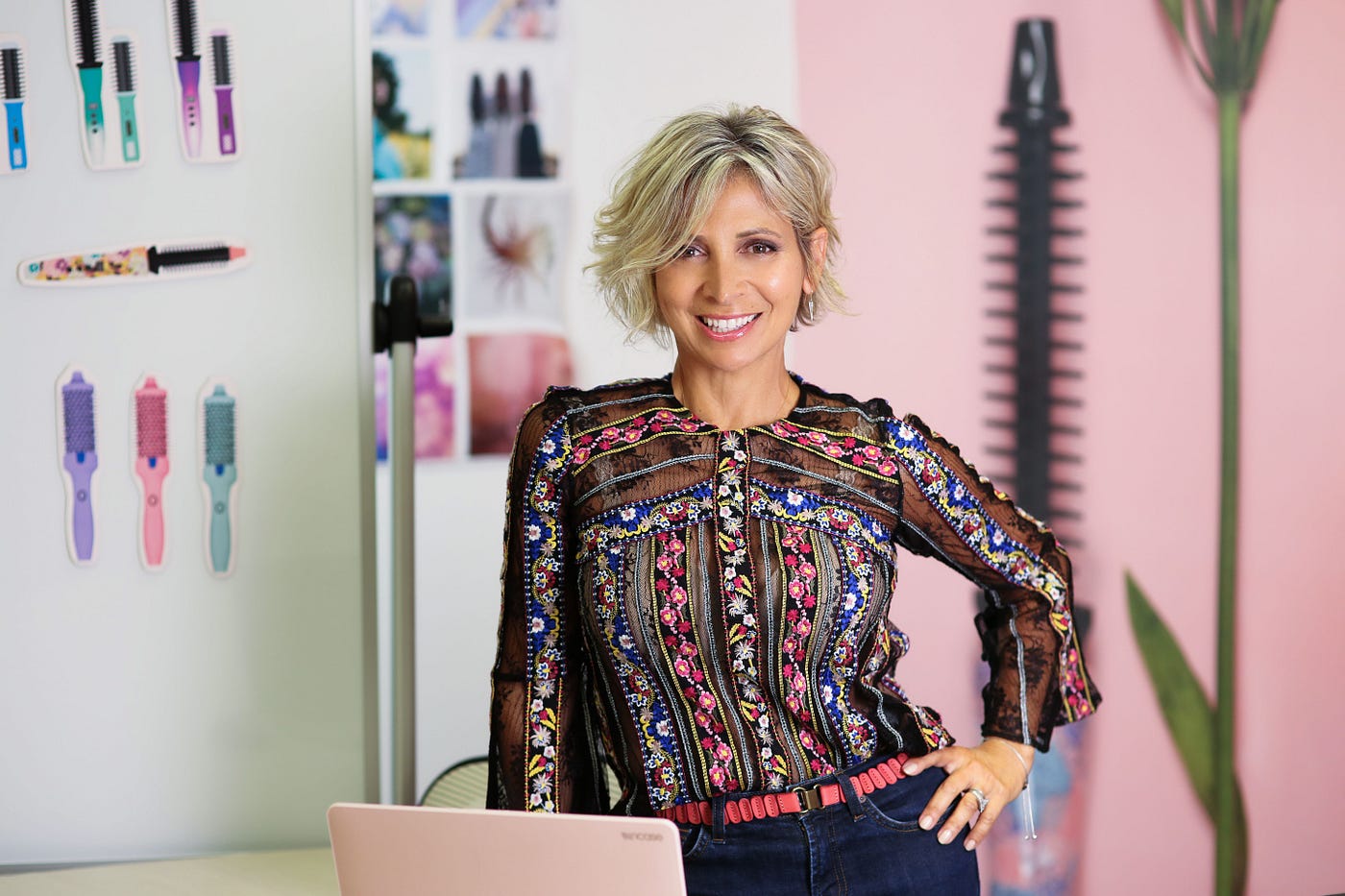
Maria McCool is a stylist, CEO, and founder of Calista, a haircare brand with a mission to inspire women to fall in love with their own unique beauty. She opened Calista Salon & Spa in West Chester, PA in 1989, and later created a line of products to give her clients the tools to create their own good hair days, 365 days a year. Calista Salon grew into a brand and launched on QVC with major success in 2007, further expanding into a diverse product line now sold on their website, www.calistatools.com. As Maria’s brand and success has grown, so has her appreciation for the importance of reflection, positivity, and gratitude.
Thank you so much for doing this with us! Before we dive into our discussion, our readers would love to “get to know you” a bit better. Can you share with us the backstory about you and about what brought you to your specific career path?
The whole reason I founded Calista was because of a feeling I got when I was just 12 years old. My best friend had decided she wasn’t going to a party, all because she felt bad about the way she looked. I wanted to make her feel better and I believed giving her a new look would do the trick, so I convinced her to let me perm and cut her hair. I literally watched her transform physically, mentally, and emotionally. I watched as she became the “belle of the ball” and saw firsthand how a small change could make someone feel brand new — how seeing our own beauty can actually make us brave. I decided right then that this was my calling and decided to nurture it. I competed in hairdressing competitions, took classes, learned from other stylists, and eventually opened Calista Salon & Spa when I was 23 years old. After years of hearing frustrated clients talk about the struggle of doing their own hair at home, I decided to create a line of products that would give them everything they needed to be their own stylists, so they could look and feel great every day of their lives. My line caught the attention of some of the QVC hosts who visited the salon, and we started selling the product line through QVC. Since then, Calista has continued to expand, providing hair products and tools to women across the world and helping all women feel brave about their beauty. Or as I call it, Beauty Brave.
Can you share the most interesting story that happened to you since you started your career?
I would say the most interesting story comes from when I was working with the SHiNE Foundation, a nonprofit Calista founded with Penn Medicine in Pennsylvania to help cancer patients. Calista’s role was to provide these patients and survivors with a day of self-love and pampering. They came to the salon and we gave them spa treatments, manicures, makeovers, fitted them for wigs, whatever they wanted. Afterwards, we put on a fashion show where these patients and survivors were the models. One of these women was at a very low point in her treatment. She was pretty young, she had recently lost her hair, she was thinking about skipping the day altogether. But she had the spa day and decided to walk the catwalk in the fashion show. I’ll never forget how she got to the end of the runway, pulled off her wig, swung it around, and threw it out to the crowd with so much joy. I’d never seen anything more brave. It was a summation of all that beauty is. It comes from inside of us and is projected onto the outside. To see her give herself love for an entire day and then feel so free and beautiful was life-changing for me.
Can you please give us your favorite “Life Lesson Quote”? Why do you think that resonates with you? Do you have a story about how that was relevant in your life?
I have so many! It’s hard to pick just one. I think my favorite is “So please ask yourself: What would I do if I weren’t afraid? And then go do it.” — Sheryl Sandberg.
It resonates with me because fear can be paralyzing. Fear blocks our potential. When it comes to taking chances or speaking my mind, I always think to myself “What’s the worst that can happen if I just go for it?” Our fear is always so much worse than anything that could actually go wrong. I now know I’d rather be laughed at or questioned than miss out on an opportunity because I was too afraid.
I also love something my mom would always say: “Great things come in a small packages”
It’s a great reminder to never underestimate anything, that the smallest things can have the biggest rewards!
Is there a particular book that made a significant impact on you? Can you share a story about why that resonated with you?
I feel like I’m impacted by every book I read, but Steven Covey’s “The 7 Habits of Highly Effective People” really started me on the path of self-awareness and self-discovery. I read it in my 20s and it set the stage for me to experience more personal and professional growth. More recently, I read “The Choice” by Edith Eger and was just so moved by her resilience and honesty. It’s a beautiful reminder of the strength of the human spirit.
Are you working on any exciting new projects now? How do you think that will help people?
I think all of our projects are exciting, but right now Calista is undergoing a rebrand and upgrading our website to further spread our message. Since the beginning, our goal has been to get women feeling great about themselves. We want to represent the opposite of what the beauty industry puts out there. Our message isn’t that you have to mimic the models or change who you are to reach some new level of beauty. It’s the opposite. You’re enough, you’ve always been enough, we want you to feel that from the inside out. The further we can spread that message, the better.
None of us are able to achieve success without some help along the way. Is there a particular person who you are grateful towards who helped get you to where you are? Can you share a story about that?
My business partner Don, who co-owns the salon with me has been a mentor and partner from the get-go. He was a judge in a hairdressing competition I was in when I was 16 years old. I won the competition and he immediately offered me a job. Don really mentored me and helped me get the education I needed in the beauty industry. When I had an opportunity to move to California and work in a big brand salon, he said “We can open that kind of salon here. The area needs it and we can do it together.” It’s now been 31 years, one of the longest relationships of my life. He’s seen me through so many life phases, and we’ve made it through it all, building a business that’s stronger now than it’s ever been.
Ok, thank you for all that. Now that we are on the topic of gratitude, let’s move to the main focus of our interview. As you know, the collective mental health of our country is facing extreme pressure. We would like to explore together how every one of us can use gratitude to improve our mental wellness. Let’s start with a basic definition of terms. How do you define the concept of Gratitude? Can you explain what you mean?
For me, gratitude is a daily practice of seeing the good. I think that when you look for the good, you find it. It’s like the Law of Attraction — grateful thoughts make for a life filled with things to be grateful for.
Why do you think so many people do not feel gratitude? How would you articulate why a simple emotion can be so elusive?
I think we’re all creatures of habit and changing our habits is really hard. It’s so easy for all of us to succumb to the negative and complain or neglect the good things to focus on the bad because it gives us this momentary boost of serotonin. It’s like eating candy. It’s easy and energizing in the moment, but not good for us in the long run. Gratitude is elusive because it’s like eating a healthy diet. It takes a certain dedication, and you can’t see the effects overnight. It’s really hard to change our habits and adopt things that are better for us than what we’re used to. But the long-term effects of gratitude are so worth it!
This might be intuitive to you but I think it will be constructive to help spell it out. Can you share with us a few ways that increased gratitude can benefit and enhance our life?
Gratitude just creates more. More enjoyment, more success, more love, more life. Increased gratitude can really just help you romanticize your life a little bit. It’s suddenly exciting to get ready for work in the morning when you’re grateful to have a job you love. It’s joyful to make dinner when you’re grateful for delicious food and the ability to cook. Gratitude turns the mundane, everyday tasks of life into beautiful, special moments. So much of the good stuff is in the everyday when you take a moment to look for it.
Let’s talk about mental wellness in particular. Can you share with us a few examples of how gratitude can help improve mental wellness?
It helps me to think back on a time where I was honestly really struggling, where I maybe wasn’t really experiencing mental wellness. My first husband left me when my three children were all under the age of 6 and it was incredibly stressful. Every weekday, I’d get my daughter up, fed, dressed, and walk her to the bus stop, only to come back for a repeat performance with my son, plus bundling up the baby for my second walk to the stop. One cold winter day, after putting my son on the bus, I was walking back home with my baby in the stroller, really feeling sorry for myself. But I looked at this little boy in front of me and I thought “Am I really feeling sorry for myself for having to go home and play with my son before the babysitter arrives? Am I really feeling sorry for myself for having all this time with these three beautiful children?” It was a humbling moment. It was a moment where being grateful for what was in front of me was so much more important than mourning what no longer was. Gratitude in small moments like that can move us toward mental wellness even in a very tough time.
Ok wonderful. Now here is the main question of our discussion. From your experience or research, what are “Five Ways That Each Of Us Can Leverage The Power Of Gratitude To Improve Our Overall Mental Wellness”. Can you please share a story or example for each?
1. Make use of clarity — Gratitude helps us create space for positive thoughts, experiences, and people in our lives. By clearing out the negative, we have a clearer vision of our values and goals. Making use of that clarity is the first step toward a happier life.
2. Attract positive relationships — Expressing love and appreciation for those around us stems from gratitude. When we express that thankfulness and foster relationships in our lives with people who we are grateful for and who are grateful for us in return, we develop stronger relationships and feel the reciprocal effects.
3. Foster a productive, welcoming work environment — Demonstrating positivity and gratitude in the workplace is a total game changer. You begin to attract more positive people and your everyday routine starts to mirror the warmth you project. We attract what we are.
4. Embrace the freedom — Being grateful for what you do have instead of focusing on what you don’t unlocks a wonderful freedom. You’re free from caring what other people think or falling prey to comparison when you love the life you’ve created for yourself and feel truly grateful for all that is uniquely yours.
5. Shift your perspective — Gratitude lets us see obstacles as opportunities and disappointments as course corrections. We can choose to be grateful for a challenge because it helped us grow or appreciate a disappointment because it shed light on something that wasn’t meant for us.
Is there a particular practice that can be used during a time when one is feeling really down, really vulnerable, or really sensitive?
Maintaining positivity all the time is impossible. I think when you’re in a really bad place, giving yourself the space to be sad is important. Don’t force positivity during a time when it’s just not in the cards. In these moments, I like to remind myself that everything flows and everything passes with time. We can only appreciate the good moments because of the bad. We can only rise from the bad moments because we anticipate the good that’s to come.
Do you have any favorite books, podcasts, or resources that you would recommend to our readers to help them to live with gratitude?
“The 15-Minute Miracle” by Jacquelyn Aldana helped me get in the habit of being grateful on a regular basis. Every day, I’d list out the things I was grateful for to help make gratitude into a daily practice. I also wrote my own book, “Becoming Beauty Brave” that’s all about being grateful for your own unique beauty in an industry and a society that makes us feel like we’re never enough.
You are a person of great influence. If you could start a movement that would bring the most amount of good to the most amount of people, what would that be? You never know what your idea can trigger. :-)
So much of what I want to bring to the world lies in this question: When did someone decide that beauty wasn’t as easy as loving ourselves? That’s the movement I want to start, and not in the preachy, cookie-cutter way. I genuinely believe that the way we feel about ourselves holds so much power and that that power is ours to take.
What is the best way our readers can further follow your work online?
“Becoming Beauty Brave” will be coming out on May 15, 2021. It will be available for sale on our website, which is also where you can find all of our amazing products and more about me and my company! You can also find us on Instagram @calistatools and Facebook at Calista by Maria McCool.
Thank you for the time you spent sharing these fantastic insights. We wish you only continued success in your great work!
PP
Written by
Parveen Panwar
Mr. Activated · Authority Magazine ColumnistAuthority Magazine Columnist & Contributor

Published inAuthority MagazineTop Lessons, Top Authorities · 42K Followers
Exclusive, curated interviews with the leaders and changemakers shaping tomorrow. Leadership lessons, industry deep dives, and executive profiles.