Agreements? I didn’t even know I was allowed to have my own agreements!
How does a successful, strong, and powerful woman navigate work, employee relationships, love, and life in a world that still feels uncomfortable with strong women? In this interview series, called “Power Women” we are talking to accomplished women leaders who share their stories and experiences navigating work, love and life as a powerful woman.
As a part of this series I had the distinct pleasure of interviewing Annmarie Kelly.
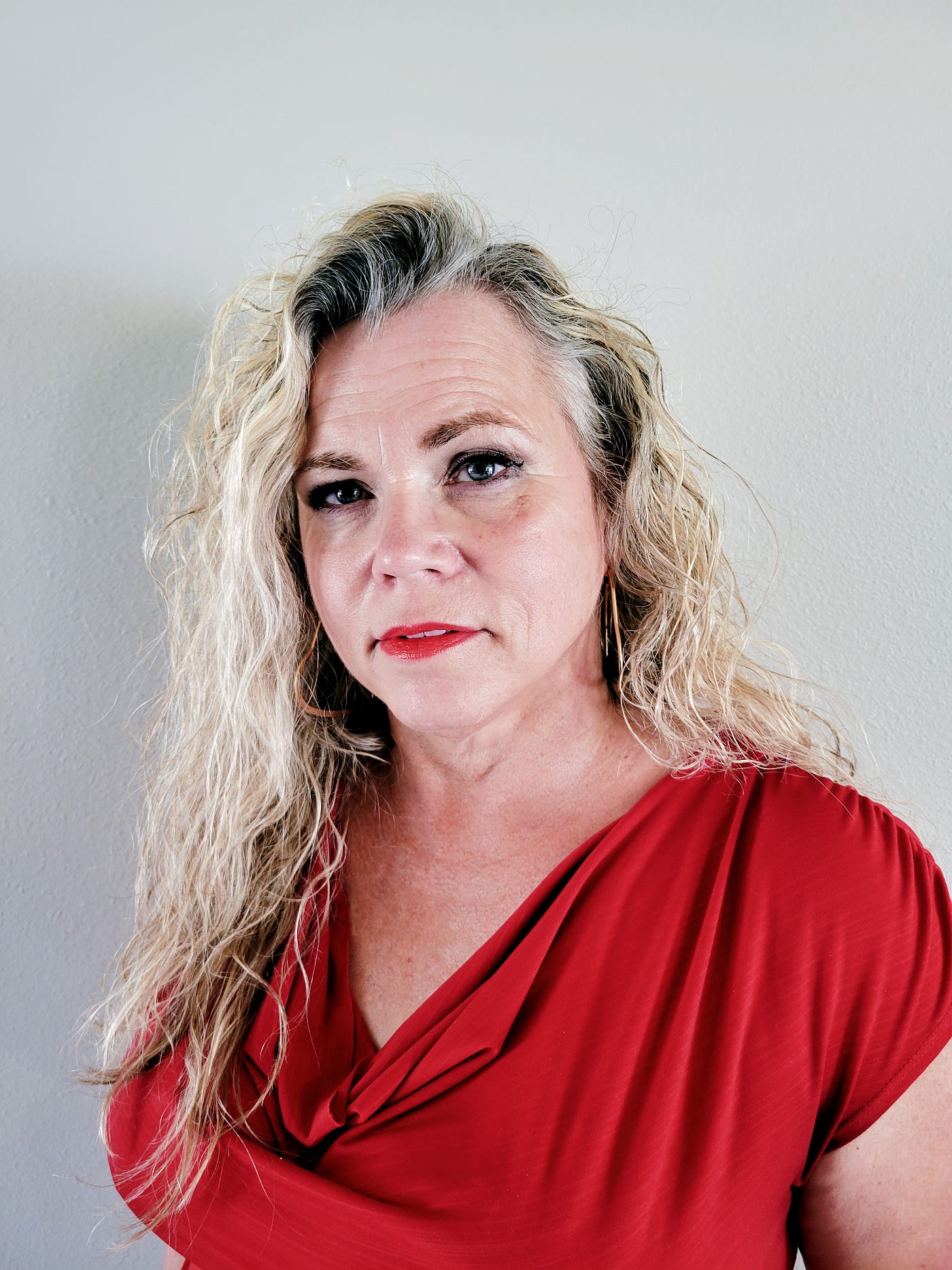
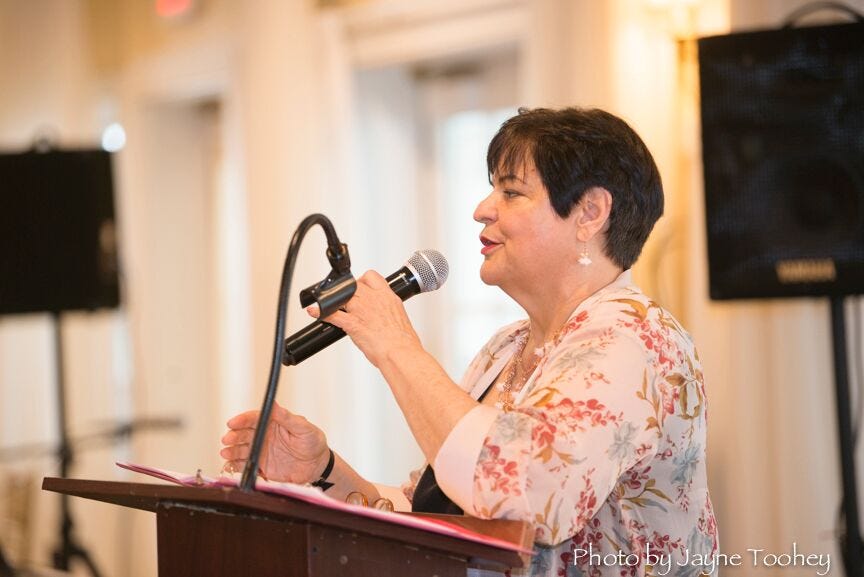
Annmarie Kelly has been married SEVEN times...to the same man...for just five years each time. Annmarie is an award-winning author, teacher, victory strategist, founder of The Victorious Woman Project, and the architect of the Five-Year Marriage®. She can be found at https://annmariekelly.com
Thank you so much for doing this with us! Before we dig in, our readers would like to get to know you a bit more. Can you tell us a bit about your childhood “backstory”?
Sure! I grew up in suburban Philadelphia. My parents were first generation Italian-American Catholics. So I had a pretty strict childhood and was a “classic good girl.” That means I did what I was told and didn’t make waves. And, as long as I did that, I got along well with my parents. Then, during my teen years, alcoholism, sibling abuse, and mental illness impacted my family. By the time I got out of high school, I started realizing that being a good girl didn’t have much of a payoff.
Still, I didn’t take my first serious step off the good girl track until I was twenty-two. I was engaged, and six months before the wedding, I broke it off. It was terrible for me because I was on “the marriage track” and thought I was ready (I wasn’t!). But all my friends were getting married and I wanted to be there with them..
As hard as the breakup was on me, the worst of it was how much my un-engagement disturbed my parents. Marriage was next on the good girl list. That’s what they wanted, and I sidetracked their plan. They seemed to think I failed them.
Then, as though I was adding insult to injury, a year or so later, I moved into my own apartment. In my family, girls only left the parental home in a wedding gown, a nun’s habit, or a coffin. Anything else was scandalous.
In my entire extended family, I was the only girl who left home “disrespectfully,” and my parents considered it a slap in the face to them. So I knew I either had to sink or swim because I wouldn’t get any help from my parents – physically, emotionally, or monetarily. In fact, my father wouldn’t talk to me for almost a year.
In spite of my parent’s response, and some really hard financial times, I never moved back to my childhood home (as one relative told me I inevitably would). Instead, I learned, grew, and made my life happy and satisfying. I also bought my first property – a small row house – something few women in the 1980’s did (for both financial and social reasons).
Slogging through my rough background brought me independence and a full appreciation for my own personal power. My old-school father noticed and came to respect my independent lifestyle. What I did then laid the foundation for and gave me enough confidence in my personal power later on to create my first Five-Year Marriage in 1988.
Can you tell us the story about what led you to this particular career path?
Whatever I do, I always consider myself a teacher. I was drawn to teaching during my teenage years and, in my junior year of high school, started helping out a teacher at the local elementary school. A few years later I was the one in front of the classroom, teaching children first in fourth and fifth grades, and then in middle school.
After eight years. I left the classroom for the real estate business, where I taught first-time buyers what they needed to know and do to buy their first home. I moved up from sales into office management. From there I was recruited by a local Better Homes and Gardens franchise to create and manage the corporate university for its 15-office company.
When that company was bought out, I started my own business providing corporate training and development to mid-size and Fortune 500 companies. I specialized in communication skill building and management development.
After my first book, Victorious Woman: Shaping Life’s Challenges into Personal Victories, was published in 2005, I began teaching women how to grow their personal power and embrace their inner victorious woman. I’m still doing that with my most recent book, The Five-Year Marriage: Shifting the Marriage Paradigm – and loving it!
Can you share the most interesting story that happened to you since you began your career?
The most interesting – and recurring – experience I have happens when a women tells me that she never saw herself as powerful, until something I said made her realize how much she’d been underestimating herself – and, now that she sees it, can never not see it again. That warms my heart.
Most recently, with The Five-Year Marriage®, women are seeing their spousal role differently, using the ACE Method (Accountability-Communication-Evaluation), and focusing on improving things like unclear and unspoken agreements. That’s life-changing for a woman!
Recently, one woman said to me, “Agreements? I didn’t even know I was allowed to have my own agreements!” That new understanding shifted her thinking and gave her back the long-missing sense of her personal power.
For me, hearing things like that, and seeing that look of newly-found confidence on a woman’s face – that never gets old!
You are a successful business leader. Which three character traits do you think were most instrumental to your success? Can you please share a story or example for each?
Persistence. Whenever I stepped into a new role, the waters didn’t just part and give me an easy path to success. I’ve worked months (and, a couple times, years) making some “uphill climb” to a successful outcome. I could have quit a thousand times, and felt like it (often!), but didn’t – and my persistence always paid off.
Emotional Intelligence. I’m pretty smart but I learned early on that IQ doesn’t always matter, but EQ does, through its several tenets. One of those tenets is boundaries, a significant part of The Five-Year Marriage®: The Bonus of Boundaries. Most married couples don’t even know what their boundaries are with each other or in the relationship. It’s that lack-of-clarity that often leads to big arguments.
My own “big” boundary is that no one is allowed to yell at me. No one. For any reason. If my spouse and I are arguing, sometimes there’s a shift in tone and I feel I’m being yelled at – which makes me feel unsafe. At that point, I call an “out-of-bounds” and we take a pause.
Social Skills. I find people fascinating and want to know about them. As a result, I have a wonderful ability to connect with people. For several years I did a local radio show, The Friday Happy Hour with Annmarie Kelly. My goal was to have “real” conversations with my guests about women, power, and success. I designed the show to mimic the kind of conversations women have at lunch or happy hour. My favorite compliment from listeners was ‘I felt like I was sitting at the same table with you.”
Ok, thank you for that. Let’s now jump to the primary focus of our interview. The premise of this series assumes that our society still feels uncomfortable with strong women. Why do you think this is so?
People are used to men arguing or challenging ideas and rules, and they (often unconsciously) present themselves in a loud voice, and a more dominant and even adversarial manner. It’s accepted as a “standard” behavior for men and no one thinks twice about it.
Meanwhile, women are still expected to be the “good girl” and not make waves...to keep the peace. So, when a woman speaks loudly or challenges something, many people – men and women alike – are surprised. They even get a “how dare you” attitude and often put the woman on the defensive. Society simply hasn’t been used to women speaking out, so it makes many people uncomfortable. But that is changing.
The good news is that, with more and more women standing up and speaking out, it’s a thousand times better than it was when I was starting out. I see how younger women today aren’t as intimidated as I was in my twenties, and even my thirties. And, especially with more women becoming prominent in politics and STEM, I can only see that trend continuing – at least in western countries.
Without saying any names, can you share a story from your own experience that illustrates this idea?
Yes! I was in a meeting just recently and questioned something the organization’s president said. The response was a meaningless non-answer – something that women too-often receive and accept when they ask for clarification. He expected an “Oh, OK’ response from me and then move on. Frankly, there was a day when that’s what I would have done. But not that day...
Instead, I pushed back. Oddly, the president responded with a scrunched-up funny-face – something he wouldn’t have given a man. I pushed forward, asking for at least one very specific thing the president would do. When I didn’t get a clear, meaningful answer, I said so. Much to his chagrin, I kept pressing until I got an answer people could understand.
I’ve run into something similar with The Five-Year Marriage® – especially with men. I think it’s because some people feel threatened by the concept – maybe because they don’t understand it or because some people aren’t prepared to be fully engaged in their marriage. So they give me the side-eye. It used to surprise me. These days I just think it’s funny.
Personally, being a successful power-woman of a certain age, I am less likely to care if someone doesn’t like me, or gets annoyed because I’m challenging the status quo.
What should a powerful woman do in a context where she feels that people are uneasy around her?
That depends on the situation but “be true to yourself” is a good rule of thumb. If backing off to make others feel good means disrespecting yourself, you have to decide what’s more important.
Here’s a great tip: when presenting something new, or disputing an idea, it helps to have an ally in your corner to back you up.
What do we need to do as a society to change the unease around powerful women?
So much of what we do is shaped by television, advertising, and social media. We can stop rewarding those things that applaud the “good girl” mentality, or those who want to make powerful women be the villain, or a temptress, or the punchline of a joke.
About twenty years ago, I discovered the work of Jean Kilbourne and her “Killing Us Softly” series. Jean showcases the various ways that advertising sabotages women and their power. It’s shocking but eye-opening.
Understanding the very subtle ways women are encouraged to be disempowered – at work, in life, and so much in marriage – it can be life-changing!
In my own experience, I have observed that often women have to endure ridiculous or uncomfortable situations to achieve success that men don’t have to endure. Do you have a story like this from your own experience? Can you share it with us?
Like every woman, I have a list. But one example appropriate for this article happened when I worked in a business where the owner was also my boss. Once or twice a month he would see me alone in the kitchen. He’d come in, wait until I was at the sink, then he’d come up close behind me and pinch my butt. Back then I only told one co-worker, who was my friend. Who else would I complain to – HR? What could they do that didn’t risk their job? Nothing.
In your opinion, what are the biggest challenges faced by women leaders that aren’t typically faced by their male counterparts?
Physically, women tend to be smaller in size and their voices are naturally softer. That’s nature.
However, women are forever doing things – like dieting or wearing skinny clothes - to make themselves smaller, as though they feel they don’t deserve to take up space in the world. They also stand with their feet together, which is a submissive stance.
Men don’t think twice about spreading out and taking up as much space as they want. They spread out on the train, at the boardroom table, anywhere. They typically stand with their feet 8-12 inches apart – and stance that is considered a power posture. Men don’t do it to be mean, they simply believe they need or are entitled to that space.
There’s only so much we can do about nature, but there are tons of things we can do about everything else – starting with not starving ourselves into smallness.
I watched a Ted Lasso episode where the power-woman shared her interesting power-technique. Before a meeting, she would go off by herself and “make herself big.” It was meant to be funny, but I thought it was fabulous!
Let’s now shift our discussion to a slightly different direction. This is a question that nearly everyone with a job has to contend with. Was it difficult to fit your personal and family life into your business and career? For the benefit of our readers, can you articulate precisely what the struggle was?
Early in my first Five-Year Marriage®, I felt all the weight of my mother’s expectations and society’s “wife” traditions weighing on me. Since my spouse didn’t have a father and his mother sent him away to a state-run boarding school, I actually don’t think he had the same issues. So the struggle to conform was all on me. I knew what my mother did and also, hiding deep in my “good girl” consciousness, was the expectation that that’s how I should be too.
The struggle for me was in reframing my own model, creating more realistic expectations for myself, and giving up being the quintessential “does it all” wife.
What was a tipping point that helped you achieve a greater balance or greater equilibrium between your work life and personal life? What did you do to reach this equilibrium?
One Saturday morning, while my spouse was working, my mother called. I was cleaning and, at the time of her call, I was scrubbing the bathroom floor. When she found out what I was doing, I could feel the sense of satisfaction in her “that’s good” response.
I got off the phone furious with myself. I was new in my own business. I worked hard all week – days, nights, and some weekends too. So did my spouse. I ran the show in my business; he did the same in his. So why was I the one scrubbing floors...alone?
That phone call was a turning point.
My spouse and I were new in business then, and couldn’t afford a house cleaner. However, we could make agreements that balanced things out.
After that Saturday morning call with my mom, first I got myself straight. Next, my spouse and I had a few conversations and started making clear – and often written - agreements about division of household chores, cooking, and everything else.
To this day, we periodically review what’s working, what’s not, and what needs to change. I expect him to make as many adjustments and sacrifices for my work as I make for his.
We’re a team. The goal isn’t for one player to shine and the other to mop up. The goal is for the team to win.
I work in the beauty tech industry, so I am very interested to hear your philosophy or perspective about beauty. In your role as a powerful woman and leader, how much of an emphasis do you place on your appearance? Do you see beauty as something that is superficial, or is it something that has inherent value for a leader in a public context? Can you explain what you mean?
I think it’s important to look your best. Find your personal style, your best colors, and dress accordingly. When you do, you show the world that you respect yourself. That’s the external part.
Beauty, however, comes from within. I think the most beautiful thing about a woman is being herself, who she really is, feeling the confidence that comes with it, and letting that shine through.
What could be a more powerful combination?
How is this similar or different for men?
I think it’s the same with men. I think they get there sooner because they have traditionally not been able to rely on makeup and other beauty enhancements for their appearance. Staying in shape, dressing with style, having a good haircut, and using deodorant are their main assets.
Ok super. Here is the main question of our interview. Based on your opinion and experience, what are the “Five Things You Need To Thrive and Succeed as a Powerful Woman?” (Please share a story or example for each.)
1. You are your one and only best person for you. No matter how much someone loves you, no one will ever care about your well-being and future as much as you do. You must take care of yourself.
2. Be the leader of your life. Any time you follow someone else, you’re going in their direction. So they will lead you someplace, but it may not be where you want to go. Being clear about your goal, and your direction, will help you partner more effectively and bring you greater satisfaction.
3. Grow your victories. Victory is the stretch you make out of your comfort zone to get from where you are to where you want to go. Once you make that stretch, you can’t un-stretch. Instead, you build on that stretch. That’s why successes come and go but victory lasts forever. Keep a log of your victories, to remind yourself about how much you’ve stretched. From time to time, you’ll need a boost. It’s so good to remember how far you’ve come.
4. Ditch the nay-sayers. Not everyone has your best interest at heart, but everyone has an opinion. Having opinions requires no expertise, no common sense, costs nothing to have one, and it’s a great tool for manipulation by toxic people. Refuse to lose your personal power to the always-nay-sayer.
5. Celebrate every good thing. Time moves fast and the next thing is already in front of you. WAIT! Take a pause to bask in the joy of the good...of the day...of your victory...of your success. It’s very helpful if you create a personal celebration ritual – so you don’t even have to think about what to do to celebrate because your celebration ritual is ready and waiting for you.
We are very blessed that some very prominent names in Business, VC funding, Sports, and Entertainment read this column. Is there a person in the world, or in the US with whom you would love to have a private breakfast or lunch with, and why? He or she might just see this if we tag them.
Hugh Jackman and Deborra-Lee Furness. They are a long-time married couple who really gets it about how change impacts your marriage and how important it is to regularly review, rethink, and reset.
I know how my spouse and I reset. I’d love to have a conversation with them about how they go about resetting in their marriage.