I never wanted my dancers to feel the way I have felt dancing for other companies—just a number, easily replaceable, treated poorly, and talked to disrespectfully.
Power Women: Lindsey Dinneen On How To Successfully Navigate Work, Love and Life As A Powerful Woman
(If you are unable to download it, please click File-Download)
Please answer the questions, and leave the questions formatted as they are in the document. We may schedule a follow-up call or skype to round things out.
INTERVIEW QUESTIONS:
How does a successful, strong, and powerful woman navigate work, employee relationships, love, and life in a world that still feels uncomfortable with strong women? In this interview series, called “Power Women” we are talking to accomplished women leaders who share their stories and experiences navigating work, love and life as a powerful woman.
As a part of this series I had the distinct pleasure of interviewing Lindsey Dinneen.
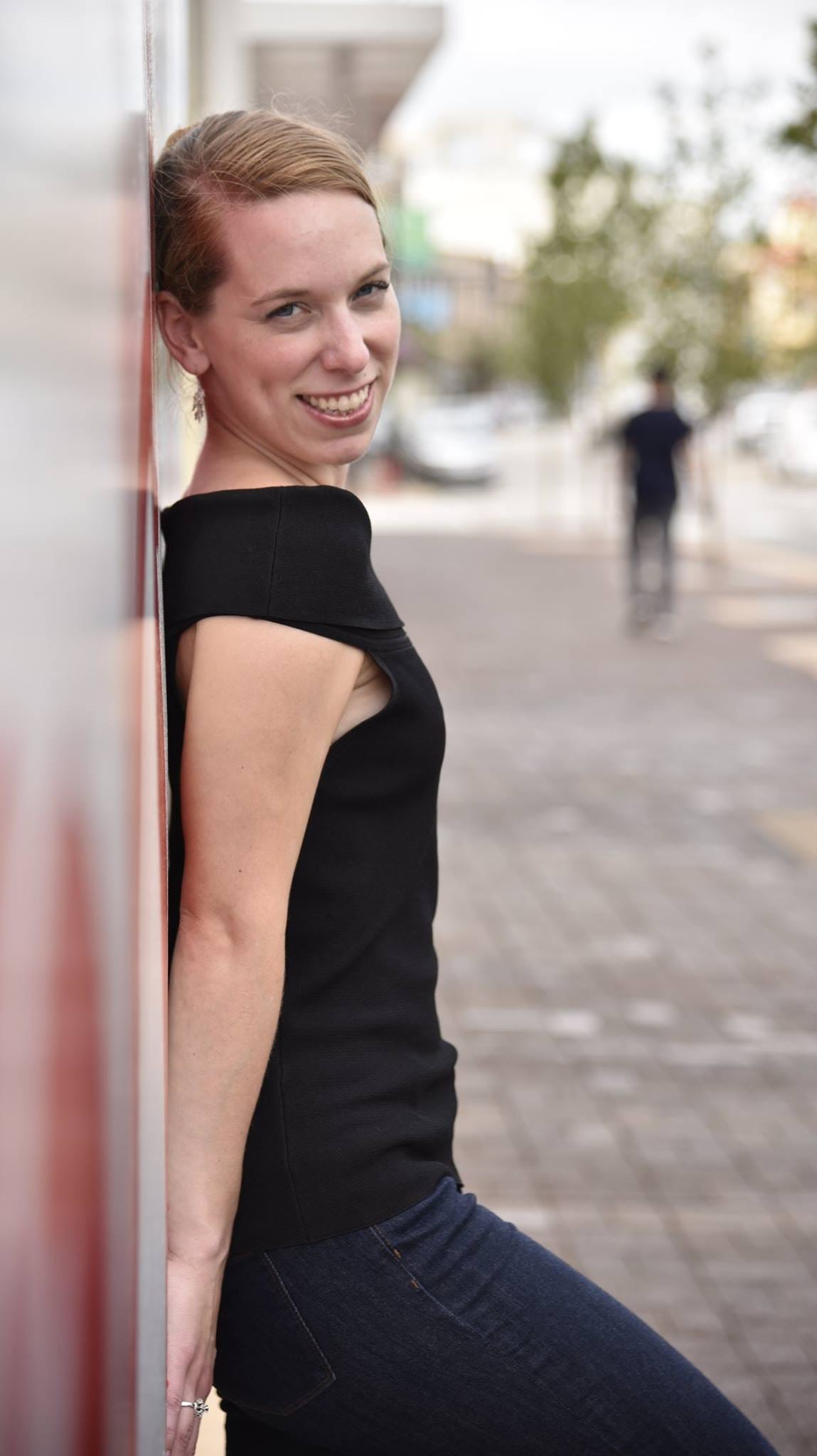
Lindsey is an entrepreneur, creator, dancer, digital nomad, and lifelong learner. She founded and is the Artistic Director of the professional dance company, VidaDance, is a Sales & Marketing Specialist for a contract medical device manufacturer, she creates online dance and wellness courses for Life, But Better, and she founded and owned VidaDance Studio for six years. She is passionate about helping women and men live their most healthy, successful, empowered, and inspired lives.
Thank you so much for doing this with us! Before we dig in, our readers would like to get to know you a bit more. Can you tell us a bit about your childhood “backstory”?
Thank you so much for inviting me! I grew up in Northern Virginia, the middle child in a family of five. I started dancing at the age of four, fell completely in love with classical ballet, and haven’t stopped dancing since. Simultaneously, I have always had a passion for business. I was that nerdy kid who was so excited to receive gifts of office supplies for Christmas one year so I could pretend that I owned my own business. I then combined my loves of dance and business by playing that I owned a dance studio. I joke that I’ve been training to be a business owner since I was a child, and that “hard play” really paid off for me! After high school, I obtained my BA in Dance with minors in Hotel & Restaurant Management and Religious Studies. I’m excited to be starting an MBA program this year too! I’ve always been interested in a wide variety of subjects and am a lifelong learner, so I relish opportunities to continue growing my knowledge and skills.
Can you tell us the story about what led you to this particular career path?
What a great question! I’ve probably had one of most winding career paths imaginable. I began my career as a professional ballet and modern dancer for a regional dance company while also teaching dance classes and working as a Managing Innkeeper at a bed and breakfast. I continued teaching in-person dance classes for various studios, a community college, and a pre-professional program before switching to solely creating online dance courses and offering an occasional masterclass. After the innkeeper position, I worked for a B2B services company, elevating my career from being hired as Project Coordinator to being promoted to Vice President within thirteen months. I then branched out to create my own professional dance company and dance studio and ran those until my husband and I sold, gave away, or donated most of our belongings to embrace the digital nomad life while working our full-time jobs. Now I’m happily working in marketing and engagement for a medical device contract manufacturing company while continuing to develop online dance and wellness courses. I’ve held positions with job titles that range from Owner to Assistant. In fact, sometimes the two are intertwined, such as when I owned the dance studio and was simultaneously both CEO and Janitor. I’ve always known that both dance and business would need to be a part of my life, and I’m grateful that I still get to do both.
Can you share the most interesting story that happened to you since you began your career?
One thing comes to mind that will always top achieving any goal or dream I could make. What I’m proudest of is also the thing that most humbles me. I built and ran a professional dance company for seven years, and always made it my number one priority to foster a company culture that was supportive, kind, nurturing, uplifting, and inspiring. I never wanted my dancers to feel the way I have felt dancing for other companies—just a number, easily replaceable, treated poorly, and talked to disrespectfully. I was very careful about who I invited to join the company, because the atmosphere that we fostered was of utmost importance to me. Over the course of running the company, I’ve been told by three separate people on different occasions that that they wouldn’t still be alive were it not for me and my company. All of them had gone through very difficult life circumstances, had been deeply depressed, and had considered suicide. What held them back from going through with self-harm was the knowledge that I and my company were there for them to support them through life’s thick and thin. Not everyone gets an opportunity to save a life, and for me, I never even knew I had until after these individuals were past their darkest days. I will never take that responsibility and knowledge for granted. It is what drives and motivates me to always Be the Light (my personal mantra) to those with whom I interact, especially in the dimmest of places or circumstances.
You are a successful business leader. Which three character traits do you think were most instrumental to your success? Can you please share a story or example for each?
Respect. I’ve lived by the Golden Rule of treating others the way you wish to be treated. I highly value the people I lead, and ensure that everyone is treated respectfully by me as well as by their peers. Treating people fairly and kindly, while helping them see and support their own potential to grow and elevate, is key in my interpersonal and professional relationships.
Gratitude. I love expressing gratitude! It’s such a simple, easy thing to do—say “thank you” in person or via a note—but it makes a world of difference in the way people feel appreciated and valued. I once had a boss who thanked me every single day at work, and that has stuck with me about the way I want others to feel around me, too.
Efficiency. This is a big one to me—it is incredibly important to lead efficiently. Efficiency with people, time, and space allows for greater productivity, satisfaction, and results. I grew up with a mom who taught me there is always something that can be accomplished in the five minutes of waiting in between activities, and with a dad who never failed to find the best deals and tools to improve processes. Those lessons allowed me to hone my skills to be an effective, efficient leader.
Ok, thank you for that. Let’s now jump to the primary focus of our interview. The premise of this series assumes that our society still feels uncomfortable with strong women. Why do you think this is so?
Although we do have some examples of powerful women throughout history, we see way more examples of powerful men. Women have been marginalized and disempowered for most of human history. We have been told what types of roles we can play, who we can marry, how much we can be educated, what is appropriate for us to wear, etc. for ages. Insecure people will always need to marginalize, dismiss, and discredit those they can’t control. Systemic problems do not get resolved overnight. They don’t get resolved through one policy change or one inspiring speech. Societal change takes a lot of time, and unfortunately there are still some people who do not wish to view women as equal and as equally capable of being powerful. And, people in power want to stay in power—and don’t want anything or anyone to threaten that power. It is easier to hold someone (or a group of people) down and back, thinking that’s necessary for your own continued success and power, than it is to be equitable. What is encouraging is that women have come a long way regarding equal rights and opportunities. We are seeing more women hold positions of power in the government and private sector who are able to affect policy and industry changes. We have a long road ahead, but at least we are on that road.
Without saying any names, can you share a story from your own experience that illustrates this idea?
I once worked for a small business that was owned by a couple. The man was an extremely insecure person, having been fired from most of his previous positions before joining the woman to run her business. Despite his many failures, he was overly arrogant, assuming he always knew more than those around him. When I was hired, the intention was for my role to be in business development to help bring that retail business more foot traffic and online presence. I had successfully run my own businesses, I had exceeded revenue goals by over 50% in one year for another business for which I did its marketing, and I had a track record of proven results. However, once I was working at this company for a couple of weeks, the male owner began to shoot down every one of my ideas, relegated me to menial tasks, and refused to implement the strategies and changes I suggested to grow their business. It got to a point where he was downright rude in his interactions with me until he started ignoring me altogether. Needless to say, I did not stay at that job for long. The female owner was completely pliable to his will, so when he found out I was not at all, he quickly turned from being my advocate to essentially being my enemy. It was such a shame because I could have been an incredible ally in that company’s future growth. Instead, within a year of me leaving, the business was forced to close.
What should a powerful woman do in a context where she feels that people are uneasy around her?
I’m of the mindset that powerful women should never shrink to make someone else feel less uneasy. Own your power and just be a gracious human being—kind, considerate, respectful, and polite. Remember that someone else’s feelings towards you are not a reflection of who you are—they are 100% a reflection on that person. And, discomfort can be an effective teaching tool to realize when change needs to happen in someone’s view of others. As long as you are being a good person in every context, be exactly who you are and don’t apologize for or diminish your power to save someone else’s unease.
What do we need to do as a society to change the unease around powerful women?
Normalize powerful women in every context—at work, at home, for children, for men, and even for women. Show powerful women for the superheroes they can be. If you’re in a leadership or teaching position, ensure that you’re regularly providing examples of strong women to those you mentor or teach. Children need to grow up with powerful women as role models in their lives. We all need to treat others as we wish to be treated—with respect, empathy, and kindness. Powerful women should be celebrated for the good they bring to the world. Everyone needs to do that!
In my own experience, I have observed that often women have to endure ridiculous or uncomfortable situations to achieve success that men don’t have to endure. Do you have a story like this from your own experience? Can you share it with us?
Oh, yes. The dance world is particularly notorious for putting women in compromising or degrading situations that our male counterparts do not have to endure because the competition is so fierce to make it as a female professional dancer. Once, when I was in college, our male jazz dance professor assigned our class the task of learning the dances moves from the “Single Ladies” music video, which he was then going to ask us to perform for him one by one so he could film and grade it. I was extremely uncomfortable with the idea and requested an alternative midterm assignment. He acted insulted by the request and proceeded to make us watch the movie “Chicago” in class and told us that “if you aren’t okay with taking off your clothes or dancing sexually, you’ll never get hired as a professional dancer.” Quid pro quo is still a reality in some places, where women are asked to provide sexual favors in exchange for jobs or promotions. Even when women become professionals, they are often paid much less than their male counterparts, are not excused from rehearsals for legitimate reasons (often when the men routinely miss rehearsals for no reason), and are consistently criticized about their “lines” (ballet code for “weight”). I firmly believe every woman should decide for herself where her boundaries lie, and it’s not okay to assume or ask women to do things that they don’t also require of men (and/or that make them uncomfortable).
In your opinion, what are the biggest challenges faced by women leaders that aren’t typically faced by their male counterparts?
Gender bias and stereotyping are real and frustrating. There are still those who believe women don’t have what it takes to lead or are too emotional to be practical and logical.
Family responsibilities often rely heavily on women, and some people believe that can make a woman unreliable when it comes to work commitments.
There’s still a sense in many companies of the “good old boys club” where men promote and provide raises to their buddies, not necessarily to whoever is most qualified, especially if it’s a woman.
Being a woman leader can be lonely because there aren’t enough of us yet and finding a supportive community can be difficult.
Not being paid fairly is still a big issue. The wage gap continues to be a problem, but it’s not something that most men have to face.
What’s ironic is that according to a recent study published by the Harvard Business Review, women are rated better than men on key leadership capabilities. Despite the challenges we face, the world needs more female leaders!
Let’s now shift our discussion to a slightly different direction. This is a question that nearly everyone with a job has to contend with. Was it difficult to fit your personal and family life into your business and career? For the benefit of our readers, can you articulate precisely what the struggle was?
This question often gets asked of women and rarely of men, even though as you pointed out, most people have to contend with it. It can be difficult to fit all the puzzle pieces together that make up your life. For the first decade of my career, I found it very difficult to find a healthy work/life balance. During the first two years, I worked four jobs over seven days a week. My only evening off was Friday, which is when I tried to fit in personal and family time. I was gradually able to reduce my days to five days per week, but the hours were still insane. Then, when I started my professional dance company and dance studio, every spare moment not at my 9-5 was spent working on developing my non-profit and business. I would take time off, but as an owner, I was really always still “on.” I felt I couldn’t completely remove myself from the running of either entity even when I was on vacation, and would be problem-solving for clients or staff from a hotel miles away.
What was a tipping point that helped you achieve a greater balance or greater equilibrium between your work life and personal life? What did you do to reach this equilibrium?
My husband is my biggest supporter and cheerleader, and he has always encouraged me to go after my dreams and goals, including telling (and demonstrating to) me that he would be there through thick and thin with both companies. However, the tipping point came one day, years later, when he realized how much he missed me even though I may be physically present. I was always on my phone or laptop answering emails or writing marketing content or editing podcast episodes, even when we were supposed to be relaxing and watching a movie. I hated that I had made him feel neglected in our marriage. He is, after all, my favorite person and best friend. Although it was challenging at first, I made some important changes that included no phone or laptop starting at dinnertime as well as nothing work-related on the weekends. We instituted a twice-weekly date night where we’d either order in or go out and spend that time as just the two of us. I decreased my obligations and changed the way I thought about downtime and rest, realizing that I didn’t just need sleep—I needed intentional, peaceful self-care time.
I work in the beauty tech industry, so I am very interested to hear your philosophy or perspective about beauty. In your role as a powerful woman and leader, how much of an emphasis do you place on your appearance? Do you see beauty as something that is superficial, or is it something that has inherent value for a leader in a public context? Can you explain what you mean?
I like Audrey Hepburn’s advice about beauty the best: “For beautiful eyes, look for the good in others; for beautiful lips, speak only words of kindness; and for poise, walk with the knowledge that you are never alone.” I tend not to wear much makeup most days and in general prefer a more natural look. I do swear by a good concealer and mascara, though! If I’m going to be presenting or have an important meeting, I will often add some blush and eyeshadow. Honestly, I just don’t have the patience to spend the time on a daily extensive makeup routine! I like to get up and going quickly. I wear clothing that is professional and flattering. I have long hair and it often ends up in a French braid or bun. I do think it’s important to put in effort when I’m in a public context, and whether anyone likes it or not, the reality is that everyone is judged instantly by how they look. Caring about your appearance and the way you are perceived is valuable for leaders. But hey—if a lady hates makeup and embraces just her natural beauty, more power to her!
How is this similar or different for men?
Again, any leader whether male or female, should put in an effort on their appearance for public contexts. Perhaps makeup isn’t much of a concern for men, but basic grooming and wearing appropriate clothing are certainly appreciated. Society tends to put more emphasis and pressure on women to look and present themselves a certain way, but men are not completely excluded from an obligation to care about their appearance. While it seems like there is perhaps somewhat less value on a man’s physical appearance, there still is value to a man to look put together.
Ok super. Here is the main question of our interview. Based on your opinion and experience, what are the “Five Things You Need To Thrive and Succeed as a Powerful Woman?” (Please share a story or example for each.)
Set clear boundaries. It’s important to decide upon and enforce boundaries when it comes to separating your personal and business lives. It’s helpful to decide on “business hours” and honor the off-times when you will power off your laptop and won’t check your phone. It’s completely acceptable (and advisable) to not be available to your clients (or boss) 24/7, and it’s also acceptable to gently remind people of your boundaries when necessary.
Know your worth. You are who you are and where you are in life because of how amazing you are! You’ve worked to become a successful, powerful woman, and it’s time to enjoy the fruits of your labor. Make sure you’re getting paid fairly, whether that is a salary from a company you work for or whether you are setting rates for your own clients. If you’re unsatisfied with your current pay, it’s time to ask for a raise, increase your rates, or seek other opportunities elsewhere.
Speak up. You won’t always be invited to voice your opinions and ideas but that doesn’t mean you shouldn’t volunteer them. What you have to contribute to the world matters. Speak up also applies to writing and sending emails or messages on social media. I have written emails to all kinds of people, whether I felt I had the “right” to write to them or not. What I have found is that, more often than not, people are very willing to help, or at least talk to me. I have met people holding higher positions than I would ever have met had I not had the courage to write a simple email. I have made new friends, achieved new goals, created new partnerships, and gotten new jobs, all from writing simple introduction emails.
Show up. Show up for things for which you are not obligated. Many of the networking opportunities I’ve received are due to showing up to events to volunteer, participate, or watch. When you’re out and about and actively engaged in your community, people take notice. People are more apt to help someone who shows an interest in other people, events, and activities aside from his or her own. You never know where those connections will lead, and what kinds of opportunities will arise as a result.
Give yourself a break. Seriously. It's easy to beat yourself up when you indulge a little too much or don't stick to your workout routine as often as you want. It's okay (and important) to take a break, and allow yourself to splurge now and then. Do what's good for you: take a bath, go to coffee with friends, watch a movie with a bag of popcorn. Heck, eat a second slice of pie once in awhile! We put so much pressure on ourselves to do all the things as perfectly as possible. Yes, live your life with excellence—and then go take a nap sometimes!
We are very blessed that some very prominent names in Business, VC funding, Sports, and Entertainment read this column. Is there a person in the world, or in the US with whom you would love to have a private breakfast or lunch with, and why? He or she might just see this if we tag them.
I would love to meet Michelle Obama. I had the opportunity to listen to a keynote interview she gave at a conference and also read her book, “Becoming.” Talk about an inspiring, powerful woman! It would be amazing to get a chance to pick her brain during a meal.
Thank you for these fantastic insights. We greatly appreciate the time you spent on this.
Thank you so much! If anyone is interested in keeping the conversation going, please feel free to reach out to me on LinkedIn!