Early in my private practice career, transgender patients were extremely marginalized. One day I took a call from a desperate patient who had surgery done out of the country and had been turned away by five plastic surgeons in Miami.
Wellness
Rian A. Maercks: Inside the Quest to Revolutionize Aesthetic Plastic Surgery Through Advanced Craniofacial Mastery and Regenerative Biologics
Renowned aesthetic and craniofacial surgeon Dr. Rian A. Maercks discusses how artistry, advanced problem-solving, and cutting-edge biologics are reshaping modern plastic surgery and patient care.
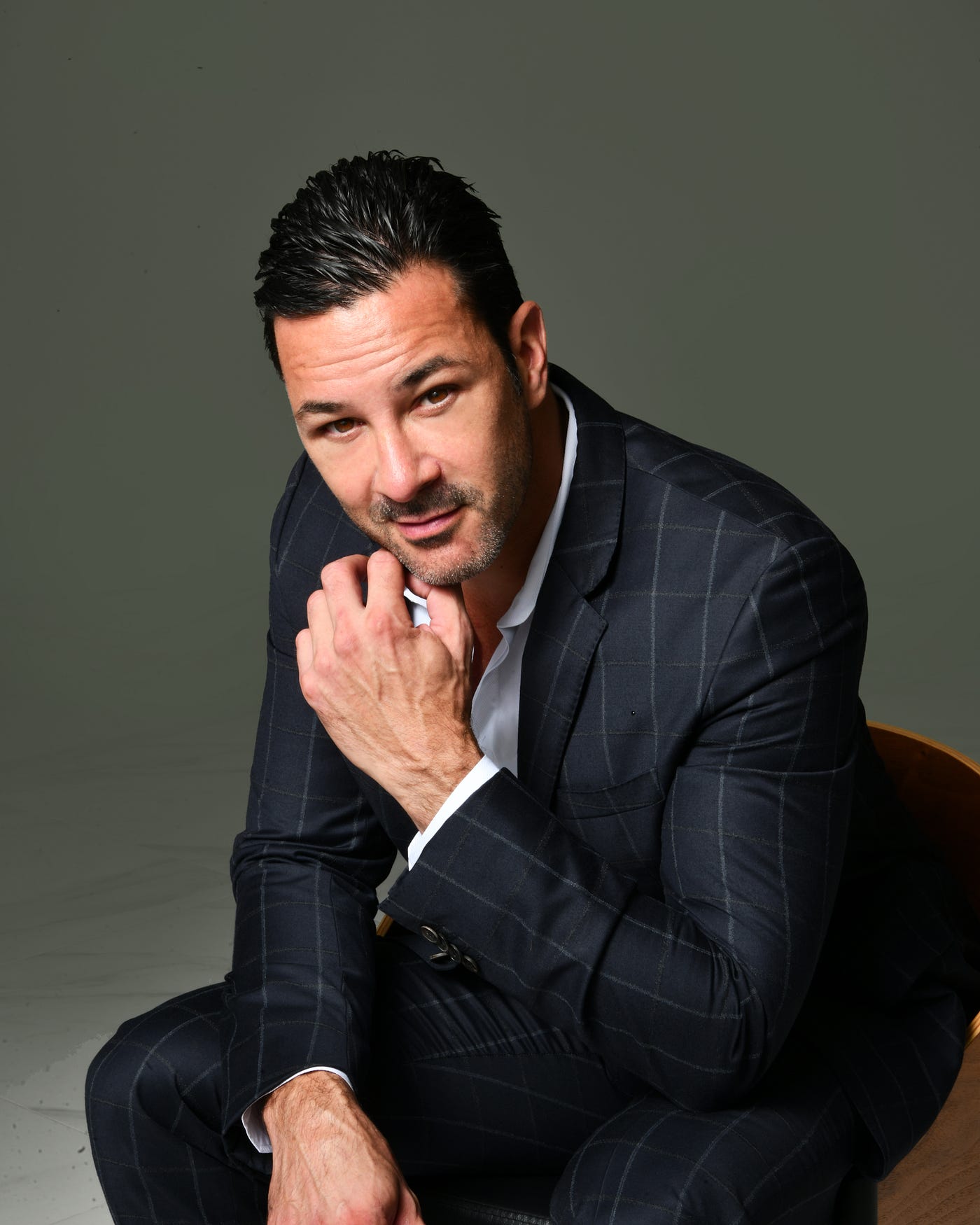
As a part of our series about how technology will be changing the beauty industry over the next five years. I had the pleasure of interviewing Rian A. Maercks, M.D. of The Maercks Institute.
Board Certified Plastic Surgeon Rian A. Maercks, M.D., P.A., founder and medical director of the Maercks Institute in Miami, FL, is an artist and leading aesthetic, craniofacial, and reconstructive plastic surgeon. His revolutionary approaches to both surgical and noninvasive aesthetic interventions of the face and body have garnered him international recognition by surgeons and patients alike.
Dr. Maercks earned his degrees from the Duke University School of Medicine with undergraduate training in fine arts and philosophy. Following an integrated plastic and reconstructive surgical residency at Cincinnati Children’s Hospital, a top-ranked U.S. craniofacial pediatric center, and the University of Cincinnati Hospital, Dr. Maercks completed fellowship training in Europe, Central and South America with the most prominent figures in plastic surgery. Dr. Maercks travels worldwide to explore innovations such as sex reassignment surgical training at Helsinki Hospital in Finland and at Vu Medical Center in Amsterdam.
Thank you for joining us! Can you tell us a story about what brought you to this specific career path?
I started out studying fine arts and ended up earning an undergraduate degree in philosophy while also studying premedical sciences. At a young age I was inspired by surgical mission work and hearing of the experiences of surgeons in Africa. While attending Duke University School of Medicine, I was captivated by the breadth of plastic surgery and the complexity of reconstructive problem solving. As a bonus, this fit perfectly with my artistic side and love for problem solving. I was also attracted by the challenge, since plastic surgery requires developing high level skill sets in virtually every surgical subspecialty.
I followed my passion for craniofacial surgery aesthetics and reconstruction to complete advanced fellowship training in Europe, Central and South America. Through the mastery of craniofacial surgery, I developed a deeper understanding of facial aesthetics and harmonizing facial features. This led to the development of some of my signature facial aesthetic procedures that allow me to unlock an individual patient’s beauty.
Can you share the most interesting story that happened to you since you began your career?
Early in my private practice career, transgender patients were extremely marginalized. One day I took a call from a desperate patient who had surgery done out of the country and had been turned away by five plastic surgeons in Miami. The patient had pain after gluteal implants and I agreed to evaluate the patient. Upon arrival, the patient was clammy with faint pulses and near septic shock. I had to emergently take the patient to the hospital and remove the implants — the patient would have likely died within hours without intervention. This made me realize the importance of not only providing sound care to the transgender community, but validated the importance of my career choice. Since then, my transgender offerings have expanded to a full range of services, including unique approaches to gender reassignment surgery and facial feminization surgery.
Are you able to identify a “tipping point” in your career when you started to see success? Did you start doing anything different? Are there takeaways or lessons that others can learn from that?
Building a private practice is not easy and everyone should recognize there tend to be rollercoaster peaks and valleys on the way up. Sometimes it feels as if no progress is being made, but I found it’s very important to step back and look at the big picture. Usually you will realize that you have, in fact, come a long way! As my practice continued to grow, I came to embrace the most important thing as constantly analyzing your own strengths and weaknesses. The end goal is to continue to find ways to better leverage those strengths while correcting any weaknesses. It takes a long time for the public to recognize value with new and different offerings, so one has to be extremely patient and stick to your core beliefs to succeed — especially when innovating in a field.
None of us is able to achieve success without some help along the way. Is there a particular person to whom you are grateful who helped get you to where you are? Can you share a story about that?
I didn’t have to look further than my own family. My mother taught me many things, always teaching me to look at any problem as an opportunity and to examine it from many different perspectives. As a result, instead of being reactive, I learned to stop and become curious when challenges present themselves. Fortunately, having a childhood where creativity and outside the box thinking were highly valued allowed me to bring fresh perspective to my studies.
As a result, much of what I do today that distinguishes my practice stems from the ability to look at procedures and treatments in a new way — importantly, finding ways to improve upon what appears to be limitations. It’s simple, really. When things are not quite right, often all it takes is to accept that fact to move forward, identify the specific issues and work to dramatically improve.
Ok super. Let’s now shift to the main part of our discussion. The beauty industry today has access to technology that was inconceivable only a short time ago. Can you tell us about the “cutting edge” (pardon the pun) technologies that you are working with or introducing? How do you think that will help people?
There are some genuinely exciting current developments happening in how we are leveraging stem cells, biologics, growth factors and even exosomes. We are learning more and more how to leverage amniotic materials, allografts, hyaluronic acids and other materials to boost the body’s ability to create tissue, heal and rejuvenate. I am working on developing protocols to use amniotic tissue and other biologics in facial aesthetics and other plastic surgery applications. Fortunately, we are getting better at creating long-term solutions for tissue repair and volume replacement that create a healthy and natural look. This will ultimately lead to safer and more effective interventions to keep people looking and feeling young and healthy.
Keeping “Black Mirror” and the “Law of Unintended Consequences” in mind, can you see any potential drawbacks about this technology that people should think more deeply about?
The biggest problem with newer technology, substances, biologics and modulators is not the technology itself. The dangers are the outsized or even outright untruthful claims fed by eager profiteering regarding new untested, potentially harmful applications. We have to be very careful with leveraging gene therapies, customized exosomes and telomere modifications since there are unintended consequences with some of the more powerful interventions in the pipeline — including the activation of cancer genes.
Can you share 3 things that most excite you about the “beauty-tech” industry?
First, I love being able to help people see a healthy and refreshed image when they look in the mirror. It can help people start their day, every day, with more energy and achieve more!
Next, I fully realize there are always ways to improve the process, and each step forward opens the door to more innovation — and, therefore, the opportunity to help people feel more confident and better about themselves.
Finally, the skill and decision making of the practitioner becomes more and more important in guiding a patient’s experience as options and modalities multiply. Practitioners are challenged to be at the top of their game and zealously guard their reputations.
Can you share things that most concern you about the industry? If you had the ability to implement ways to reform or improve the industry, what would you suggest?
By far the most concerning aspect of the beauty-tech industry is the lack of transparency and the raw amount of misinformation. This leads to confusion among patients who are often very misguided and can make poor decisions based on information intended to sell technology and particular services. Reform is difficult because there is little regulation. There needs to be diligence on the part of the public to recognize there are risks with invasive procedures and to investigate. Amidst all this “noise,” patients need more education and credible resources to better discern who is qualified to advise and treat them. In the hands of less skilled practitioners, certain procedures that should be “age defying” for patients sadly look simply “ageing.”
You are an expert about beauty. Can you share ideas that anyone can use “to feel beautiful”? (Please share a story or example for each.)
Often the best things to make oneself feel beautiful are in the “mind over matter” category. For example, the most important thing everyone can do in the morning is look in the mirror, smile and express gratitude for the day. There is no replacement for this! Also, do something thoughtful and loving for yourself and at least one other person before you head to work. Then there are certain basics, namely using an exfoliating facial wash to make yourself feel fresh and clean and help skin turnover. It’s also extremely important to use a quality, low weight sun protection with antioxidants before leaving the house.
You are a person of great influence. If you could inspire a movement that would bring the most amount of good to the most amount of people, what would that be? You never know what your idea can trigger. :-)
I would like to help more people find centering and peace through meditation and greater connection to the world. Modern times have led to individual isolation, which can cause a lot of social and psychological problems. I truly believe that helping more people connect to inner peace through meditation and connectedness can transform the world in countless untold ways. Teaching people to lead with love and thoughtfulness can ignite greater success, happiness and beauty.
Can you please give us your favorite “Life Lesson Quote”? Can you share how that was relevant to you in your life?
The difference between fortune and misfortune is often simply perspective. I’ve found over time that we owe it to ourselves to find value in every perceived loss. In this way, not only do we release the loss, but we shape it into an opportunity for growth.
“The reasonable man adapts himself to the world. The unreasonable one persists in trying to adapt the world to himself. Therefore all progress depends on the unreasonable man.”
I have spent time in life being both the reasonable man and the unreasonable man. I think there is an art to blending both sides — adapting to the world on one side and following one’s passions to change and challenge on the other. Life has taught me to be inclusive and adaptable, especially when I want the world to adapt. In this way, an open mind is preserved and chances of collaboration and growth are increased. It is very easy to isolate oneself when following big dreams, it’s important to find aligned thinkers to join the march. Without allowing for your internal flexibility, this can be very difficult. We also have to continually reflect and assure that our motivations are of love and mission is for the benefit of all. This is the only way to move forward.
How can our readers follow you online?
Website: https://themaercksinstitute.com/
Instagram: @themaercksinstitute
Facebook: rianmaercksmd
Linkedin: https://www.linkedin.com/in/rian-maercks-m-d-631296b/
CG
Written by
Candice Georgiadis
Editor & Journalist · Authority MagazineCandice Georgiadis is a senior columnist at Authority Magazine covering Business and Tech, conducting primary-source Q&A interviews with founders, executives, and industry leaders.

Published inAuthority MagazineTop Lessons, Top Authorities · 42K Followers
Exclusive, curated interviews with the leaders and changemakers shaping tomorrow. Leadership lessons, industry deep dives, and executive profiles.