When you’re forced to be simple, you’re forced to face the real problem. When you can’t deliver ornament, you have to deliver substance.
As part of my series on the “5 Things You Can Do To Help Your Living Space Spark More Joy”, I had the pleasure of interviewing Anna Popov
Anna Popov BIO
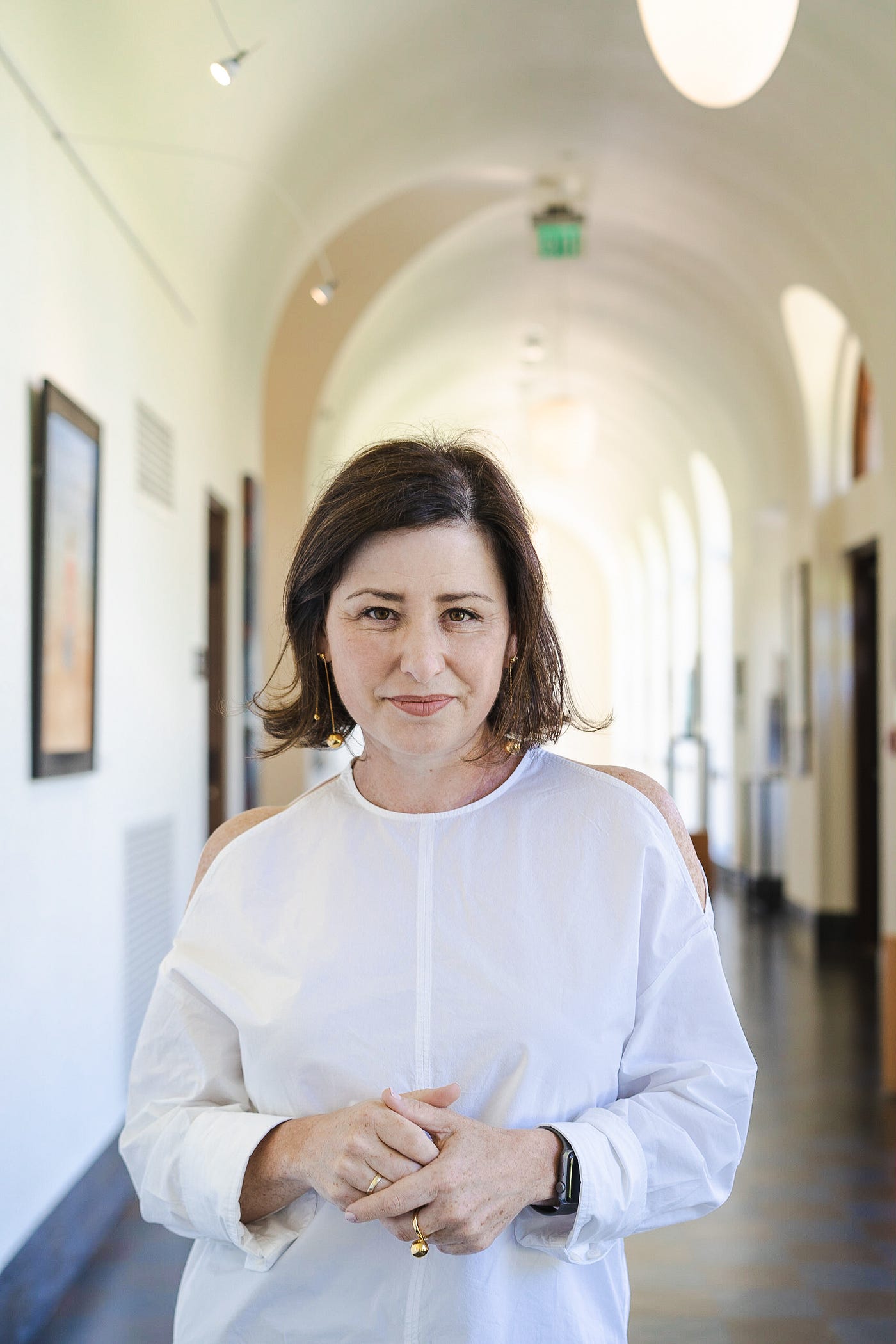
Anna Popov—the founder and creative force behind PNW-based firm Interiors by Popov— is a true original. Having resided and worked in some of the most diverse and design-centric global cities, she is guided by quintessential European practices of design and craftsmanship to create spaces that are beautiful, functional and tailored to the precise needs of her clients’ lifestyles.
Thank you so much for joining us in this series! Before we dive in, our readers would love to learn a bit more about you. Can you tell us a story about what brought you to this specific career path?
I was finishing my business degree in Tel-Aviv—a diverse, design-centric city known as the “city that never sleeps—when I became acutely aware of the effect of human-centered design. It all started when I noticed how perfectly a particular mug molded into my hand. The design of the mug improved the enjoyment of my daily tea to such a degree that I became aware of just how profoundly one well-designed object can alter an experience for the better—and an everyday experience at that. From then on I started to pay attention to the tactile sensation and emotional effect physical objects and the physical environment can have on a person.
I also became cognizant of the fact that interior design and architecture (and all they entail) have an immense impact on one’s physical, mental, and spiritual wellbeing—this enlightening realization was not only deeply inspiring but it led me to pursue a career in interior design. Good interior design entails deep knowledge of interior architecture, building systems, and engineering—it’s so much more than decorating. I am fascinated by all of it. My work is also greatly inspired by art, travel, and the opportunity to improve people's lives by altering their interiors to work for them. For example, when it comes to working—so many factors can influence how well you perform. When light is correctly positioned, when walls are the perfect color and not only inspire creativity but infuse a room with a sense of calm, when fabrics, texture, and organizational materials are incorporated well—work becomes effortless.
Can you share the most interesting story that happened to you since you started this career?
It's hard to find the most interesting one in a 20-year-long-career. I once had to have a German manufacturer (who shall not be named) deliver 10,000 pairs of defective drawer slides. I was forced to have them make 10,000 additional pairs of new drawer slides to the correct specifications and airlift them to the US. They also had to pay for uninstalling the defective ones and reinstalling the new slides on thousands of cabinets for a large medical center.
Another interesting moment: I was working for a company as a designer and we were vying for a job on a very large project with an important, well-known commercial client. It was very early on in my career—I was part of the design team but I was not yet presenting. But I had drawn a custom pattern for the main area carpets. We won the job and in a very proud moment for me, the awarding committee stated that my pattern design was the deciding factor in awarding us the job. They asked for me to lead the project / be the main designer.
Lastly, which I am sure many women who started their careers around the same time can relate to, I had to constantly prove myself. About 15 years ago, I walked into a new construction site of a university building, where I was scheduled to have a meeting (on the job site). The mechanical foreman took one look at me, looked at the superintendent, and downright asked him why he had brought a ‘kindergartner’ to the meeting. I am petite at 5’1’ and I was about 115lbs then—and back then construction boots were not even made in small women's sizes so I always had to have extra large shoes on. Well suffice it to say that by the end of the meeting there was no more talk of a “kindergartner.” As a woman in commercial construction back then, it wasn’t always a walk in the park.
Can you share a story about the funniest mistake you made when you were first starting? Can you tell us what lesson you learned from that?
I was asked to place an order for 100 feet of a beautiful solid walnut custom wood trim. While ordering, I accidentally added two zeros to the quantity. The mistake was not discovered until 10,000 feet of custom trim arrived. I worked for a small company at that point and it was a very costly mistake. To fix it, I designed a unique detail using this trim, that could be used in various applications. Everyone in the office loved it and the trim became our signature detail. We ended up ordering it again, and again, and again—many times in various additional species of wood, finishes, and even in metal. I learned from this mistake that with every challenge comes an opportunity. Even though my boss had not asked me to figure out a solution to my mistake, once I did, it truly presented itself as a new opportunity for success and a new avenue to employ my creativity.
What are some of the most interesting or exciting projects you are working on now? How do you think that might help people?
There are quite a few in the works. We are working on a gorgeous midcentury house in West Seattle, an ultra-modern waterfront property on Mercer Island, two beautiful custom homes in Kirkland, a small modern condo in Bellevue, and a bucolic equestrian estate in North Carolina, I can go on and on. 😊
We are also in the pre-construction stage of a uniquely beautiful project on Lake Sammamish. It's a full-house renovation for a family with very unique and exact requirements. The family was originally advised by an architect and a contractor to just build an entirely new home in place of the existing one, despite the fact that the existing house was in a great condition. They did not believe it was possible to reconfigure the existing structure to include the common modern must-haves that are popular today—including a huge kitchen, a large entryway, or a walk-in closet in the main bedroom. But once I delved into what the family truly wanted, I realized the homeowners did not want a large kitchen, were not looking for a large entry, nor did they care about a walk-in closet. They did not need any of the “modern must-haves” the original architect and contractor had recommended. They loved their house and wanted to update it to suit the needs of their growing family and fulfill their specific requirements—not someone else's.
This is where we came in—our entire approach always revolves around designing a support system for the home’s inhabitants. Essentially, we believe the house should function as a support system to its occupants. We listen to their requirements, and with those in mind, we discover and address the real problems. By going through this exercise with each client, we find real solutions. And this is how our design approach is custom to each family—as well as functional and intentional. The experience of living in an environment that is designed to support the way someone/a family lives, is actual functional luxury. It's an entirely different new level of living—where function and substance surpass ornament, though aesthetics are far from sacrificed.
Can you please give us your favorite "Life Lesson Quote"? Can you share how that was relevant to you in your life?
My favorite quote is by a software engineer named Paul Graham. When I first saw it I could not believe my eyes. It profoundly resonated with me. I thought to myself, ‘here is IBP’s design approach described perfectly.’ We stand by that philosophy every day.
“When you’re forced to be simple, you’re forced to face the real problem. When you can’t deliver ornament, you have to deliver substance.” - Paul Graham
None of us are able to achieve success without some help along the way. Is there a particular person who you are grateful towards who helped get you to where you are? Can you share a story about that?
When it comes to my career, from start to finish it has to be Michael, my husband. Without his support, none of this would have been possible. I graduated from college with a business degree. We got married and had our beautiful daughter. Even though I worked in a different field for a couple of years, my fascination with the physical environment only grew. It was evident I wanted to pursue another degree in interior architecture and design. The school and course load was very intense—it entailed long lab hours and very unrealistic timelines. I started working immediately after graduation, and thankfully, very quickly and successfully landed on my feet with a fast-rising career in the design and construction industry. It was incredibly tough, especially with a toddler, but my husband was my biggest supporter (and remains so) during this period. Michael jokes that as soon as I went to design school, the homemade meals disappeared from our household for a good few years. We make a great team—he’s very successful in his own right—and I think that’s key.
Thank you for that. Here is the main question of our discussion. What are your "5 Things You Can Do To Help Your Living Space Spark More Joy" and why. Please share a story or example for each.
To be honest, I would not choose to name an object or any type of furniture.
Support System
Design your home so that it serves as a support system to you and your family. Every daily activity, from the moment you wake up in the morning, until the time you go to bed at night should be carefully considered and planned for. That way, your home will be organized in a way that suits your everyday life. When you implement systems that work for your daily routine, practices, and habits – and use them – your life will improve dramatically.
Renew, Recharge, Relax
Your home should serve as a charging station—your place to renew, recharge, and relax. If you enjoy having coffee while watching the sunrise, or a glass of wine while watching the sunset, or benefit from daily meditation, create a comfortable spot for yourself in your home that is conducive and caters to these personal enjoyments. This is part of how your home should function for you and your family.
Purge.
Your belongings are important to you, but they should be intentional, high quality, used often and serve a purpose. Keep the items you use most often organized and easily accessible. Get rid of any items you do not need or have not used in a very long time. In the process of lightening your household load, you yourself will feel lighter too.
4. Smart Storage
Smart storage helps you stay organized. It is so important and wherever possible, should be planned in advance. Studies have shown how a clean and organized home promotes productivity, confidence, and serenity. The more thought you put into planning your organization, the easier it will be for your household to maintain and the more benefit you will get overall.
Maximize Natural Light
Biophilic design is known to aid cognitive function, psychological well-being, and physical health. Evaluating your decisions within your home, keeping natural light as a priority, and then optimizing it with systems to enhance and control it during the day, will have a huge effect on your enjoyment of your space and makes for a happy home.
You are a person of great influence. If you could start a movement that would bring the most amount of good to the most amount of people, what would that be? You never know what your idea can trigger. :-)
If I could start a movement I would advocate for greater education around organization and make it a mandatory subject and a fundamental part of the core curriculum in schools. There is a common misconception that creative people thrive in disorganization—I disagree. Organization is a basic skill we should all learn.learn. Countless studies have shown that organized people experience less stress and are generally more positive and confident. There is a great book by Lee Silber called Organizing from the Right Side of the Brain: A Creative Approach to Getting Organized. He explains how disorganization can actually get in the way of your creativity and outlines solutions that can make organized living effortless, especially for creative thinkers. It really resonated with me because organization is such a major part of our work at Interiors by Popov. Implementing creative storage solutions establishes a beautiful flow in each home, with a place for everything and everything in its place.
We are very blessed that some of the biggest names in Business, VC funding, Sports, and Entertainment read this column. Is there a person in the world, or in the US whom you would love to have a private breakfast or lunch with, and why? He or she might see this, especially if we tag them :-)
I would love to share a meal with Yotam Ottolenghi—an Isreali Chef based in the UK. I utilize his recipes all the time (they are delicious), and he seems like such a genuine and interesting individual. I would love to converse with him and delve into his views on food, his process, and the magic that goes into creating his recipes. I would also love to gauge his thoughts on kitchen design. I am also interested in what he perceives as the best kitchen he's ever cooked in and/or why he thinks the kitchen is the heart of the home for many families.
How can our readers follow you on social media?
We post regularly and love to share our process and behind the scenes as well as finished projects. You can follow us here Instagram and Facebook and TikTok
Thank you so much for joining us. This was very inspirational!