Fix your business processes first or in parallel. AI will move more quickly, and you’ll miss the chance for a major business or cultural transformation if you don’t start on those aspects as quickly as possible- ideally first.
Tech
AI and Automation: Helen Merianos Of Sanofi On How To Effectively Harness AI Technology In People Operations
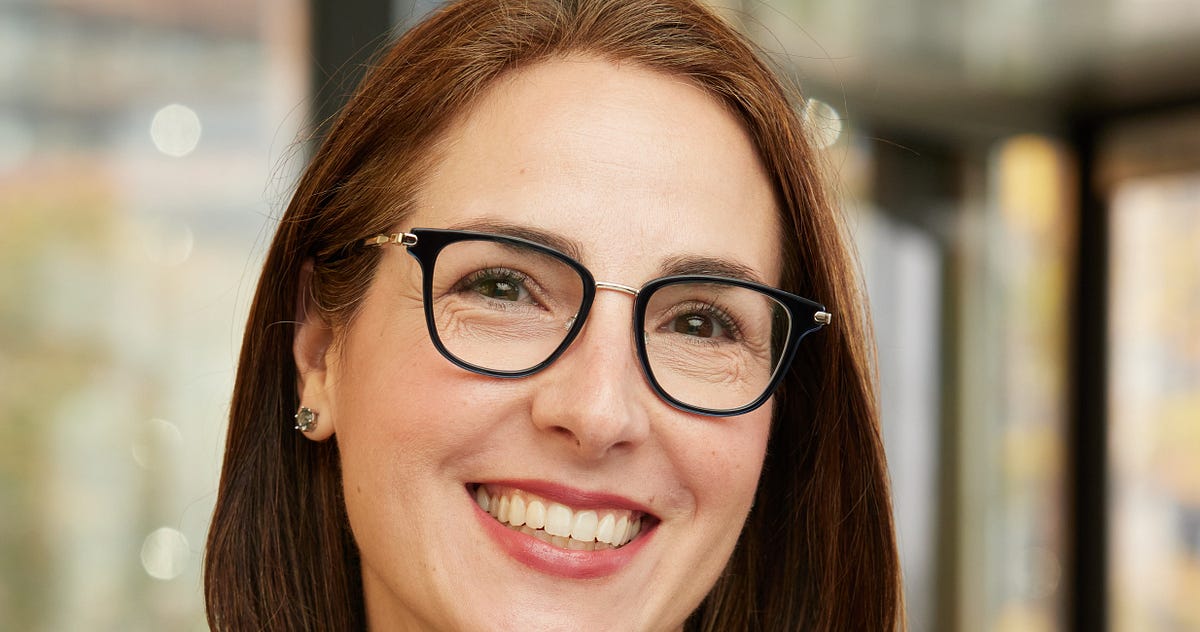
With technological advancements, particularly in the AI space, an increasing number of tasks can be either fully or partially automated. In this series, we are talking to People experts about how they’re utilizing new technologies to make their jobs easier and provide greater strategic value. As a part of this series, we had the pleasure of interviewing Helen Merianos.
Helen Merianos joined Sanofi Research & Development in 2021. In her role as Head of R&D Portfolio Strategy, Merianos drives decision-making through objective, externally focused data driven insights and scenario planning. Merianos earned her PhD and MS in biophysical chemistry from Yale University and her BS in chemistry from the University of Virginia. She started her career and spent three years at McKinsey & Co. She has 15 years of experience in the pharma industry, in a variety of commercial and portfolio strategy positions as well as global project head for rare disease and infectious disease.
Thank you so much for your time! I know that you are a very busy person. Before we drive in, our readers would love to “get to know you” a bit better. Can you tell us a bit about your ‘backstory’ and how you got started?
I am a scientist by training. My PhD was in structural biology. After finishing my education, I went into management consulting at McKinsey and Company where I spent 3 years leveraging my scientific and analytical strengths to solve business problems. Then, I joined GSK in R&D where I supported investment decisions on medicines at all stages of discovery and development from a commercial perspective. I also held a couple of project leadership roles for medicines in late-development where I was responsible for a large cross-functional team, leading development, regulatory and commercial strategy for the products. In addition, I spent several years leading portfolio management at GSK where I led a business transformation around investment governance. I joined Sanofi a little over 2 years ago and lead the R&D Strategy team guiding portfolio strategy for Sanofi R&D. We are at a critical juncture in the company’s transformation to become a more innovative, science-led and AI enabled pharma company. It is very exciting to be in this role at Sanofi at this moment in time.
It has been said that our mistakes can be our greatest teachers. Can you share a story about the funniest mistake you made when you were first starting? Can you tell us what lesson you learned from that?
When I first came to GSK from management consulting, I struggled with my communication style not really fitting into a corporate environment. At the time, I did not know this was the issue. I simply knew I was not making the connections or relationships I needed to be successful in a large pharma company. I went to my boss and explained that I knew how to do the work, but I was struggling on how to get it done in this environment. He was kind enough to take the time to review some of the materials I was using in meetings with colleagues and very quickly explained that it was too analytical, too detailed. Unlike consulting, you don’t have to put all your thoughts/proof points on the page because if anyone has a question later, they will just stop by your office and ask. Once I started communicating with conclusions/high-level analysis and only shared the data if asked, I fit in. I wish I would have asked for help sooner because it was a simple fix.
None of us are able to achieve success without some help along the way. Is there a particular person who you are grateful for who helped get you to where you are? Can you share a story?
I am grateful to so many individuals who helped me along the way. At each inflection point in my career there was always a special individual who helped me make the strategic choices that were right for me. Overall, the most critical aspect of who I am and how I got here comes down to my love of science, my love of data. I got this obsession from my dad who is also a scientist. He incorporated science into everyday life growing up. When he wanted to rush me out of the house for my sports, he would say, ‘Fast like an electron. Not slow like a neutron!’ I was the only kindergartner who knew what an electron was.
Can you please give us your favorite “Life Lesson Quote”? Can you share how that was relevant to you in your life?
‘There is a voice that doesn’t use words. Listen.’ — Rumi
This quote speaks to me because for many years earlier in my career, I did not have the loudest voice. I had to learn how and when to use my voice while being true to my authentic self. A prior boss helped me with this challenge, by asking me for my view in meetings. It gave me the space I needed to practice speaking up. I bet if you ask anyone at Sanofi, they will say I no longer have this challenge!
This quote also speaks to one of my most sacred values, being data driven and inclusive. It is critical to create the space for different points of view, styles, backgrounds, etc. to ‘speak’ their minds. It is critical in a function like mine where we are guiding massive investment decisions. To get the best decisions, you need a diverse team with diverse perspectives. Including an AI perspective in the room when making decisions, will make us smarter. We need to be open to this transformation in all aspects of our business.
Thinking back on your own career, what would you tell your younger self?
Be yourself. Fitting in is overrated and exhausting. You won’t always be the youngest or the only female in the room.
Let’s now move to the central part of our interview. How have recent technological advancements such as AI made your job easier?
AI is transforming portfolio management by leveraging large publicly available datasets to predict many of the inputs used to determine business cases of the investments we make in our potential medicines. AI also provides recommendations for us to investigate to keep us on track with our goals for our innovative pipeline. This data is now able to be integrated and accessible in a transparent way so we can all be smarter about the investments we make in medicines. I have personally benefited with more time to think and strategize based on the data than spending most of the time obtaining the data, cleaning, and integrating it. For me, this means faster and smarter decisions that leverage all the available data both inside and outside the company. We hope the end result will be a bigger impact on the patients we serve.
In which processes do you utilize automation the most?
We use automation in general business processes like approvals for work with our business partners, expenses, managing complaints, etc. We are also using it to integrate data across business units. The integration of the data is mostly for training the AI we use across the company to make better informed decisions say around risk of a stock out or other important business processes that could directly and significantly impact the patients we serve.
What should people bear in mind when automating processes?
You still need a subject matter expert to review the deliverables and make sure they make sense. Rarely would an automation result in a significant decision without human intervention. We are using automation to create space for us to think and get smarter with data, including AI. It almost always ends with a cross-functional discussion leading to the decision, but everyone is looking at a single source of truth of the underlying data and what the AI is saying. You can spend the discussion time on risks and opportunities and taking the decision with less or no time debating the data.

What are your “Top Five Tips For Harnessing AI Technology to Propel People Operations”?
1 . When you start, the data is probably not 100% correct. Just publish the data anyway. Make it visible. Within a short period, you’ll have better quality data than you have ever had. It is OK not to understand all the details of the AI engine- knowing what data are used to train the algorithm and what data are not, is good enough in the beginning.
2 . The insights from AI take time to build but keep pushing use case by use case. In a surprisingly short period, <6 months, you can transform how you use AI and the insights generated.
3 . Fix your business processes first or in parallel. AI will move more quickly, and you’ll miss the chance for a major business or cultural transformation if you don’t start on those aspects as quickly as possible- ideally first.
4 . Get a team of your best change management experts to support the cultural revolution that AI will drive. Do this early in the process even at the time of your first minimally viable product or MVP.
5 . Start with the business or cultural change you want to drive first then determine how you might leverage AI to deliver the transformation more quickly. This approach will help ensure utility in all the use cases you build enabling quick wins and early proof points which are needed to drive change.
What are your favorite “I couldn’t live without these” tools?
I cannot live without plai, the Sanofi wide snackable AI app which has all the relevant R&D data I need to do my job with visibility across the business units. I cannot live without my competitive intelligence alerts as it is how I stay updated on the industry.
How do you see technology impacting the HR space in the future?
I think we will see utility of AI in recruitment process in terms of filtering and screening and ideally helping to ensure a diverse candidate pool for roles. I also think we may be able to leverage AI to increase engagement of employees by addressing problem areas surgically and quickly through Ai-enabled alerts. It could guide managers to address the root cause of diminishing engagement of their teams prior to seeing attrition.
We are very blessed to have some of the biggest names in Business, VC funding, Sports, and Entertainment read this column. Is there a person in the world whom you would love to have a private lunch with, and why? He or she might just see this.
Adam Grant. His book “Think Again” provides many examples of where the intersection of data and courage results in the extraordinary. It is critical to challenge our thinking, to listen to all perspectives, including AI. It is powerful to imagine all you know as truth to be wrong and re-think problems and create new options to arrive at the best decisions. Drug development is risky business. We will be wrong a lot of the time, but the more we practice quality decision making, the better we will do for our patients.
How can our readers further follow your work?
Find me on linked in at Helen Merianos | LinkedIn.
Thank you so much for sharing these important insights. We wish you continued success and good health!
AM
Written by
Authority Magazine Editorial Staff
Writer & ContributorContributor at Authority Magazine covering leadership, innovation, and industry insights.

Published inAuthority MagazineTop Lessons, Top Authorities · 42K Followers
Exclusive, curated interviews with the leaders and changemakers shaping tomorrow. Leadership lessons, industry deep dives, and executive profiles.
More from Authority Magazine
See all stories →A
Authority Magazine Editorial StaffBrandon Wade & Dana Rosewall on Why ‘Yes’ People are a Liability and the “Painful” 180-Degree Redemption Story
Tech27 min read

Y
Yitzi WeinerAmazon’s Lauren Stovall Talks AWS Nonprofit Programs, Enterprise AI and the Push for Unrestricted Funding
Tech22 min read
G
Gabriel Borden, Managing Partner at Arrow FundGuardians of AI: Kerstin Woods of Toshiba America Business Solutions On How AI Leaders Are Keeping AI Safe, Ethical, Responsible, and True
Tech17 min read
A
Authority Magazine Editorial StaffFrom New York Wild Child to Bali Wellness Queen: Inside Meghan Pappenheim’s Spiritual Empire
Tech20 min read