Moving back home to Ohio would be a huge adjustment! I think we need to pursue what we feel passionate about and inspired by. We need to not let fear and doubts prevent us from this.
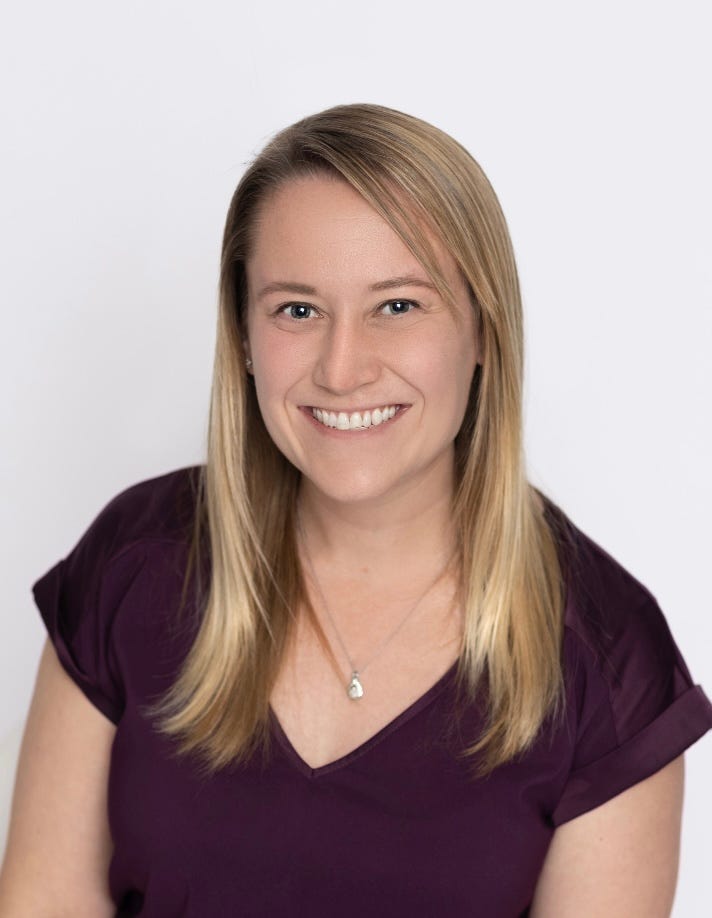
As a part of our series about Mental Health Champions helping to promote mental wellness, I had the pleasure to interview Victoria Rodgers.
Victoria is a licensed marriage and family therapist in Newport Beach, CA. She has been working in the mental health field to help others to heal and to connect with others in their lives in a more meaningful way.
Thank you so much for doing this with us! Before we dig in, our readers would like to get to know you a bit. Can you tell us a bit about how you grew up?
Igrew up in NorthEast Ohio, the youngest of two in a middle class working family. My parents divorced when I was in the third grade and so began the norm of going back and forth between houses. My paternal grandmother was a big part of my life and lived around the block so we could just walk to her house when we were younger. Family get-togethers and family meals were a regular thing at her house. Being able to be surrounded by family even if it wasn’t always straight from a story book provided a sense of comfort. Getting older my mother, sister, and I moved about an hour away from where I grew up and my extended family. This was a change of pace as we were in the suburbs before and this new home was with my stepfather in a more rural area. I fought against this and asked to stay with my grandparents, but this wasn’t a possibility so I moved. I am grateful for this now as I met some of my longest and dearest friends in the eighth grade at my new school. I learned a lot adjusting to this new house and rules of the house with our new stepfather. There’s a fairly significant age difference between my mother and stepfather. He married his first wife when he was 18 years old and my mom at the time would have been two years old. So, some of my step siblings are closer to my mom’s age than mine. This was a hard adjustment and it felt like a battle for my mom’s attention which I suppose is part of what led me to my career choice. As a young adult I felt like I wanted to be a support for adolescents who may have been going through the same family complications as I had. While these adjustments weren’t as loud and in your face as what some people incur they still made a significant impact on me. Being able to help families and individuals to feel understood and be able to connect in a meaningful way is what my goal is.
You are currently leading a social impact organization that is helping to promote mental wellness. Can you tell us a bit about what you or your organization are trying to address?
I have recently joined the Family Development Collective in opening their Newport Beach location. I was drawn to this opportunity and this company because of its founding philosophies of family systems and strengths based approach. Having worked in substance use recovery treatment I feel that the family system has a significant impact on the individual for better or for worse. At Newport Beach Family Development Center we try to be the bridge to individuals and their families in addition to being a safe harbor for an individual to continue to process through hurts that they still carry. We support our clients in building self awareness and the skills they need to be able to feel empowered in life to better manage their relationships.
Can you tell us the backstory about what inspired you to originally feel passionate about this cause?
Having grown up in a family system with divorce, step family, and substance use history on one side, I felt like I could have used someone to talk to when I was younger, someone who would hear me, I wanted to be this person for someone else. Sometimes if you aren’t causing a scene your pain can turn inward and lead to loneliness. Adolescence is a prime age to learn to express your feelings in a healthy appropriate way to loved ones and develop healthy vulnerability. I originally planned to work with adolescents, but life led me a different way and that landed me in substance use treatment. Working in this specialty population I have gained a great deal of knowledge about family systems, trauma, attachment, and resilience. I try to empower others to see their strengths and believe in themselves. I feel this style in my work goes hand and hand with that of the Family Development Collective. I learned a lot working with the substance use and recovery field. I feel this gave a significant amount of experience working trauma. This has influenced my practice, as well, in investigating how different life events have shaped some of one’s beliefs about the world, and themselves. Helping to untangle this I have seen helps someone to better understand themselves and not live on autopilot.
Many of us have ideas, dreams, and passions, but never manifest them. They don’t get up and just do it. But you did. Was there an “Aha Moment” that made you decide that you were actually going to step up and do it? What was that final trigger?
I was 25 when I decided I needed more out of life and decided to pursue a graduate school. Wanting to grow academically and further develop my intrapersonal skills, I decided it was time for me to face my fears and live life independently by moving 2300 miles away from home. I was dreaming about this and how it would be so adventurous, then I started talking about it, and then when it came time to move I had to, otherwise my words meant nothing and I was allowing fear to dictate my choices and life. I packed up and hit the road. I have lived in Southern California for 10 years now. Moving back home to Ohio would be a huge adjustment! I think we need to pursue what we feel passionate about and inspired by. We need to not let fear and doubts prevent us from this. At times fear can be unrealistic and keep us stuck from the growth and life we long for. I have told myself that I won’t let fear control me. I know at times I fall back into the feelings of complacency and false sense of safety that fear can foster if I tell myself to just stay and not push to move forward.
Can you share the most interesting story that happened to you since you began leading your company or organization?
That’s a tough one. I have to say experience is where real learning happens. I have been through a variety of challenges in my career from a group co-facilitator having a stroke right before us walking in to lead a group together, to helping to build a new company, to working in a mental health hospital, to opening my own private practice. All of these have served to help teach and guide me to grow. I know I still have even more of that growth to do as well. I think one of my happiest moments is when I see my client have success. One instance that comes to mind is a young woman who I had worked with in a substance use facility who detailed how drinking habits were throughout her family. She had lost her dad as a teenager and her mom became more of a drinking buddy. She had taken on the image of a party girl and would settle for abusive relationships. She worried how getting better would affect her relationship with her mom and how she would handle seeing her mom struggle with her own addiction. She is now able to say that she led the way and her mom sought treatment and is now sober, too. It is such a beautiful thing when you can see how one person getting healthy will hopefully impact the family system to do the same. I think what is the most interesting is hearing client’s personal stories and challenges. It’s like you can go through it with them, the good, success, and the bad, hard times. Walking with them through this is a true privilege. It motivates me to learn more and new strategies for helping others like EMDR, TF-CBT, and IFS. These different modalities help me to increase my tool box that I can give to others as well.
None of us can be successful without some help along the way. Did you have mentors or cheerleaders who helped you to succeed? Can you tell us a story about their influence?
I think one of my biggest mentors was my former supervisors, Susan Jester and Julianne Piascik. These women are fantastic therapists and teachers. They have led me in developing my own style of therapy and believing in myself. Susan helped me when I was in graduate school and after. She has always been there for a quick consult or to grab a bite to eat. I am forever grateful to her for being so kind and a warm shoulder to trust. Julianne has shown me how to work with individuals with trauma and to be confident. She is a spitfire and tough. Having this presence of strengths in the way she does creates a sense of safety for individuals to feel safe enough to be able to share some of their darkest things.
According to Mental Health America’s report, over 44 million Americans have a mental health condition. Yet there’s still a stigma about mental illness. Can you share a few reasons you think this is so?
I think we are all hard on ourselves and push ourselves to be as close to perfect as we can and to not show weakness. While we can be empathetic and understanding of another, we struggle to do this for ourselves. I think once we sit down one on one with someone and really hear their story that we find that empathy and compassion. It’s about learning to turn that inward and to larger groups as well. I think there is a layer of denial we put on ourselves, too. Making the time to self reflect can be a shock to the system of the well oiled machine you may have made out of your daily life and structure. Really taking a look at what has happened in your past and how it may be still affecting you today can be a lot to ask, and a risk. Hopefully doing the work on this will set you free and on a more happy course, but it’s not always guaranteed. Therapy comes with a risk.
In your experience, what should a) individuals b) society, and c) the government do to better support people suffering from mental illness?
I feel we need to come together more as a village or a community rather than our ways of isolating ourselves emotionally and only showing this polished version via social media. Get back to those evenings of sharing dinner with loved ones and block parties. Be more open to welcoming your neighbor and feeling privileged to hear their story. First encouraging in the family system and then encouraging this in schools and in our community.
What are your 5 strategies you use to promote your own wellbeing and mental wellness? Can you please give a story or example for each?
- First, I try to ensure I have my support group of friends and family. I try to make sure I am seeing them and not just hiding at home with Netflix. 2)
- Second I try to be sure I am getting out into nature. Hiking and kayaking are big ways for me to recharge my batteries. I purchased an America The Beautiful Pass to have access to national parks and that has been an adventure. I have tried to make it a point this past year to explore and discover different areas on road trips. I have gone to Yosemite, Sequoia, Pinnacles twice, Joshua Tree, Glacier, and Zion. I now have a goal of going to all of the national parks. Nature is incredible and nothing can totally caper how this feels when you’re there in the beauty of it all.
- Third, I also think it is an important strategy for me for my well being by taking time to practice intentional meditation. I know if I don’t force myself to do this with the intention that I will just nap. Napping is good too, but different. I set times to be intentional with meditating. This could be with a guided meditation I find online, being on the water, or it could be at a sound bath.
- The fourth thing I have noticed myself doing is deep breathing. This I just have gotten in the habit of doing while saying a mantra to myself. I definitely notice an increase of this happening when I am feeling anxious or stressed. It’s now more of a habit.
- Lastly, I think it’s also important that I am seeing my own therapist to be able to work through my own feelings and issues to allow myself to be able to be more present for those that I am helping. I need to be sure I am trying to practice what I preach. This again goes back to my words having meaning.
What are your favorite books, podcasts, or resources that inspire you to be a mental health champion?
I love Dan Siegel, Sue Johnson, and Brené Brown are my go to’s. I feel like when I need to turn off the therapy side my other resources are true crime documentaries and Abraham Hicks. I think another thing that inspires me is volunteering. I have done this with Comfort Zone camp. I find this rewarding to be able to dedicate a weekend to hearing the stories from kids and being able to pivot from serious to play. Being able to be in the camp bubble for a weekend allows for the ability to connect and develop the skills needed to manage feelings of loss. Another inspiration source for me was working with Laura’s house. I have worked at an all women’s treatment center and these young women so often would come in with terrible stories of domestic violence and not even know it was abuse. I feel allowing these women a place to heal and learn has been such an inspiration.
If you could tell other people one thing about why they should consider making a positive impact on our environment or society, like you, what would you tell them?
It’s for the greater good, not only for you and your loved ones, but for everyone. If we’re surrounded by others doing well that encourages us to do well. It’s contagious. It has a domino effect.
How can our readers follow you online?
I recommend checking out my company’s instagram at NewportBeachFamilyDC to see what we’re up to and how we are working to foster a positive atmosphere.
This was very meaningful, thank you so much. We wish you only continued success on your great work!