Although I may not have the same level of recognition as my great-grandfather, I have developed my ability to heal myself and to heal other people's hearts, so that they can exercise their power to love themselves and others.
Total Health: Dr. Michiyo Ambrosius On How We Can Optimize Our Mental, Physical, Emotional, & Spiritual Wellbeing
Often when we refer to wellness, we assume that we are talking about physical wellbeing. But one can be physically very healthy but still be unwell, emotionally, or mentally. What are the steps we can take to cultivate optimal wellness in all areas of our life; to develop Mental, Physical, Emotional, & Spiritual Wellbeing?
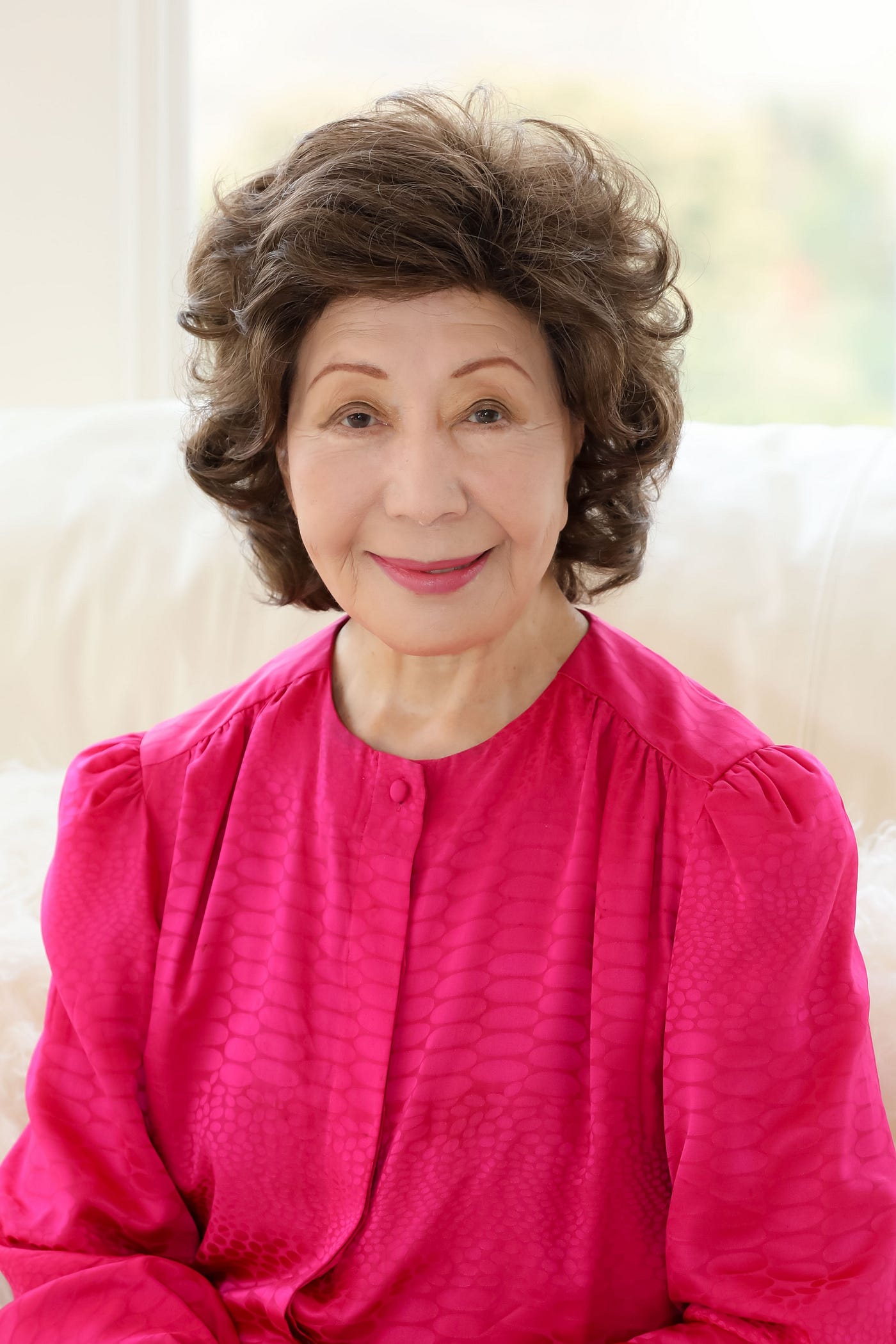
As a part of our series about “How We Can Cultivate Our Mental, Physical, Emotional, & Spiritual Wellbeing”, I had the pleasure of interviewing Dr. Michiyo Ambrosius.
BIO: Dr. Michiyo Ambrosius is creator of Neuro Bi-lateral Processing (NBP), a trademarked treatment integrating the left and right sides of the brain that allows people to release negative emotions and limiting beliefs that are caused by trauma.
Thank you so much for joining us in this interview series! Before we dive into the main focus of our interview, our readers would love to “get to know you” a bit better. Can you tell us a bit about your childhood backstory?
I was born and raised in Tokyo, Japan and was raised by a Roman Catholic grandmother and father, and by a Shinto mother, in a predominantly Buddhist culture and Zen philosophy. I grew up with both Eastern and Western spiritual and belief systems that influenced me to become open-minded and inclusive of different cultural and philosophical approaches to life. It’s not so much what you believe in: what you learn from living life is more important than prescribed belief systems.
As far as my childhood experiences, it was a rather difficult childhood, because socially and economically Japan had been flattened by the aftermath of World War II. There were tremendous changes taking place in the attempt to recover from the losses that we all had experienced, as a Nation and individually. When I was 7 years old, my father contracted tuberculosis and went through major surgery to remove one of his lungs. It took about 4 years for him to recover in a convalescent hospital, and as a family we suffered because our breadwinner was unable to provide. At first, my mother had to accept very menial work, but she trained herself to become a kindergarten teacher to support us.
Although she was a good role model in that she overcame the challenge of suddenly becoming a working mother and a self-made woman, she was always frustrated and fearful, and that made her emotionally volatile. As a result, I experienced some emotional abuse growing up. Fortunately, my grandmother took care of me in the absence of my mother while she worked outside of the home. I personally experienced trauma as a child, and that became the background motivation for me to pursue my career as a healer.
I also grew up with a sense that I must make something of my life. My great-grandfather had a huge stone monument in a suburb of Tokyo, dedicated to him after his passing, for his contribution in building the area’s infrastructures. I passed by this monument every day on my way to school. I knew that I was expected to do something as great as my great-grandfather. As a young girl, my relatives and neighbors used to say to me “I wish you were a boy.” “It’s too bad you are not a boy.” People were lamenting, because as a girl, I wasn’t expected to be able to do anything worthwhile. Although I may not have the same level of recognition as my great-grandfather, I have developed my ability to heal myself and to heal other people's hearts, so that they can exercise their power to love themselves and others.
What or who inspired you to pursue your career? We’d love to hear the story.
Although you may be expecting me to choose a very accomplished person as the subject, in my case, I was inspired by a boy in my grade school years, in Japan. One day a teacher suggested that we could choose who we want to sit with at our 2-seated desks in the classroom. There was a boy who must have been developmentally delayed and was receiving 0 points every morning on our spelling tests. His school uniform jacket was dirty, and the sleeves were crusted from wiping his nose on them.
Nobody wanted to sit with him. In a moment of empathy, I raised my hand and offered to sit with him. I started to help him prepare for his daily spelling tests, and to my amazement, he started to improve his scores to 20 points, 40 points, 60 points and so on. I said to myself, “Wow, if I show my caring, I can influence someone this much!”
It was an eye-opening experience for me to see how caring for someone made a huge difference in their motivation and growth in life. Although he moved away and I did not have a chance to see how he grew up and developed in his later life, this experience stayed in my memory for a long time.
None of us can achieve success without some help along the way. Was there a particular person who you feel gave you the most help or encouragement to be who you are today? Can you share a story about that?
There are so many people who helped me along the way, such as my husband, but this particular incident was a pivotal moment in my life. When I was 14 years old, a newspaper article caught my eye. It was about a young woman found dead, her arms clutching a pair of red, high heeled shoes. This young person from the farming community lost her hopes for living the life of her dreams and aspirations. I said to myself, “I’ve GOT to get away from these gender, cultural and societal restrictions!” This gave me definitive determination to live my life to the fullest of my capacity. It was that moment I decided I had to leave Japan to seek freedom and opportunity in the US.
Can you share the funniest or most interesting mistake that occurred to you in the course of your career? What lesson or take away did you learn from that?
Despite my language difficulties, I attended the actor’s studio in New York City. I was rehearsing the scenes from a play called Barefoot in the Park which later became a movie starring Jane Fonda and Robert Redford. I began to act out behavior and thinking patterns of the character I was portraying. I even started to talk like her.
The Zen concept of “no self” was revealed to me. This concept does not mean you should lose your belief in yourself. Instead, our personhood can be changeable. We do not have to be trapped by the limiting idea, “This is Me.” We are greatly influenced by the energy streams we collect from life experiences and the teachings of others. So, the idea of “self” is a fluid, adaptable concept. It is not a good idea to become an inflexible person who believes “this is ME and cannot change” or “this is MY way” because there is a larger self that is more universal and connectable than we believe. Therefore, it is so important to surround yourself with energy and people who are positive, inspiring and influence you to become a better version of yourself.
Is there a particular book that made a significant impact on you? Can you share a story or explain why it resonated with you so much?
The book called The Second Sex by Simone de Beauvoir, a French existentialist. She was a philosopher and partner to Jean-Paul Sartre. She was the original influencer of feminism and the women’s liberation movement in the 70s and early 80s. She was part of a group of existential philosophers who influenced people’s lives globally as they discussed the importance of each of us to take responsibility in shaping our lives.
Beauvoir’s philosophy inspired me to create my own life to the best of my ability rather than living my life to meet parental and societal expectations. Even today, it still fuels my desire to help other women liberate themselves from cultural and societal restrictions and expectations and seek a purposeful life for themselves. One of my passions is to help women discover self-defeating beliefs and old emotional patterns that are stopping them from becoming influential leaders. Some of those blockages are caused by their past trauma experiences and that’s why I developed my trauma healing technique called Neuro Bi-lateral Processing (NBP)™.
Can you share your favorite “Life Lesson Quote”? Why does that resonate with you so much?
“Follow your bliss and the universe will open doors for you where there were only walls.” ― Joseph Campbell
The documentary called; The Power of Myth was broadcast on PBS in 1987 and was hugely influential. His word “bliss” was misunderstood by many young people at that time who interpreted it as permission to experiment with drugs. During this time, I witnessed many people who fried their brain due to heavy drug use. However, what he meant to say was we need to follow our intuitive knowledge of what our soul’s purpose is, that is unique to every individual.
For me, this meant that we need to discover our own unique capacity, inclination, and calling. This requires the development of an unyielding belief in yourself, that each step you take is in the correct direction no matter what challenges or blockages you may face. You must follow your own soul’s guidance otherwise you will not obtain a satisfying, fulfilling life.
What are some of the most interesting or exciting projects you are working on now? How do you think that might help people?
I have started to teach and train people with a trauma healing method I have developed, called Neuro Bi-lateral Processing (NBP). As I mentioned earlier, I created this technique after discovering that our traumatic experiences block our capacity to live our life to the fullest. NBP is a process that utilizes yogic breathing, tapping and visualization to help a person process a traumatic memory and release the negative feelings and beliefs stored at the cellular level.
Trauma experiences create limiting beliefs such as “I’m not good enough,” or “I’m not valuable,” or “I’m not lovable.” These limiting beliefs create blockages in people’s lives that prevent them from achieving success, happiness, and fulfillment. It is important to heal our trauma and activate our full capacity and power.
The NBP trauma healing technique is one of the most effective and quickest methods to transform limiting beliefs and resolve emotional and physical difficulties. It breaks through the way our brains store painful memories and enables us to finally process and heal them. This technique is particularly effective in working with people who have experienced emotionally charged or painful incidents that we call “traumas”. I have personally applied this method over 500 times during the past 8 years with a success rate of 99.9%.
Because of the success I have experienced myself and with my own clients, I am beginning to teach this technique to other healers and coaching professionals and have just wrapped up our pilot program and we are about to begin the next cycle of classes. In the past few years, the pandemic has created a vastly increased number of people in need of healing from trauma and painful events. Stress, anxiety, and depression are at an all-time high and there are not enough trained healers and licensed therapists to meet the demand.
It is my hope that by teaching NBP to others, we can create a ripple effect of healing that extends beyond my local community and into the rest of the world. I believe that the healing of trauma is in fact the healing of people’s souls. Healing is an act of grace, and we are privileged to engage in it. Global healing is greatly needed. Trauma happens everywhere in the world and affects all cultures, races, and economic classes. My hope is to teach as many people as I can so that my technique can be utilized as widely as possible. Having access to trauma healing should be available to all who want it.
Read more about Neuro Bi-lateral Processing (NBP) at TraumaHealingMethod.com
OK, thank you for all of that. Let’s now shift to the core focus of our interview. In this interview series we’d like to discuss cultivating wellness habits in four areas of our lives: Mental wellness, Physical wellness, Emotional wellness, & Spiritual wellness. Let’s dive deeper into these together. Based on your research or experience, can you share with our readers three good habits that can lead to optimum mental wellness? Please share a story or example for each.
Heal your trauma. When most people think of trauma, they immediately think about big, disastrous moments such as warzone experiences. The reality is that EVERYONE experiences trauma at some point in their life. Trauma experiences can include: the loss of someone or something important (even pets); losing a job, home or large sum of money; identity; childbirth and surgeries; relationship break-ups, accidents, bullying, and abuse of any kind. Think about how many times you have personally experienced something “painful” or “scary”. These are trauma experiences.
Trauma memories influence us from a subconscious level and can impact all facets of our lives. Most people believe a conscious part of us has control over our thinking, behavior, and lives. It is in fact, our subconscious that is running the show. Because of the effects of the trauma lurking under our skin, we tend to hold distorted views of life, ourselves, and our abilities.
For example, the belief that “I’m not good enough” can prevent us from obtaining a more satisfying or successful life. “I’m not worthy” can create self-sabotaging situations. Someone who believes that they are not loveable may choose partners who really don’t love them, repeatedly and they don’t know why. Many people do not realize that these limiting beliefs can be controlling their lives, their decisions, and hold them back from experiencing life to its fullest.
I also wasted many, many years of my younger life not being able to engage in a purposeful and meaningful profession, because I believed that I was not good enough, that I couldn’t speak English fluently, therefore I was unworthy. During my midlife crisis, I realized how much anger and rage I was carrying because of trauma I experiences in my childhood.
I engaged in psychotherapy work. It took over 10 years to work through with very little to show for my efforts. Later, I learned that talking therapies have very little effect on healing trauma. During that time, I instinctively invented my own anger management method to externalize and release my strong emotions. With this, I was able to achieve huge breakthroughs. I regained my own strength and decided to pursue a doctorate in clinical psychology at the age of 53. It’s never too late for you to heal your trauma and start living your life to its fullest!
Love yourself and take care of what’s needed to develop and maintain healthy balance between mental, physical, spiritual, and emotional wellness. Proper exercise, eating habits, sleeping, and dreaming provide tremendous resources for development and maintenance of all areas of life. Some people have been taught to believe that loving yourself is selfish. Many people prioritize the needs of others over their own on a regular basis, especially women. You cannot pour from an empty cup. No matter how busy you are, you must love yourself, stop criticizing yourself and take care of yourself. You are an instrument to experience life. If you are unhappy, you will experience an unhappy life. If you love yourself, you can love your life and incorporate the many gifts the universe can offer to you.
During the pandemic, many parents, especially mothers had to take on the additional role of educator, as well as being working professionals and caregivers. Homes became multi-purpose, with entire families working and learning from home. Because of this, many people experienced increased levels of stress, anxiety, and depression. Self-care efforts were neglected, and licensed therapists saw a huge increase in people seeking help. Now that we are witnessing a decrease in COVID cases (and their variants), we need to take control of our self-care activities and treat ourselves with love and respect.
Commit to your personal growth and development. Most people believe that happiness can be achieved by obtaining more money, wealth, or external achievements, but what we really need to work on is our internal feelings and perception of ourselves. Happiness, success, and fulfillment are all descriptions of how we feel about ourselves and our perception of the situations we are in. What we call personal growth and development consist of emotional maturity and an objective perception of ourselves that we acquire through living our lives and overcoming our difficulties. That is the state of being that is called “being wise.”
Research psychologists who studied human development discovered that people who are at full emotional maturity, value beauty, justice, and love. This matches the stages of human development. This seems to coincide with religious teachings in many different cultures around the world, and I believe that most religious teachings can agree with these ideas. Heaven and hell are both psychological states.
The quest for the best possible state of being as a human has been of the greatest interest among people for centuries. For example, the term Buddha means an awakened or enlighten person and does not necessarily refer to only one person who is best known to be Siddhattha Gotama, a teacher in achieving peace and fulfillment in life in ancient India. That means that anyone can become a Buddha or enlightened one. Images of Buddha are often shown sitting or standing on a lotus flower because they have reached the flowering stage of life, reaching full emotional maturity or an enlightened state.
It requires huge effort and commitment on your part to grow as a person and acquire a satisfying life. You have to experience and learn from both good and bad experiences and come to the realization that these experiences will shape you into the being you are meant to become. Success and happiness are just states of being, not final destinations or who you become.
Do you have a specific type of meditation practice or Yoga practice that you have found helpful? We’d love to hear about it.
According to Joseph Campbell, the word “meditation” means thinking. So, any act of focused thinking can be meditation. However, it is valuable for you to explore and search for your particular meaning of life, what you are living for, and how we can live our lives in the optimum manner. I am a yoga teacher, so of course, I consider yoga to be a great way to focus and connect with yourself and at the same time, work on the health of your body, mind, and spirit. The activities that are involved in the practice of yoga are a basic way to develop and grow as a human being, including mentally, physically, and spiritually. However, I believe that the act of meditating can be done in any way you choose. It’s about contemplation, consideration and focus in an intentional way to create a well-rounded person.
Thank you for that. Can you share three good habits that can lead to optimum physical wellness? Please share a story or example for each.
Sleep and dream. Sleep is the most reparative, healing activity you can do to ensure optimum physical, mental, and spiritual wellness. All our basic, body functions require proper rest and sleep to operate at their best. Getting enough sleep on a regular basis is the best thing you can do for your health, both mentally and physically. Also, when you enter deep sleep (called NREM sleep), your mind does a kind of “housekeeping,” allowing for healthy repair and reset to occur in your body. This is when our body builds muscle and bones, strengthens our immune system, and repairs tissues.
Another less talked about healing function of sleep is dreaming (REM sleep). The mind and body continue to do more “housekeeping,” healing and repairing. Dreams provide us with energy. The subconscious is an enormous energy system. Energy must flow from our subconsciousness to our consciousness. Dreaming can transfer energy from subconsciousness to consciousness.
I read about a dream study where people in a sleep lab were awakened every time REM sleep occurred (when their eyelids moved). In three days, the results showed the subjects were dysfunctional. Their consciousness was mixed up and some subjects even had difficulty distinguishing their waking life from when they were asleep. This study indicates that sleeping and dreaming are key factors to our healing and functioning of our minds.
I experienced a similar phenomenon when I flew to the Philippines. It was a thirteen-hour flight, and I could not sleep while on the plane. When I arrived, I had difficulty spelling and typing on my computer. It took a few days for me to recover back to normal.
Dreaming also has another function: Dreams help us by showing us what we should be focusing on. They are our soul’s whispering communication. They show us what is going on within ourselves. They can be prophetic and can show us what is to come. That’s why I believe our souls are timeless and spaceless.
When we pay attention to our dreams, they can show us truths that only our true selves know. Nightmares or flashbacks can give us insight to trauma that is haunting us, that we need to resolve. They can also be showing us our power, potential and the path our soul wants us to take. Even if a dream doesn’t come true immediately, it is wise to pay attention to even the most confusing dreams because they offer us a rare insight to our subconscious.
Before I decided to apply for my doctorate program, I had a dream in which I was driving a two-passenger car (In my case, vehicles represent the manifestation of professional activities). I got out of the car and walked without knowing where I was going until I came to a hut, where a man who seemed to be a gatekeeper stopped me and asked me to show him my passport. I presented my passport and he opened it up and looked at the photo in it and said, “This is not you” and returned the passport to me.
When I saw the photo, indeed, it was not my own, but a different person. That indicated to me that I was not living according to my true self, and I was lost along my life course. He let me pass through the gate and I entered a village where a festival was taking place and included the sacrifice of a small pig. In ancient times, sacrificing animals was customarily done to ask the gods for favor or guidance. I was greeted by three maidens; each of them gestured and offered me a fruit in their hands; and I interpreted these fruits to be nourishment and the seeds to be the source of the lifeforce. Sure enough, I pursued a career as a clinical psychologist, yoga teacher, and am now currently an educator teaching my technique to others. Although working towards these achievements involved some sacrifice in pursuit of my professional identity, I am very happy with my career path.
Exercise and self-care (this includes eating properly and staying hydrated!) This one almost goes without saying, but I will touch on it by saying that taking care of your body IS a form of self-care and self-love. Love yourself and feed your body healthy foods, drink plenty of water, and exercise regularly. Remember—emotions are forms of energy—exercise and physical activity can be a very good release of negative emotions. Don’t be afraid to vocalize these releases as well! Martial artists and Samurai often release a vocal “kiai” (in Japanese, kiai means “joining with your lifeforce”) or short shout when exerting themselves. This is a healthy way to release negative energy and regain focus and calm.
Breathe from the abdomen. The first thing I teach my clients when we meet for the first time is proper breathing technique. Many people tend to breathe shallow, from the chest without fully expanding the abdominal cavity. When you place your hands on your belly and chest, you should feel no movement in your chest in order for the lower part of the lungs to expand first. You can take in a lot more oxygen this way instead of the use of the upper part of the lungs through chest breathing. This increased amount of oxygen can get into your blood stream to provide life force into your body, mind, and spirit, and bring calmness and more energy.
Do you have any particular thoughts about healthy eating? We all know that it's important to eat more vegetables, eat less sugar, etc. But while we know it intellectually, it's often difficult to put it into practice and make it a part of our daily habits. In your opinion what are the main blockages that prevent us from taking the information that we all know, and integrating it into our lives?
This relates to emotional eating vs eating for self-love. People try to equate success and happiness to getting approval, love, and acceptance from others. This includes how they look, their weight, and their dress size. With this mindset, things like eating healthy and exercise are seen as tasks or chores we must complete and are no longer considered acts of self-love. This is why we reach for foods that are easy and not necessarily nutritious. Or we reward ourselves with sweets when we are sad or angry. We must engage in more self-care and self-love and not focus on getting approval, love, and acceptance from other people. It is important to prioritize what is good for us rather than what is easy or soothing.
True success and happiness means you are able to value yourself for your own unique gifts that you possess and can contribute by sharing with others. When you feel good about yourself and what you do, you feel a sense of satisfaction that comes from being and living through your true self. Prioritizing healthy habits means you are choosing to love and care for yourself first, so that you are, in turn capable of loving and caring for others. Remember, even on the airplane, in an emergency it is important to “secure your own oxygen mask” before aiding others. It is not selfish to take care of yourself. Your health and well-being are just as important, if not more so than others.
Can you share three good habits that can lead to optimum emotional wellness? Please share a story or example for each.
Operate with gratitude and empathy. When you start from a place of gratitude and empathy, you are focusing on what is positive. Having empathy for people around you will help others feel understood, accepted, and connected with you. Being thankful for the gifts and graces the universe grants us is a great way to maintain a healthy, happy mindset. People who only focus on the negative aspects of their situation can create a “snowball” effect of negativity for themselves, and others. When you take stock in all the things you are grateful for, and share your appreciation for others, you can do the same thing with positivity. It is infectious in all the right ways.
I shared a story earlier, about a boy in my grade school. I could have easily chosen to sit next to a friend instead. If I had not felt empathy for him and his situation, I might never have had that eye-opening moment and pursued my calling as a healer later in life. Just a little bit of empathy and gratitude can create far-reaching effects that you cannot predict.
Focus on the current and present steps rather than the future end result. Life is a true, heroes’ journey. Living life means developing, growing, and changing as we learn from our experiences, successes, and shortcomings. Many people tend to think if they can make a six-figure salary, get that corner office, or big promotion they will somehow reach the destination of happiness or fulfillment. These things are not permanent destinations you can reach. They are simply emotions and temporary states we experience along the path of our development.
When you stay focused on the present steps you need to take, celebrate your accomplishments (as big or little as they may seem), and learn from mistakes instead of dwelling on failure, you will experience all the good feelings you want to feel that come with growth and progress. You cannot wait for happiness only at the end of your journey—it is in the life you LIVE along the way.
Release your negative emotions (physically & vocally). All emotions are forms of energy and you either can carry them around and keep on feeling negatively or you can release them and free yourself. When you release negative emotions, you can free your energy for positive purposes.
Toddlers stamping their feet and yelling in temper tantrums have something to teach us about moving negative emotions out of the body. I developed a quick, effective “five-second, take-care-of-your-anger” exercise called, Samurai Anger Management. (Watch the video for a demonstration!)
Anger can accumulate in the abdomen and weigh you down. Stir up the anger in your abdomen by poking with your fingers, then with your voice, movement, and breath work you expel anger out of your body. I developed this technique to help people quickly disperse the anger, frustration, and stress they feel in the moment.
I call it “Samurai Anger Management” because it is modeled after the practice of samurais who expelled their anger while learning martial arts skills. Essentially, this is a stylized form of a temper tantrum, very much like the practice children instinctively know. However, children tend to throw tantrums in inappropriate places like the supermarket, so parents shout, “Don’t you EVER do that again!” Then children learn to swallow their anger and hurt emotions and not to feel. This can lead to a buildup of unexpressed anger which can result in anxiety and depression. With this anger management technique, you can release your anger effectively in a private place and time.
Do you have any particular thoughts about the power of smiling to improve emotional wellness? We’d love to hear it.
Smiling expresses many positive emotional states including appreciation, gratitude, happiness, love, acceptance, and approval. The act of smiling can bring about all these positive states in ourselves and to others. Our mood follows our actions! By smiling more, you can help improve your mood. Laughing is even better medicine. Being able to express all these feelings allows us to live a more enriched life.
Finally, can you share three good habits that can lead to optimum spiritual wellness? Please share a story or example for each.
Listen to your soul’s voice and purpose. We spend a good portion of our lives living up to other people’s expectations and desires for us. As children, we learn to mind our parents and listen to their demands and often follow it even when we don’t want to. When we begin our careers, often we must fulfill goals and duties our employers and companies choose in order to obtain financial stability.
Often, our own, true voice becomes harder to hear and, in some cases, can grow silent behind all the other noise and demands on our time, energy and lives. Sometimes, we learn to silence that voice ourselves because of painful or traumatic experiences, abuse, or unhealthy relationships. It is important to learn to listen to your inner voice, your true voice or soul. Each one of us has the capacity to live life with purpose, fulfillment, and happiness. Ikigai is a
Japanese word meaning “worth living.” Ikigai is what gives your life value, meaning and purpose, and finding it is
the key to a satisfying life. When you listen to your inner voice, pursue dreams, and overcome the roadblocks in your life, you are on the path to live the kind of life you deserve to live.
Learn to accept failures & success as momentary states of being rather than destinations. Don’t let setbacks define your success or failure. Remember that even mistakes can offer a learning opportunity. Likewise, success and achievements are not the end. Often, they are doorways to the next big dream or goal, and new opportunities to learn (and make mistakes) will soon follow. Keeping both success and failure in perspective is a healthy practice and learning to celebrate all of your accomplishments, big and not so big will help you maintain your emotional and spiritual wellness.
Seek connection (with yourself, the universe, and other people). People grow with connections. Every person you encounter has a lesson or something to teach. We are all valuable, unique contributors to the universe in our own ways. Celebrate differences with those around you and take opportunities to learn. Consider what others are feeling and experiencing rather than being judgmental or thinking negatively. Connect with your true self and listen to the wisdom and guidance you have uniquely for yourself. Often, you already have the answers, within.
Do you have any particular thoughts about how being “in nature” can help us to cultivate spiritual wellness?
I think, what people call “god” is nature’s power, both creative and destructive, in other words, “higher power.” When we are in nature that is manifested positively, we can cultivate gratefulness and be appreciative of how the universe is being good to us. When we are faced with nature that manifests in negative ways, we realize that there are some things that we don’t have control over, and this can lead us to humility. Being in nature can help us connect to that higher power both negatively and positively and it is up to us to choose how to respond to its effects on us.
Ok, we are nearly done. You are a person of great influence. If you could inspire a movement that would bring the most amount of good for the greatest number of people, what would that be? You never know what your idea can trigger.
Most people operate with about 20% of their capacity and do not realize how much more powerful they could be. Therefore, most of us live from a place of fear of failure and do not even attempt to strive for more. In my opinion, people’s perception of themselves and their power or capacity is based on their past traumatic experiences. When we go through situations we cannot handle well, we start to believe that these limitations are the extent or limits of our capacity. Our brain does not completely develop until we are in our twenties. As children, of course are not capable of handling difficult life situations and get traumatized. As I mentioned before, these unhealed traumatic experiences create negative perceptions of ourselves and our abilities that we believe to be true, even as adults.
I would love to inspire a global movement of healing trauma or wounding and free people from their imagined limits. I want to help people to discover their own true power and capacity so they can embrace all the possibilities the universe presents. I have created a tagline that says, “I’m co-creating my life” to encourage people to take responsibility in shaping their lives with the universe and not live their lives with poor perceptions of themselves.
If people were not held back by their limiting beliefs about themselves and how much they can accomplish, we could all make more conscious choices in everything we do, and create a richer, more satisfying and fulfilling existence.
We are very blessed that some of the biggest names in Business, VC funding, Sports, and Entertainment read this column. Is there a person in the world, or in the US, whom you would love to have a private breakfast or lunch with, and why? He or she might just see this, especially if we both tag them :-)
I recently listened to Nick Santonastasso speak at a Tony Robbins event and was extremely inspired. He was born with no legs and only one arm with one finger but despite that, is a widely known motivational speaker and body builder. I think he is an incredible person and there is so much we can learn from his spirit and determination to live a purposeful life. I would love the opportunity to get to know him and ask how he conquered his fear of being in the public eye and becoming an international motivational speaker. He turned his deficit into an asset that helps him inspire and influence others and I have such a huge respect for that.
How can our readers further follow your work online?
You can learn more about me, my services, trauma, and my powerful Neuro Bi-lateral Processing (NBP) technique by visiting TraumaHealingMethod.com, downloading the Ambrosius Center app (in the Google Play or Apple store), or following me on social media:
Facebook: https://www.facebook.com/DrMichiyo/
Instagram: https://www.instagram.com/ambrosiuscenter/
LinkedIn: https://www.linkedin.com/in/drmichiyo/
Thank you for these really excellent insights, and we greatly appreciate the time you spent with this. We wish you continued success.
Thank you! In my culture we don’t say goodbye, so I’ll say “see you soon.”