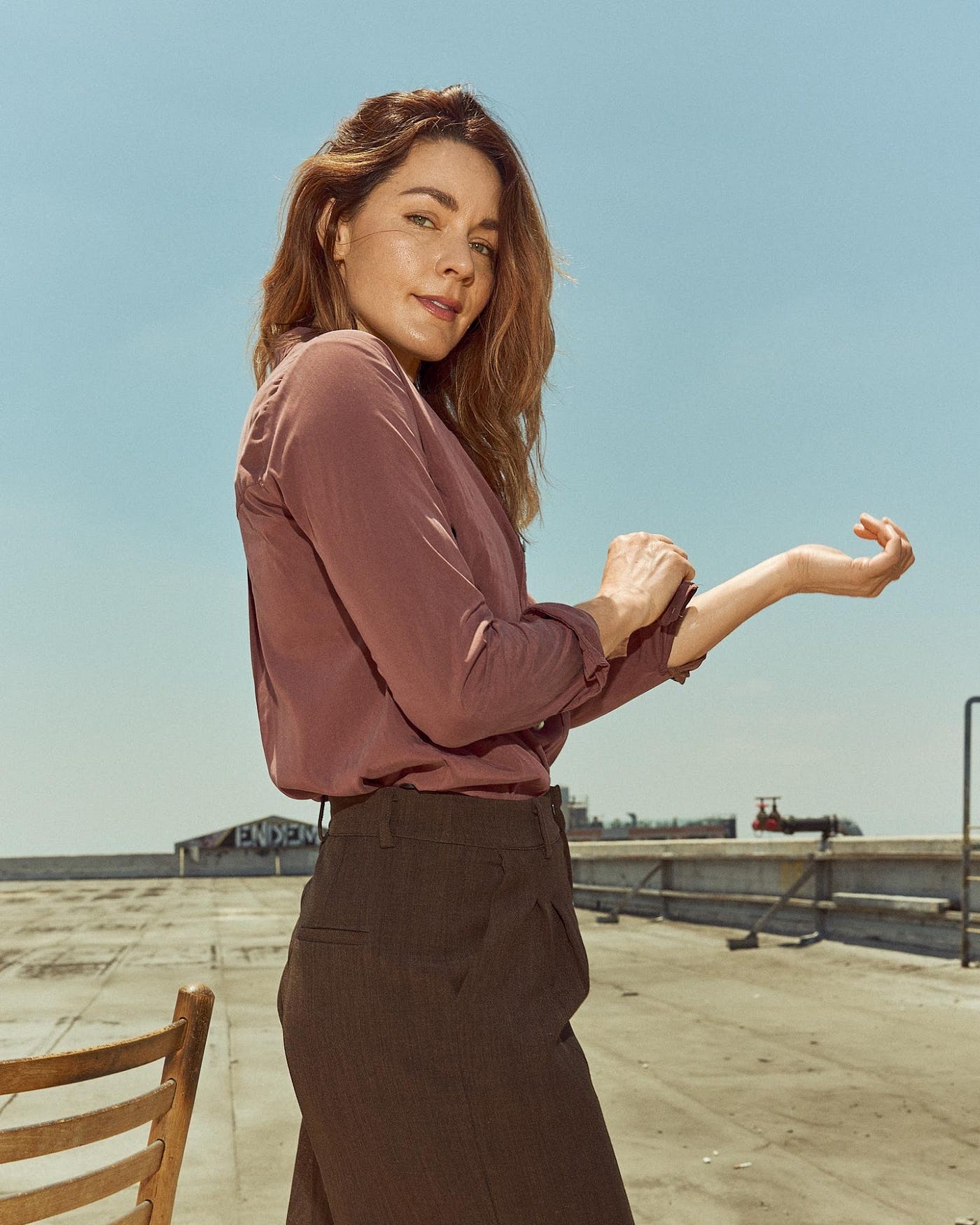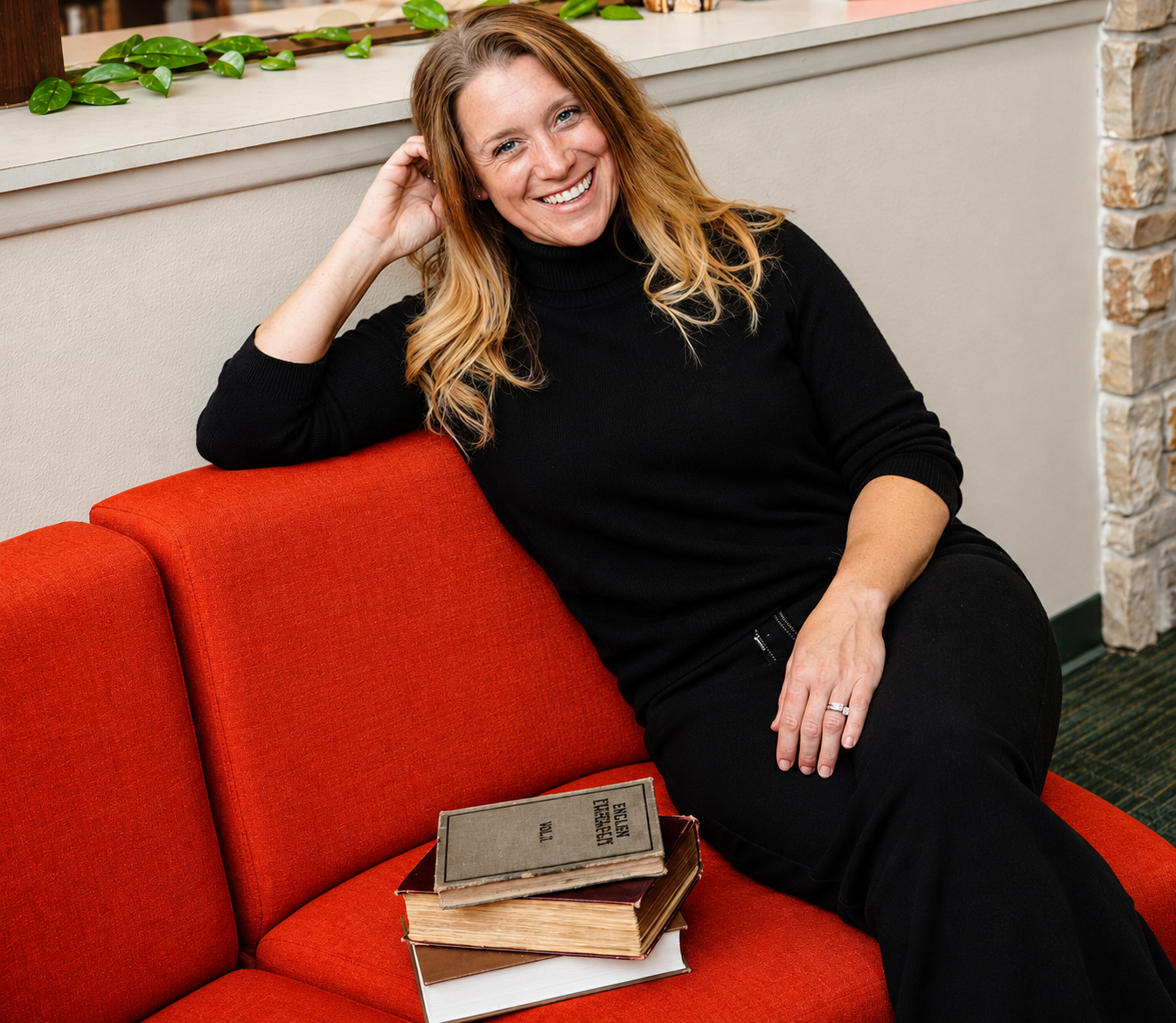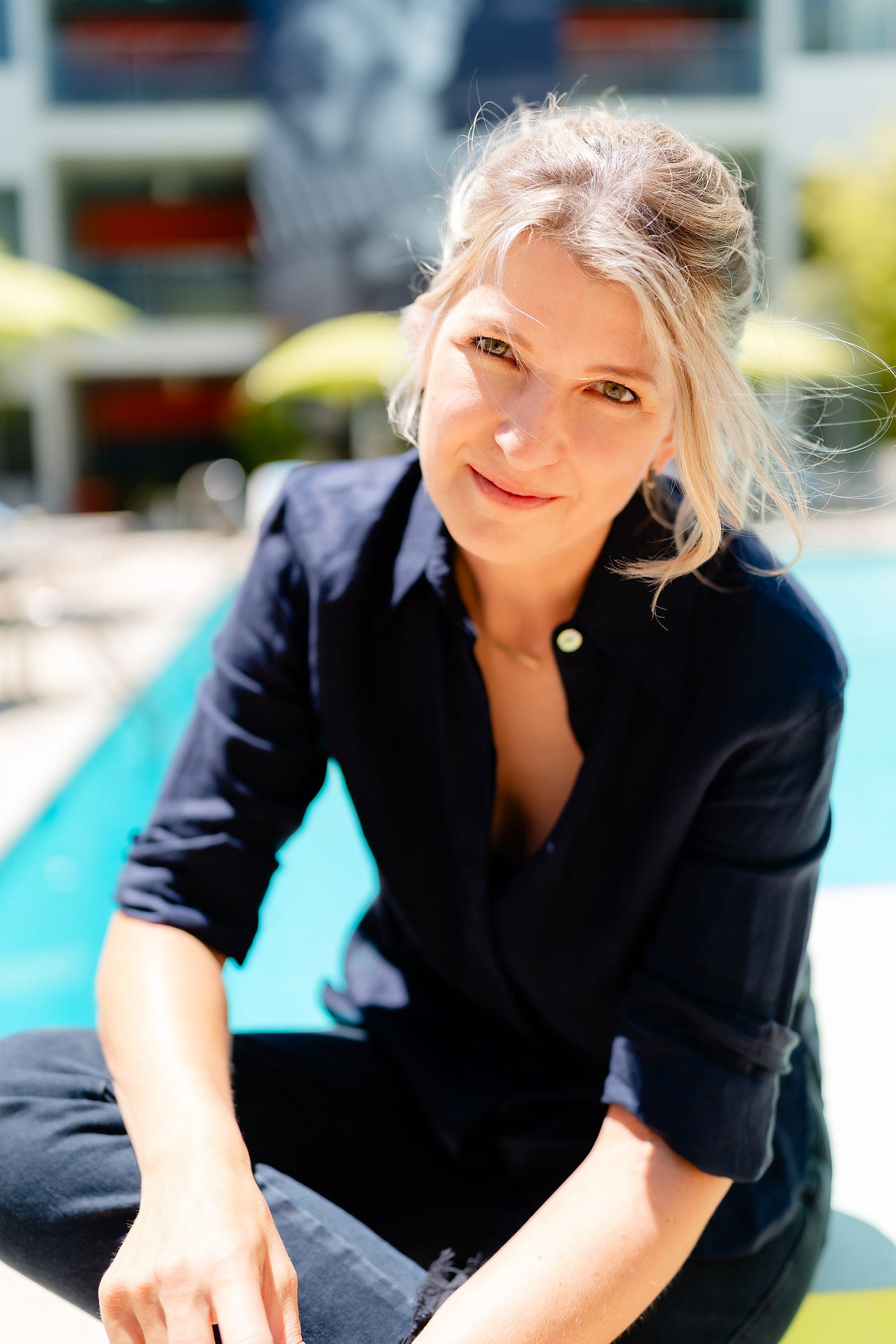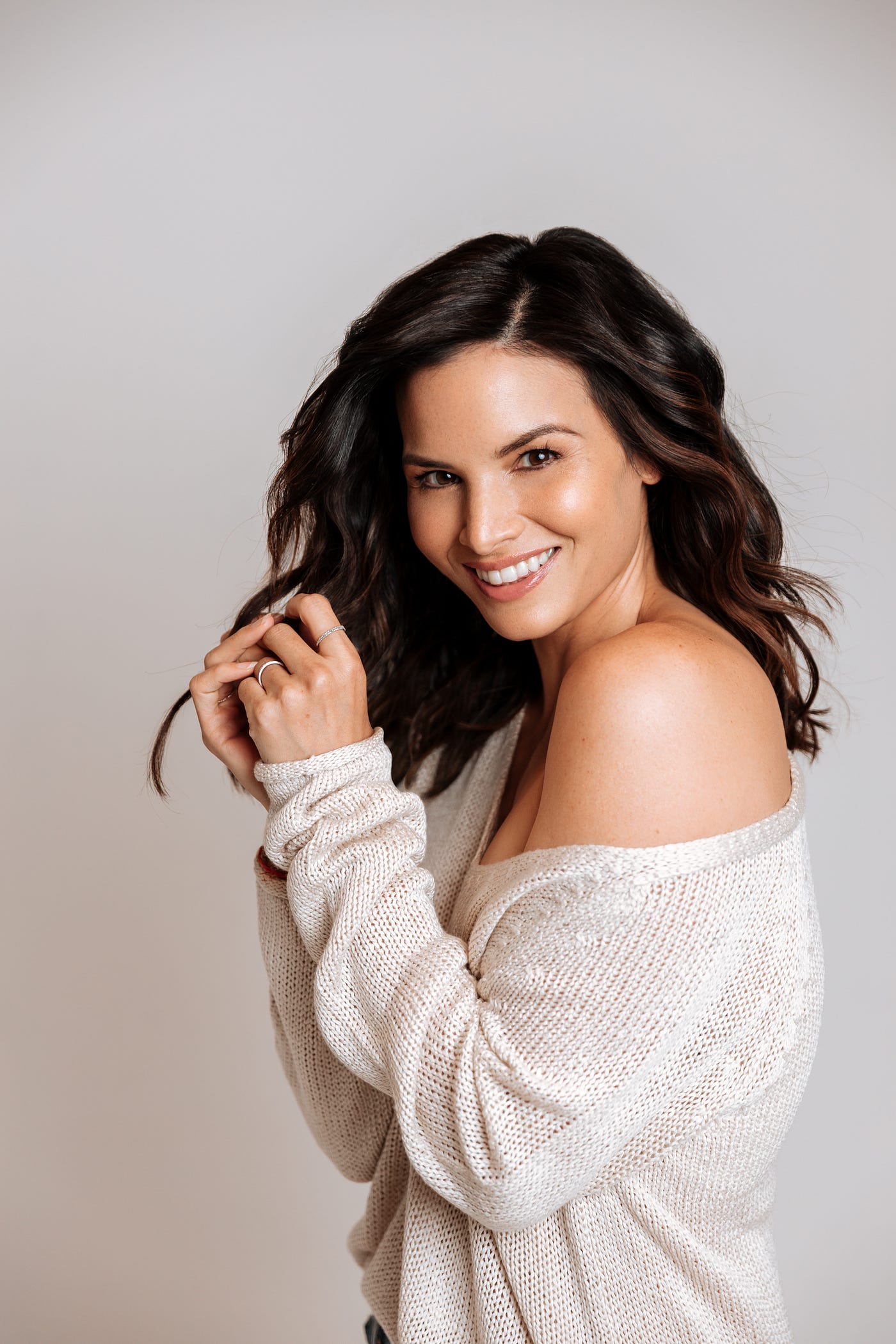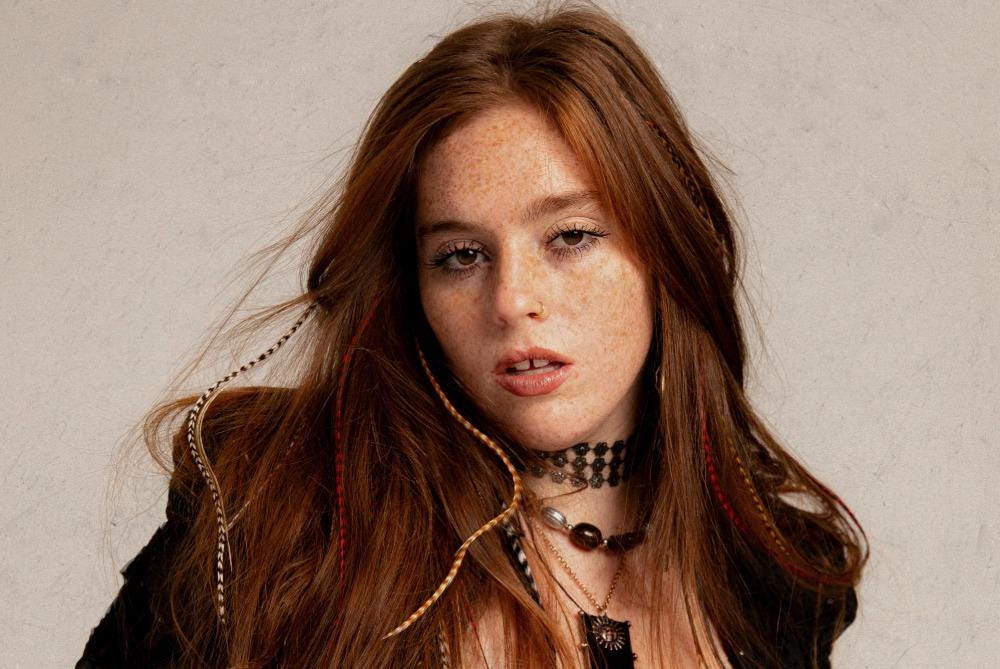
Honey, no. I never get nervous. This is my whole life.
I had the pleasure of talking with Vella, who remembers one particular moment from opening for Teddy Swims in Stuttgart, Germany, with unusual clarity. As she performed, she looked out into the crowd and saw people singing along to her songs. “Holy crap, this is crazy to see,” she recalls thinking. She had been singing in front of audiences for most of her life, but this was different. These were strangers who knew her music well enough to sing it back to her. She almost became emotional. For someone who considers herself completely at home onstage, the experience caught her by surprise.
Vella is the kind of performer who answers questions about stage fright with a laugh. “Honey, no. I never get nervous. This is my whole life.” Her confidence is unmistakable, as is the big, soulful voice that has taken her from childhood performances to international stages. Yet behind that commanding presence is an artist who has cried while recording her own music, struggled to speak up in early studio sessions, and openly admits that she is still figuring out who she is. The contrast between her fearless public persona and the vulnerability she brings to songwriting may be the most revealing part of her story.
Music began as a family affair. At six or seven, she would sit beside her father as he played piano, singing along while he accompanied her. He recognized something in her voice early on and began recording their performances, including a living-room rendition of Adele’s “Rolling in the Deep” that remains on YouTube. Those afternoons helped convince her that singing could become her life’s work. She also spent nine years with an all-girls performance group, gaining the kind of stage experience that most young singers can only imagine. By the time she began pursuing music professionally, performing already felt natural.
The recording studio, however, required a different kind of confidence. Vella began coming to Los Angeles when she was sixteen, entering an environment where producers, collaborators, and industry professionals all had opinions about how music should sound. Looking back, she considers her reluctance to speak up in those early sessions a significant mistake. She had always believed in herself, but expressing exactly what she wanted took practice. Over time, she learned that having a powerful voice meant little if she couldn’t also use it to make decisions about her own work.
That determination eventually extended to the most personal parts of her songwriting. While working with her friend Ben Wy on “Dead Roses,” a ballad from her previous album, Vella found herself crying during the writing sessions. The lyrics felt almost like private diary entries, exposing emotions that were difficult to revisit. Recording the song proved equally demanding. She had to stop and collect herself before continuing. Rather than treating those moments as failures of professionalism, she came to see them as part of what makes music meaningful. Listeners, she believes, should be able to hear the emotion behind a performance, even when delivering it is uncomfortable.
Interestingly, her insistence on artistic authenticity has not made her resistant to other people’s ideas. She welcomes collaborators who challenge her instincts, sometimes taking a funk or soul concept in an unexpected hip-hop direction. “You cannot have an ego,” she insists. The singer who once struggled to assert herself now sees a distinction between defending her artistic identity and refusing to listen. She wants her perspective heard, but she also wants the freedom to discover something she would never have created alone.
Her recent work reflects that openness. In October 2026, she released “Don’t Mistake This For Love,” written by acclaimed songwriter Diane Warren. The song explores the contradiction of caring deeply for someone while trying to conceal those feelings to protect one’s heart. Vella brings her forceful, emotionally direct vocal style to a composition built around emotional denial. She has also been developing a new EP in Miami, experimenting with songs she believes reveal more of her personality.
There is another contradiction in Vella’s career, one familiar to musicians navigating the modern entertainment business. Social media helps audiences discover her work and allows her to announce performances, yet she is deeply skeptical of its influence. She acknowledges that algorithms and online numbers can create anxiety, even for artists who understand their limitations. Asked what movement she would start if given the opportunity, she offers a surprisingly radical answer: “Let’s stop social media. Let’s stop it completely.” She would rather see people reconnect with the present and rediscover physical media. It is an amusing position for an artist whose career has benefited from digital visibility, but she doesn’t pretend to have escaped the pressures she criticizes.
Away from music, her methods of reconnecting are refreshingly ordinary. When she feels overwhelmed, she can spend hours at the beach. She writes thoughts and lyric fragments in a diary, plays The Legend of Zelda, spends time with friends and family, and works out to relieve stress. She is equally serious about the practical discipline of singing, including daily vocal warm-ups and hydration. Having experienced the anxiety of a hoarse voice, she understands that even a seemingly effortless instrument requires constant care.
Perhaps that is what makes Vella particularly interesting at this stage of her career. She can deliver an enormous vocal performance while remaining emotionally exposed, assert her own creative instincts while welcoming collaboration, and build an audience online while wishing people spent less time staring at screens. The little girl singing beside her father’s piano already knew she wanted to make music for the rest of her life. The adult artist is discovering what it takes to keep that original love intact while the expectations surrounding it become increasingly complicated.
It’s so nice to meet you. Before we dive in deep and talk about your amazing work, our readers would love to learn about your personal origin story. Can you share with us the story of your childhood and how you grew up, and the seeds of all the amazing musical creativity that has come since then?
Vella: I started singing when I was six years old. One of my biggest influences was my dad, because he plays piano. I remember vividly as a kid that I would sit next to him on the piano. He would play, and I would sing, and he was one of the first people to be like, “Wait, I think we got something here.” I remember vividly that he would record me singing. I was seven, either six or seven, and he recorded me in our living room singing “Rolling in the Deep.” I think in that moment it made me realize that I wanted to sing and make music for the rest of my life.
The video is actually still on YouTube to this day. It’s pretty old, but it’s really cute. That’s where the whole journey started. Those small moments I had with my dad, when he would play and I would sing, made me realize, “Okay, this is what I want to do for the rest of my life. I want to do music for the rest of my life and stay doing it till I croak.” I was also part of this all-girls performance group called Entertainment Review, and I was part of it for nine years. It was basically my whole childhood, where I would sing and perform in front of crowds at a very young age. I was really happy that I had that kind of outlet and the creativity of being able to perform in front of crowds at that young age.
I’m very happy and grateful that I was able to experience that, because now when I perform, it’s second nature. I’ve been doing it basically my whole life. When people ask me, “Do you ever get nervous?” I’m like, “Honey, no. I never get nervous. This is my whole life.” That’s basically what my childhood was: just singing and performing. I’ve been singing since I could talk. That’s basically how it all started.
Where does the name Vella come from?
Vella: Oh, this is actually a beautiful question. The label that I used to be a part of when I first started coming out here in LA, the owner of the label, his name was Matt Hill, and he was like, “We need to do an artist name, because my actual name is Gabriella Valdez.” So what we decided on was to use the V in Valdez and Ella, or Bella. So we decided to just combine the two, my first and last name together.
That’s amazing. You probably have some amazing stories from your career, and I’m sure this is difficult to single out, but can you share with our readers two stories that stand out in your mind from your musical career?
Vella: Okay. I have two, and they’re actually both performances. Actually, you know what? I’m going to share one performance and one time that I recorded a song.
The first one: I opened for Teddy Swims this year in Stuttgart, Germany. I remember vividly as I was performing, I looked in the crowd and there were people that knew my songs. I was like, “Holy crap, this is crazy to see.” I’d never really seen that before. It was a starstruck moment. When I was on stage, I almost got emotional, because it was always a dream come true. One of my dreams is to see people connect with my music, relate to it, and sing their hearts out with it. Seeing that in the present moment was really emotional and really amazing.
Then there was one time, it’s a bit sad, but it made me realize in my career that I had to do this for the rest of my life. I always knew, but it was one of those things like, “This is what I am born to do.” I was singing one of my ballads from my last album, and it was one of the hardest songs to ever record because I always would get emotional when I would sing it. It made me realize, if my music can really touch people to the point where they can hear my emotions — when I was recording it, I had to take a second because I was crying. I was a mess, but I held myself together. This is exactly what people need to hear. They need to hear the authenticity. They need to hear the emotions. They need to hear everything. That’s exactly what I did with the song. It really did make me realize, this is what music is all about: for you to pour out your emotions, pour out what you’re feeling, and for people to be able to relate and feel the song.
I feel like that is one of the most memorable moments of my career, because it was a moment. It was a hard song to sing, and I love a good challenge. That’s one thing about me: I love a challenge. In that moment, in that room, I was like, “This is exactly what I need to be doing right now, so I can touch people with my music.” Those are my two memorable moments in my career.
There’s a saying that sometimes our mistakes can be our greatest teachers. Do you have a story about a funny mistake you made when you were first starting out, and the lesson you took away from it?
Vella: Oh, my God. I feel like that’s actually a really good question, because I’ve made a lot of mistakes. It’s bound to happen. Everyone makes mistakes. We’re all human.
When I was a kid, when I first started coming out here when I was 16, I feel like one of the first mistakes I definitely made was not speaking up more in the studio. Now, looking back on that, I’ve grown so much from that, because now I make sure that I say what I want to say and feel what I want to feel in the studio. I remember that was one mistake I made when I started coming out here. I’m glad I was that age, because as I progressively got older, it was like, “You’ve got to be straight up. You’ve got to be head-on about what you want, what you need, and especially what you want to put out there.”
You just have to build that confidence, which I’ve always had. Especially being in such a big place, it can kind of be overwhelming sometimes. But you’ve got to learn from that, and you’ve got to step up from that. That’s what I did. That’s definitely something I learned from, and now it’s definitely good.
That’s great. There’s a related idea that no is not rejection, but redirection. Do you have a story like that, where you got a no that turned into an opportunity, but that led to an even better opportunity?
Vella: Yes. I’ve noticed that I always get my best stuff when I get out of my comfort zone. When I’m in my comfort zone, it’s great and all, but I’ve always gotten my best stuff when I got out of my comfort zone. For example, if I want to do something funky or something soul, but they’re like, “Okay, then how about we do something that’s a mix of hip-hop?” And I was like, “Oh, I never thought of that. Let’s kind of hit that a little bit and see how that goes.” You never know if it hits or not. At least you know, and if you don’t like it, you don’t like it.
I’ve definitely had moments like that when I’m working with other people in the studio. I think it’s so cool, because you never know. That’s the reason why people need to be open-minded when you’re in the studio as an artist, when you want to work with other people. You can’t have an ego. You cannot have an ego. That’s one thing I will say. I will never have an ego. I will always listen to what other people say, and I will always make sure that my point is across, and I will make sure someone else’s point is across. You never know. You’ve got to get out of your comfort zone. I feel like it’s so cool that it happens all the time when I’m in the studio, because I always love challenging myself. Every time I challenge myself, I always see really good stuff that comes along with it.
That’s great. What’s been the most challenging project or role you’ve taken on so far, and why?
Vella: Honestly, I feel like one of the hardest ones I did was definitely my ballad on my last album, because it was one of those songs where I decided to show my vulnerability through my music. I’ve done it before, but it was like you could see through the glass my true emotions with the song. It’s right there. Even when I was writing the song — it’s called “Dead Roses.” It’s from my last album. I even remember when I was writing it with my friend Ben Wy, I would start crying in the sessions when we were even writing it.
Not even recording, when we were writing it. I was writing my stuff down. It was like I was writing stuff in my diary, because it was just so emotional, and I felt so bare, because all my emotions were just on that song. It was definitely one of the hardest songs I recorded and wrote. There are going to be plenty more, but so far, emotionally, it was really hard. I’m really glad how it came out, because of how emotional it is.
Please tell us more about any of the exciting new projects you’re working on, any new initiatives. Tell us all about it, and feel free to be as elaborate as you like.
Vella: Yes. I actually recently released a song called “Don’t Mistake This for Love.” I had the absolute pleasure of working on the song with Diane Warren. She wrote the song, and I am so, so grateful and honored to have worked on this song with her. It was such a treat. I’m going to release a little acoustic version soon, which I’m excited about.
Another thing I’ve been working on a lot recently is this new EP that I’ve been working on out in Miami, my hometown, which I am super stoked about. I really do think these couple of songs really showcase my personality, and I love it so much. I’m just creating more and more, and performing more and more, and I’m going to keep doing it till I drop.
That’s great. Unbelievable. If you could take all of your music, all of the words, all of the album covers, all of the melodies, all of the video, put it in a blender, mix it all up, what would be the overall message that comes out of it?
Vella: If I had to describe it in three words, I would think of it as fiery, authentic, and passionate. It’s just putting everything out on a golden platter and being like, “Here you go. This is me. This is my true authentic self. And if you don’t like it, you don’t like it. If you love it, you love it. Listen, I’m here to show up and show out.” I feel like those are the main three categories, if I blended it and made it into some sort of smoothie or whatnot. The message for sure is to always be your true, authentic self and to never let anyone dim your light. It’s okay to feel certain things. It’s okay to feel heavily and passionately. I feel like that’s what it would come out as.
You said fiery, passionate, and authentic. How is fiery different than passionate?
Vella: I feel like they come together, because certain ingredients just mesh well together. I feel like fiery is like, boom, boom, in your face, like everything. And then passion is like emphasizing what I’m fiery about. It’s something like that, in a sort of way. But it meshes very well together.
This is our signature question. You’ve been blessed with a lot of success now, and you must have learned a lot from your experiences. Looking back all the way to the beginning, when you first started, can you share five things that you’ve learned over the years? Five things you’ve learned over the years that someone starting out today can really benefit from?
Vella: Five things I would say: always be consistent with your work and your art. Don’t ever stop. Obviously, you can have little breaks here and there, but always be consistent with your work. Always make sure that you’re shining bright, and don’t let anyone dim it.
Just live freely and live passionately, and just be your true authentic self. I feel like that’s the main thing I always come across now, looking back at what I’ve gone through and what I’ve dealt with. One of the main things is just to always be yourself. Don’t let any of this social media stuff or any of the stuff online make you think that you’re doing anything wrong, or that you’re doing this or that, or, “Oh, I have to be perceived as this. Okay, I’ll do it.” No. If you want to be perceived as this truly, go for it. Don’t let any social media, don’t let any other person tell you, “Oh, do this, do this, and do that.” No. If you want to do this, you do that. If you don’t want to do this, don’t do that. Always be straight up and head-on about what you want to do.
It takes a while to figure out who you are, and that’s okay. It took me a while, and I’m still figuring stuff out. Listen, there’s never going to be a stopping point on figuring out yourself, and that’s what’s amazing about being an artist, because you can do different things, but it’s still your true authentic self. It’s what you’re feeling in that moment. At the end of the day, it’s just always be your authentic self and do not let anyone dim your light. Just always live passionately and freely.
Okay, so I said authenticity, and do not let anyone dim your light. Another thing, too, is to take care of your voice. Take care of that. It is your instrument. Treat it like an instrument. Tune it the right way, because if you don’t tune it the right way, things can go wrong. I’ve been in situations multiple times where I didn’t take care of my voice, and I would be so anxious and stressed, being like, “Oh, my God, my voice is so hoarse.” Always make sure that you do the right vocal warm-ups. Always make sure that you’re hydrated. I feel like that’s one thing that I’m very adamant about when it comes to fellow artists: always take care of your voice like an instrument. It is your livelihood. Take care of it as such, because it is your instrument that you need to take care of. It’s like you’re taking care of your body. It’s the same thing as that.
What’s another thing? Don’t be scared of taking challenges. I feel like that’s another thing as well. Do not be scared of taking on challenges, especially in your personal life, too, and professionally, because you never know what’s going to happen. Especially with new doors, for example. If someone asks you to perform at this place, you’re like, “Take it. Take it.” You never know who’s going to be in the crowd. You never know who’s going to be there. Always take that challenge. Always take that opportunity. Take it. Always take it.
And then lastly, I feel like just to have fun with your music. I feel like that’s another thing, too. Nowadays, people are kind of stressed out with social media and algorithms and stuff, because I’ve been in those shoes, too. I’d be stressed out. But at the end of the day, the reason why us artists do music is because we love it and we want to have fun with it. So do not let the social media stuff bring you down. You are doing something that you love, and if you want to really do it, you’re going to do it. Don’t let anything else, like algorithms or anyone else, tell you otherwise. Always have fun with it, because that’s what we do. That’s what we love.
Do you not worry about algorithms anymore?
Vella: Well, I mean, we all do. I feel like I still do, but it’s to a point where you can’t let it affect you. You can’t let it affect you at all, because that’s when you’re like, “Oh, I have to do this differently. Oh, I have to do this.” No. Make sure that you’re yourself. Obviously, try to figure out what’s tracking and what’s not tracking on what you’re doing and whatnot, and just make sure it’s you. That’s one thing I’ve noticed with some of my artist friends, that they would struggle with social media and stuff. That’s the reason why I always say to always be consistent with your work. You’ve got to make sure it’s all you. It’s all you.
That’s great. What do you do during the dark times, when things don’t seem to be going your way?
Vella: I kind of just sit with my thoughts and whatnot. Sometimes I’ll go with my friends, but sometimes I would just have my own grounding time. For example, I love going to the beach. If I’m ever feeling sad, if I’m ever feeling disconnected with myself, I always go to the beach, and I’d be there for hours, because not only does it ground me, it helps me a lot, and it always inspires me every time I go over there. I love going to the beach.
Another thing, too, is I make sure that I surround myself with things that I love that help me out, that help me go through the dark times — with music, but I also love playing video games, too. I love playing The Legend of Zelda, which helps me a lot, because it’s been there for me. That game has always been there for me. I do that sometimes. It’s just things that I love, surrounding myself with things that I love, that help me a lot when I go through dark times, and jotting my feelings down, for sure. I have a little diary, also with my lyrics and whatnot. I jot stuff down. Just surrounding myself with things that I love, like family and friends and all that stuff.
Can you share some of the self-care routines that you do to help your body, mind, and heart to thrive?
Vella: What helps me a lot is actually doing vocal warm-ups every day. That is very, very important. Doing vocal warm-ups every day, working out, which helps me a lot. I try to blow off some steam if I’m stressed out or if I’m angry about something. I’m going to pump my gains. That helps a lot.
I feel like one of my routines as well is writing stuff down. If I’m ever feeling inspired, for sure. Even just one word that I would find inspiring, write it down, and I’ll come back to it. So writing, for sure. What’s another thing I do? I do a lot of things, actually, to keep me sane. But I feel like those are the main things that I do that help me, for sure.
This is our final aspirational question. Because of your amazing work and the platform that you’ve built, you’re honestly a person of enormous influence. If you could spread an idea or inspire a movement that would bring the most amount of good to the most amount of people, what would that be? Because you never know what your idea would inspire.
Vella: That’s actually a really good question. Oh, man. Let’s stop social media. Let’s stop it completely. I say we shut that stuff down. I say we shut it down and start getting off our phones and be present in life. I feel like that’s my movement. Take social media off, especially when it comes to numbers and whatnot. Let’s bring back physical media. How’s that? Let’s bring that all back, because honestly, I think that’s such a great movement, because so much stuff has changed in social media — sometimes positive, but a lot of negatives. I say we take a hold on social media and live in the present. That would be my movement.
Unbelievable. Vella, how can our readers purchase your music? How can our readers watch any of your shows? How could they support you and your work in any possible way?
Vella: My website is VellaMusic.io. I update shows on my social media at @VellaSings on IG and TikTok, and you can also stream my music as Vella on Spotify and Apple Music, and I also have a YouTube as well. Just look up my name and I’ll pop up.
Vella, it’s been a joy to meet you. I wish you continued success and good health and blessings, so you could continue to sing until you’re 120. And I’d love to do this again next year.
Vella: Me, too. Thank you. Thank you so much for having me.