When someone dies, there’s this fear you’ll forget the person’s laugh or their facial expressions or how their body moved. But film can keep a person alive, cemented in time forever.
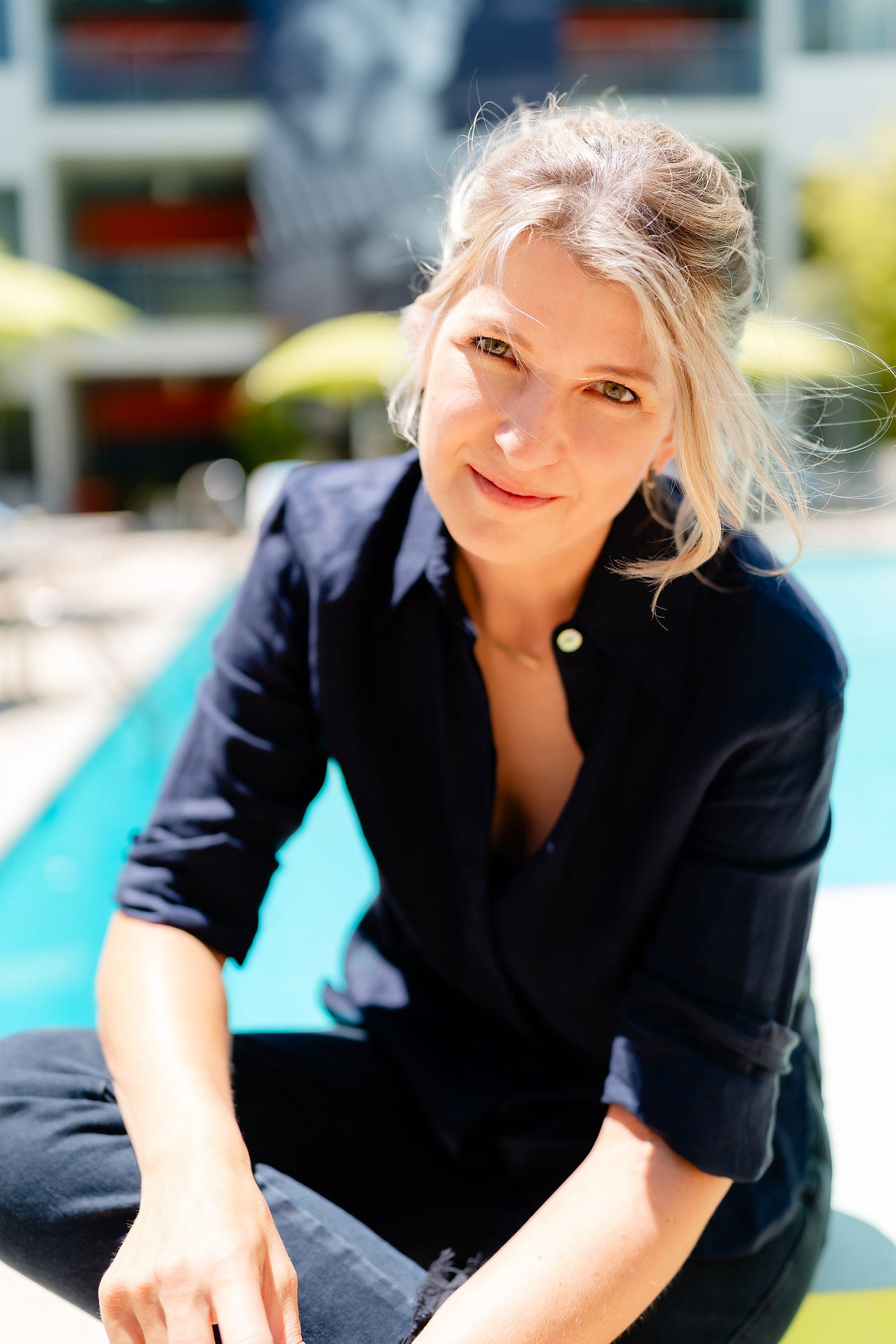
As a part of our series called “5 Things I Wish Someone Told Me When I First Became A Filmmaker”, I had the distinct pleasure of interviewing Ky Dickens.
Award-winning filmmaker Ky Dickens is best known for her acclaimed documentaries that shift public policy and culture. Her most recent film, “Show Her the Money,” exposes the staggering gender funding gap for female entrepreneurs. A festival favorite, it won the “Best Full-Length Documentary Film” Award at The Women’s Film Festival in Philadelphia and will open theatrically in New York and Los Angeles in December 2023.
Ms. Dickens been hailed a storyteller at the intersection of film and complex social issues — demonstrated by receiving the Focus Award for Achievement in Directing from Women in Film and the Ford Foundation Change Maker Award for influencing social change through art and film. Her film, “#TimetoCare” screened at SXSW and then for the United States Congress. It highlights influencers whose surreal caregiving journeys made them TikTok sensations. Ms. Dickens’ film “Zero Weeks” about America’s paid leave crisis, premiered its trailer at the White House Summit on the United State of Women, hosted by Oprah Winfrey and Michelle Obama in 2018.
From 2019–2021, she rolled out a series of award-winning short films about hard working people dying of curable diseases due to the Medicaid Gap. These films (“Critical Condition, “On the Edge,” and “Left Behind”) were in partnership with the American Cancer Society, The Robert Wood Johnson Foundation and local governments. Her 2019 film, “The City That Sold America” is about Chicago’s crucial, yet often-overlooked, place in American consumer culture. The film is a sequel to Emmy Award-winning Art & Copy. Ms. Dickens documentary “Sole Survivor” (CNN Films), profiled four survivors of otherwise fatal plane crashes. Her first feature documentary, “Fish Out of Water,” was recognized for its instrumental role in changing the national faith perspective on LGBTQ human rights.
Collectively, her films have won over two dozen awards for best picture and audience choice. In addition to her feature film work, she directs commercials for some of the biggest brands in America. Her clients include Netflix, Google, Facebook, Tylenol, McDonald’s, Hershey’s and Kellogg’s.
Thank you so much for joining us in this interview series! Our readers would love to get to know you a bit better. Can you tell us a bit of the ‘backstory’ of how you grew up?
I grew up in a middle-class family in a quaint suburb called Hinsdale, outside of Chicago. My mom immigrated to Chicago from Sweden so Swedish holidays were a huge part of my childhood and my grandma owned a Swedish restaurant in Chicago. I love sneaking cherries from behind the bar, hiding in the coatroom, sliding across the greasy kitchen floor. I had two brothers and always felt like I had to watch out for them or stick up for them because neither had an easy experience in school. I was a tomboy growing up and I distinct memories of unwrapping dolls and pink things on my birthday when what I really wanted He-Man figures and superheroes. However, my parents did support my artistic side. I loved playing guitar and piano and songwriting and I also loved cameras. In high school, I was an over-achiever. I was the student council president and class president and played basketball and softball. I was passionate about the special needs community and helped spearhead the inclusion program. I love being around human beings who are neurodiverse or differently abled. I went to Vanderbilt University for undergrad because my parents didn’t see film school as a viable option. That said they were always super supportive of me and sacrificed so much for me.
Can you share a story with us about what brought you to this specific career path?
My parents gave me a video camera for Christmas when I was twelve years old. I filmed everything. I started documenting my life at home, with friends. At the age of 16, one of my very close friends died in a car crash. I was there at the scene. We didn’t have cell phones. My friend Mary and I were on the side of the road in a blizzard, trying desperately to keep our friends Nick and Carson warm while they were trapped in the car. We were also trying to flag down someone who could call our parents and call an ambulance. Carson died at the scene it was really traumatic for our entire friend group but I had videos of him dancing, telling jokes, analyzing cloud formations, doing cannon balls into a pool. Those videos became the most precious thing in the world. When someone dies, there’s this fear you’ll forget the person’s laugh or their facial expressions or how their body moved. But film can keep a person alive, cemented in time forever. After that experience, I knew that I wanted to pursue non-fiction film. It felt like the most powerful and impactful way to live my life.
Can you share the funniest or most interesting story that occurred to you in the course of your filmmaking career?
My second feature film was called “Sole Survivor” and it was lone survivors of large commercial plane crashes. That group of survivors is very private and earning their trust is something I am very proud of. We made that film on a shoestring and every shooting trip felt like an epic expense but also incredibly valuable. The most important shoot for that film was in France. Two survivors– George Lamson (Nevada) and Bahia Bakari (France) were meeting. No sole survivors of large plane crashes have ever met prior to this…which is devastating because the survivors feel so alone in the world. I decided to bring my film editor with to France so she could understand how scenes and moments were unfolding. Due to the language gap, I thought she’d be lost if she wasn’t with us on the trip. Our final day of filming was incredible. George and Bahia bonded and spent an incredible day together and then said a heartfelt goodbye. We went to the airport hotel where we were going to fly out the next morning. The editor wanted to borrow the 500GB media card to start working on transcripts.
When getting on the elevator, somehow the card fell through the crack between the hotel floor and elevator floor — to the bottom of the elevator shaft. My editor came to my room utterly mortified, crying and inconsolable. My personality is such that I don’t get upset when things go wrong…I go into fix-it mode and try to solve the problem. We got the DP and first tried to talk to the hotel staff. Nobody spoke English and trying to explain that we needed them to stop the elevators so we could retrieve something from the elevator shaft was impossible.
My next idea was to take matters into our own hands. We were going to stop the elevator mid-floor on level one, while one of us jumped down into the elevator shaft. We had found a ladder and we were ready to go. Somehow, all three of us thought this was a reasonable plan and then thank God, my rational brain kicked in. What if the elevator didn’t stop and someone got crushed down there? What if we got hurt jumping down? What if we couldn’t get back out? Was the footage worth it? For any director, footage is priceless, and it feels even more so when you captured something unscripted that can never be captured again. But obviously, the wellbeing and safety is more important, so we abandon our plan. So somewhere in France, my media card is at the bottom of an elevator along with a note that I dropped down the shaft asking whoever finds it to call me. It’s been 10 years and I’m still waiting for that phone call.
Who are some of the most interesting people you have interacted with? What was that like? Do you have any stories?
The beauty of being a documentary filmmaker is entering an entirely new world, immersing yourself in it and becoming an expert and stakeholder in the community in which you’re filming. I’ve worked with incredible activists, parents, entrepreneurs, ministers, kids, healthcare providers, celebrities and tastemakers but my favorite world is the one I’m swimming in right now. A few years ago, I met a Johns-Hopkins Neuroscientist who was testing claims of widespread telepathy amongst non-speakers with autism. As a little background, non-speakers have been systematically dismissed and ignored. Often, their families are told they will never learn beyond a preschool level, they won’t comprehend, they will never communicate. All of that is completely false. Non-speakers are in there and if their parents teach them to communicate using a letterboard they discover their child is not only in there, but often more intelligent and insightful than their peers. It’s heartbreaking because the education system and medical system continues to perpetuate the myth that non-speakers aren’t competent. Once a family “unlocks” their non-speaker via the letterboard, it’s obviously emotional. There is so much to learn and know and understand when you truly meet your child for the first time — often at an older age. And may parents said they learned their child could read minds. I became immersed with many of these families, documenting their experiences. Being around the parents and their children is the most powerful, beautiful, life-changing experience. The non-speakers don’t have a disability. They have abilities many of us don’t have. And their parents are the most selfless, incredible human beings I’ve ever met. I admire, appreciate and respect the non-speakers more than anyone I’ve ever met. They are on an entirely different level than us. As far as telepathy, my crew has filmed tests with five cameras. The kids in my project can tell you what their parent is looking at if they open to a random page in a book, across the room. Of course, I’d bring my own obscure books…and sometimes a book in a different language. There is no cheating…it’s like they can see through their parents’ eyes. They can accurately tell you what their parent is looking at if we show them flash cards behind a screen. They score 100% when it comes to writing down numbers from a random number generator. It’s remarkable. This current project, SIGNAL, is in development with Radical Media. Once this project is out there, I hope it will impact humanity the way it’s impacted me. I hope that SIGNAL shifts our entire paradigm because our current paradigm is wrong, and the non-speakers will be the ones to teach humans what we’re capable of.
None of us are able to achieve success without some help along the way. Is there a particular person who you are grateful towards who helped get you to where you are? Can you share a story about that?
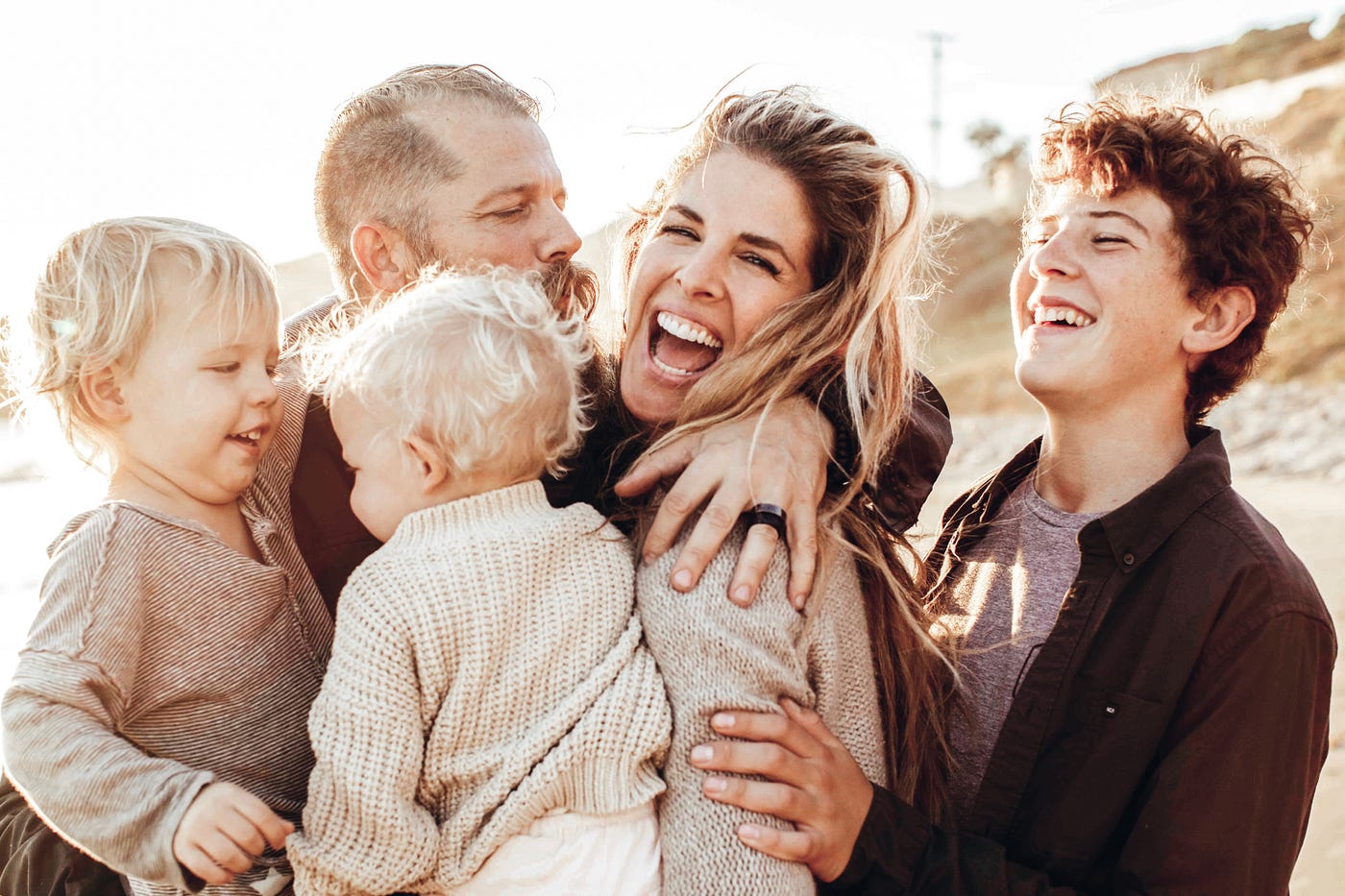
That’s a great question because it does take a village. In my twenties, my best friend was this wonderful person named, Kristen Kaza. She believed in my first film, FISH OUT OF WATER, with such ferocity that she planned weekly themed dance parties to raise money for that film. I could have never made that film if it wasn’t for her dedication to raising money by hosting these fun, packed community events. I mean, we paid for that film with costume parties! My second film, SOLE SURVIVOR, was incredibly expensive. We crowd sourced some of it and received some donations but it wasn’t enough. My dad gave me a loan for $20K which was a game changer. I was able to finish the film with that money. When the film sold to CNN, I was able to pay my dad back, which felt great. Now that I have kids, my wife Kaisa, holds down the fort while I go away for long trips to film. It is a huge burden and sacrifice on her to be a single parent for long stretches at a time. I could not continue to make films without her. And my mom equally rises to the occasion. She helps with bedtimes and school pick-ups and dinners so that I can keep doing what I love. And of course, there is the commitment of the DP and editors who have worked for less than they deserved to help me tell stories on a shoe-string. Michael Ognisanti, Tom Clayton, Anna Patel, C.J. Arellano and Brian James O’Connell — those people have believed in me and the stories we’re telling. They’ve worked long hours and shared sketchy Airbnb’s and crammed onto Southwest with loads of equipment. They’re all such talented and beautiful human beings. And lastly the subjects — a documentary filmmakers is nothing without the trust and access of subjects. My subjects are near and dear to me and I couldn’t do what I do without them.
Can you please give us your favorite “Life Lesson Quote”? Can you share how that was relevant to you in your life?
I love life lesson quotes! One of my favorites is: “Only boring people get bored.” If you continually ask questions and seek adventure and knowledge, you’ll never be bored. Another one, is “Just because it’s not your fault doesn’t mean it’s not your responsibility.” I think this is true for directing people, leadership, even parenting. A lot is your responsibility, even if it’s not your fault. I also love the idea to “Ignore what they are thinking of you because they are not thinking of you.” Overall, people are thinking about themselves and their lives not about you so you need to live your truth and be authentic. As far as film, I love the advice, “there is no magic door.” I think this is so true. So often filmmakers think that there is a magic door — a festival acceptance, a contact, an award that will make them. This isn’t true. Your work and your integrity and your work ethic are the magic door. And lastly, I love the sentiment: “If you meet a jerk once a month, you’ve met a jerk. If you meet jerks every day, you’re a jerk.” This resonates with me because sometimes, it’s hard to evaluate people and even yourself and your reactions. This quote keeps all that in check. Our attitude is everything.
I am very interested in diversity in the entertainment industry. Can you share three reasons with our readers about why you think it’s important to have diversity represented in film and television? How can that potentially affect our culture?
This is everything. I am a queer female filmmaker and I’ve always had to work twice as hard to be taken seriously. Our society is made up of a huge variety of experiences, cultures, truths. In America, white, straight cis men have controlled the narratives and the scaffolding that allows people to climb to the top. Changing who has the power to tell stories will change the double standard in work ethic, pay and of course — in the stories being told. When we change the stories being told, more people feel empowered and validated and more empathy is created for others who don’t look like us. Empathy is what will elevate our society to a more compassionate, equitable and peaceful one. It’s that simple.
What are some of the most interesting or exciting projects you are working on now?
I’m in creating, directing and Executive Producing a docuseries called “Signal,” in development with Radical Media. I love this project because it has inverted all my beliefs about the world and humanity. I’m a science nerd. I love physics and biology. I almost exclusively read non-fiction. I approach everything as an open-minded skeptic. I always feel the need to disclaim that before talking about this project because “Signal” explores ESP by entering the lives of the most unexpected subjects: non-speaking children with autism. Many parents of non-speakers will tell you that telepathy is widespread amongst this group — a truth that these desperate families have expressed for decades without being believed. They have written books and blogs about this. They’ve filmed proof and sent evidence to various scientists. I’ve immersed myself with these families and the scientists studying them and they are all credible, thoughtful, selfless, amazing human beings. Their kids are not disabled — they have abilities and gifts that most of us don’t have, or don’t know we have. This show will prove that our minds are more powerful than imagined and the implications for humanity and our planet are unprecedented.
Which aspect of your work makes you most proud? Can you explain or give a story?
I think I’m most proud of my relationships with subjects. It takes a lot of trust on their part — to let you into their lives to film their world. They put their reputations, their kids, their beliefs, in your hands. Documentary filmmakers have a duty to honor and protect them, to be transparent with them…to not exploit them or harm them. I’ve never had a subject tell me that something was taken out of context. I’ve never had a subject tell me they were unhappy with the integrity with which their story was told. At the end of the day, this means everything to me.
What are your “5 things I wish someone told me when I first started” and why.
- First, you don’t need to go to film school. Just make a movie and you’ll start to learn in the field what it takes and if you have what it takes. Sure, film school gives you a great foundation and will expose you to equipment and experience and best practices but you don’t need a degree to make a movie. Just go do it.
- Second, most people fund their first film on their own and with favors from their friends, colleagues and family members and donations. The idea that you get huge funding to create your first or even second project is a dream. Work crazy hard, sacrifice your time and your paycheck. Don’t expect other people to back you if you won’t back yourself.
- Third, there is no magic door. Getting into a huge festival won’t set up you forever. Getting an agent or getting distributed won’t set you up forever. Getting a celebrity or high profile producer attached is not magic. There is no one person who can make your movie a success outside of you. You’re as good as your current or last project. You have to continually work hard…work really freaking hard and continue to be curious and educate yourself so you can continue to create meaningful, fresh films.
- Fourth, ask for feedback even though it’s hard. I think it’s critical for directors to attend focus groups and ask for feedback about their rough cut. The experience is usually soul crushing for me and my editor and producers but it’s SO valuable. When you’re super close to a project, you miss some of the holes in your story or the plot points that need more clarity. Focus groups are essential in ironing out these mishaps.
- When you give feedback to your own crew, staff end editors make sure it’s 1) Actionable 2) Specific and 3) kind. It’s frustrating when feedback is not actionable because there isn’t the budget or time or storyline to deliver the notes and it’s also frustrating when feedback isn’t specific. Give timecode, give specifics. Saying you “don’t like something” isn’t very helpful. And lastly, be kind. Everyone is doing their best and working with you and for you. Just take the time to be kind.
When you create a film, which stakeholders have the greatest impact on the artistic and cinematic choices you make? Is it the viewers, the critics, the financiers, or your own personal artistic vision? Can you share a story with us or give an example about what you mean?
If you are true to your truth and your voice, you will reach the viewers. If you spend all your time thinking about viewers, you lose your voice, and your voice is the thing that will connect. You have to know who you are and what you stand for and you will connect with the audience. I never think about critics. I mean, there will always be someone who doesn’t get it; there will always be people judging what you do and how you did it. You can’t let critics influence the creative process or you’ll never create anything authentically. Beyond that, I think financiers make an impact when they’re bankrolling a project and then knock on your door. My films like “Show Her the Money,” “The City That Sold America,” and “Critical Condition” were bankrolled by large forces other than myself and have passionate positions and input on the story points you need to hit. The projects that I conceive of on my own usually have way more creative control because I outline the story, pick the team, find the subjects, write the story. For me, those film were “Zero Weeks,” “Sole Survivor,” “Fish Out of Water,” and “Signal”. I think most directors can keep their fingerprints on their projects in a robust, meaningful way if you can communication well, utilize emotional intelligence, galvanize those around you and stay true to your voice and authentic self.
You are a person of great influence. If you could start a movement that would bring the most amount of good to the most amount of people, what would that be? You never know what your idea can trigger. :-)
Gosh, I don’t think there is one project that can bring the most good to the most number of people. I think major social change is made by many people committing to change in their corner of the world, being fervent and dedicated to that change with unflappable passion and sacrifice. There are so many groups that matter. There are so many efforts that can alter the course of the planet and humans living on it. There are amazing filmmakers currently amplifying the atrocities happening in Gaza and in Ukraine. Others are making a huge impact regarding conservation, animal rights and protecting our forests and oceans. Others are working for civil rights, trans rights, workers’ rights. All the work is so important. We all need to be following our own passion and making work and raising voices that will help make a difference because the world will change by ALL of us doing something. My current film, “Show Her the Money” is elevating women founders in hopes to get women more than 2% of investments funds that they currently receive. If women can equitably start businesses and bring ideas to fruition, this can drastically impact the environment, equity and access to opportunity, healthcare, education. My current docuseries, “Signal,” will show the world that non-speaking people with autism are “in there”. They should not be dismissed. We should find ways to unlock them and value their incredible minds, personalities, individuality, and strengths. I’ve done a ton of film work around access to healthcare so that people don’t need to die of curable diseases because they can’t afford or access care. I’ve done work around paid family and medical leave so people can be at the bedside of a dying parents or bond with a newborn baby or treat their own cancer instead of worrying about losing their jobs and income. All of it matters, even things that may seem trivial to others. For example, I deeply care about the women’s soccer league succeeding because so much of the feminist movement is tied to its success. Do we value women at the absolute pinnacle of sport or do we only value men? Will audiences go to stadiums and cheer women athletes on outside of the Olympics and world cups? I believe society will support and embrace these incredible athletes and that means programming their games on networks, packing their stadiums, wearing their merch. There is so much tied to the success of the NWSL right now because if they succeed it means that women can truly succeed in any arena. There was a great 3-Part HBO documentary called “Angel City” that looks at all this. Everyone’s efforts are critical when it comes to elevating our society to a more empathic, compassionate and equitable place.
We are very blessed that some of the biggest names in Business, VC funding, Sports, and Entertainment read this column. Is there a person in the world, or in the US whom you would love to have a private breakfast or lunch with, and why? He or she might see this. :-)
Megan Rapinoe is starting a production company. I’d love to collaborate with her because she has proven time and time again that she has integrity when it comes to her truth.
How can our readers further follow you online?
I’m on Instagram at kydickens_pro
I’m on X or Twitter at @Kydickens
I’m on TikTok at @KyDickens
This was very meaningful, thank you so much! We wish you continued success!
About the interviewer: Guernslye Honoré, affectionately known as “Gee-Gee”, is an amalgamation of creativity, vision, and endless enthusiasm. She has elegantly twined the worlds of writing, acting, and digital marketing into an inspiring tapestry of achievement. As the creative genius at the heart of Esma Marketing & Publishing, she leads her team to unprecedented heights with her comprehensive understanding of the industry and her innate flair for innovation. Her boundless passion and sense of purpose radiate from every endeavor she undertakes, turning ideas into reality and creating a realm of infinite possibilities. A true dynamo, Gee-Gee’s name has become synonymous with inspirational leadership and the art of creating success.
GH
Written by
Guernslye Honore
Executive Contributor · Authority MagazineGuernslye Honore is an executive interviewer and contributor covering leadership, culture, and business for Authority Magazine.

Published inAuthority MagazineTop Lessons, Top Authorities · 42K Followers
Exclusive, curated interviews with the leaders and changemakers shaping tomorrow. Leadership lessons, industry deep dives, and executive profiles.