This group has been the most instrumental for me to growing as a leader in the C-store space; helping me understand how to structure our businesses; enabling me to think about how to analyze our financials, and helping me assess about how to be a better operator.
Business
Varish Goyal of Vintners Distributors: How Transitioning From Medicine to Family Business Fueled the Creation of California’s First Lifestyle Convenience Brand
The president and CEO shares how transitioning from medicine to retail leadership helped him scale a family empire and pioneer a new era of lifestyle convenience stores.
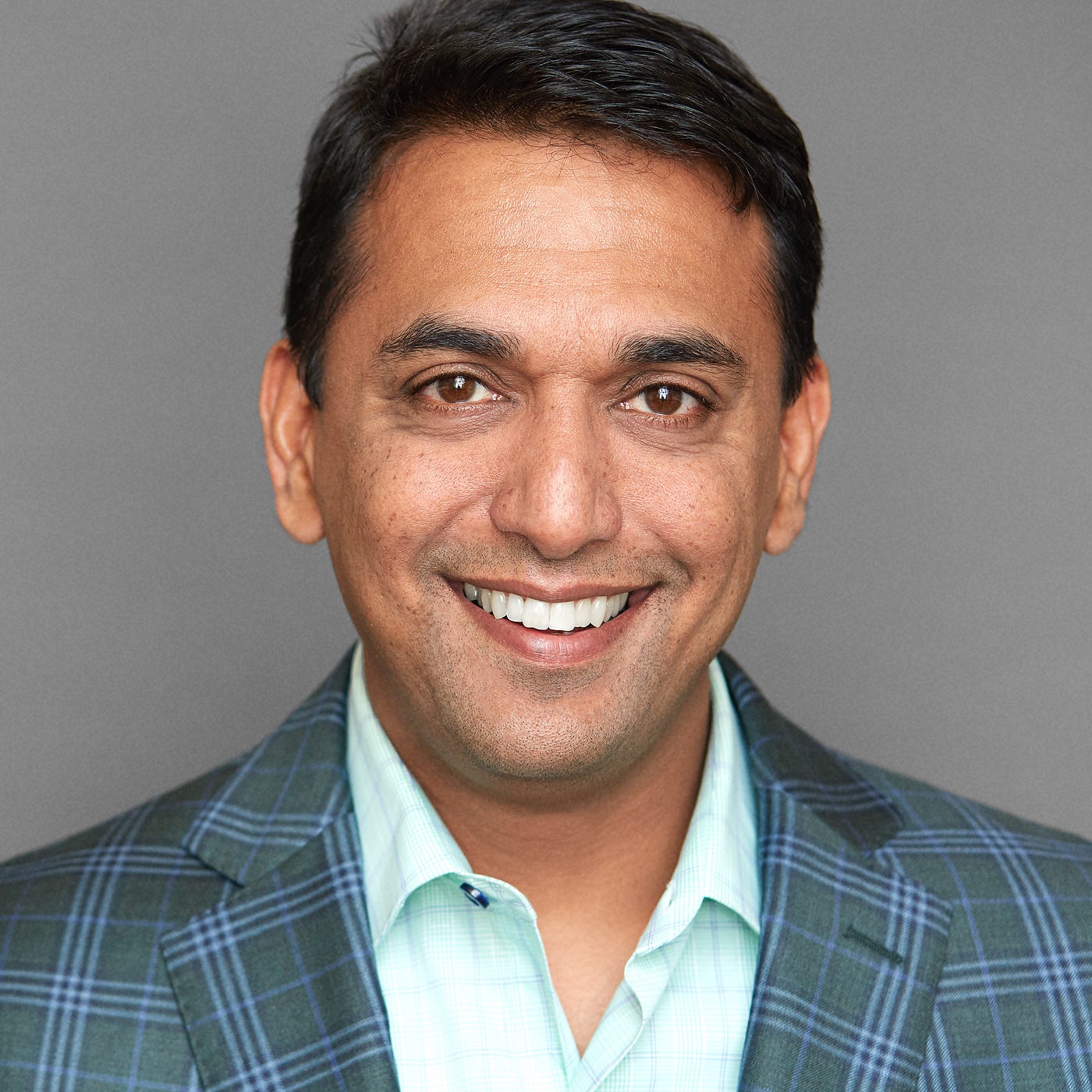
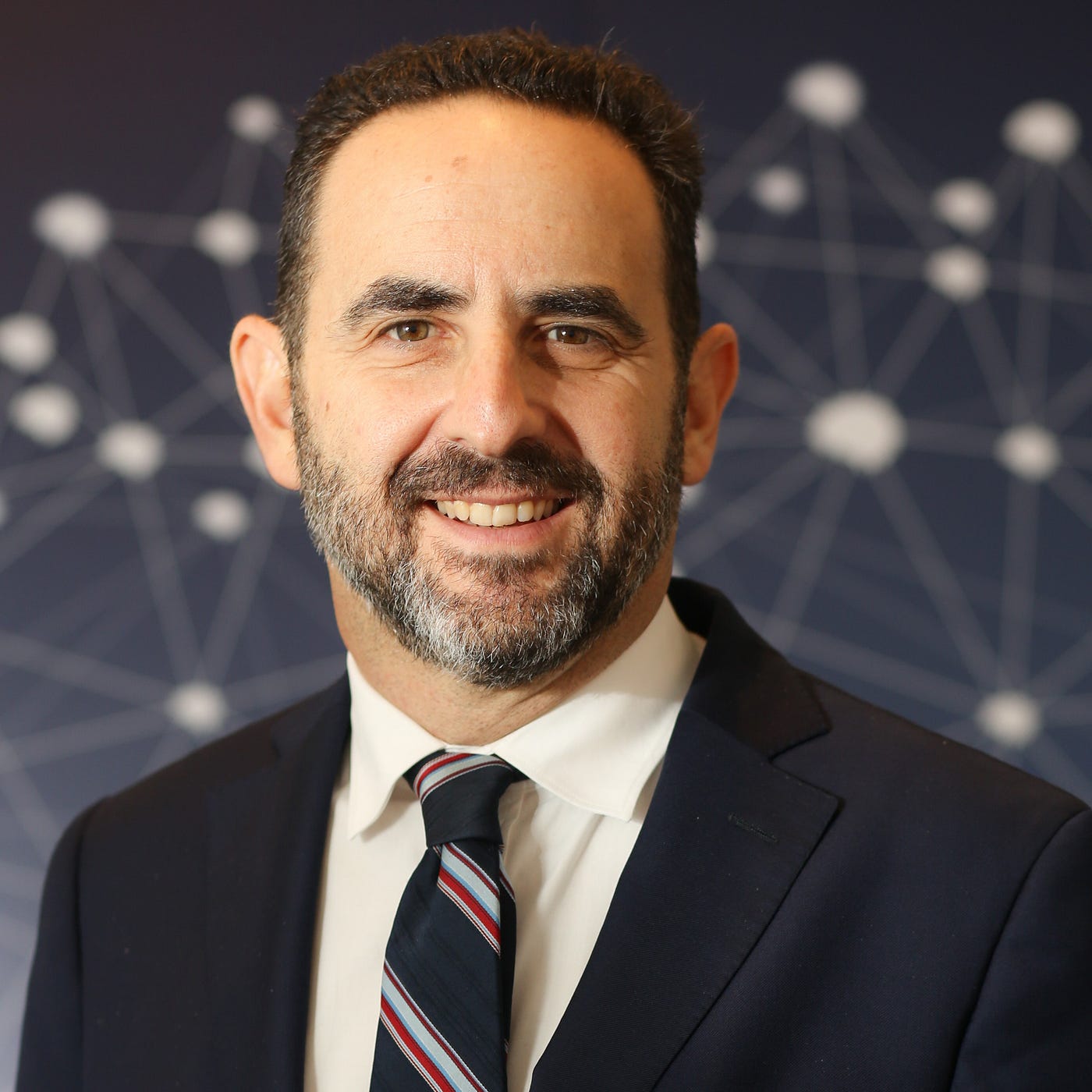
As part of my series about the “How To Create A Fantastic Retail Experience That Keeps Bringing Customers Back For More”, I had the pleasure of interviewing Varish Goyal, President/CEO of Vintners Distributors, Au Energy and Loop Neighborhood Markets, a family of companies that operates 130 stores and supplies fuel to 80 dealers. Varish is a second-generation family member whose father, Nick Goyal, started the company. A proven operator who has led his company through multiple rounds of growth, Varish’s strategic planning has led to the launch of a lifestyle convenient market brand called Loop, the first of its kind in California.
Varish has been working in the convenience and petroleum retail industry since 2002. His first project was to implement a centralized price book, accounting and back-office management system. From there, he leveraged the new IT system to become heavily involved in operations eventually taking the role of operations and price book manager. In 2005, he took over the role of Marketing Manager and Buyer. His diverse roles have provided experience and expertise in fueling, marketing, operations, finance, IT, mobile applications for retail, business intelligence and most recently new brand development.
He is also a member of the NACS Research Committee, Study Group 900 and YPO. Varish holds a bachelor’s degree in biomedical engineering from Duke University and earned a MD/MBA degree from Wake Forest University.
Thank you so much for joining us in this interview series! Before we dive in, our readers would love to “get to know you” a bit better. Can you tell us a bit about your ‘backstory’ and how you got started?
Our family business began in 1978 with my dad and my uncles. When I was young my intention was to be a doctor, so I went to Duke for my undergrad then I went on to med school at Wake Forest to get my MD and MBA. In the middle of the program, I discovered the life of a practicing physician wasn’t for me.
I came back to California married with a child during the dot.com bust. Needless to say, the job market was limited, so I began working at my dad’s office, helping him to revamp the IT infrastructure. After about a year, my role became integral to the operations. My family didn’t want me to move on, and I had a new-found appreciation for the business.
At that time, we were about 30 stores and we grew primarily through new site acquisitions, new land acquisitions and property development. In 2008 Shell had sold their gas stations in the Sacramento market. We purchased 16 stations and became a wholesaler of fuel for the first time. We went from 31 to 47 markets and branched into fuel delivery.
In 2010 we purchased a lot of the Bay Area assets that Shell had been looking to offload, brining an additional 74 sites and the wholesale for all of California. It took us about a year, from 2010 to 2011 to sort of get all of the new assets under our belt. Deciding we wanted to be more proactive with our long-term goals, we coordinated regular strategy sessions. One of the key initiatives was the development of a new C-store brand for the future. It took two years and we were able to develop Loop and have the first store open in 2013.
Can you share a story about the funniest mistake you made when you were first starting? Can you tell us what lessons or ‘takeaways’ you learned from that?
Oh yeah, this is related to a real estate venture. We went online through Google Maps and we were assessing and looking at all the information that the brokers and sellers had provided us. We thought, “this is a good site.”
We started down the process on the fly, working the purchasing sale agreement. Then finally, my brother and I were doing a road trip to go see property and we thought, “Let’s just go by this property.” We went by the location and we thought “Oh my God, what are we thinking?” Both of us looked at each other and said, “This is a mistake.” This is not the type of transaction you venture into sight unseen.
That was a quick learning to us, and we changed the process. Nothing gets even to the LOI stage until one of us has gone and seen it and actually gotten an idea of it because that is something that we have to understand and look at. Otherwise, we are going to get in trouble. At some point you just got to get down there and you got to get your hands and feet dirty.
Is there a particular person who you are grateful towards who helped get you to where you are? Can you share a story?
There were a lot of people along the way at Shell who have been very instrumental in helping us get these assets and grow our company. One of the most valuable things that I did was join a study group or “share group” within the industry. Study groups are basically a group of convenience and gas operators who are regionally dispersed, so you don’t compete against each other and you act as each other’s outside board of advisors and there’s full transparency in the process.
You’re fully transparent about your business, about your financials, about your strategic growth plans, about the people in your company, so it’s a fully open process. In 2007, I joined a study group, and that move has been instrumental for me outside the amount of mentoring and learning I’ve gained from my family.
This group has been the most instrumental for me to growing as a leader in the C-store space; helping me understand how to structure our businesses; enabling me to think about how to analyze our financials, and helping me assess about how to be a better operator. To this day they still challenge me (in a good way) with decisions and things that we do.
What do you think makes your company stand out? Can you share a story?
I think the main thing about the Loop Stores is we WANT them to stand out: 1) is the cleanliness and the look and feel of the stores 2) is product selection. We have a very diverse set of products that can cater to any sort of taste or desire you have at that time, and I think it’s our service 3) Quality of service — we provide strong service at our locations, and 4) the last piece is our innovation that marries with the evolving expectation of our consumers. Especially in the C-store and gas space, whether it’s loyalty program platform and some of the other payment solutions that were coming up with, what makes us different is that we stay ahead of the trends in our industry.
Which tips would you recommend to your colleagues in your industry to help them to thrive and not “burn out”?
I think the biggest tip, and this is going to sound really cliché, but e you really have to get the right team around you. For me, when I first took over the role as president of our company, I tried to do too much. I tried to handle marketing, I tried to handle operations, and HR. I was used to doing it before, so I figured how hard could it be with a bigger chain?
What you quickly realize is that if you don’t have the right people in place to help you figure this out, you are going to pull your hair out and you are going to a really struggle. Also, you cannot effectively scale.
So, first and foremost the most different thing for our family is that we brought in non-family members in key roles, like C level positions. Prior to that there had never been a non-family member in a C level position. Obviously at times, we didn’t always hit it right with the position. But as we started to get better with it, we began to realize how important it was.
I think that is really the key thing. Go out and find the right people for you, the right people for your culture, right people for your business and that will allow you to continue to grow and be successful in this industry.
Pivoting now to the pandemic, what are some things, some lessons, and obviously we are not through it, some lessons you have learned on the fly coming up on a year?
The first I would say is being prepared. We’ve been through a lot of these exercises where you have these disaster recovery scenarios, and you create these “what happens if X happens?” and “what happens if Y happens?” During these planning exercises, a lot of the of the time you’re thinking, “like really, I have to spend my time doing this?” And then you know something massive happens like the pandemic.
So, for us, we have built these disaster recovery locations. We had said okay, we’re going to have a data center office outside of an earthquake zone that we’re going to have backed up. We are going to have this service that’s going to build an office for us in the event our office burns down within 48 hours — then we would spin up those remote servers and connect. For years and years, we never used it. Occasionally, now and then, we had remote log ins where people could log in and do some work remotely. Then the pandemic hit.
And it was actually amazing how many tools we already had in place, and how much infrastructure we established which allowed us to adapt quickly. We didn’t realize how much bandwidth it was going to need; how slow the servers get when everyone is logging in remotely. But at the end of the day, those were small tweaks versus major upgrades.
That was the main learning for us. Being prepared for disastrous events (no matter if it feels like overkill) does produce a lot of value. You never know when this kind of thing will hit you. Literally with the pandemic, we had days.
I think the second thing that COVID and this whole pandemic taught us was the need to diversify our supply chain. We ran into a lot of issues where we couldn’t get thigs that we needed to sell in the stores and so we really struggled with that.
Today, there is a shortage of propane exchange tanks — the actual tanks — because of all these restaurants and services that need outdoor seating. So, now we have a big challenge. We have the propane, we just can’t get enough of the tanks. And so, being able to build a more diverse supply chain, being able to say, “if one guy is low, we can go to another one, if one company can’t support us, can we go to a third?” That’s another key learning that we need to think through: how are we going to diversify our supply chains well?
And then lastly: people. This thing really did a number on people’s psyche…on their level of fear, their comfort level and their aggression. We have customers and employees who refuse to wear masks and how do you deal with that? A key learning is applying better methods of communication as to why things are being done the way they are so they can be done efficiently and rapidly. Like other industries, the rules kept changing on us, especially early on. Every few weeks there was a new rule, a new requirement, and new thing we had to do. How do we get that out to 1500 people across the state of California in an efficient fashion? We are still working on optimizing our internal and external comms.
This might be intuitive, but I think it’s helpful to specifically articulate it. In your words, can you share a few reasons why great customer service and a great customer experience is essential for success in business in general and for retail in particular?
I think that the first and foremost is that it should be a welcoming environment. Gas stations are normally considered as these dingy, unclean, unhealthy environments. The customer experience should be welcoming. You should want customers to come in. You should want them to browse. You should want them to trust that you have the thing that fits their lifestyle interests, whether its low calorie, gluten free, vegan… or just a candy bar. You have it there at your disposal. So that’s one of the areas that we have focused a lot on the customer experience.
Can you share with us a story from your experience about a customer who was “Wowed” by the experience you provided?
I’ll give you two examples of how a customer was wowed.
People constantly walk into the store and go “Wow this is the best-looking convenience store we’ve ever seen.” And they walk in and they talk about it. “I can get everything here, from frozen yogurt to candy bar, to an energy drink to unique types of water, all kinds of snacks.”
That’s naturally where we get the biggest and most consistent wow factor.
I have a more specific example related to the pandemic. We sent an outside cleaning service to our stores for a thorough decontamination. There was a customer who wanted to get in the store while it was closed. They mentioned this in their review: “I was frustrated, I came to the store and it was closed. I was frustrated and then I looked in the window. What’s happening was there was a professional cleaner cleaning the store and they were fogging it to clean the air and the air ducts of any virus.”
She wrote back saying that just “changed, blew my mind and I became very appreciative of the fact that the store and the people and the company were taking our health and our safety to that level that they were shutting it down to get it fogged for that purpose.” So, you know, that is a part of what our culture and our company is about: doing the right thing, being safe, and putting our staffs’ and customers’ health first.
Based on your experience and success, what are the five most important things in order to create a fantastic retail experience that keeps bringing customers back for more?
Innovation, service, integrity, authenticity and a sense of purpose.
If you could start a movement that would bring the most amount of good to the most amount of people, what would that be? You never know what your idea can trigger. :-)
Our journey into the gas business is an interesting one. My father came to this country, went to college, became a mechanical engineer and worked at a nuclear power plant, cooling systems. He was a senior engineer with 40 engineers that worked under him.
My dad’s younger brother didn’t want to go to college. And my dad was a big believer in college. His brother thought, “Oh, I can get a job at this place and that place and make money and be done with it.”
My dad was like, “No, I want you to go to college.” So, a friend of his was selling a gas station. It was his first listing when he became a real estate broker, and he was trying to convince my dad to do it. He said, “Hell no, why am I going to do that. I go to work every day in a three-piece suite. You want me to go into the gas station business?”
So, my mom had an idea: what if we do buy the gas station and make his brother work on it 24/7. He’ll work there so much he will want to go to college. My dad was like, that’s not a bad idea. But they didn’t have the money, so they sold my mom’s car and they bought the gas station. And then six months later, we had the second oil embargo which didn’t help my uncle think that it was a good idea to go to college. My uncle found the perfect path, making money, lines out the door.
Ultimately, he ended up going to college and we were able to grow the business. So, to answer the question, for my family, the biggest thing we value is education. We want to do is start a movement to get everybody educated. Everybody needs to go to high school and they need to have a proper college or trade school experience. I think if we properly educated the majority of the world, it would make the whole world a better, more tolerant place. And it’s something that my family has always valued and takes very seriously.
How can our readers further follow your work?
https://www.facebook.com/loopneighborhood
https://www.instagram.com/loopmarkets/
https://www.linkedin.com/in/varishgoyal/
This was very inspiring. Thank you so much for the time you spent with this!
About The Interviewer: Orlando Zayas is the CEO of Katapult, an award-winning omnichannel payment platform. Zayas is known for his revenue growth strategies and visionary leadership in the eCommerce and retail space. His future-forward expertise has led companies such as GE Capital, Safe-Guard Products International, and DRB Capital. Zayas is also highly committed to providing educational opportunities to underprivileged communities through his philanthropic endeavors. Zayas’ business insights are regularly featured in publications such as Forbes, Entrepreneur Magazine, Retail Insights, and more.
OZ
Written by
Orlando Zayas
CEO of Katapult · Authority Magazine ColumnistAuthority Magazine Columnist & Contributor

Published inAuthority MagazineTop Lessons, Top Authorities · 42K Followers
Exclusive, curated interviews with the leaders and changemakers shaping tomorrow. Leadership lessons, industry deep dives, and executive profiles.