I have noticed we often overestimate what we can change in a week and underestimate what we can build over a year.
When it comes to health and wellness, small, consistent changes often have the most profound impact. Daily habits, whether in nutrition, exercise, mindfulness, or sleep, can accumulate to create lasting transformations. In this series, we aim to explore the power of small, intentional actions and how they can lead to big health results over time. As a part of this series, we had the pleasure of interviewing Trisha Schimek.
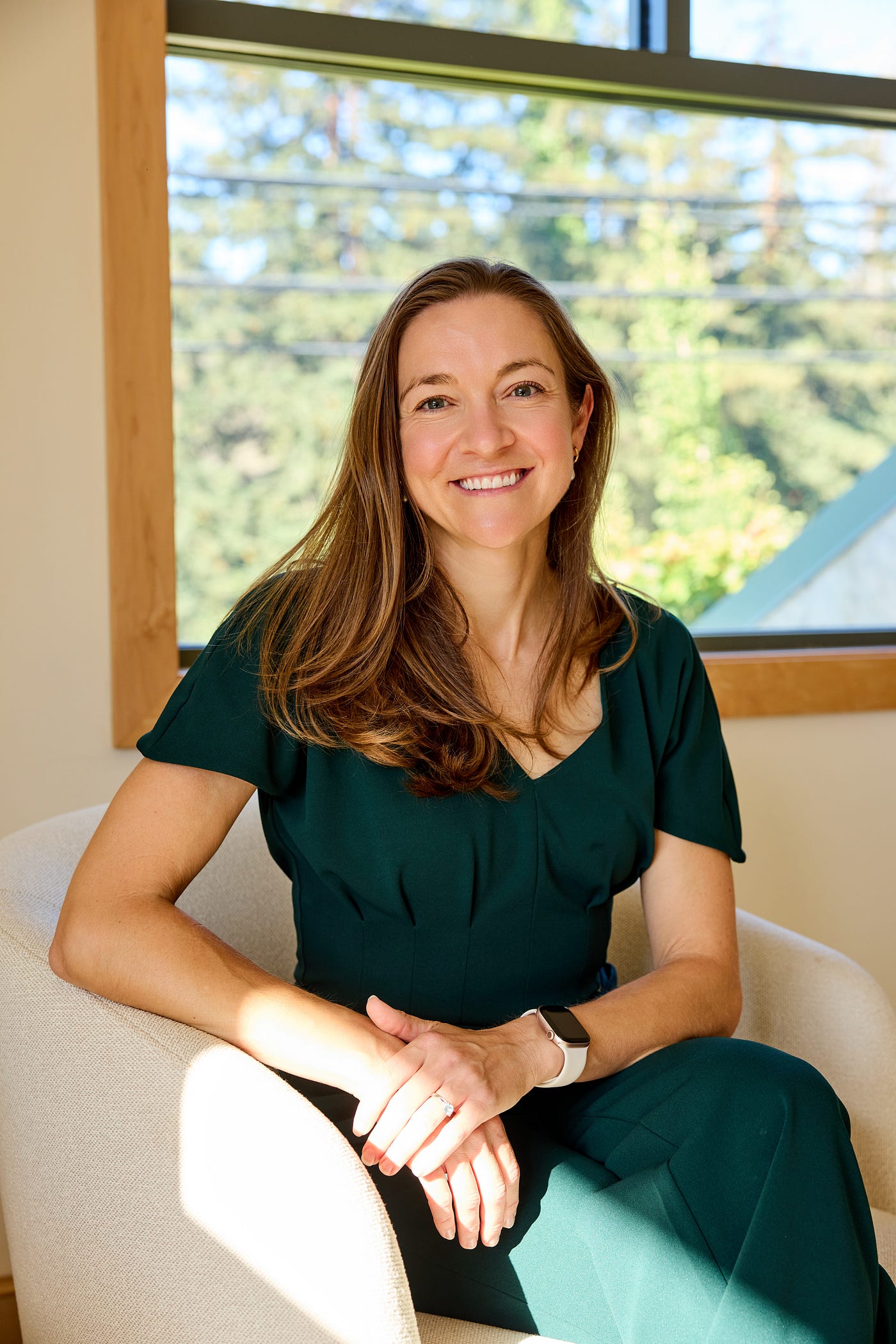
Trisha Schimek, MD, MSPH, DipABLM, MSCP, is dual board-certified in Family Medicine and Lifestyle Medicine, and a Menopause Society Certified Practitioner, with expertise in the prevention and treatment of chronic disease. She specializes in metabolic health, weight management, cardiovascular risk reduction, and helping patients prevent and, when possible, reverse chronic conditions through sustainable lifestyle changes.
Thank you so much for joining us in this interview series! I know that you are a very busy person. Our readers would love to “get to know you” a bit better. Can you tell us a bit about your ‘backstory’ and how you got started?
I was drawn to medicine by my fascination with biology and health. When I worked as an EMT in college, I discovered how much I liked being there for people when they needed help. I chose family medicine because I loved the breadth and the ongoing relationships that came with it. I could care for someone through pregnancy, meet their baby, and get to know their whole family over time. I love doing procedures because there’s something satisfying about seeing a patient feel better before they leave the exam room. Yet, I find just as much meaning in sitting with someone whose symptoms or test results are hard to make sense of. I enjoy bringing together what they’ve been experiencing and what different specialists have found, then helping them understand how those pieces might fit together and what to do next.
I spent nine years teaching family medicine residents and worked in community hospitals, safety-net clinics, and rural communities in Latin America and Native American reservations. Those settings taught me to ask an important question: what can this patient realistically do after they leave my office?
Over time, I found myself drawn to the conversations about what happens between visits. How is someone sleeping? What does dinner look like after a long workday? What kind of movement would they actually enjoy? Becoming board certified in lifestyle medicine gave me a stronger scientific foundation for the way I wanted to practice. I wanted to spend more time helping people prevent chronic disease and, when possible, work toward remission.
More recently, I became a Menopause Society Certified Practitioner and joined Radiant Women’s Health in Menlo Park, CA. I love caring for women in midlife because so many things can shift at once, from sleep and energy to how they feel in their bodies. I can help women make sense of those changes and figure out what would make the biggest difference in their day-to-day lives. What excites me about building this practice is having the time to listen closely, talk through the evidence together and follow up regularly to see what’s actually helping.
None of us can achieve success without some help along the way. Is there a particular person that you are grateful for, who helped get you to where you are? Can you share a story?
It’s hard to credit just one person. I still hear the voices of different mentors in the exam room with me. One might come to mind when I’m working through a difficult diagnosis. Another comes to mind when I realize I need to slow down and ask one more question. After nine years of teaching residents, I’ve come to appreciate how much medicine is passed down in those small moments. So much of the physician I am today comes from having mentors who took the time to show me how they thought and how they compassionately cared for patients.
One mentor who stands out is Dr. Patrick McManus, a family physician who founded and led the Jefferson Medical College’s Urban Underserved Program. I remember seeing patients with him and hearing them describe him as a healer. Some called him an angel. What stayed with me was how they talked about the ways he had helped them through difficult times in their lives. Watching him listen, I could see why they trusted him with so much of their story.
He also taught me to think about where and how we offer care. That might mean going to a shelter to see people where they are living or leading a diabetes group visit so patients can learn from one another. I still carry both those lessons into my work. I try to listen long enough to understand what someone is really asking for, then think with them about what would help in the life they’re going back to after the visit.
You are a successful leader. Which three character traits do you think were most instrumental to your success? Can you please share a story or example for each?
Resilience. I once applied for a position I really wanted and didn’t get it. I gave myself time to be disappointed, then asked what I had been hoping that job would give me. Staying open led me to other opportunities that were a great fit. It expanded my experience. I think about that when a patient’s first plan falls apart. Sometimes the goal still matters and we just need a different way to get there.
Curiosity. Studying lifestyle medicine after years in practice gave me a reason to ask different questions and revisit outcomes I’d been observing for a long time. I was interested in why two people could leave a visit with similar advice and have completely different experiences trying it. That curiosity changed the questions I ask. I’m more likely now to say, “Walk me through what happened when you tried it,” because the answer usually gives us a clue where to adjust.
Dedication. People learn they can count on you by watching what you do day after day. I felt that especially during the early days of COVID. There was so much uncertainty, and my colleagues and I felt a lot of the same fear our patients did. Showing up each day, caring for patients, and supporting one another taught me how much leadership happens in those everyday actions.
Ok, fantastic. Let’s now turn to the crux of our interview. Can you share a small health habit you adopted that had an unexpectedly large impact on your physical or mental well-being? What inspired you to make that change?
I rowed in high school and I would wake up at 5 a.m. to meet my teammates at the boathouse. At that hour, knowing there were people waiting for me made the difference. I carried morning movement through college and medical school, and I even taught early-morning spin classes. Eventually, I realized how much I liked the way I felt after morning movement. I had more energy, I could focus, and I’d already felt productive and accomplished before the day got busy.
The habit that stuck was giving movement a place near the beginning of my day. Sometimes that’s a run or strength training. Sometimes it’s biking or walking somewhere I already need to go. I’ve kept it through very different seasons of my life because I can pivot based on circumstances.
What advice would you give to someone who struggles with consistency? How can they build daily habits without becoming overwhelmed?
I encourage them to start small and decide on what their minimum amount needs to be. I ask them to pick a version of the habit they could do on a busy Tuesday. Twenty minutes is my own fallback for daily movement. That might be a walk while on a phone call with a friend or a kitchen dance party with my kids. And when unexpected barriers come up because they will, I modify to still achieve my minimum goal which is moving my body. For instance when I’ve had a hurt foot or shin splints, I picked up swimming. Or after I had my kids I explored pilates to work on strengthening my core and pelvic floor muscles before I went back to running.
For someone just getting it started, it might be walking to the end of the block after lunch. James Clear calls linking a new behavior to something you already do “habit stacking.” Lunch gives a walk a place in the day so you have one fewer decision to make.
How do you identify which habits are worth focusing on, and which might not provide meaningful results? Do you use any specific frameworks or tracking methods?
I often start with three questions. What would make the biggest difference in your life right now? What has worked for you before? What would fit into the life or week you actually have? If someone tells me they’re exhausted every afternoon, I want to understand their sleep, how they’re eating, and what their day asks of them before we decide where to start. Sometimes they already know what helps. They used to walk with a friend at lunch, for example, and then the routine disappeared when their work schedule changed. We can figure out which part they miss and whether there’s a way to bring it back.
Once we choose a habit, I like to treat it as a short experiment. If the goal is to have more energy and feel alert in the afternoon, we would prioritize eating a satisfying lunch followed by a ten minute walk. At the next visit, we can visit what was easy, what got in the way, and whether they got the benefit they were looking for. That gives us a basis for deciding whether to keep going, adjust the plan, or put our energy into something else.
I have noticed we often overestimate what we can change in a week and underestimate what we can build over a year. That’s why I start with something small enough to try this week and look for ways to make it enjoyable. A walk with a friend gives you something to look forward to that same day, even if your longer-term goals take time. And when life changes, as it always does, we can revisit the plan and find a version that fits again.
Can you explain how compounding benefits work when it comes to daily health habits? Have you experienced any surprising long-term transformations from seemingly small changes?
Generally, it doesn’t matter what health habit a person starts, what matters is they pick something achievable and get started so they get a win, start gaining momentum and keep going. Then of course the habits and benefits start to compound. A growth mindset is important because then no matter what happens, as long as we are learning from our results and mistakes, we can keep improving.
Big changes often start with something small enough to do on an ordinary day. If someone’s goal is to feel stronger and keep up with their kids, a 10- minute walk after lunch is a good place to start. It gives them an early win. Maybe they come back to work feeling more alert, or they simply enjoy having a few minutes outside. That’s the benefit they can feel today, and it gives them a reason to do it again tomorrow.
Over time, the benefits build in a few ways. First, the minutes add up. Ten minutes a day is 70 minutes of movement over a week. Second, doing something at the same point in your day can make it feel more natural. After a while, finishing lunch becomes your cue to take a walk. And one habit can make the next step easier. Once that walk feels familiar, you might invite a friend, take a slightly longer route, or realize the hill you used to avoid is getting easier. The bigger change can show up in everyday life before you think to measure it.
A growth mindset helps you keep going when life interrupts the plan. If you miss your walk 3 days in a row, get curious about what happened. Maybe lunch is unpredictable, but you could walk after dinner. Every time you adjust the plan and come back to it, you learn a little more about what works for you. Over months, those small adjustments can turn something you had to remind yourself to do into a part of your day and look forward to.
What are “5 Health Habits That Lead to Great Results ”? (please share stories or examples)
1. Move more throughout the day: I love having dedicated time for a run or a strength workout, but I also look for ways to move more throughout the day. I squat or lunge while I’m waiting for my coffee, or bike to the store or take a walk while I’m catching up with a friend on the phone. If you’re wondering where to start, think about one thing you already do most days and see whether you can add a little movement to it.
2. Plan ahead to reduce decision fatigue: Meal planning and prepping help me make nutritious decisions during the week because the decision has already been made before I come home tired from work. It’s also useful to decide what to do when a plan gets interrupted. If I need more rest, sleep in and skip my morning work out, I decide I can add a walk after dinner. Researchers call this an “implementation intention,” or an if-then plan. The advantage is that you’ve already picked your next move by the time the obstacle shows up.
3. Make it fun so you look forward to it: I love Zumba because I get to dance to music I enjoy. If you look forward to a particular podcast, try saving it for your walk. Researchers found that initially giving people gym-only access to audiobooks increased gym visits. If I feel the novelty of an activity wearing off, I’ll think of ways to change it up. I like the idea of giving yourself something to look forward to today, especially when the health benefits you’re working toward may take months to notice.
4. Give rest and recovery a place in the plan: I think of rest as something I plan for, the same way I work out. The time between harder sessions gives my body a chance to recover and helps me get more out of the next workout. After a few tough training days in a row, I will go for an easy walk, do some gentle yoga, or take the day off and sleep in. A quiet walk or a few minutes of slow breathing can also help me settle my nervous system after a day when I’ve been rushing from one thing to the next. Over the course of a year, I’m more consistent when I give myself room to recover.
5. Make accountability feel like support: Playing sports taught me how much easier it is to show up when someone is expecting you. That can be as simple as a standing Saturday walk with a friend or a health check-in with your physician. When a week doesn’t go as planned, I like to ask, “What would make this easier next week?” and “What would I say to a friend who was having the same trouble?” Often, the advice we give our friends is kinder and more practical than what we might tell ourselves at first.
What role does mindset play in forming new habits? How do you maintain motivation when the results aren’t immediately visible?
I find being curious and having a positive attitude with a growth mindset is incredibly valuable. We live in an environment filled with temptation, influencing us to make many unhealthy choices (convenient ultra-processed foods, Netflix, social media, packed schedules, basing our value on productivity).
Psychiatrist Judson Brewer talks about noticing the cue, the behavior, and the reward that keeps a habit going. Think about picking up your phone after a long day. What were you hoping for at that moment? A few minutes to yourself? A way to switch off from work? Then notice how you actually feel after scrolling. That information can help you decide whether to keep doing it or try something that leaves you feeling more rested.
I also encourage people to notice what changes before a lab result or a number on the scale does. Maybe you have more patience at the end of the day, more energy in the afternoon, or the hill you walk up feels a little easier. Those are changes you get to experience now, and they can give you a reason to keep going while the longer-term results take shape. Having a positive attitude and a growth mindset is incredibly valuable.
How can our readers further follow your work?
I share practical ideas about lifestyle medicine or women’s health on our website blogs and LinkedIn. If you’re in the Bay Area and looking for primary care support through perimenopause or menopause, you can learn more about my practice at Radiant Women’s Health in Menlo Park.
Thank you so much for sharing these important insights. We wish you continued success and good health!