I grew up on a farm, so I was a hard worker. But they pushed me to grow.
Pop Culture
Tricia Helfer: How Transitioning From Rural Farming and International Modeling to Cult Sci-Fi Built a Lasting Acting Career
The acclaimed actress discusses her remarkable pivot from farmhand to global modeling icon and her evolution into a versatile force on television and film.
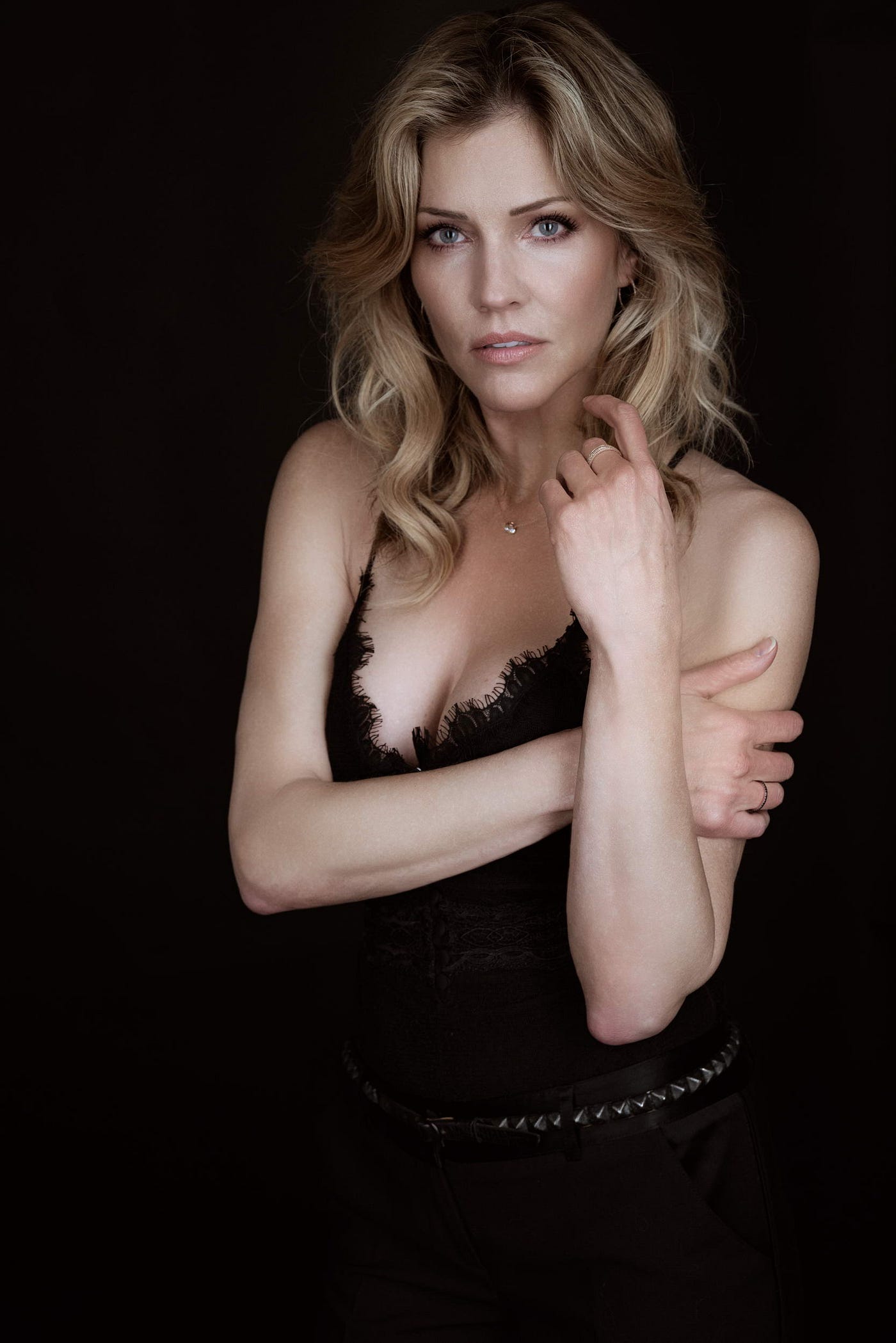
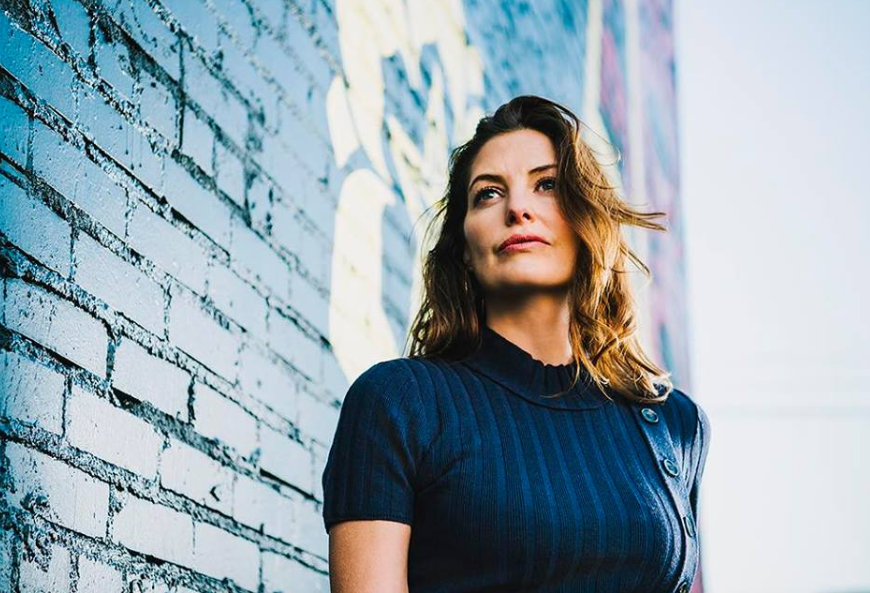
We had the pleasure of talking with Tricia Helfer. Tricia’s path from rural Alberta to international modeling fame and cult TV icon status was neither scripted nor sought, but rather stumbled into, first by the happenstance of discovery, and later, by her own willingness to adapt. Born and raised on a grain farm in Donalda, a small community in central Alberta, Helfer’s early life was grounded in manual labor, family cooperation, and the solitude of open fields. It’s a backdrop she credits not only with shaping her work ethic, but also with providing a baseline of humility that never quite left, even as her public profile expanded.
At 17, Helfer was spotted by a modeling scout. Though initially skeptical, a trip with her mother to the modest offices of Mode Models in Red Deer would set off a series of events that catapulted her into the upper echelons of fashion. Within a month, she was in New York, staying at the home of Ford Models co-founder Eileen Ford. Her modeling career soon took her across Paris, Milan, and back again, fronting campaigns for Armani, Ralph Lauren, and Givenchy, and appearing on covers of Vogue, ELLE, and Cosmopolitan. She never made it to university; the modeling world consumed her twenties, and by the early 2000s, she pivoted again, this time to acting.
Her screen career began modestly, including early appearances on shows like CSI and in indie films. But the trajectory shifted sharply in 2003 when she landed the role of Number Six in Syfy’s reimagined Battlestar Galactica. Initially met with skepticism by some, the casting became a defining moment. “Ron Moore, David Eick, and Michael Rymer took a chance on me,” she has said. The role required Helfer to inhabit both a seductive femme fatale and an emotionally layered symbol of AI consciousness, ultimately earning her a Leo Award and a lasting association with science fiction.
Battlestar Galactica introduced her to a cast and crew who remain close friends, including Edward James Olmos and Mary McDonnell. It also served as an informal masterclass in the technical and emotional demands of screen acting. “Being around that level of acting, true masters, it was incredibly influential,” she reflected. “I grew up on a farm, so I was a hard worker. But they pushed me to grow.”
Over the years, Helfer has built a broad résumé that resists easy categorization. Her credits include the network series Killer Women and Dark Blue, appearances on Suits, Chuck, Lie to Me, Key & Peele, Two and a Half Men, and Community, and a prominent role on Lucifer, where she played multiple incarnations of celestial characters. She’s also appeared in feature films like Bombshell, alongside Charlize Theron and Nicole Kidman, and Step Up: High Water for Starz.
In her latest film, Primitive War, Helfer plays a Russian paleontologist caught in the jungles of Vietnam in 1968, where a team of U.S. Green Berets confront an unexpected enemy: dinosaurs. Adapted from the novel of the same name, the film blends war movie realism with creature-feature spectacle. Helfer initially viewed the production with skepticism, but upon arriving on set in Australia, she found herself impressed by the military-accurate costuming, tight-knit crew, and ambitious direction. “It’s like Full Metal Jacket meets Jurassic Park,” she said. “And it actually works.”
Despite her years in front of the camera, Helfer is quick to downplay her own early skillset. She recounts stories of misjudging a camera’s pacing while fake-running through a forest, or mistakenly turning off a bathtub during a take on CSI, thinking she was saving the set from being ruined. “It was a lesson in staying in my lane,” she said, laughing. “You have to trust that everyone on set knows what they’re doing.”
But Helfer’s evolution from model to actor also included a growing awareness of her platform. She has lent her voice to a range of causes, particularly animal welfare, working with organizations like Best Friends Animal Society, the Humane Society, and PETA. She frequently shares her advocacy, and the occasional goat or cat photo, with her nearly one million Instagram followers.
In 2024, she completed Hello Beautiful, a low-budget indie film that she considers one of the most meaningful projects of her career. Inspired by the real-life story of producer and breast cancer survivor Christine Handy, the film centers on the psychological and emotional toll of illness. Helfer played a version of Handy and described the experience as deeply personal. “Everyone on that set understood the weight of the story,” she said. “It wasn’t about budget or profile. It was about getting it right.”
At 51, Helfer remains a student of the work, wary of stagnation, and conscious of the industry’s volatility. Her reflections on what it takes to endure in Hollywood are unvarnished: passion, preparedness, observation, physical endurance, and a grounding presence to lean on during the highs and lows. “You have to separate your self-worth from the business,” she said. “There are going to be moments when everything’s going great, and others when you’re wondering if you’ll ever work again.”
Asked who she’d most like to meet, she names Dr. Jane Goodall without hesitation. “She seems to have such a calm, lovely presence,” she said. “I just find her fascinating.” When told she bears a striking resemblance to a young Goodall, Helfer laughed and added, “Ooh. You just put an idea in my head.”
For all the roles she’s played, cybernetic insurgent, seductive demon, war-time scientist, Tricia Helfer’s trajectory remains grounded in curiosity and a steady, workmanlike approach to a craft she never formally studied. She’s still evolving, still observing, and still open to being surprised by what comes next.
Yitzi: Tricia, it’s a delight and an honor to meet you. Before we dive in deep, our readers would love to learn about Tricia Helfer’s origin story. Can you share with us a story of your childhood and how you grew up?
Tricia: Wow, thank you. Yes, certainly. I grew up on a grain farm in Alberta, Canada with my parents and three sisters. We were farmers, and I grew up working as a farmhand. I’m sure when I was younger I thought, “Oh, I’d like to be in a busier place,” but looking back as an adult, I wouldn’t change anything about my childhood. I had a wonderful time growing up, and my family is still in Alberta.
I was discovered by a modeling scout when I was 17, and I decided to give it a try and put off university for a bit. I never ended up going back. I modeled in New York, Paris, Milan, and a few other places for about 10 years, then transitioned into acting in 2002.
Yitzi: Tell us a bit about that story. Tell us about that transition. Tell us about your first breaks. Tell us the story of your entry into entertainment.
Tricia: I was literally just discovered by a modeling scout. I didn’t think much of it, but after meeting the scout, my volleyball teammates encouraged me to go meet with the agency.
The next time I was in the city with my mom, we went into this small agency called Mode Models. It’s still around, at the time it was in Red Deer, but now it’s in Calgary. He took some pictures of me, and within a month I was in New York City staying at Eileen Ford’s house.
They set me up with a bunch of photoshoots to build a test book, a portfolio, since when you’re starting out, you don’t have any pictures. Your portfolio is basically your resume. So yeah, I just jumped right into it.
Yitzi: I’m sure you have some amazing stories from all the different sets and projects you’ve been on, different places you’ve been to. Can you share with our readers one or two stories that most stand out in your mind from your professional life?
Tricia: Oh gosh, there are so many. It’s been 34 years now, I’m 51, so there’s a lot to go through. It’s hard to pick just a couple, but I was really fortunate, especially with modeling, to travel the world.
I think I was 17 or 18 years old, traveling with French Elle to Indonesia, staying at these incredible Aman Resorts and working with wonderful people. That’s one of the great things about modeling and acting, you meet a lot of international people. The crews often include people from all over the world.
It introduces you to different cultures, places, and perspectives, which I think is the best part of the experience. I know I’m not narrowing it down to one specific story, but in a broader sense, having the opportunity to travel the world at a young age and connect with people from so many backgrounds really shaped how I view the world. It helped build acceptance and a broader understanding of life. That, to me, is probably my favorite aspect.
Yitzi: It’s been said that sometimes our mistakes can be our greatest teachers. Do you have a story about a funny mistake you made when you were first starting acting and the lesson you learned from it?
Tricia: Okay, this is just a silly one. It’s not some deep, profound lesson, but it’s the first thing that popped into my mind, so I’ll go with it. One of my first acting jobs was this independent film with Judd Nelson. I was still fairly green, and in one scene I was supposed to be running through a forest. I just took off running. They were like, “Whoa, whoa, whoa, the camera can’t keep up with you!” The poor cameraman was trying to run backwards while holding a 50-pound camera, and I just sprinted off. They had to stop me and say, “No, you have to keep pace with the camera.”
That was my first lesson in fake running, running in a way that looks like you’re terrified and running for your life, but you’re barely moving at a snail’s pace. I remember thinking, even in the moment, “I’m not doing this well. This probably won’t look right.” It wasn’t a huge failure or anything, just a funny moment where I clearly didn’t know what I was doing.
Another one, around the same time, was when I booked a role on CSI. It was the season finale, and these were all technical aspects of the job that you don’t really learn in acting class. In class, you’re practicing scenes, but on set, there’s this whole other side, the technical side, that you only learn by doing.
In this episode, my character dies, though it happens off-camera. You see her drawing a bath, and then later they find her body. Classic CSI. I had read the script, but I was a guest role, brand new, and they weren’t really keeping me in the loop. But I’m a little OCD, personally, and I’m watching everything closely. They had built this full bathroom set in the studio, and they were running the bathtub water for the scene. I was the only one in the set, and all I had to do was reach in and turn on the water. The whole idea was that the tub would overflow, signaling that something was wrong.
As the water kept rising, I started to panic. I totally forgot it was supposed to overflow. I was thinking, “It’s going to ruin the set, I have to fix this. I’m the only one in here!” So, right at the last second, just as the water was about to spill over, I reached in and turned it off. But of course, I did it too late. The water still overflowed and it ruined the shot.
That was my lesson in staying in my lane. Everyone else on set is a professional and knows what they’re doing. Obviously, if someone’s going to get hurt, you step in. But in that moment, I just needed to let it play out. I messed up. I ruined the shot, and they had to clean everything up and redo it. So yeah, you learn things along the way.
Yitzi: We love hearing stories where someone a bit further ahead opens a door or creates an opportunity that changes someone’s life. Do you have a story where you did that for someone or someone did that for you?
Tricia: I think probably one of the things that really changed my trajectory early on in acting was Battlestar Galactica. I was a brand new actor, and I know they were hesitant to hire me for a lead role on a television series. Ron Moore, David Eick, and Michael Rymer, I believe Michael Rymer really fought for me, they took a chance on me.
That just made me think of the song, “Take a Chance on Me.” But really, they did take a chance, and that show introduced me to what I now consider my family. Edward James Olmos, Mary McDonnell, Katee Sackhoff, Michael Trucco, James Callis, my whole crew, my castmates, writers, directors, we’re all still really close.
To be able to work with that level of talent… I mean, Eddie and Mary were Oscar and Emmy nominees. Their dedication, professionalism, and passion for the craft have never wavered. They’re still just as committed as they were when they started, and that really helped instill something in me. I already grew up on a farm, so I was a hard worker and a team player, but being around them really pushed me to keep learning and growing.
If you’re stagnant, do something to shake yourself up. I’ve felt a bit stagnant the last few years, and I’m trying to remind myself of those lessons I learned from them. Just being around that level of acting, true masters, it was incredibly influential. That experience was definitely one of the most instrumental in my career. And it’s the gift that keeps on giving. I still have opportunities because of Battlestar Galactica.
As for what I’ve done for other people, I don’t really know. I think I try to be accepting and supportive. But I really do believe there’s room for all of us. Our careers will have ups and downs, but being there for others, rather than seeing them as competition, is something I’ve tried to do and will continue to do.
Yitzi: What has been the most challenging role or project you’ve taken on and why?
Tricia: One that I just shot last year, which is currently doing the festival circuit and has won a few Best Picture awards at some film festivals, was called Hello Beautiful. I was playing a version of a real woman, of course, the script was slightly changed, but it was based on her story. I played Christine Handy, though my character’s name in the film is Willow. Christine produced the film, and she’s a breast cancer survivor. This was her story, and she was very close to the material.
She had a very clear and important vision for the film. She told me that when she was going through cancer treatment, she wished she could have watched a movie about someone surviving, someone conquering. So she wanted to make a story that showed that hope.
Playing someone who was right there on set with me, telling such a personal and important story, was a really special experience. It was something I wanted to get right, not just to honor her journey but to support her and what the story meant to her.
It was a low-budget indie film, a small crew, but everyone was there with such a beautiful intention. Cancer touches everyone in some way, and everyone on that set understood the weight of the story. The camera department had just lost one of their own a few months earlier to prostate cancer, so there were moments during filming when something would hit home and become deeply emotional for someone on set.
I wouldn’t necessarily say it was the most challenging role I’ve ever done, but it’s what comes to mind because it was recent and really meaningful. I felt a strong obligation to tell her story with care and accuracy.
Yitzi: Let’s move to the main part of our interview. Tell us about Primitive War. Tell us why we have to watch it.
Tricia: Primitive War is a very fun ride. It’s such a unique mash-up of genres. It’s based off a book of the same name, an IP. I didn’t have high hopes going in. I thought, “Oh, this is a small indie film, smaller budget, grand scale. This is going to be really hard to pull off.” But when I got down to Australia, it was just an incredible team.
It’s a family affair. The writer, producer, director, and editor, he’s a one-man show, Luke Sparke. His wife is a producer, his in-laws are producers, and one of his parents is the costume designer. She had been in the military her whole career. When I arrived and saw the sets and costumes, everything was so on point. I thought, “Okay, this might actually turn into something.”
And I had one of the most phenomenal filming experiences. We worked our butts off, but we had so much fun. It’s a really interesting mash-up between a war film, it’s set in 1968 during the Vietnam War, and there’s a group of Green Berets that go missing. This recon group, Vulture Squad, goes in to find them, and what they encounter is far more dangerous. They encounter dinosaurs. I won’t give away the spoiler of why the dinosaurs are there, but it’s a mix of war, action, horror, and creature film.
It’s like Full Metal Jacket meets Jurassic Park. It has a really unique take, and I think that’s what makes it exciting. Especially seeing it in theaters, we’re so thrilled it got a theatrical release. It’s one of those movies you want to see on the big screen. You want to see a Tyrannosaurus rex head coming at you at 20 or 30 feet.
But at the end of the day, it’s also a war story. We’re not telling a true story, obviously, but the war was real. It’s not fictional. Luke wanted that part of the story to be really grounded. It’s about a recon team fighting for their lives and trying to find their partners. He wanted to ground that part so that when we do encounter the dinosaurs, there’s more of a sense of, “Okay, there are dinosaurs, but let’s get on with the story,” instead of, “Wait, dinosaurs? Come on.”
It’s a really fun ride and definitely worth seeing on the big screen.
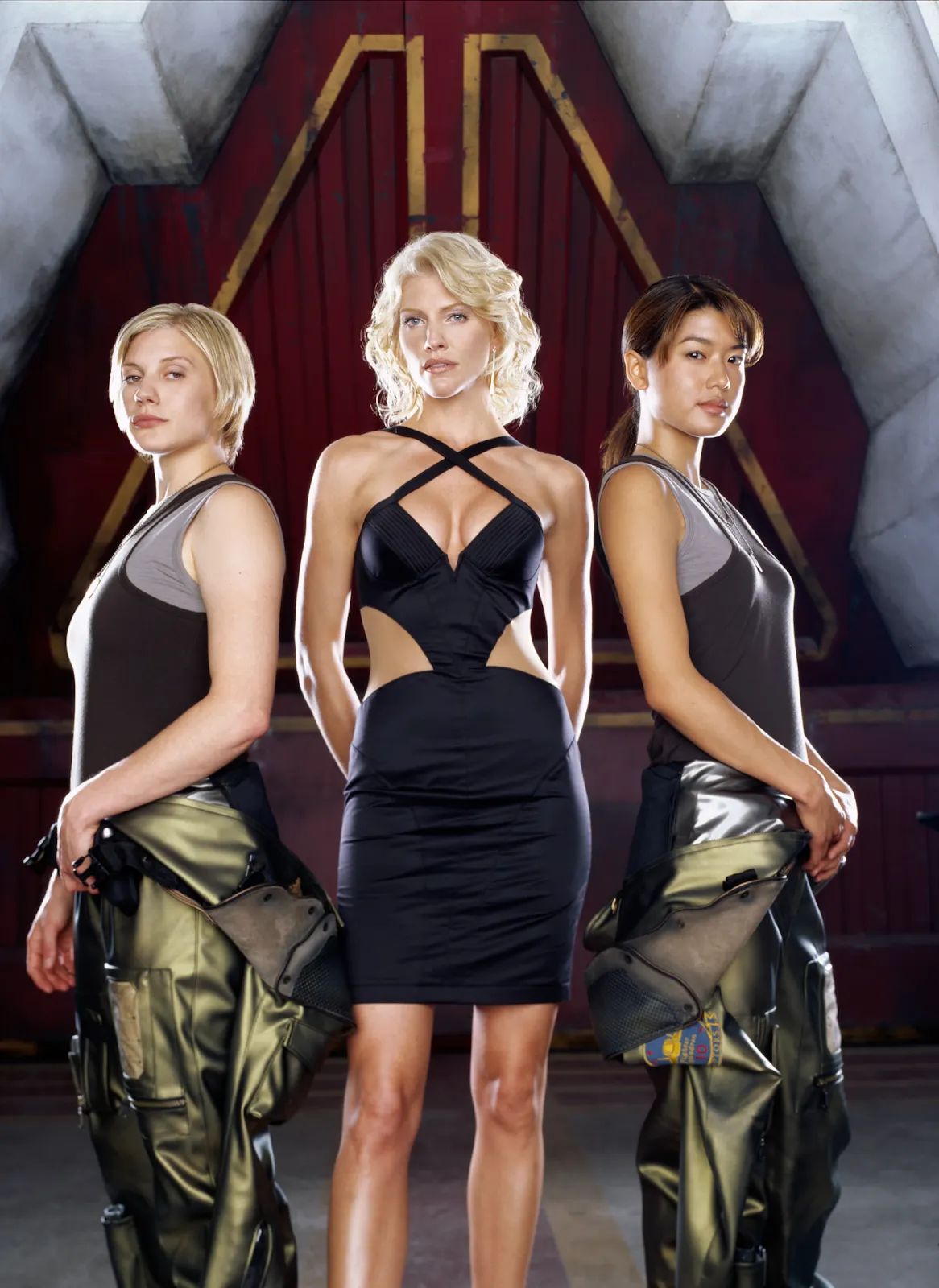
Yitzi: Unbelievable. I’d be remiss if I didn’t ask you a question about Battlestar Galactica. You’re probably most well known for your character, the Cylon, Number Six. How would you compare and contrast your personal character, Tricia, with the character you played? How are you similar, and how are you different?
Tricia: How would I compare who I am, Tricia, to Number Six? Well, I’m not a robot, and I wasn’t responsible for the near annihilation of the human population.
I’m very different from Number Six. She’s very calculated, very purposeful. I intentionally made her move with precision and stay laser focused. I, on the other hand, am a little more all over the place, more human, I guess.
But the part of myself that I brought to Number Six was her vulnerability. From the outside, people can sometimes misread me. Not here, in conversation, because I’m relaxed and open, but if someone sees me out at a party or gathering, I can come off as cold. I grew up very shy and can still be self-conscious in public settings. That shyness can be misunderstood.
With Number Six, I wanted to bring in that vulnerability. Yes, at first, she’s clearly the Cylon, the antagonist. But one of the points of the series was to start seeing things from the Cylons’ perspective. I wanted viewers to gradually feel empathy for her.
I’m not sure if I was consciously doing that from the beginning or if it was a mix of that and my own self-consciousness as a newer actor. Probably both. But the vulnerability that came through in the character, that wasn’t necessarily written into the role at first, that came from me.
Yitzi: Unbelievable. This is our signature question. You’ve been blessed with a lot of success. Looking back to when you first started, can you share five things you need to create a highly successful career in the entertainment industry?
Tricia:
- Passion. Passion for the craft.
- Preparedness.
- I think you have to be a hard worker.
- You have to be observant, because you’re playing all facets of humanity. You’re playing all sorts of different characters, if you’re lucky and don’t get pigeonholed into the same type over and over. So, being observant of people is really important.
- And one more: I think you need to have an outlet. Someone you can talk to, vent to, and get things off your chest. It’s a business with extreme ups and downs. It can be hard to navigate without feeling like you’re either on top of the world or at the bottom. Some people get too big of a head when things are going well, and then when there’s a downturn, it hits hard. You have to separate your self-worth from the business. You’re going to have moments where everything’s going great, and then moments where you’re wondering if you’ll ever book another job. So you need some level-headedness, or someone you trust who can help you stay grounded. Maybe it’s your mom, a therapist, a friend, a co-star, anyone who understands and can help you weather the storms.
Yitzi: Can you share with our readers the self-care routines that you use to help your body, mind, and heart thrive?
Tricia: I definitely don’t get enough sleep. That’s one thing I need to improve on. I’m a big believer in physical activity. I’ve always been that way, I don’t sit still very well. I’ve always made it a point to work out. I like moving my body and being strong, and I think that’s important.
I also love getting out in nature. I have a garden, and I enjoy going for hikes and walks, or just sitting out on the front porch and taking in the view.
I think it’s important to read, though I don’t do it as much as I’d like. I go through phases with that. I also think it’s valuable to watch programs, plays, and things like that. It’s a way of staying connected to the business and seeing other people practice the craft.
I didn’t grow up with a television, so I came into this world without a lot of knowledge about classics or pop culture.
For self-care, I try to eat healthy, exercise, and find ways to de-stress. I also think it’s important to have a focus outside of the business. For me, that includes working with animals and being involved in some advocacy groups. Having that outside focus really helps keep me balanced.
Yitzi: This is our aspirational question. Tricia, because of your great work and the platform that you’ve built, you’re a person of enormous influence. If you could spread an idea or inspire a movement that would bring the most amount of good to the most amount of people, what would that be?
Tricia: Oh, gosh. I think my answer goes back to one of the first things we talked about. Not everyone is able to travel, and I understand that, but I do believe that the more people could travel, the more it would open them up. It helps you realize that we’re really all the same. We all want love, safety, health, security, we want our loved ones to be safe.
I think if more people had that broader perspective, it could help us become more moderate, more realistic, more willing to compromise. We’re not always going to get our own way. Right now, the world, politics, everything feels so polarized. It’s become so extreme that no one is really listening anymore. There’s no compromise, no middle ground.
Again, I know not everyone can travel, but I do think everyone can be a little more curious. Most people have access to the internet. So instead of scrolling through Twitter, or X now, and yelling at each other, why not try seeking out people, places, and stories that are different from your own? Learn about the world a bit more.
Maybe that kind of curiosity could help us come back together in a kind, diplomatic, altruistic way. I just feel like we’ve lost the plot. We’ve lost our sense of humanity, kindness, sharing, and just caring for one another.
Yitzi: I wasn’t going to ask this, but I might as well. This is what we call our matchmaker question, and it works a lot of the time. We’re very blessed that prominent leaders in entertainment and business read this column. Is there a person, maybe we could connect you, is there someone in the US or the world you’d like to collaborate with or have a power lunch with? We could tag them on social media, maybe make the connection.
Tricia: Okay, the first person that comes to mind is Dr. Jane Goodall. Not that I would have anything to offer her, but I actually saw her at the Trailblazers Gala in LA at the beginning of April. She was receiving an award and gave a speech. That was my first time seeing her in person. I didn’t talk to her or anything, but I just find her fascinating. She seems to have such a lovely, calm presence, at least from what I’ve seen of her. I just find her fascinating.
Yitzi: It’s funny you mention her. Actually, I want to say, when she was younger, she looked like you. Have you ever seen a picture of her when she was young? She looks like you. You could probably play her in a movie.
Tricia: Ooh. You just put an idea in my head.
Yitzi: Yeah, that’d be an amazing movie, right? Can you imagine living with and communicating with monkeys? Amazing.
Tricia: Oh my gosh, that would be unbelievable.
Yitzi: Tricia, how can our readers continue to follow your work? How can they watch the movie? How can they support you in any possible way?
Tricia: Primitive War is going to be out in theaters on August 21. If people want to see it, they should go as soon as they can because theatrical releases are short these days. It might only be in theaters for a few days, a week, or just the weekend. The more people go, the longer it’ll play. Of course, it will be available on streaming platforms afterward, but it really is a movie theater experience.
As for following my work, I’m most active on Instagram, @officialtriciahelfer. That’s where I post about animal advocacy work, anything I’m promoting, or just silly pictures of my goats and cats. That’s the main way I communicate.
Yitzi: Amazing. Tricia, it has been an honor to meet you. I wish you continued success, good health, and blessings. And I hope we can do this again when you win an Oscar for Hello Beautiful.
Tricia: Thank you. I appreciate the time.
AM
Written by
Authority Magazine Editorial Staff
Editorial Desk · Authority MagazineThe Authority Magazine Editorial Desk produces, verifies, and edits long-form primary-source interviews with executives, innovators, clinicians, creators, and social impact leaders across Business, Tech, Pop Culture, Wellness, and Social Impact.

Published inAuthority MagazineTop Lessons, Top Authorities · 42K Followers
Exclusive, curated interviews with the leaders and changemakers shaping tomorrow. Leadership lessons, industry deep dives, and executive profiles.