The one thing I had to help ground me through all of these symptoms was the work ethic I always embodied. For me, recovery was about meditation and mindfulness practices that got me back on track along with physical therapy.
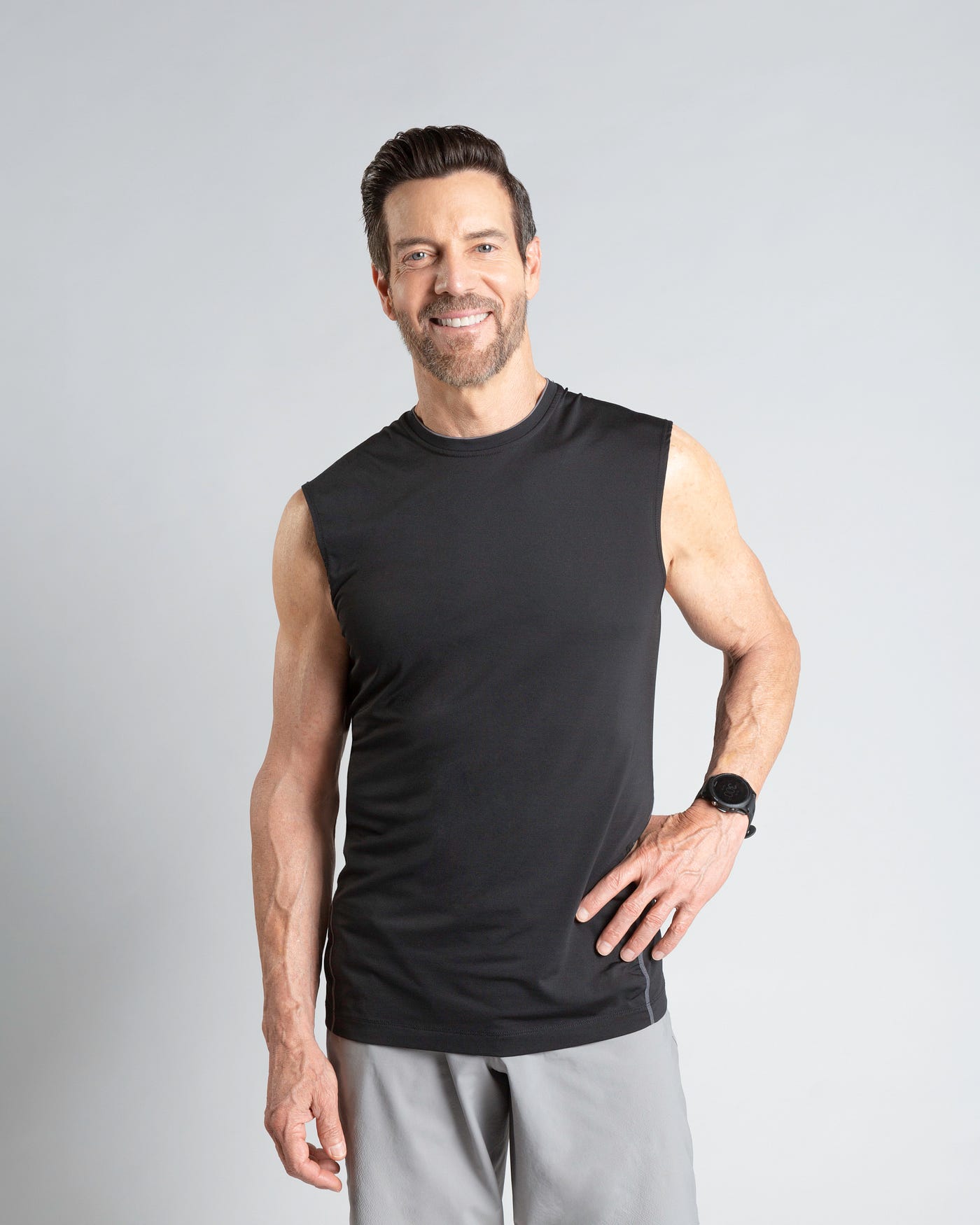
As a part of our “Unstoppable” series, I had the pleasure of interviewing Tony Horton, Fitness Legend & Founder of Power Life by Tony Horton.
Tony Horton has been at the forefront of the fitness industry for decades. He’s created revolutionary programs that have helped improve the lives of millions of people around the world, including the most successful fitness program in America, P90X. He has also trained A-list celebrities such as Tom Petty, Billy Idol, Bruce Springsteen, Stevie Nicks, Ewan McGregor, and more, helping them perform at their best while touring.
Tony is an ambassador for Tonal, leading home smart gym, and has created several programs rooted across fitness categories for the brand. He’s also a motivational speaker and is the best-selling author of “Bring It” Crush It!” and “The Big Picture.”
Tony is the founder of Power Life, a supplement line designed to help people take their fitness to the next level. The motivation to create Power Life was born when Tony was diagnosed with Ramsay Hunt Syndrome, a rare form of shingles that impacts the brain and causes facial paralysis and muscle weakness. In Tony’s extreme case, he was bedridden and suffered loss of balance, nausea, vomiting, had Bell’s palsy, and lost 25 lbs of muscle mass. Power Life was created as a result of Tony working with specialists to understand how to manage his symptoms. With science-backed ingredients and cutting-edge formulas, Power Life’s portfolio of products maximizes fitness performance and optimizes wellness, allowing people to feel energized, strong, and confident every day, no matter their age or fitness level.
Thank you so much for doing this with us! It is really an honor. Our readers would love to get to know you a bit better. Can you share your “backstory” with us?
Iwasn’t much of an athlete growing up. I wanted to be, but I wasn’t. I played some tennis and was on the football team, but wasn’t a stand-out athlete. In 1980, I moved from the east coast out to California and the lifestyle there was very different from what I was used to. I was a young actor and my agent at the time was not happy with my physique. So, I started to get serious about exercise. I joined a gym, and then another one, then another one. Before I knew it, I was a member at four gyms because each of them offered different things: one was an aerobic gym, one was more of a body-building gym, and I really fell in love with all of it.
At that time, I had lots of odd jobs. I was a Production Assistant at FOX, I was a carpenter, I painted houses, I played a mime on Santa Monica Pier — you name it, I did it. It was around that time that I and started training my boss at FOX because he noticed the changes to my body and wanted to make a change himself. I helped him lose a lot of weight and then eventually I decided I could turn training into a business. One day, my boss was walking down the hallway at FOX and he ran into Tom Petty who asked him if he was working out with someone.
He gave Tom my phone number and I started training him and after a few months he was in great shape; no one had ever seen him look like that before. From there, the phone started ringing off the hook and I started training Billy Idol, Annie Lennox, Bryce Dallas Howard, Sean Connery, Bruce Springsteen, and the list goes on.
At the same time I was working on my acting career, doing stand up comedy as part of Second City LA. Through that, I got connected with Carl Daikeler and we developed “Great Body Guaranteed” and from there refined it to “Power 90”, which did quite well. Then we developed what is now P90X and it began to take off and is now under the Beachbody company. Now, I’m working on a line of my own supplements called Power Life, am an ambassador for Tonal, and have other side projects in the works, as well.
Do you feel comfortable sharing with us the story surrounding how you became disabled or became ill? What mental shift did you make to not let that “stop you”?
I got Ramsay Hunt Syndrome and it usually comes on as a result of stress. At that time, I was certainly stressed, but I didn’t realize how bad it was. There were three things happening during the course of about a month: I was going through contract negotiations with Beachbody and it wasn’t going well, some friends of mine were present at the Las Vegas shooting (they survived), and then Tom Petty died.
Around this time I started feeling pain in the right side of my head and I thought I was having a stroke. Ramsay Hunt Syndrome affects your vision, smell, taste, and balance, making you very nauseous all the time. As a result you can also get Bells palsy, which some people don’t recover from. You can’t eat, drive, workout…you can’t even get out of bed sometimes. Then there’s also an after-effect called bilateral vestibular hypofunction which feels like the shakes inside of your head.
The one thing I had to help ground me through all of these symptoms was the work ethic I always embodied. For me, recovery was about meditation and mindfulness practices that got me back on track along with physical therapy. It still sometimes kicks in with a feeling of brain fog or dizziness and I just take some deep breaths to try to overcome. I am also very heavily focused on getting enough sleep, managing stress, hydrating properly, and alleviating inflammation with a vegan diet. It’s a long road but I can function perfectly fine at this point and my mental game is strong.
Can you tell our readers about the accomplishments you have been able to make despite your disability or illness ?
My illness made me realize I needed to nourish my body in a very particular kind of way. As a result, I started working with specialists to develop formulations that would strengthen and fuel me based on my needs. There’s a lot of serendipity in my life and as I was starting to recover I met the good folks who helped me develop my supplement line, Power Life. Together, we looked at what I was dealing with and what formulations would help me improve my muscle mass and my gut health. It turns out there are a lot of other people out there who haven’t suffered from Ramsay Hunt, or any other disease, but they are experiencing muscle mass loss and gut issues, as well. I’m grateful that my ailment allowed me to create products that work for me and can be beneficial to others, as well.
What advice would you give to other people who have disabilities or limitations?
Surround yourself with the right kind of loving people who can be kind and selfless in the way they support you.
None of us are able to achieve success without some help along the way. Is there a particular person who you are grateful towards who helped get you to where you are?
Growing up I didn’t have many mentors, but once I got older, I have to say my acting coach Darryl Hickman was a special individual who helped me build my confidence. Our experience together was about much more than acting; it was about how to be a more present, loving, thoughtful, and caring human being.
I’d also say some people I’ve followed such as Deepak Chopra, Gary Zockoff, Richard Carlson, and more, have helped me unlock parts of my brain that have shaped me. Some of my peers such as Carl Daikeler have really shaped the course of my life so I’m grateful for him. And, of course, my wife Shawna been my rock for the last 16 years.
How have you used your success to bring goodness to the world?
When I was starting out and we were beginning to sell workout programs, I wasn’t aware that I’d be changing lives so drastically. I came to realize over the years that for so many people it was about much more than looking better. It was life-altering for many; not only physically but mentionally, emotionally, and spiritually. They were completely different human beings on every level because they were taking care of themselves in a way they never had before. Now, with Power Life, I get to create something for the masses with the help of a great team that has been so crucial to my own personal recovery process.
Can you share “5 things I wish people understood or knew about people with physical limitations” and why.
- Sympathy is number one.
- From that place of sympathy and understanding, the next thing would be to proactively seek out ways to help them, whether they’re strangers or people you know.
- “Helping” is not offensive. Offering assistance equals being present with a loved one or stranger with a physical limitation, rather than acting like the ailment doesn’t exist.
- Ramsay Hunt Syndrome was incredibly eye-opening and humbling for me. In certain cases, performing what we might consider “simple” tasks — things we do without even really thinking — can take much more effort for someone with a physical limitation, so have patience with loved ones who are experiencing a frustrating setback.
- Physical limitations do not define a person. My personal limitation was temporary and I’m extremely grateful for that. For some, it is a way of life but not a definition of who they are.
Can you please give us your favorite “Life Lesson Quote”?
The more you do the better you get. If you’re not good at something right away, be okay with the journey and fall in love with the process.
We are very blessed that some of the biggest names in Business, VC funding, Sports, and Entertainment read this column. Is there a person in the world, or in the US whom you would love to have a private breakfast or lunch with, and why? He or she might just see this :-)
I would love to sit down with Steven Colbert. I think we’d get along!