An outline tells you where the story goes, a question tells you why it matters.
Some writers and authors have a knack for using language that can really move people. Some writers and authors have been able to influence millions with their words alone. What does it take to become an effective and successful author or writer? In this interview series, called “5 Things You Need To Be A Successful Author or Writer” we are talking to successful authors and writers who can share lessons from their experiences. As part of this series, I had the pleasure of interviewing Tony Haber-Matos.
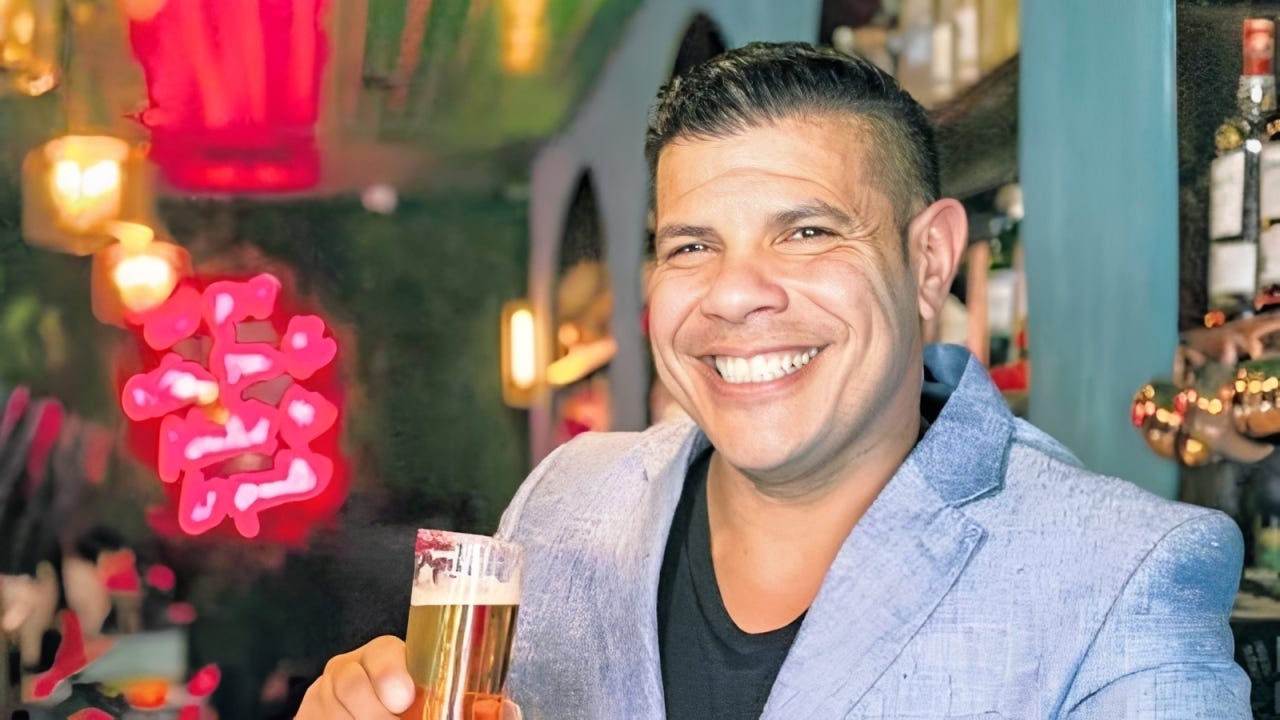
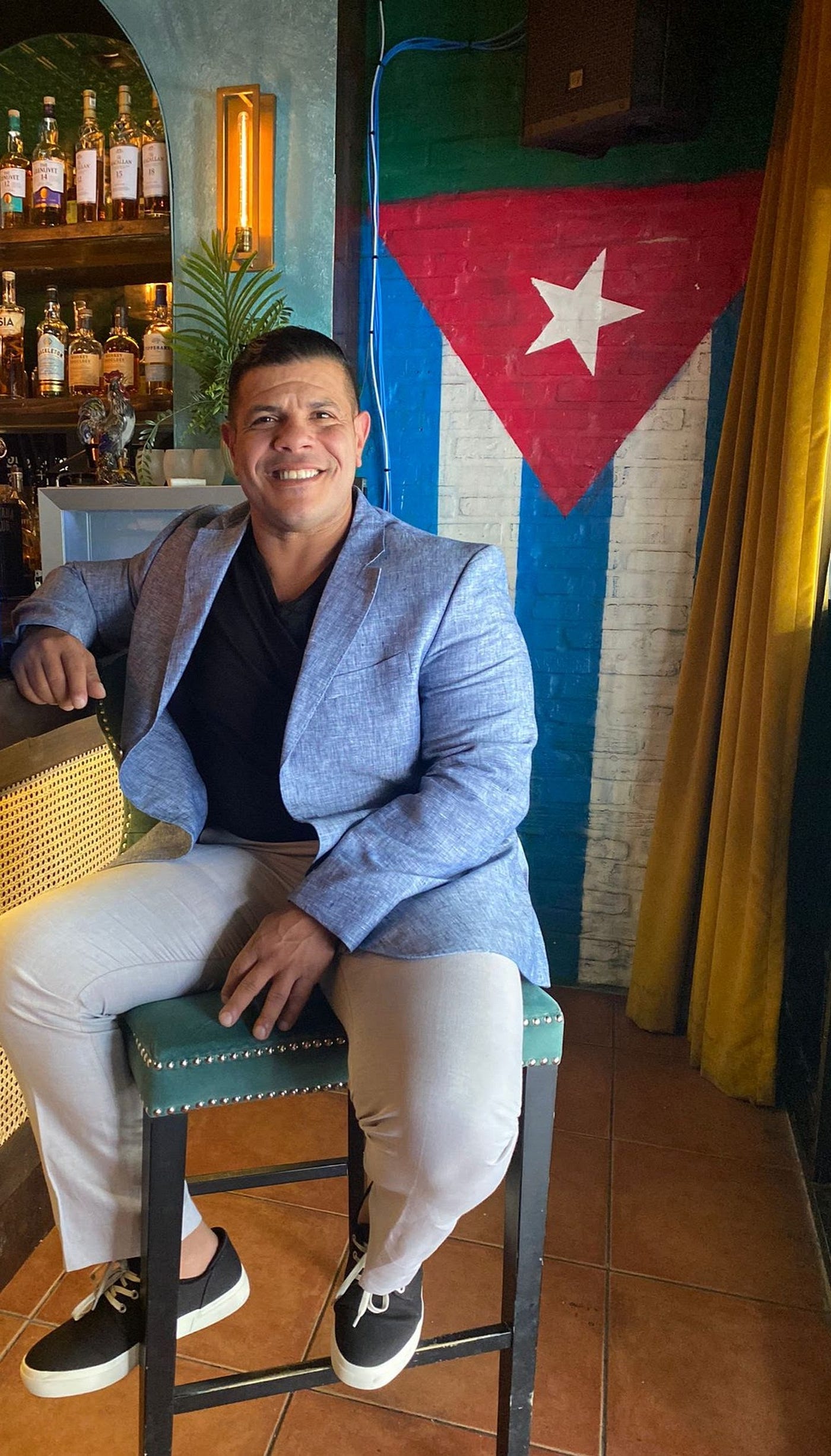
Tony Haber-Matos is a Miami-based author and entrepreneur, founder of Casa Santiago LLC and Qvivo Brands Inc., and a veteran-owned business leader. His debut novel, Lost Innocences: The Pact (OreatePress, 2026), Part I of the Lost Innocence saga set in contemporary Havana, launched simultaneously in seven languages. He is now writing Part II, and his Sabrocito agave spirit launches at Total Wine & More on February 1, 2027.
Thank you so much for joining us in this interview series! Before we dive in, our readers would love to “get to know you” a bit better. Can you tell us a bit about your ‘backstory’ and how you got started?
I grew up in a Cuban family that had learned to whisper. There was a phrase always spoken softly, as if the walls themselves were listening, “de eso no se habla,” we do not talk about that. We did not talk about the uncle who left, or the cousin who was detained, or the house that stopped being a house. My family, like so many, was divided between those who stayed and those who left, between those who believed and those who paid for not believing. That inheritance, faith, fear, and the price of silence, is the ground everything I have built stands on.
Before I was a novelist I was a founder. I built Casa Santiago LLC and Qvivo Brands Inc. in Miami, and the first thing the world ever read of my writing was on wine labels. I took Richard Blanco’s poetry class at FIU, and my wine brands, Loco Por Ti and Crazy Love, were born there, with my poems printed in Spanish and English on the labels, the kind of labels a phone could bring to life. FIU News wrote about it, I sponsored university events, hosted interns, funded a scholarship, and years later I revived Guayabita del Pinar, a Cuban spirit brand with a long memory. My debut novel, Lost Innocences: The Pact, is the book I had been carrying all along. I published it through my own imprint, OreatePress, in seven languages at once, because the story belongs to every country where a family learned to whisper.
Can you share the most interesting story that occurred to you in the course of your career?
The poetry class. I walked into Richard Blanco’s classroom at FIU as a businessman, and I walked out with a wine brand that carried poems on its labels. Loco Por Ti and Crazy Love were not built in a boardroom, they were built line by line, in two languages, with an AR app that let a customer point a phone at the bottle and hear the poem come alive. That experience taught me something I have carried into the novel, that people do not fall in love with products or plots, they fall in love with the feeling that someone meant what they made. The labels had to be honest, the poems had to earn their place beside the wine, and the whole thing only worked because the story on the bottle was the same story as the liquid inside it. Years later, when I was writing the novel, I kept that discipline in front of me, every scene had to earn its place the way those poems had to earn theirs.
What was the biggest challenge you faced in your journey to becoming a writer? How did you overcome it? Can you share a story about that that other aspiring writers can learn from?
The biggest challenge was the silence itself. For years one question pursued me, what does it do to a human being to carry, for decades, a secret he never chose. I come from families where the history was taught not in books but in the pauses of our grandparents, in the subjects avoided at the table, in the photographs missing from the album. The material was enormous and it was forbidden at the same time, which is a hard place to begin a first novel. I overcame it the way the book itself taught me to, by listening. I discovered that silence is also a form of narration, what a family does not say is transmitted just the same, and once I understood that, the gaps became my raw material instead of my obstacle.
There is a scene late in the novel that came straight out of that struggle. Pedro is brought before the machine that has classified him and is offered exactly two statements, accept responsibility in words written for him, or deny everything and invalidate the testimony of everyone who spoke. He finds the additional-statement field and types a third answer of his own, “I accept responsibility for what I did. I reject responsibility for what you did with it.” The system answers that his statement is incompatible with its available categories. The lesson for another writer is the one that scene taught me, when the available categories do not fit your truth, you write your own sentence anyway.
It has been said that our mistakes can be our greatest teachers. Can you share a story about the funniest mistake you made when you were first starting? Can you tell us what lesson you learned from that?
My characters kept changing their surnames between chapters, and I did not notice for an embarrassingly long time. Rafael was Cabrera in one chapter and Cárdenas in another. Eulogio picked up two last names he never earned. A journalist named Valdés reappeared later with a different surname, and I had two Mateos and two Nicoláses wandering through the manuscript like the book had a cloning problem. One afternoon I sat down with a printed manuscript and a red pen and discovered the novel had more people than I had written. The lesson was plain, and it has stayed with me, the details are the work. I built a register, a page for every name, every door, every thread, and that register eventually became one of the appendices of the published book. A novel is a machine with hundreds of moving parts, and the funniest mistake is always the one you catch yourself making, the machine only runs when every part is in its place.
In your opinion, were you a “natural born writer” or did you develop that aptitude later on? Can you explain what you mean?
I developed it, and the poetry came first. Long before I wrote a novel I was writing poems on wine labels, short lines that had to say something true in the space of a bottle. That constraint was my school, it taught me to cut everything that did not earn its place. Then the question arrived that would not leave me, what does it do to a person to carry a secret he never chose, and I carried that question for years before I carried a manuscript. When I finally sat down to write the novel, I was not drawing on a gift, I was drawing on a discipline I had been practicing without knowing it, listening to what my family said, and even more to what it did not say. So no, I was not born with it. I was raised inside the material, and I apprenticed myself to the label, the line, and the pause.
What are some of the most interesting or exciting projects you are working on now?
Part II of the Lost Innocence saga. Part I ends honestly, the successor account is frozen but not dissolved, the endowment survives, and a new class of students has already been marked for the next examination, so the story of Pedro, Rafael, and Juan, and of Sofía and the students who learned to refuse, continues from exactly that unfinished place. On the business side, I am preparing the launch of Sabrocito, my agave spirit, which arrives at Total Wine & More on February 1, 2027. And in between I am carrying the seven editions of Part I, English, Spanish, Italian, French, German, Japanese, and Portuguese, to readers in every country where the story can find them. Building brands and building this saga are the same work in the end, taking something rooted in family, faith, and memory, and carrying it across borders.
Based on your experience, what are the “5 Things You Need To Be A Successful Author or Writer”? Please share a story or example for each.
1. Write the story only you can tell. Mine was waiting in my own family’s silences, in the phrase “de eso no se habla” that educated two generations. Your material is closer than you think, pay attention to what your family does not say, because the gaps are a story too.
2. Start with a question, not an outline. This book did not begin as a plan, it began with a question that pursued me for years, what does it do to a person to carry a secret he never chose. I let the characters carry that question through the book’s two movements, the examination the boys try to buy their way through, and the network the examination turns out to serve. An outline tells you where the story goes, a question tells you why it matters.
3. Give your characters their own scenes, and let them fail on the page. Pedro steals his mother’s and grandmother’s jewelry, lets the family’s housekeeper Yadira be blamed and dismissed, and the novel never excuses him. When the family returns the unsold jewelry, Yadira refuses the private absolution, “That explains you. It does not repair me.” Readers trust a book that does not flinch from what its own people did.
4. Do not wait for permission. I am a first-time author, and I published through my own imprint, OreatePress, in seven languages at once, a launch most debut novelists are told is impossible. The door that is not opened for you can be one you build, and the building of it becomes part of the story you have to tell.
5. End honestly. Part I does not destroy the machine, the successor account is frozen, not dissolved, and the endowment survives. What survives against it is a refusal, placed on the public record by students who learned that attendance does not mean agreement and that rescue does not create ownership. A dishonest ending betrays everything the honest chapters earned.
What is the one habit you believe contributed the most to you becoming a great writer? (i.e. perseverance, discipline, play, craft study). Can you share a story or example?
Listening. Not the kind of listening where you wait for your turn to speak, the kind where you study what people leave out. The children of exile learned the history of Cuba not in books but in the pauses of our grandparents, in the names nobody pronounces, in the photographs missing from the album, and I spent years learning to read those gaps before I ever wrote a scene. That habit is the whole origin of the novel’s central scene. In Room 7, Pedro is offered two pre-written statements and types a third, because he finally heard what the machine was really asking him to sign, and he refused to let his guilt become the institution’s absolution. The habit came first, the scene came later, and everything I write still begins with sitting still and hearing what is not being said.
Which literature do you draw inspiration from? Why?
Poetry, first, because a poem taught me the discipline the novel runs on. Richard Blanco’s classroom at FIU is where I learned that a line has to earn its place, and the wine labels I wrote afterward were my apprenticeship, small surfaces, true words, no room for anything decorative. After that, my family’s own oral history, the stories told in pauses, which is a literature of its own even though it was never printed. And I returned to FIU for creative writing because I wanted the craft to match the material, to learn how a long story is built the way a poem is built, line by line, until it can hold weight. I draw from the places where the language had to be exact, the poem, the pause, the label, because a novel is only a very long act of getting the words right.
You are a person of enormous influence. If you could start a movement that would bring the most amount of good to the most amount of people, what would that be? You never know what your idea can trigger. :-)
I would start a fund for scholarships that ask for nothing back. The novel is built around a foundation machine that turned help into a system for sorting children, that taught them gratitude is a debt, that help requires a name, and that protection means ownership. A document examiner in the book names what happened to a sixteen-year-old’s borrowed signature in one sentence, “Your signature was not forged. Your consent was.” So the movement would be the opposite of that machine, help given as help, with no referral required, no silence purchased, no file opened on the child. Every student funded would simply be funded, and the only record kept would be the one the student chooses to write herself. If enough people saw that assistance can exist without a price, the old question, “Who deserves help,” might finally be answered with the harder one, “Who gets to decide.”
How can our readers further follow your work online?
The book is available now at Amazon, Walmart, and Barnes & Noble. Readers can find me and the work here:
Author website: https://tonyhabermatos.wordpress.com Amazon: https://www.amazon.com/dp/B0HHXVHXHS Walmart: https://www.walmart.com/ip/Inocencia-Perdida-El-Pacto-Paperback/20996368906 LinkedIn: https://www.linkedin.com/in/tony-haber/ Instagram: @tonyhaberofficial (https://www.instagram.com/tonyhaberofficial)
Thank you so much for this. This was very inspiring!
Thank you. It is an honor to be part of this series, and I hope the readers take one thing from it, the story only you can tell is usually the one closest to home.