
Well, everything has, almost most things, it's new inventions, like if you want to be an inventor, that means your idea isn't around. However, people have been calling taxis and ordering taxi service for 50 years.
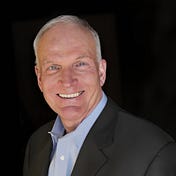
Tarek Mohajer Founder / CEO GrowME Marketing Calgary, Canada Area.
Passionate about growth, technology, and marketing, Tarek is an initiator, thought leader, and trail-blazer in the Calgary business community.
He has a natural knack for connecting with people and an energy that's infectious. Driven by a dream, Tarek founded GrowME Marketing in 2013 to help local businesses grow and prosper through their online presence. He is an expert in digital marketing, and his team of professionals deliver success time, and time again. What's most inspiring about the GrowME story is that the company began in the midst of one of the worst economic recessions in Canadian history.
Tarek consistently demonstrates fortitude and fervour in overcoming failure and helping the less fortunate. It is his grateful heart and serving mentality that has given rise to a multitude of charitable efforts including GrowME Cares and GrowMEntor. GrowME Cares is an annual charity drive geared towards giving back to individuals in the community who are less fortunate. GrowMEntor is a non-profit organization that will soon be available in boardrooms across Canada. The curriculum, developed by Tarek, helps young adults determine their dreams and set goals towards achieving them.
As the founder and leader of multiple businesses, Tarek has achieved his high school dream of becoming a 'successful businessman", but the goal doesn't end here. Speaking in front of crowds of over a hundred, Tarek continues to share his story of perseverance, inspire young people with a vision of victory, and contribute consistently to the business and entrepreneurial world.
Thank you so much for doing this with us! Before we dive in, our readers would love to learn a bit more about you. Can you tell us a bit about your “childhood backstory”?
Well, growing up, I kept myself busy doing business stuff like, I guess I liked troubling sidewalks, asking people if they wanted their grass cut. I enjoyed selling Pokemon cards, so I always liked that aspect of the hustle and doing deals when I was younger so there would be my childhood going into my education life. I was a pretty bad student, not some good student who got really high grades and got into a good amount of trouble, but I liked learning. But I wouldn't say I love school, so focusing on school was a bit hard for me. I always found that I was good at helping. Like, if someone came to me with a problem, I could help them find a solution. And I really enjoyed helping someone achieve a positive outcome.
Can you please give us your favourite "Life Lesson Quote"? Can you share how that was relevant to you in your life?
I would say Jim Ron did really well by saying there's seasons to life and that there are times where you're going to be more up than down, you'll have more energy than less energy. So tell me to look at a year based on nature. Like, everyone springs into action around the spring, then you have the harvest time around the fall, and in winter you go into hibernation mode. So by finding my animal clock and picking times to really go put my best foot forward into the spring, into the new year, it allowed me to stay rejuvenated and motivated year round.
Is there a particular book, podcast, or film that made a significant impact on you? Can you share a story or explain why it resonated with you so much?
Well, two things. From a movie standpoint. I loved how Tony Montana climbed the ranks and scarface from dishwasher to building an empire. I wouldn't necessarily say I agreed with the method he did, but I do respect his heart and the fact that he was able to really push it to the limit. Actually, I hold that value very near and dear to push it to the limit, which I learned from Scarface in terms of a book to build a business and be successful. Traction, it's actually here. Traction by Gina Wickman. It's an amazing quality book that will teach you how to get a grip on your business and scale your company.
Ok super. Let’s now shift to the main part of our discussion. There is no shortage of good ideas out there. Many people have good ideas all the time. But people seem to struggle in taking a good idea and translating it into an actual business. Can you share a few ideas from your experience about how to overcome this challenge?
If you have an idea, you have to find is there a need for your idea? So defining the need in the market is you have to see what's out there and how you have something that's better, truly, for an idea. So is it better, is it faster? Is it more affordable? You have to find the needs. That takes a bit of research. So if you're not strong at research, get someone who is to help you find your place in the market. And then after identifying the need, you really have to ask yourself, do I really care about this idea? Is it something I am passionate about? And by passionate about, does it excite you to work on the idea? Because your idea should be serving an audience in a certain way. You're kind of helping facilitate something for them. So pass the finding the position of the market. And if you're passionate about it, then the third part would be to make some goals around your idea, set some tasks you want to achieve. Have a vision of what success would look like taking your idea to something over a certain period.
For example, you have an idea of having a tool that helps business owners plan their week.
Maybe saying, oh, I want to get an MVP version of this. Here's some functions I want. Let's talk about building it. Let's find out how much it costs. Let's look at the competitors out there to plan the week. All things that will help take your idea to action.
Often when people think of a new idea, they dismiss it saying someone else must have thought of it before. How would you recommend that someone go about researching whether or not their idea has already been created?
Well, everything has, almost most things, it's new inventions, like if you want to be an inventor, that means your idea isn't around. However, people have been calling taxis and ordering taxi service for 50 years. Uber is just a better way to order a taxi service, but it's still fulfilling the same need. Netflix is just a better way to watch video on demand. But there was video on demand through Shaw and other players, so it's not so much, oh, somehow I had the idea. The idea must be something in an industry that you feel could be done better, or at the same time, your idea could be. I feel there's opportunity in this market. You don't have to do anything new with your idea. You just have to say, you know what, I want to start a fitness coaching business, and I want to do things a little differently. I'd rather add these for my people than that and just have your own flavour in an industry or market that could be being served. If you could serve it better, that's great. And if you're passionate about transforming it, then that's a great idea.
For the benefit of our readers, can you outline the steps one has to go through, from when they think of the idea, until it finally lands in a customer’s hands? In particular, we’d love to hear about how to file a patent, how to source a good manufacturer, and how to find a retailer to distribute it.
Yeah, well, I can talk about taking an idea to market. Hopefully that's something for your readers as well. So, taking an idea to market, the first step is finding out what it is the customer needs. So if you can identify the client's need, the second part is, how do you plan to fulfil that specific need? So by fulfilling a need, it's how are you going to serve the client? With Uber, they were just serving through pushing a couple of buttons to get a taxi versus having to call and get a taxi. They were convenient. So find the method in which you are going to serve a client. The third part is to have your product or service properly done, ready to go, so that you can fulfil the client's needs. The fourth part is to find clients. Find customers. Get in front of customers to use your product or service. And then the last part is, the more clients you have using your service or product, the bigger it's going to grow. So see how you can expand into other regions, add on more clients, take up more market share.
What are your "5 Things I Wish Someone Told Me When I First Started Leading My Company" and why? (Please share a story or example for each.)
1 . First thing I would say is don't be in a hurry. Why I say don't be in a hurry is we're almost like I was rushing a lot to get things done and I have to get this done, I have to get that done. It was a never ending list. And that's just it. Like in entrepreneurship and running a company, there is a never ending list. So rather than not being in a hurry, I think slow and steady, working towards a goal, not getting overwhelmed, having your day planned out and knowing what you can handle, that would be it. Just don't be in a hurry and take my time. That would be the first one.
2 . The second one would be knowing that problems are going to happen. Had some pretty major issues come up in the first couple of years and I was really stressed out. When your server crashes or your developer can't deliver, knowing that working through a problem is part of the process, that would have been mentally prepared for it, that would have helped too. The third thing would be that there's levels to success that when I look back on my other years, is that success is a continuous process of improvement.
3 . The third thing would be that there are levels to success. When I look back in my younger years, success is a continuous process of improvement.What you've done in your first year lays the ground for the second and the third year and we are doubling in size every single year. So it's been great to know that first you learn how to lay bricks before you build.
4 . The fourth would have been to structure. Better and by structuring myself better, it would be, you know, setting priorities for a quarter, knowing what I wanted to achieve over a time period and working towards a 90 day goal or a year goal and breaking things down into manageable goals that I could focus this on, versus looking at the big picture of everything.
5 . The last one would be that pain is part of the game. No struggle, no results, no gamble, no future. So knowing that if someone had told me, you got to be up for the punches and the butterfly upset stomach, all the things that success makes you do to be successful, that would have been awesome.
Those five things again are, don't be in a hurry, problems are going to happen, there are levels to success, structure yourself better. and pain is part of the game.
Let’s imagine that a reader reading this interview has an idea for a product that they would like to invent. What are the first few steps that you would recommend that they take?
If you're looking at inventing a product, do some research, see if that product already exists or what is the closest product that exists towards the one you'd like to invent once you've done your research. The second part is either go see how you can fabricate or begin getting a prototype for that product. Speak to different manufacturers or different developers. It depends if it's an online product or if it's a physical product. After there it would also be good to do some more market research, see if there is a need for this product, see if there's going to be demand for it from there. If it's a bigger idea or bigger product you'd like to create, find some funding, find out how much it's going to cost to build it, develop it and take it to market. And then lastly, you want to make sure you have a marketing plan. How are you going to get your invention into the needs of the hands of ready to buy consumers? That would be my take.
There are many invention development consultants. Would you recommend that a person with a new idea hire such a consultant, or should they try to strike out on their own?
Mentorship and consultants are two good avenues to help you on a journey ahead. Put together some of the roads so it doesn't hurt to talk to a consultant. At the same time. A mentor also might be better because a mentor genuinely wants to help, but also a consultant does too. If they can help you scale and they're part of it, they definitely could be valuable to your invention.
What are your thoughts about bootstrapping vs looking for venture capital? What is the best way to decide if you should do either one?
Just depends how big you want to go and the idea is like if you bootstrap there's levels so you can go slow and steady and go. But if you're bootstrapping something that's going to cost a lot of money, like hundreds of thousands, it is probably pretty stressful if you don't have the capital. So venture capital is a great way if you can prove to them and demonstrate that that investment is going to produce a very good return on investment for them. And bootstrapping is also good on the other side if you want to have more control and you're okay with taking more time to put things together.
Ok. We are nearly done. Here are our final questions. How have you used your success to make the world a better place?
Well, there's two things. One is I have a free mentorship program called Grow Mentor and Grow Mentor is available to youth, young adults, anyone who wants some mentorship on building a successful business or finding success in their life. I regularly speak complimentary at universities, at clubs, and talk about how to create success. I talk about marketing, put presentations and workshops together. So one part is I do share that knowledge and expertise with people who would like to get to where I am. The second side is we take 5% of our profit and we do give back through that by helping people in third world countries who don't have money for food, don't have money for medication, for heating. And thankfully, we're feeding well over 200 families a month. We sponsor orphans, one orphan per employee we really take care of. And we give thanks by paying it forward with our Grow Mentor. And the grow we give back by feeding hungry people in countries where there's no food, orphans and taking care of their health.
You are an inspiration to a great many people. If you could inspire a movement that would bring the most amount of good to the most amount of people, what would that be? You never know what your idea can trigger.
Yeah, well, the world needs much better leaders. What I would say is find a way where you can lead for the good of the people you're serving, really thinking about the people you want to serve versus thinking about yourself. Because if we had more people thinking like that, then maybe you could get into the way our governments are more looking out for the average person. And so be a role model when you lead and know that a leader is truly just a giant caretaker for their community.
We are very blessed that some of the biggest names in Business, VC funding, Sports, and Entertainment read this column. Is there a person in the world, or in the US, with whom you would love to have a private breakfast or lunch, and why? He or she might just see this if we tag them.
Oh, I haven't really thought that far, but if I had to pick someone, I think Mark Cuban is an entrepreneur with lots of heart, does lots of good. He's no bullshit straight shooter guy. So if Mark Cuban wanted to have lunch someday I would be blessed with that, I would love to learn about what it takes to go from multimillionaire to billionaire and how to do more good.
Thank you for these fantastic insights. We greatly appreciate the time you spent on this.