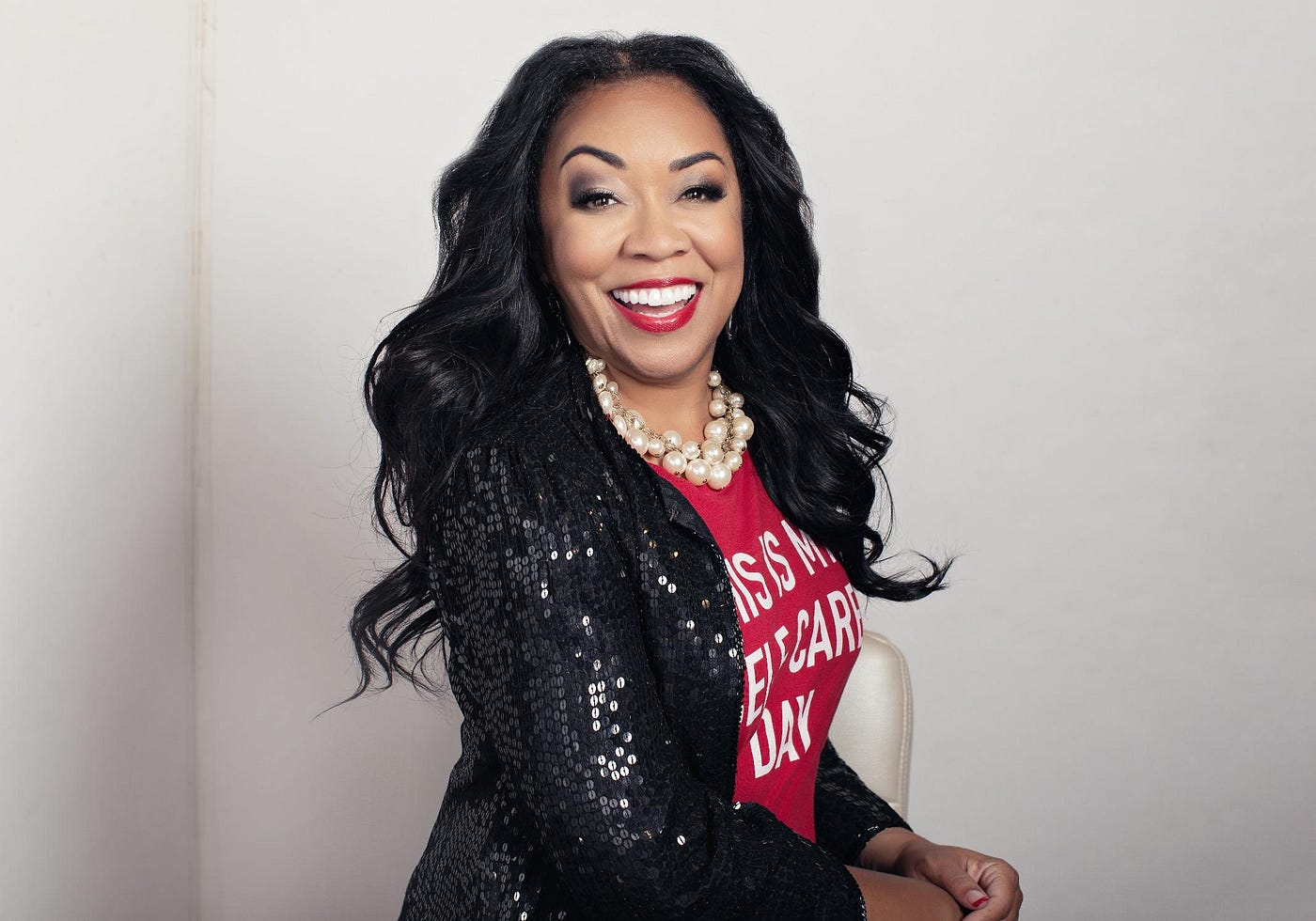

I truly believe that success occurs with people and not in spite of people. There are many people who have contributed to my success along the way from previous bosses and coworkers two informal mentors and supervisors.
How to communicate effectively with your team remotely?
Sile specialises in strategic leadership and organisational development. She is experienced coaching senior leaders and middle managers across sectors including healthcare, pharmaceuticals, education, technology and commerce within Ireland and internationally.
Sile has over ten years of experience working with individuals, teams and organisations supporting change management, leadership development, inclusion and diversity, and organisational development programmes.
Sile is committed to being inclusive in her work and supporting people from a wide range of backgrounds to reach their potential; this includes people who experience systemic barriers in society. She is a PhD researcher focused on the role of coaching psychology in inclusive leadership within private organisations.
Sile has an international client base and speaks on leadership, inclusion, and coaching psychology. Sile has guest lectured with University College Cork on both the masters in Organisational Psychology and Personal and Management Coaching, is on the committee for Coaching Psychology with the Psychological Society of Ireland and is a senior board member for a private organisation providing support services on behalf of government agencies.
Can you share the most interesting story that happened to you since you began your career?
Early on in my career I gained a lot of new clients through referrals and there wasn't many visuals of me available online. One day a senior executive walked in to my office shook my hand and told me he was here to see Sile Walsh. I greeted him with a firm handshake as I was taught by my dad introduce myself as Sile Walsh and explained it was nice to meet him. He preceded to say that he was here to see the coach Sile Walsh and when I explained that I was in fact her the look on his face was worth noting. Later after our first session together he disclosed to me that when he saw me he thought I was far too young to be the Sheila Walsh that he had been told about and having worked with me he was glad to have not known my age before being in the situation as it required him to overcome his bias and decide for himself if working together was effective. We worked together for another two years.
Can you please give us your favourite “Life Lesson Quote”? Can you share how that was relevant to you in your life?
“Life isn’t about waiting for the storm to pass, its about learning to dance in the rain”
None of us are able to achieve success without some help along the way. Is there a particular person who you are grateful towards who helped get you to where you are? Can you share a story about that?
I truly believe that success occurs with people and not in spite of people. There are many people who have contributed to my success along the way from previous bosses and coworkers two informal mentors and supervisors. The one that stands out to me for the purpose of this article would be Margaret Archer CEO of Futimis in Atlanta, operating all over the the united states of America. Maggie is my aunt and has been a fundamental support and inspiration for the development of my business. She has encouraged me and supported, mostly though she has dished me some hard to hear words when I needed to hear them and has given me nudging when I most needed them in my business.
To begin, can you articulate for our readers a few of the main benefits of having a team physically together?
Informal interactions that unconsciously build trust.
Easier to read body language and tone.
Shared environment creating shared experiences.
On the flip side, can you articulate for our readers a few of the main challenges that arise when a team is not in the same space?
Tine being added to emails, less fluid interactions, more focus on tasks and less on each other. A sense of isolation and more silo’d ways of working.
Based on your experience, what can one do to address or redress each of those challenges? What are your "5 Things You Need To Know To Communicate With Your Team Effectively Even If You Are Rarely In The Same Physical Space ? (Please share a story or example for each.)
The first thing is that communicating with your team should still hold the core purpose of communication so there needs to be connection empathy and clarity coming from all communication now how you do that may be different if you're working remotely or in different locations. An example would be to create, connection and empathy you may have to be less task orientated in some of your conversations then possibly in person because working remotely removes that informal connection building time.
The second thing to think about is how working away from each other may impact team cohesiveness and connection. This requires more time and effort in team building activities and in pairing people together to problem solve as units rather than as individuals.
The third is to dedicate time to checking in with your team on a more personal or relational level than task orientated or work output. This creates a greater sense of connection but also a greater sense of mattering.
The fourth is to think about how your team prefer to communicate and to create consistent and frequent communication opportunities across the team.
The 5th is to ensure that the processes and procedures support your team working separately in different locations. An example would be at the start of the pandemic people took the normal way of working in person and simply thought that it would produce the same results in different locations however what we found was that the needs change when the location changes and the ability to informally interact changes and so we need to have processes and procedures that support the reality of working from different locations and the impact that has on a team.
Has your company experienced communication challenges with your workforce working from home during the pandemic? For example, does your company allow employees to use their own cell phones or do they use the company’s phone lines for work? Can you share any other issues that came up?
This hasn't really been an issue as one of the organizations I work with would have already had people working remotely and the pandemic didn't change that. In my other business it has impacted how we meet clients and how we support people and so it's required us to work online requiring better Internet and technology to ensure it can be done to the same standard as if we were working in person.
Let’s zoom in a bit. Many tools have been developed to help teams coordinate and communicate with each other. In your personal experiences which tools have been most effective in helping to replicate the benefits of being together in the same space?
Hands down I have found zoomed to be the most helpful platform to work with in terms of meetings and using Google Apps has been also very helpful. Some of the businesses I work with use teams and while it can be helpful in some ways I found it to be less intuitive than working with zoom and Google applications.
If you could design the perfect communication feature or system to help your business, what would it be?
A centralized location where all of the social media and connection tools work off one platform so I can check our social media my emails and in-house conversations from one platform without it killing data.
My particular expertise and interest is in Unified Communications. Has the pandemic changed the need or appeal for unified communications technology requirements? Can you explain?
Yes so the pandemic has encouraged people to work more intuitively with technology and for technology to be more integrated into processes and procedures then I think previously had been considered important.
The technology is rapidly evolving and new tools like VR, AR, and Mixed Reality are being developed to help bring remote teams together in a shared virtual space. Is there any technology coming down the pipeline that excites you?
Not that I am aware of.
Is there a part of this future vision that concerns you? Can you explain?
While I think technology is deeply important and is the future I also would be concerned that we replace human interaction and start to focus on performance only and not on relationships . However I doubt this will take over as we see a lot of research into retaining employees and attracting key talent as requiring strong relationships with the organization and with their teammates so while technology is helpful I would be afraid that organisations think it will promote performance and not consider the other implications that only working virtually may create.
So far we have discussed communication within a team. How has the pandemic changed the way you interact and engage your customers? How much of your interactions have moved to digital such as chatbots, messaging apps, phone, or video calls?
Before the pandemic I probably saw 15% of my clients online via zoom now I see 100% of them online via zoom I've also learned to use applications more effectively for doing some of the activities I would do in training sessions on whiteboards and now I have applications that I use to do them online together.
In my experience, one of the trickiest parts of working with a remote team is giving honest feedback, in a way that doesn't come across as too harsh. If someone is in front of you much of the nuance can be picked up in facial expressions and body language. But not when someone is remote. Can you give a few suggestions about how to best give constructive criticism to a remote team member?
Do it face to face over a video application , state clearly the purpose of the feedback and the desired outcome. In short to communicate the full value of the person and the purpose of the feedbacks value add so this isn't giving feedback for the sake of it but instead giving feedback to create a better outcome for everybody involved.
Before giving feedback check with the person you're about to give feedback to you if they're doing OK if their home situation is stable if they have the time and headspace for this type of feedback ensure that you aren't just dumping something on top of them in the middle of something that's very stressful in their home setting.
Also ask if there are any contributing factors to why some of the behaviors that you are looking to be changed may be present, unlike working in person we can't see the context that they're working within and so we need to ask explicitly what that that is and the impact of it on their performance or the situation we're discussing.
Can you give any specific ideas about how to create a sense of camaraderie and team cohesion when you are not physically together?
Yes get teams visioning and problem solving together, give them time to connect and create wins.
Ok wonderful. We are nearly done. Here is our last “meaty” question. You are a person of great influence. If you could inspire a movement that would bring the most amount of good to the most amount of people, what would that be? You never know what your idea can trigger. :-)
I would integrate all inclusion work into onboarding and training processes that occur in order to improve performance or support culture within organizations. I would stop siloing diversity and inclusion movements into department's and start seeing them as integral parts of all organizational agendas.