The environment is constantly changing. Some privacy regulations make certain information hard to obtain, while certain technologies make it easier.
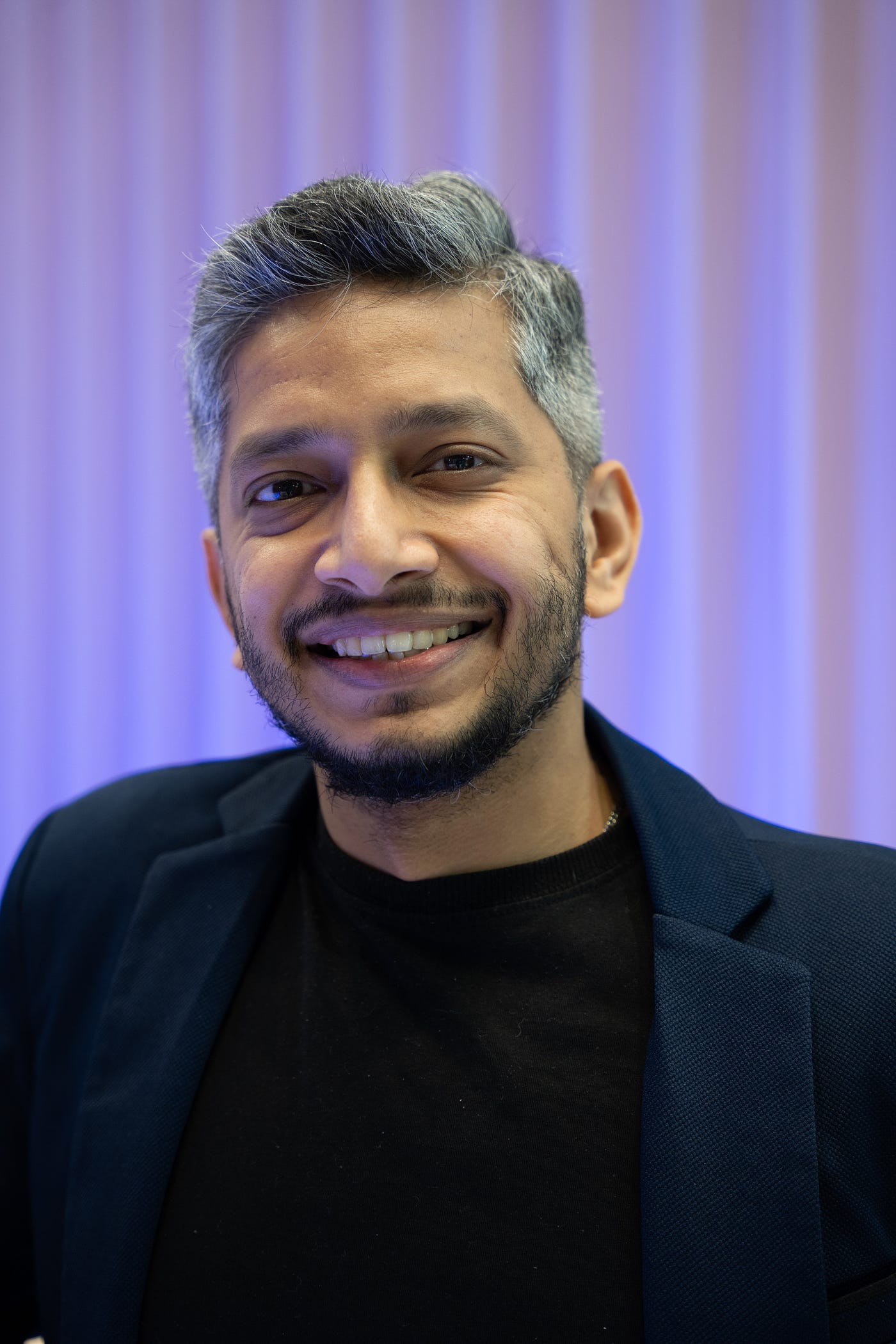
As a part of this series, we had the pleasure to interview Shafi Saiduddin.
Shafi Saiduddin is a legal advisor, strategist and CEO of Legalis, bringing together his background in law enforcement, intelligence and military service to support high-stakes business and legal matters. After graduating from law school in 1995, he began his career as a police officer before transitioning into civilian roles in the Intelligence Community following 9/11. He later served in the military, retiring as a Lieutenant Colonel. Throughout his government career, Shafi witnessed rapid technological changes in the information environment and their implications for intelligence collection and investigative work. He applies those insights, along with his legal and operational experience, to litigation support investigations, helping clients evaluate their cases from multiple perspectives and develop more informed strategies. Shafi’s approach centers on separating facts from uncertainty. By examining a matter from the client’s perspective, the opposing side’s position and a broader third-party viewpoint, he helps clients cut through the noise, assess their options and make strategic decisions in complex legal and business matters.
Thank you so much for joining us in this interview series! Before we dig in, our readers would like to get to know you. Can you tell us a bit about how you grew up?
I was born to immigrants and had a typical childhood: delivering papers, and being pushed to excel in school. I joined Boy Scouts and became an Eagle Scout. That path often leads to the military, where I spent 30 years.
Is there a particular story that inspired you to pursue your career? We’d love to hear it.
There’s not one story, just my keen interest in going to the library, reading, and studying military history, mainly Lewis and Clark and T.E. Lawrence. This got me interested in exploration, travel, and engaging with different cultures.
Can you share the most interesting story that happened to you since you began this fascinating career?
I taught a lot in the military. I saw that we got very used to our processes early on. Adaptability has been a challenge in every organization I’ve been with. This interests me because it is an ongoing challenge. The problems we are dealing with have been dealt with in the past. Few people can absorb a local culture and become part of it. (Lewis and Clark, T.E. Lawrence). Nearly every mission I was on, people were always missing part of the problem and, because of that, part of the solution. And I have seen this with partner militaries as well. This is why our company focuses on the concept of “the third side.” Everyone has their own cultural and institutional blinders. We recognize that we must look at the problem from unfamiliar or uncomfortable angles, and not overvalue our own experience. You are always a student.
None of us are able to achieve success without some help along the way. Is there a particular person to whom you are grateful who helped get you to where you are? Can you share a story about that?
My father always encouraged me to pursue my interests, even if he did not always agree with them. He pushed me to go to law school and to have the degree to fall back on. I went into the Police Academy after graduating from law school but kept my law license current over the past 30 years. Even though I never practiced law, after I retired from the military, I returned to the law and found it a very natural fit, blending intelligence work and the law.
Are you working on any exciting new projects now? How do you think that will help people?
We look at continuous improvement. Because we are building the company in a time of profound technical change and have a blank canvas to do it, we have a free hand for innovation. We are retired military, and we have more time than most to slow down, fully research and experiment with these new systems and concepts. This will help our clients because we are not in a hurry to jump on every bandwagon. Every new technique we explore and develop for our business gets thoughtful consideration.
What advice would you give to your colleagues to help them to thrive and not “burn out”?
Recognize that information overload is real. Be great at one thing; you don’t have to be good at everything. Learn to outsource tasks and create multiple brains for yourself.
Ok super. Thank you for all that. Let’s now shift to the main focus of our interview. How have recent privacy measures like The California Consumer Privacy Act (CCPA), CPRA GDPR, and other related laws affected your business? How do you think they might affect business in general?
The environment is constantly changing. Some privacy regulations make certain information hard to obtain, while certain technologies make it easier. We are seeing six-month windows before something changes again. You cannot sit still and expect that your processes and procedures will endure. You must have the agility to relook and reshape your company. The effect on businesses is a mixed bag. There are some positive privacy protections for consumers, but it also allows fraudsters more options to cover their tracks. There have been recent examples with the General Data Protection Regulation (GDPR) and business registries.
From your vantage point, is there anything that you would suggest to make these measures more effective?
A lot of the privacy laws provide broad exceptions for government and law enforcement, but limit access to lawyers and their investigators. Many issues of fraud and malfeasance are handled in civil versus criminal courts. Civil attorneys should have ways to access this information while instituting appropriate safeguards.
What are the most common data security mistakes you have seen companies make?
Ignoring the human element. Not background-checking employees. A background check is more than just running records. It’s about looking for behavioral indicators that would prevent someone from being a good fit for the company. You need to think like an adversary; the human element is usually the weakest link in the chain. All the cybersecurity in the world does not stop an employee from planting a listening device in a conference room or walking out the door with paper documents in hand.
What are the “5 Things Every Company Needs To Know To Tighten Up Its Approach to Data Privacy” and why?
1. Plan for a compromise. It’s not “if” your data gets compromised; it is usually “when.” So, plan for it to happen.
2. Compartmentalize your information. Have different bins to store different types of data. If you keep it all in one place, then it is all hacked. The more information you have in one place, the bigger the target.
3. Establish an incident response plan. Have an incident response plan. Studies show that only 42% of companies have one, and many employees don’t know how to use it.
4. Secure your traveling workforce. If your employees travel, make sure they have burner phones and clean computers. If you are traveling overseas, the threat actor may be a nation-state. Do a risk assessment on where you are going, who your clients are, and the types of industries there.
5. Curate your public persona. Manage your public persona online. Limit it to the things you want to be out there. Some people are extreme privacy enthusiasts, and they use every method to erase their information from the internet. Some level of transparency is important to show legitimacy in a business. An indicator of fraud is not being able to find any information on someone who claims to be a business owner.
You are a person of enormous influence. If you could inspire a movement that would bring the most amount of good to the most amount of people, what would that be? You never know what your idea can trigger. :-) (Think, simple, fast, effective and something everyone can do!)
I would encourage a movement toward looking at problems from perspectives beyond our own. Whether in business, government or our personal lives, we all have blind spots shaped by our experiences, assumptions and the institutions we work within. We can make better decisions when we recognize those blind spots and remain open to information or perspectives we may have overlooked. At Legalis, our work is grounded in this same principle of looking beyond the obvious and considering unfamiliar angles. I would encourage everyone to make a habit of asking, “What might I be missing?” before reaching a conclusion. It is a simple question that can open the door to new insights, stronger decisions and a better understanding of the world around us.
How can our readers further follow your work online?
Follow Legalis Intelligence Advisors on LinkedIn at https://www.linkedin.com/company/legalis-intelligence-advisors/posts/
Thank you for sharing these insights!