When we started Moonware, I assumed airlines would move at startup speed.
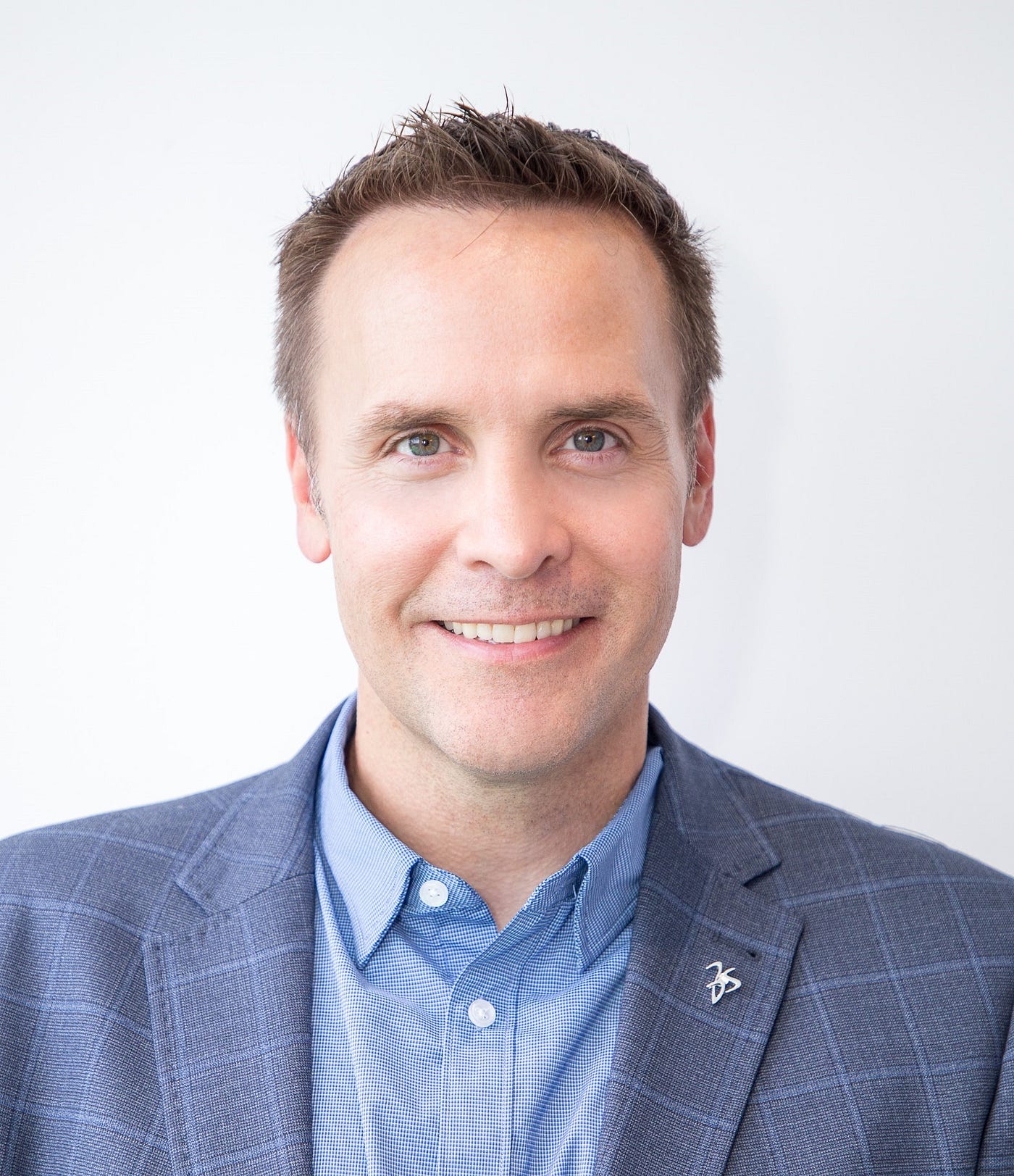
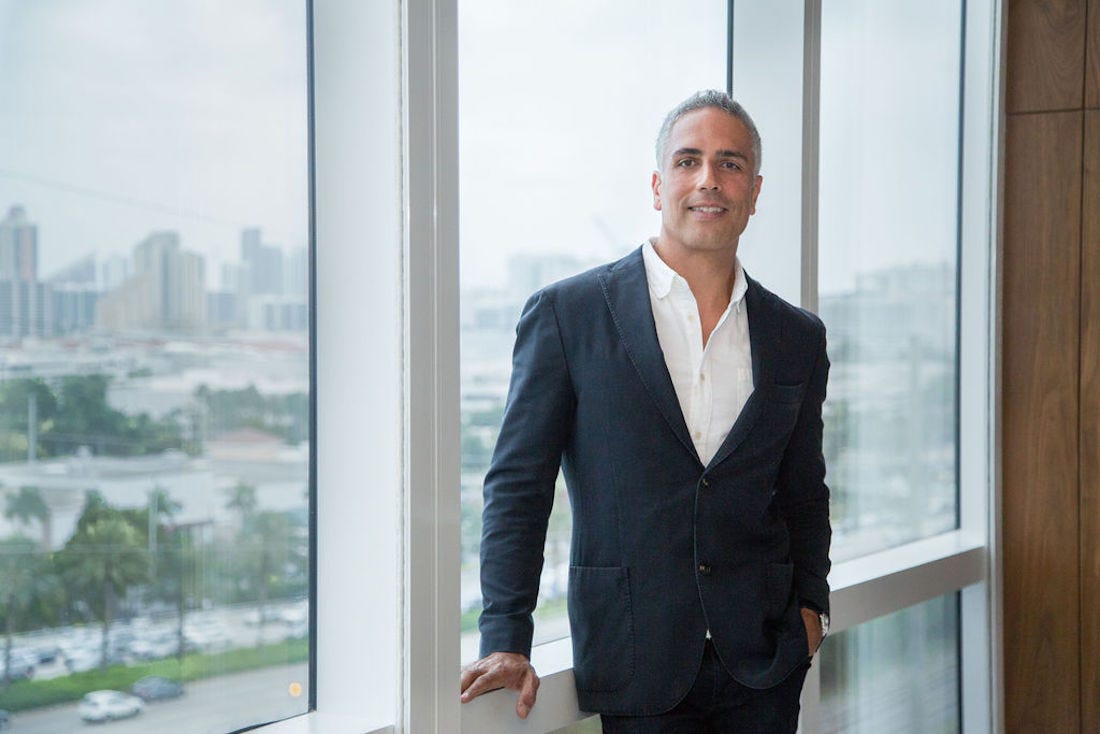
As a part of this series, we had the pleasure to interview Javier Vidal.
Javier Vidal is the Founder and CEO of Moonware, a leader in AI for airfield operations. Javier founded Moonware in 2020 after recognizing the industry’s reliance on manual coordination and fragmented communication. Under his leadership, Moonware developed HALO, an AI-powered operating platform that coordinates ground crews, equipment, and workflows in real time to improve aircraft turnaround performance and operational efficiency. Today, Moonware supports some of the aviation industry’s largest operators, helping airlines increase flight throughput, improve on-time performance, and reduce operational costs. Before founding Moonware, Javier worked at Tesla and Uber. He began his engineering career in robotics, received his first patent at age 15, and studied Mechanical Engineering at Duke University.
Thank you so much for joining us in this interview series! Before we dive in, our readers would love to get to know you a bit better. Can you tell us a story about what brought you to this specific career path?
My path started in robotics. I was granted my first patent at 15, began my engineering career in Tokyo in the robotics industry, and later studied Mechanical Engineering at Duke. I then joined Tesla during the 2018 Model 3 production ramp, working on autonomous systems and production operations, where I saw how much depends on people, machines, and timing working together. From Tesla I went to Uber ATG, working across systems and hardware engineering on self-driving vehicle development.
What pulled me into aviation was exploring the world of autonomous ground vehicles for air taxis. Looking closely at what happens to an aircraft on the ground, I saw an industry preparing for a new era of flight while critical decisions on the ramp were still driven by fragmented communication, manual coordination, and institutional knowledge that doesn’t scale.
I founded Moonware in 2020 to change that. We started by developing autonomous vehicles for the airfield, but the more time we spent with operators, the clearer it became that the bigger opportunity was coordinating the entire turnaround in real time. That became HALO, Moonware’s AI-powered operating platform for the airfield.
Can you share the most interesting story that happened to you since you started your career?
Early on, I spent some time on the ramp with ground crews so I could see the operation from the inside. On one of those days, a late inbound flight squeezed the turnaround window, and within minutes everything depended on the crew chief. He was juggling radio calls, a belt loader that hadn’t shown up, and a bag cart sitting at the wrong gate, all from memory and a paper sheet in his pocket. The plane pushed back on time, mostly because he’d done it thousands of times.
Standing there next to a cart of bags, it hit me that the whole turn was running on one person’s head. If he’d been off that day, the flight would have left late, and nobody upstream would have known why until it was too late. That experience did more to shape Moonware’s technology than any market study we could ever run.
Can you share a story about the funniest mistake you made when you were first starting? Can you tell us what lesson you learned from that?
When we started Moonware, I assumed airlines would move at startup speed. After one of our first meetings with an airline, I went back to the office and built a timeline to deploy our technology within a few weeks. Their procurement and legal reviews alone took longer than my entire plan.
The lesson was that a great meeting isn’t a decision, and a startup can’t afford to build its plans around an airline’s timeline. So we changed our approach. Today we offer operators short trials in their own operation, so they can see results before they commit. I still believe this industry needs to adopt new technology much faster, and putting it in operators’ hands early is the quickest way I’ve found to get there.
None of us are able to achieve success without some help along the way. Is there a particular person who you are grateful towards who helped get you to where you are? Can you share a story?
My father is an architect who has spent most of his career designing airports, from Terminal 4 at Madrid-Barajas to the Queen’s Terminal at Heathrow and new terminals in Pittsburgh and Boston. I grew up in Madrid with airports as a constant topic at home, and learned early how much thought goes into parts of a terminal that passengers never notice.
His work shapes what passengers see. Mine is about what happens on the other side of the glass, where crews and equipment keep each aircraft moving. What he taught me applies to both: an airport only works when every piece works together, and that’s the idea Moonware is built on.
You are a successful business leader. Which three character traits do you think were most instrumental to your success? Can you please share a story or example for each?
Curiosity. I’ve never stayed inside one field for long. Robotics in Tokyo, a factory at Tesla, self-driving cars at Uber. Each move came from wanting to understand how a different system worked, and all of them show up in how we build Moonware today.
Willingness to change course. Moonware started out building autonomous vehicles for the airfield, and airlines were genuinely interested. Walking away from something with real demand is hard, especially for a young company. But the field was telling us the bigger need was transforming operations from manual to digital, and following that instead of our original plan is how HALO, Moonware’s software product, came to be.
Persistence. We started in 2020, the year air travel nearly stopped. Aviation is also an industry where trust takes years to earn, and some of our relationships took a long time to turn into a first deployment. Staying with it, and coming back with something better each time, is a big part of how we got here.
Thank you for that. Let’s jump to the core of our discussion. Can you share with our readers a bit about the innovations that you are bringing to the Aviation and Air Travel industries?
When an aircraft arrives at the gate, it’s like a Formula 1 pit stop. Several teams work on it at once to turn it around quickly and safely: unloading and loading bags, cleaning the cabin, refueling, restocking catering, and deplaning and boarding passengers, all within a tight window set by the airline. In Formula 1, every second in the pits counts. On the ramp, every extra minute an aircraft spends at the gate costs the airline money.
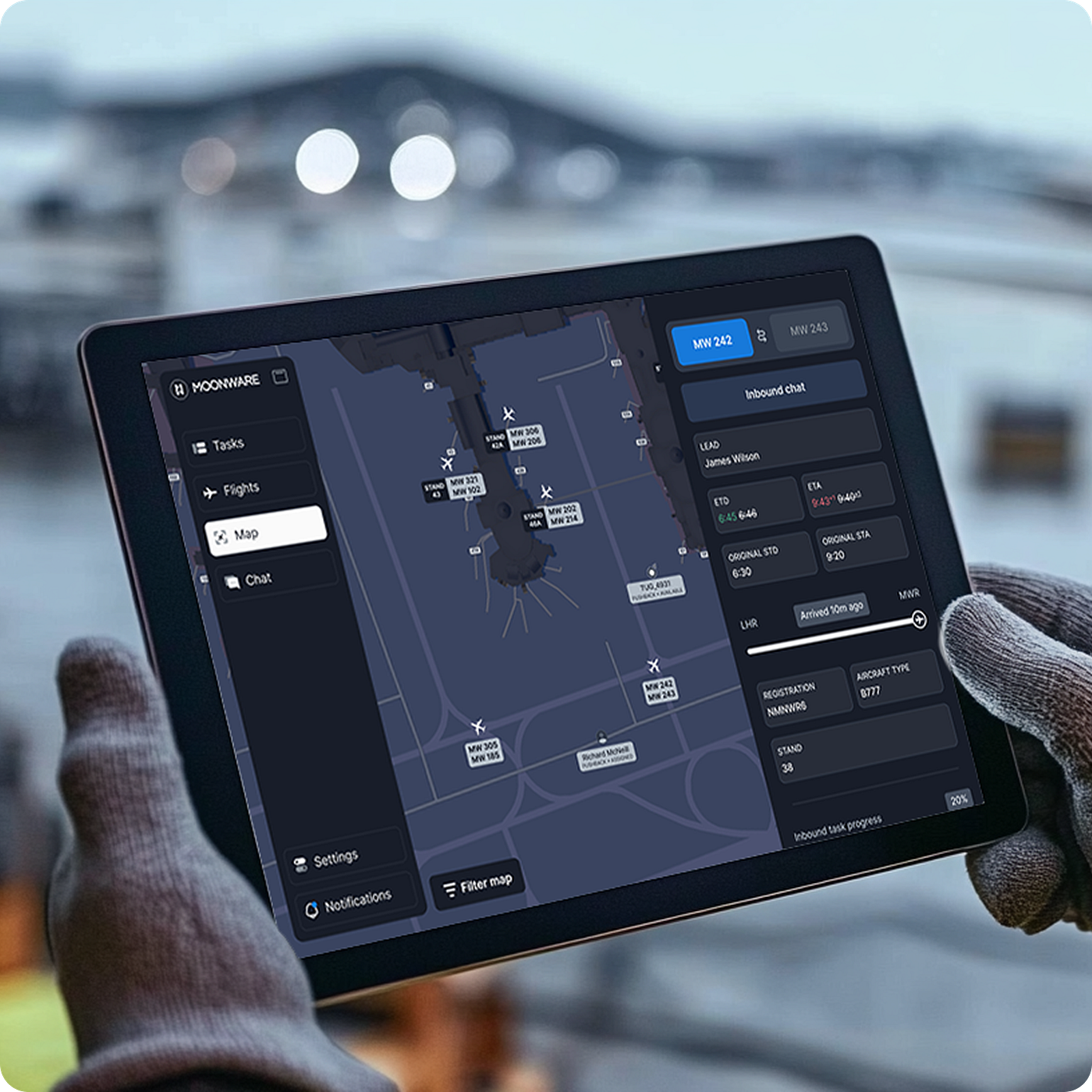
Our core product, HALO, is an AI-powered Ground Traffic Control™ platform for airport ground operations. It gives airlines, ground handlers, and airports a live picture of every turnaround from gate-in to gate-out, coordinating crews, equipment, and tasks in real time.
HALO combines live operational data with AI to understand what’s happening on the ground, flag risk as it develops, and help teams act before small issues become delays. It also captures the services performed on each turn, so the same data that runs the operation supports billing and performance tracking.
Operators stay in control. HALO gives them better information to make faster decisions, and today it’s live with airlines and ground handlers across several continents.
Which “pain point” are you trying to address by introducing these innovations?
Every turnaround is a race against the clock. In as little as 30 to 60 minutes, dozens of people and vehicles converge on a single aircraft to get it pushed back safely and on time. It happens on every flight, every day, at every airport.
Most of that work is still coordinated over walkie-talkies, paper, spreadsheets, and disconnected tools. When one task slips, nobody has the full picture, so a small delay at one gate can cascade across the schedule. Ground handlers carry that complexity on thin margins, and the cost shows up as late departures, missed services, and added risk on the ramp.
How do you envision that this might disrupt the status quo?
Ground operations have always been reactive. Teams usually find out something went wrong once it’s already a delay. Moonware’s technology shifts that by giving everyone working the turnaround the same live picture and flagging risk early enough to act on it.
It also changes who can see what. Airlines, ground handlers, and airports share the same aircraft but rarely the same information. A common operational picture means fewer things lost between organizations and better decisions across the whole airfield.
This isn’t about replacing the people on the ramp. Their experience is what keeps aircraft moving. The shift is giving them technology that matches the complexity of the job they already do.
What are your “5 Things You Need To Create A Highly Successful Career In The Aviation Industry?
1. Spend time where the work happens. When we started building Moonware, our team spent a lot of time on the ramp with ground crews, watching real turnarounds and testing workflows in live operations. Many of our most important product decisions came from those hours, not from a conference room. Aviation runs on operational reality, and you can’t design for it from a distance.
2. Treat safety as the job, not a feature. Everything on the ramp happens around aircraft, heavy equipment, and people working on tight timelines. That’s why Moonware’s technology is built to support operators’ decisions rather than take control away from them. In aviation, new technology earns trust by making the operation safer first, and efficiency follows.
3. Bring in perspective from outside aviation. My time at Tesla during the Model 3 production ramp shaped how I think about operations. A turnaround has a lot in common with a production line: many specialized tasks, tight sequencing, and little room for error. Aviation benefits from people who’ve solved similar problems elsewhere, as long as they respect what makes this industry different.
4. Learn from the people who’ve run the operation. Our team includes the former COO of Swissport USA, a leading ground handling company, and the leader who ran all of Air Canada’s US stations. Pairing that experience with engineers from leading Silicon Valley companies is what lets us build something operators actually use. If you’re new to aviation, find the people who’ve lived the operation and listen to them.
5. Think globally. I’m from Madrid, started my career in Tokyo, and today we work with airlines and ground handlers on different continents. The same turnaround runs very differently from one country to the next, shaped by culture, regulation, and how teams are organized. Understanding those differences matters as much as the technology itself.
You are a person of great influence. If you could start a movement that would bring the most amount of good to the most amount of people, what would that be? You never know what your idea can trigger. :-)
I’d start a movement to give frontline aviation workers the recognition and tools they deserve. The people on the ramp, loading bags in the rain before sunrise and turning aircraft in under an hour, make global travel possible, yet most passengers never think about them. Better technology, safer working conditions, and real career paths for those teams would improve travel for everyone who flies.
How can our readers further follow your work online?
The best place is LinkedIn (https://www.linkedin.com/in/javier-vidal/), where I share most of what we’re working on. You can also follow Moonware on LinkedIn (https://www.linkedin.com/company/moonware/) and learn more at moonware.com.
This was very inspiring. Thank you so much for joining us!