
When you remove team members from the same space, a very important part of communication becomes almost completely unavailable – non-verbal cues. In absence of these cues, our brain simply doesn’t have enough information to make reasonable judgments and create human bonds that are so essential to human thriving.
We are living in a new world in which offices are becoming obsolete. How can teams effectively communicate if they are never together? Zoom and Slack are excellent tools, but they don't replicate all the advantages of being together. What strategies, tools and techniques work to be a highly effective communicator, even if you are not in the same space?
In this interview series, we are interviewing business leaders who share the strategies, tools and techniques they use to effectively and efficiently communicate with their team who may be spread out across the world. As a part of this series, I had the pleasure of interviewing .
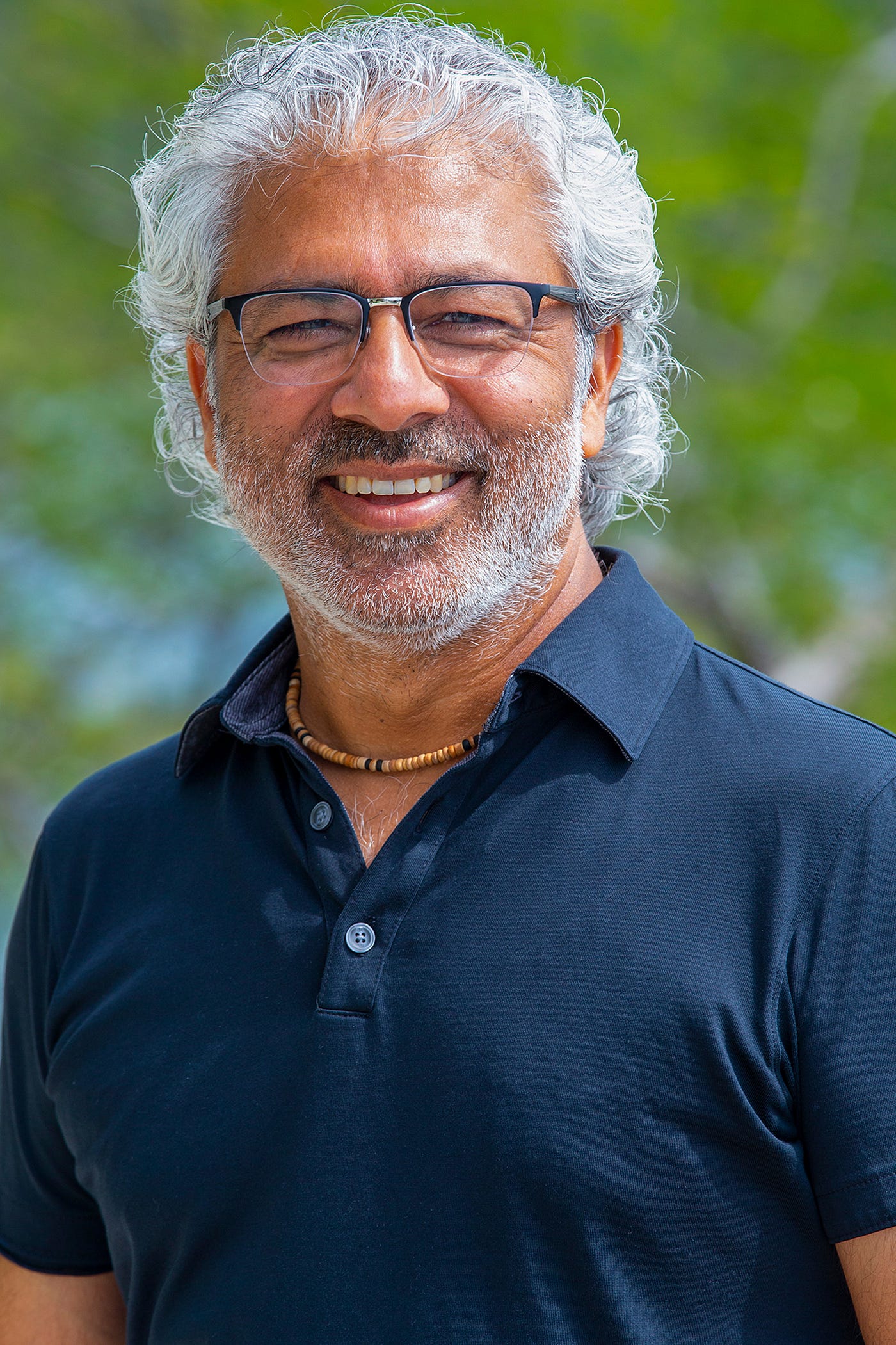
Arun Sardana obtained his formal undergraduate education in hospitality management and also in business administration in India. He came to the United States in 1988 and completed his MBA from Johns Hopkins University, Baltimore, Maryland, in the year 2000. In 2019, in order to inform his work with orphans and abused children in Costa Rica, he completed a Masters in Clinical Psychology and Education with a focus on Spirituality, Mind & Body, from Teachers College, Columbia University, New York.
Thank you so much for joining us in this interview series! Before we dive in, our readers would love to “get to know you” a bit better. Can you tell us a bit about your ‘backstory’ and how you got started?
I came to the United States from India in 1988 with nothing more than $200 in my pocket and big dreams to find and earn the American dream. With intense focus and perseverance over a 25-year period, I built an investment consulting business from scratch that now advises on almost $2 billion in client assets. While still engaged in my work as an investment consultant, I'm now launching a social enterprise start-up called karuna, where we’re helping people access the essential tools of wellbeing they need to reimagine, reclaim, and reset their happiness. I’ve also started a public charity called the karuna happiness foundation with a singular commitment - to make happiness accessible to all.
Can you share the most interesting story that happened to you since you began your career?
Our lives are a collection of interesting stories so it is really hard to pick one without doing justice to others since they have all played a big role in my life's direction. Since you have posed the question, I will give you one. When I started working in financial services in 1995, I barely knew anyone who had a respectable sum of money to invest. So, I did the next best natural thing - I started cold-calling successful Indian business owners who had migrated to the US in the early and mid-1970's. My calendar was packed with meetings every day and I seemed like the busiest rookie in the office except for one raw, disturbing fact - for the first three critical months of my career, I opened zero accounts and had no success to point to. My office manager called me in his office and taught me a very productive lesson which I use to date. After expressing his serious doubt about my ability to succeed in this highly competitive and entrepreneurial world, he said to me, "Arun, there's a difference between activity and productivity." And he left me alone in his office… I cried and cried that day because I was sure that he was going to fire me that day or very soon thereafter. Well, I am happy to report that I am still in the business 25 years after taking this advice to heart.
Can you please give us your favorite "Life Lesson Quote"? Can you share how that was relevant to you in your life?
Of course. It’s a quote by my favorite philosopher teacher, Lao Tzu – “mastering others is strength; mastering yourself is true power.” This quote has always resonated with me because it has a never-ending lesson for how to live your life. The more I work on this teaching, the more enriched I feel. And the more enriched I feel, I realize how much work I still need to do on myself.
None of us are able to achieve success without some help along the way. Is there a particular person who you are grateful towards who helped get you to where you are? Can you share a story about that?
My father had an uncanny ability to listen, step back from the conversation and then respond with such eloquence that it almost always shocked people (pleasantly). His responses were always thoughtful, compassionate and, most of all, truthful. He didn't tell people what they wanted to hear but what they needed to hear but in a way that it always sounded like he was their biggest cheerleader even when he was issuing red alerts and warnings. I admired this quality in him so much that I recall leaving sports games with my friends and running home if I heard that some people were visiting him for advice. I have never forgotten that art of listening but I must admit that I have a long way to go - it is a truly special ability to listen and speak intentionally without reacting.
Ok wonderful. Let’s now shift to the main focus of our interview. The pandemic has changed so many things about the way we behave. One of them of course, is how we work and how we communicate in our work. Many teams have started working remotely. Working remotely can be very different than working with a team that is in front of you. This provides great opportunity but it can also create unique challenges. To begin, can you articulate for our readers a few of the main benefits of having a team physically together?
Human beings were not designed to exist in isolation. We are herd animals and connection with others is not only a basic primal need but it is also one of the most important determinants of wellbeing and happiness. There are fine nuances of communication that are purely non-verbal that give us important cues about our environment. When people are present physically in the same space, our brains are able to process signals that are otherwise absent. These signals are incredibly important in building human bonds, relationships, camaraderie, compassion for each other – in short, team spirit. It is this team spirit that creates the flywheel effect, a term that Jim Collins, who authored the famous book Good to Great, coined. A flywheel is really hard to get started because of its weight but as it picks momentum, it becomes easier to move with each revolution.
This is how teams operate over time. They build synergies and as their momentum picks up, productivity rises, creativity goes through the roof and everyone thrives.
On the flip side, can you articulate for our readers a few of the main challenges that arise when a team is not in the same space?
When you remove team members from the same space, a very important part of communication becomes almost completely unavailable – non-verbal cues. In absence of these cues, our brain simply doesn’t have enough information to make reasonable judgments and create human bonds that are so essential to human thriving. The metaphor that comes to mind is like eating food that has absolutely no taste – you can satisfy hunger and you can survive, but there’s no way to completely appreciate what the food has to offer. That’s what virtual connection can do – remove our ability to appreciate and cherish each other as we should. We can still get the work done, but it’s just not the same.
Fantastic. Here is the main question of our interview. Based on your experience, what can one do to address or redress each of those challenges? What are your "5 Things You Need To Know To Communicate With Your Team Effectively Even If You Are Rarely In The Same Physical Space ? (Please share a story or example for each.)
Here are my 5 things that I consider incredibly important for teams to communicate effectively when they are rarely in the same physical space:
Learn to listen more acutely – since we have many environmental disturbances in a virtual team scenario that are otherwise absent in an office space, it is critical that we truly develop our sense of listening and consciously focus on what’s being said. In fact, I go as far as saying that we should make a mental statement to ourselves when someone begins speaking that “I am now going to stop paying attention to everything and I will open myself up to listen to you with complete intention.” That sends a signal to our brain to perform the task in a more focused manner. This is an adaptation from an indigenous listening circle or listening stick practice in which only one person is allowed to speak and others are directed to simply listen, and they both do that with their hearts.
Pay attention to non-verbal cues – even though they are extremely limited. There’s a wonderful book I once read called What Every Body Is Saying which has a wealth of non-verbal signals one should be paying attention to. For example, when someone touches their neck, it is usually a signal that they have something to say. And when someone places their fingers on their lips, they are holding their words back, and a hand on the chin represents a thought that may need airing.
More is less – when we are unable to come together in the same physical space. In other words, more contact through a variety of communication channels – voice notes, emails, texts, phone calls, Zoom etc. – becomes more important to keep the finger on the pulse. This does not mean death-by-meetings, it simply means a completely open channel of communication that utilizes various ways to connect with each other.
Trust and not doubt – is the key to success in virtual situations. Many managers have a challenge in trusting that a virtual team is just as dedicated to the work as they were when they were present in the same physical space. Out of sight, out of mind scares a lot of people. The reality is that your team is probably working harder and spending more hours doing work related tasks than personal stuff. So, trust in every team member is critical or the whole castle can come crumbling down. Trust is like a beautiful hand blown glass sculpture – it takes a lot of time, effort and care to build but one little crack can completely shatter it in a second.
Set clear goals for work AND self-care – to prevent burnout and stress which can take a devastating toll on the physical and mental wellbeing of your team. By setting clear and realistic goals and planning deadlines not only for work but also for self-care, you empower your team members to take agency of their own life. You also send a clear signal that work-life integration is important to you as their leader and you will have their loyalty and trust because of it. As a leader, scaffolding the team and providing them ways to lean on each other for professional and personal issues, as appropriate, is a mark of a culture of compassion – a pre-requisite in today’s environment.
Has your company experienced communication challenges with your workforce working from home during the pandemic? For example, does your company allow employees to use their own cell phones or do they use the company’s phone lines for work? Can you share any other issues that came up?
It would be disingenuous to say that we haven’t. While we don’t really have a cell phone usage policy because we don’t issue corporate cell phones, we do have a very clear standard – raise your hand when you are overwhelmed or find yourself in a difficult spot so that you can get the help you need. The biggest challenge in this virtual environment is what you don’t know. So, that’s been my personal challenge in these times with my two teams. Sometimes, people simply suffer alone because of a variety of reasons – the fear of being judged, reprimanded, feeling inadequate, or personal preference. Such unknowns can undermine the team’s performance, morale and productivity. So, that’s what I worry about most – the wellbeing of my team members on all fronts.
Let’s zoom in a bit. Many tools have been developed to help teams coordinate and communicate with each other. In your personal experiences which tools have been most effective in helping to replicate the benefits of being together in the same space?
Frankly, I am old-fashioned when it comes to communication. While many tools are excellent for improving communication forced by the need of the hour, none of them come close to in-person contact in my opinion. While Zoom, Google Meet, Windows Teams and other such virtual meeting tools are truly amazing in keeping us connected, I believe they need to be used with an eye towards replicating an in-person environment and I am not sure if that’s happening enough. For example, these tools are mostly used for meetings and official business. Perhaps, they ought to be used for virtual hangouts, virtual lunches and after-hour drinks…that’s happening to some extent but not nearly enough. These tools need to start figuring out how to satisfy the social needs of human beings. Once they do, we will have made important progress.
If you could design the perfect communication feature or system to help your business, what would it be?
I would call it Trust because trust operates in silence and in words. It is one of the most powerful communication features or system that human beings need to feel secure and not have unhealthy anxiety and stress in its absence. When people feel secure, they can move mountains without a word being said. Communication is not just an exchange of words or non-verbal cues – it is a silent transfer of energy that tells another human being that they have nothing to fear or doubt. Trust does that job. And when you trust someone, you begin a virtuous cycle that has depth, character and strong roots.
My particular expertise and interest is in Unified Communications. Has the pandemic changed the need or appeal for unified communications technology requirements? Can you explain?
I don’t think that the need for unified communications is going to go away, and it shouldn’t due to the pandemic. The reason is simple – people learn and communicate in different ways, as has been shown by the studies of Dr. Gardner who developed the eight multiple intelligences concept. Unified communications is about productivity and not necessarily about an alternative to teams sharing the same physical space. In a global business world, unified communications can offer great benefits and economies to businesses – that was the intent of this technology and that hasn’t changed.
The technology is rapidly evolving and new tools like VR, AR, and Mixed Reality are being developed to help bring remote teams together in a shared virtual space. Is there any technology coming down the pipeline that excites you?
My answer will bore you – none of these technology enhancements strike me as exciting. They are simply efficiencies in systems and processes that are necessary as we move ahead technologically. We all know that we are becoming more disconnected in an always-on connected world. There are real dangers of these technologies to human wellbeing, specifically to mental wellbeing and I am a big proponent of the phrase “everything in moderation is good.”
Is there a part of this future vision that concerns you? Can you explain?
Very much so. As I said in the previous answer, the highly connected world has already taken a huge toll on peoples’ mental wellbeing. There’s a real danger that our future generations will somehow become robots without even trying. If they stop understanding the value of human connection, I can only imagine what horrors that may bring to society at large. A society that has a paucity of connection will also be devoid of compassion, of love, of forgiveness, of gratitude, of everything a human being is supposed to experience in this marvelous life. We will be reduced to robots – as a new normal, nothing about that makes me feel good.
So far we have discussed communication within a team. How has the pandemic changed the way you interact and engage your customers? How much of your interactions have moved to digital such as chatbots, messaging apps, phone, or video calls?
I am glad that you asked this question. The new startup on mental wellbeing that we are launching was initially conceived as a purely in-person experience. When COVID derailed those plans, we decided that we also had to go the route that everyone else seemed to be following – virtual mental wellbeing. We spent a lot of time, effort and resources building it out. Then, I had a watershed moment when everything became crystal clear – there was absolutely no way we could deliver wellbeing from behind a computer screen because happiness doesn’t live there, it lives in our hearts and in human touch and connection. So, we abandoned the virtual route almost completely and decided to use technology only when it enabled our clients and members and did not disable them.
In our new model, while we will deliver content through emails, we will not require our clients and members to sit in front of a computer screen to listen to master classes and lessons being delivered for hours on end. We will use technology selectively and for micro-learning only. Most of the work that our members – we call them karuna ambassadors – will do will be out in nature or in the comfort of their home or any other space they enjoy. When it is safe, we will bring our members together for in-person transformational experiences, as was our plan before the pandemic.
In my experience, one of the trickiest parts of working with a remote team is giving honest feedback, in a way that doesn't come across as too harsh. If someone is in front of you much of the nuance can be picked up in facial expressions and body language. But not when someone is remote. Can you give a few suggestions about how to best give constructive criticism to a remote team member?
Once again, listening is a rare skill that needs to be developed. Before responding to anyone, whether in person or in a virtual setting, one must step back and ask the question “what is this person trying to convey?” And if that’s not absolutely clear, then ask clarifying questions or paraphrase the person’s question to make sure you understand their perspective as fully as possible before answering or reacting to their comments. Trust me, I am guilty of these reactions because sometimes comments can trigger emotions in our brain stem which then cuts off our rational (cortical) region of the brain – the result is an embarrassing reaction which we all tend to regret later. So, taking the time to step back and placing yourself in the other person’s shoes is the optimal way to provide constructive criticism.
I also like to encourage “respectful dissonance.” This is disagreement with each other but always in a respectful manner because every person brings unique intelligence to the team. All perspectives are relevant and essential. Disagreement is too. But it must always be respectful.
Can you give any specific ideas about how to create a sense of camaraderie and team cohesion when you are not physically together?
This is where I use the policy “small is big” – notice small positive things in each other and point them out on a daily basis. They can make a big difference in someone’s day. Encourage people to get together using safe protocols if they are comfortable with that idea. Give people the space they need and trust that they are doing their job. Allow and even encourage creative destruction of ideas in a playful manner so people can truly get engaged. Gamify the work to include small prizes, badges, points etc. that can be redeemed for something special. Recognize that people learn differently and create opportunities for each of those ways to be used – kinesthetic, musical, linguistic etc.
Ok wonderful. We are nearly done. Here is our last “meaty” question. You are a person of great influence. If you could inspire a movement that would bring the most amount of good to the most amount of people, what would that be? You never know what your idea can trigger. :-)
I would love to see the cut-throat corporate culture change to a tolerant and symbiotic compassion culture…a movement of compassion has the power to change the world in beautiful ways. That’s what I would love to see happen during my lifetime.
How can our readers further follow your work online?
They can visit www.raymondjames.com/spgfiduciarypartners/ for our team’s work in institutional investment consulting exclusively dedicated to not-for-profit organizations, and they can visit www.accesskaruna.com and www.karunahappinessfoundation.org for the social enterprise start up committed to making happiness accessible to all and empowering marginalized women, youth and children so they can break out of the vicious cycle of poverty and abuse and get a fair shot at life.
Thank you so much for the time you spent doing this interview. This was very inspirational, and we wish you continued success.
Thank you very much. It was a true delight to do this with you. Thanks for the opportunity