I was working on AI software for contact-center agents when I noticed that agents still had to physically raise their hands to ask supervisors for help. I suggested building a digital hand-raise feature, but my team initially questioned whether it was necessary because managers and agents were sitting in the same office.
As a part of our series about the future of Artificial Intelligence, I had the pleasure of interviewing Malaika Saini.
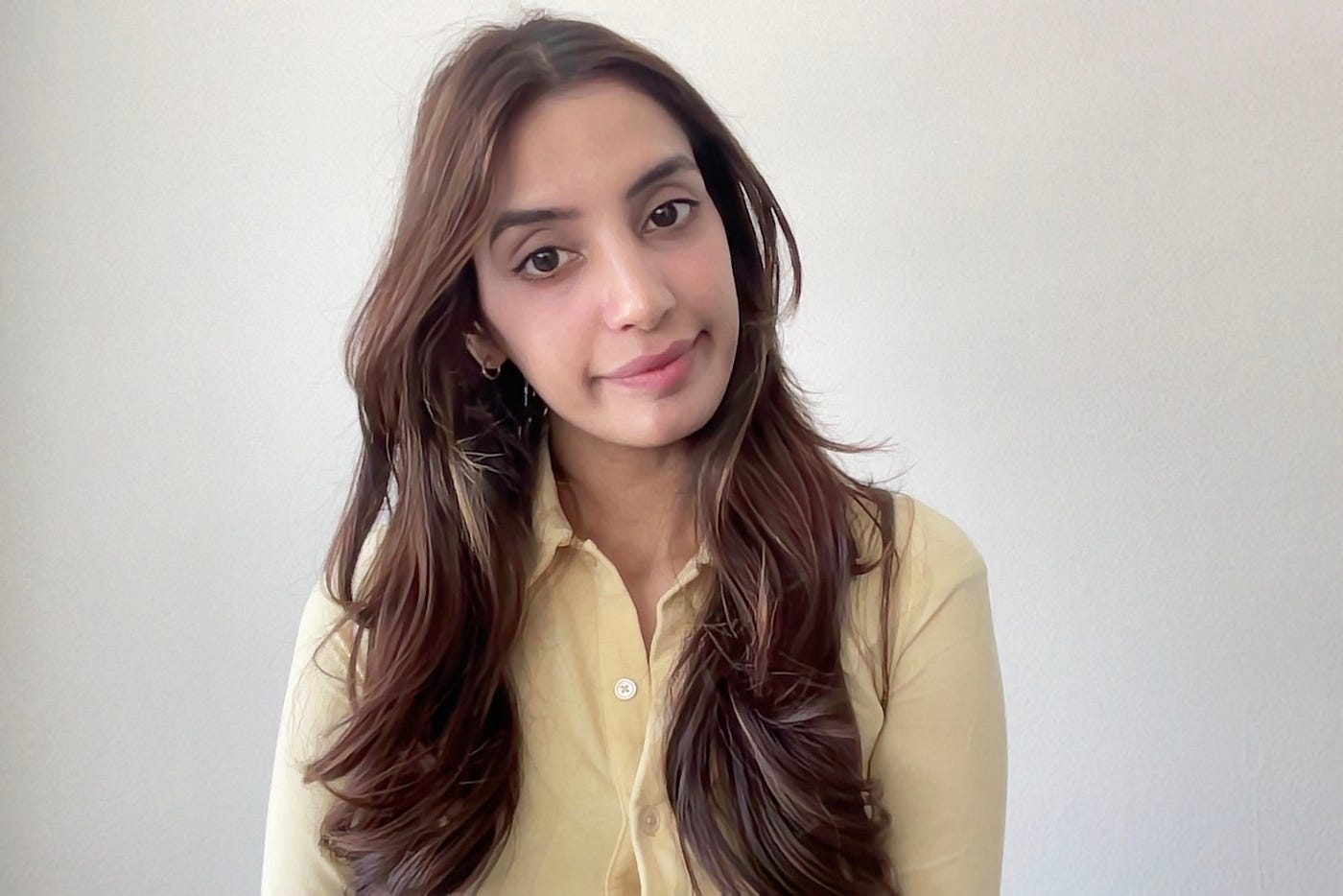
Malaika Saini is a product designer specializing in AI-powered products that make complex technology more useful and accessible. Most recently at Google, she designed AI experiences for more than 10,000 sellers, collaborated with DeepMind, and was the only recipient of Google’s CE Excellence — Risk & Innovation Award that year; previously, she worked at Cresta and was the founding product designer at Gan.ai. She is now an incoming founding product designer at a Series A startup, driven by her belief that AI should empower people rather than replace them.
Thank you so much for joining us in this interview series! Can you share with us the ‘backstory” of how you decided to pursue this career path in AI?
I didn’t grow up thinking I would work in technology. My introduction to product design happened at our dining table, where my mother ran her home décor business, Decor by Isha, surrounded by fabric swatches, packaging materials, and cups of chai.
I remember watching her juggle nearly ten different apps to manage one business. She once told me, “I’m running ten apps, not one business.” I helped her design packaging, build a website, and set up online sales. When her first international order came in from Dubai, she was emotional. Something she had built from our home had reached someone on the other side of the world.
That experience made me curious about how technology could create opportunities for people who didn’t have access to large teams or sophisticated resources.
I went on to study Human-Computer Interaction Design at the School of Visual Arts in New York. I became interested in understanding human behavior, how people make decisions, and how technology could make complicated things feel simpler.
My professional journey has taken me through companies at very different stages. At Gan.ai, I was the first product designer, building the product and design system from scratch and helping take it from early prototypes to enterprise pilots. At Cresta, I designed AI tools that assisted contact-center agents during live customer conversations. Most recently, at Google, I worked on AI-powered products for sellers, including Email Assist, which reached more than 10,000 sellers. I also collaborated with DeepMind on AI meeting summarization and received Google’s CE Excellence — Risk & Innovation Award as its only recipient that year.
Working across these environments has taught me that building great technology isn’t just about what the system is capable of doing. It’s about understanding the people using it, the decisions they need to make, and how much control they should have.
I’m now preparing to join a Series A startup as its founding product designer. I’m excited to return to an environment where I can help shape a product from the ground up, work closely with the team, and have a direct impact on what gets built.
What lessons can others learn from your story?
The biggest lesson I’ve learned is that you don’t need to have everything figured out before you start. You need curiosity, the willingness to learn, and the confidence to take ownership when things are unclear.
I didn’t come from a family with a background in technology. When I started studying design, there was a lot I didn’t know about the industry. But I learned to ask questions, reach out to people, and take opportunities even when I wasn’t entirely sure I was ready.
At Gan.ai, I was the first product designer. There was no established design team or playbook. I had to figure out the product’s interaction model, build the design system, and work closely with engineers and researchers to turn ideas into something customers could use.
At Cresta, I learned another important lesson: never assume you understand a problem until you’ve seen it yourself.
I was working on AI software for contact-center agents when I noticed that agents still had to physically raise their hands to ask supervisors for help. I suggested building a digital hand-raise feature, but my team initially questioned whether it was necessary because managers and agents were sitting in the same office.
Instead of continuing to debate it, I visited a call center and spent time observing how people worked. I watched managers walk between cubicles, often carrying laptops, trying to answer questions while several agents waited for help.
I came back and designed a simple solution: one button for agents and a chat interface for managers. We built it, and manager productivity increased by 14%.
That experience reinforced something I still believe: the best way to challenge an assumption is to get closer to the person experiencing the problem.
I would encourage anyone starting their career to be curious, take initiative, and not limit themselves to their job description. Understanding the people, technology, and business behind your work will take you much further than focusing only on the output.
Can you tell our readers about the most interesting projects you are working on now?
I’m currently exploring an AI-powered growth copilot for small businesses.
The idea comes from watching my mother run her business and from conversations I’ve had with small-business owners across India, Kenya, and the Philippines.
A florist in Delhi once told me, “I sell flowers, but I’ve become an app manager.” She was spending so much time managing payments, customer messages, marketing tools, and orders that technology had become another part of her workload.
I started thinking about what it would look like if these tools actually worked together.
The copilot I’m exploring would connect information from a business’s existing systems and help owners answer practical questions: Which customers should I follow up with? Which marketing campaigns are bringing in revenue? Where should I spend my budget next?
What interests me most is the decision-making layer. I don’t want AI to simply generate another dashboard or make decisions without explanation.
If the system recommends spending more on a campaign, it should show why, estimate the potential return, and let the owner change or reject the recommendation. The owner should always understand what is happening.
I’m developing the concept and exploring its technical foundations using PyTorch, React, Segment, Mixpanel, SQL, and Flask. My plan is to run a 12-week pilot with 20 small businesses across India, Kenya, and the Bay Area.
I’ll measure how much time owners save managing tools, whether revenue per active customer improves, how frequently they accept recommendations, and when they choose to override the AI. One of my initial targets is to keep overrides below 15%, while making sure the recommendations are genuinely useful and not simply being accepted without review.
Ultimately, I want to explore how AI can give small-business owners the kind of support that larger companies can afford, without taking away their independence.
None of us are able to achieve success without some help along the way. Is there a particular person who you are grateful towards who helped get you to where you are? Can you share a story about that?
The person I’m most grateful to is my mother.
She ran her home décor brand, Decor by Isha, from our dining table. I watched her manage everything herself, from talking to customers and choosing fabrics to packaging orders and figuring out online sales.
I remember helping her build the website and set up online commerce channels. Neither of us knew exactly how everything would work, so we learned as we went.
Then one day, she received her first international order from Dubai.
I still remember how emotional she was. It wasn’t just another sale. Someone in another country had discovered something she had created from our home and wanted to buy it.
That moment changed how I understood technology. I saw what it could make possible for someone who didn’t have a large team or access to sophisticated resources.
But I also saw the other side: the amount of work she had to put into learning different tools and managing systems that didn’t communicate with one another.
My mother taught me resilience and resourcefulness, but she also gave me the perspective I bring to design today. Behind every screen is a person trying to accomplish something that matters to them.
A lot of what I want to build comes from wanting to make that journey easier for people like her.
What are the 5 things that most excite you about the AI industry? Why?
There are five developments I’m particularly excited about.
1. AI that understands context rather than just commands.
Today, people spend a lot of time moving information between applications and explaining the same things repeatedly. I think AI can change that by understanding what someone is trying to accomplish and helping at the right moment.
At Google, I worked with DeepMind on AI meeting summaries that captured information sellers needed after customer conversations. The first internal rollout achieved 82% adoption among target sellers in one week, compared with an average of 43% for previous internal pilots. Sellers also spent 18% less time on meeting summaries.
2. Making sophisticated technology accessible to small businesses.
A small-business owner shouldn’t need a data analyst, marketing team, and multiple software subscriptions to understand what’s working in their business.
I’m excited by the possibility of giving people access to useful intelligence without requiring them to become experts in the technology.
3. Real-time assistance.
At Cresta, I designed AI experiences that helped contact-center agents during live conversations. The value wasn’t simply generating information. It was giving agents useful guidance while they were speaking to customers.
I think we’ll see more of this across industries, where AI supports people while they’re working rather than waiting for them to ask a question afterward.
4. Faster experimentation and product development.
AI has changed how I work as a designer. At Google, I used AI-assisted prototyping to complete around 10 significant design iterations in three days, work that would previously have taken two to three weeks.
That means I can spend more time testing ideas with people and less time manually building every interaction.
5. AI agents that can take action with permission.
I’m excited about systems that can handle multi-step tasks, but I think the important question is how much autonomy they should have.
The goal shouldn’t be to automate everything by default. It should be to help people accomplish more while remaining in control of important decisions.
What are the 5 things that concern you about the AI industry? Why?
I’m optimistic about AI, but there are five concerns I think we need to take seriously.
1. Confident but incorrect information.
AI can produce answers that sound convincing even when they’re wrong. In a professional setting, that can have real consequences.
If an AI gives incorrect guidance to a customer-service agent or recommends a bad financial decision to a small-business owner, the cost isn’t just a frustrating interaction.
2. Decisions people can’t understand.
At Cresta, I worked on a decision-transparency framework that showed agents why AI suggestions appeared. This helped reduce manual overrides by 22% across 15+ agents.
That experience taught me that transparency directly affects whether people trust and use AI. If a system can’t explain an important recommendation, people should be cautious about relying on it.
3. AI acting without sufficient context.
A system might give a generally correct answer that is completely wrong for a particular person.
For example, a refund policy might depend on a customer’s subscription tier or account status. Without that information, an AI can confidently recommend something that doesn’t apply.
4. People becoming overly dependent on AI.
I worry about systems that gradually remove people from decision-making rather than helping them become better at it.
AI should strengthen human judgment, not make people feel they no longer need to think critically.
5. Bias and concentrated power.
As AI becomes embedded in more parts of our lives, we need to think carefully about whose data these systems are trained on, whose needs they prioritize, and who has access to the technology.
I don’t want the benefits of AI to be limited to people and companies that already have the most resources.
For me, the common thread is accountability. We should be ambitious about what AI can do, but equally thoughtful about how it affects the people using it.
As you know, there is an ongoing debate between prominent scientists, (personified as a debate between Elon Musk and Mark Zuckerberg,) about whether advanced AI poses an existential danger to humanity. What is your position about this?
I think existential risk from advanced AI is a possibility we should take seriously, even though there is still considerable uncertainty about how these risks might emerge.
As AI systems become more capable and autonomous, the questions become bigger than whether a model can generate a good answer. We need to understand what happens when systems can pursue goals, make decisions, and take actions with limited human supervision.
I don’t think we should dismiss those risks simply because we haven’t experienced them yet. At the same time, I don’t believe fear should stop us from exploring the enormous potential of the technology.
I probably sit somewhere between the strongest AI optimists and skeptics, although I lean optimistic.
I’ve seen AI help sellers spend less time on administrative work and support agents during difficult customer conversations. I believe it can make sophisticated capabilities accessible to people who previously couldn’t afford them.
But progress needs to come with safeguards. We need rigorous evaluations, clear accountability, and systems that can be monitored, interrupted, or corrected.
From a product design perspective, one of the most important questions is how much autonomy we give a system. Just because AI can take an action doesn’t mean it should take that action independently.
My position is that we should keep building and researching AI while taking the possibility of serious harm, including existential harm, seriously.
What can be done to prevent such concerns from materializing? And what can be done to assure the public that there is nothing to be concerned about?
I think reassurance has to come from how these systems behave, not just from what technology companies promise.
First, we need transparency. People should know when they’re interacting with AI, what information it is using, and why it is making a recommendation or taking an action.
Second, we need meaningful human control. People should be able to review, approve, reject, or reverse important actions. The more consequential the decision, the stronger the safeguards should be.
Third, AI needs to communicate uncertainty. If a system doesn’t have enough information, it should say so rather than confidently inventing an answer.
Fourth, companies need to take responsibility for what they release. That includes testing systems before deployment, monitoring failures, communicating problems honestly, and providing ways for people to report issues.
For advanced AI, I also think independent evaluations and safety research are essential. Product-level safeguards alone aren’t enough to address every potential risk.
When it comes to reassuring the public, I wouldn’t ask people to trust AI blindly. I would rather show them what the system can and cannot do, give them control over its actions, and make it easy to understand what happened when something goes wrong.
Trust should be earned through experience.
As you know, there are not that many women in your industry. Can you advise what is needed to engage more women into the AI industry?
I think we need to work on three things: representation, access, and opportunity.
I entered technology without a family background in the industry. When you don’t know anyone who works in the field, even figuring out where to begin can feel difficult.
Seeing more women build products, lead teams, and make technical decisions can help others imagine those possibilities for themselves.
But representation alone isn’t enough. We also need accessible education, mentorship, and sponsorship.
Mentorship helps someone navigate their career. Sponsorship helps them get access to opportunities, visibility, and leadership responsibilities. Both are important.
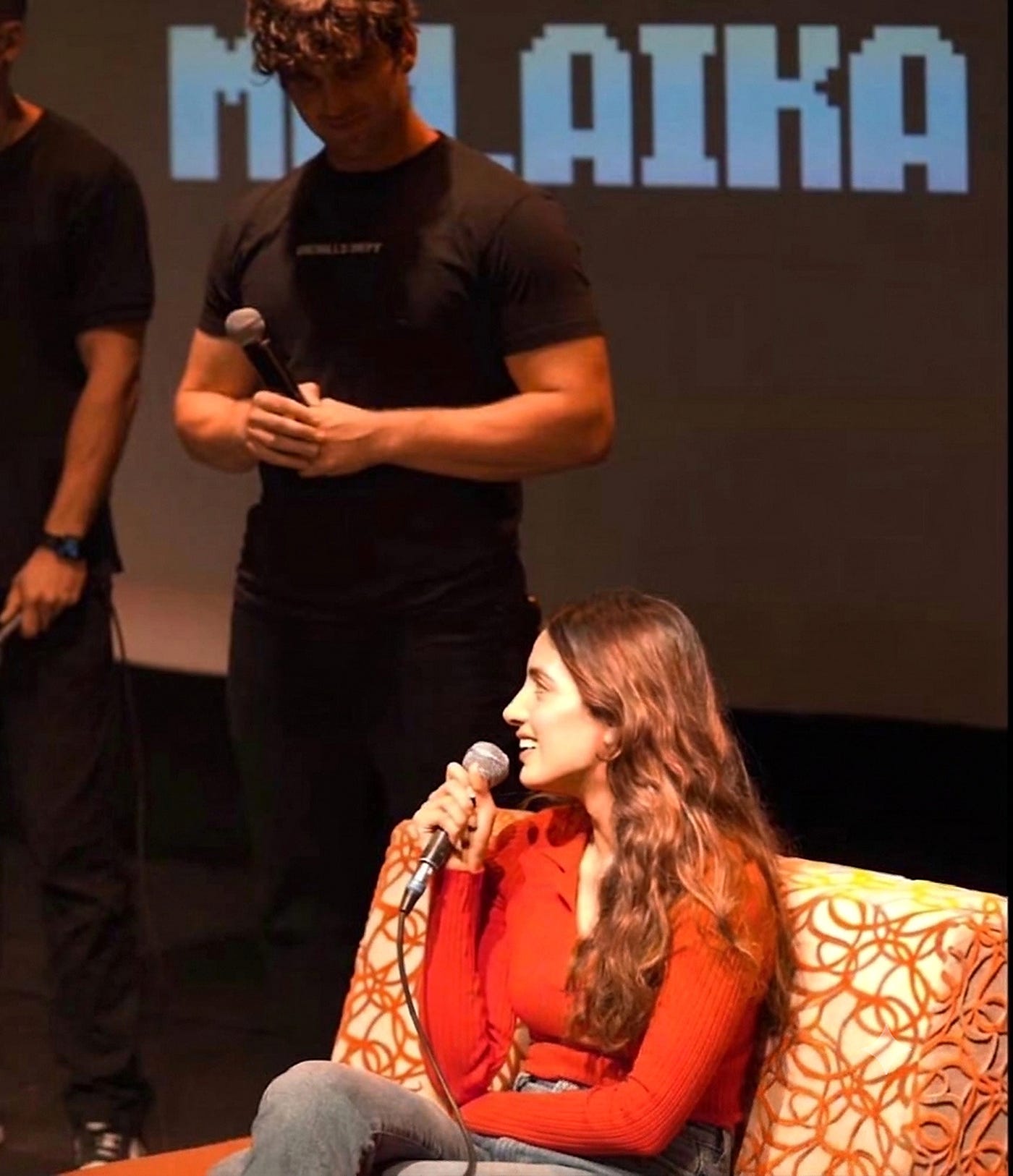
I’ve tried to contribute through teaching and mentorship. I’ve guest lectured to master’s students at Parsons School of Design about AI ethics, agentic AI, conversational design, and chatbots. I’ve also mentored designers and participated in conversations about founding design roles and careers in technology.
I’d also like to see companies become more open to different educational and professional backgrounds. People don’t all arrive in technology through the same path, and those differences can make teams stronger.
Ultimately, the goal isn’t just to have more women working in technology. It’s to have more women influencing what gets built and how decisions are made.
What is your favorite “Life Lesson Quote”? Can you share a story of how that had relevance to your own life?
“Technology’s true promise is not automation. It is empowerment.”
I come back to this idea often because I think we sometimes measure technological progress by how much work a system can take away from people.
But that isn’t always the right measure.
Sometimes the most meaningful thing technology can do is give someone the information, confidence, or time to make a better decision.
I think about my mother running her business, the sellers I worked with at Google, and the agents I met at Cresta. These are people who already understand their work. They don’t necessarily need technology to make every decision for them.
They need tools that help them make those decisions with less friction and more confidence.
That’s the kind of technology I want to spend my career building.
How have you used your success to bring goodness to the world? Can you share a story?
One experience that has been especially meaningful to me was volunteering with Spread a Smile India, an organization founded by Sangita Mehra that supports educational experiences for children living on the streets in Delhi.
During Janmashtami, I conducted art classes for children across different age groups. We painted Krishna ji and makhan ki matki.
What I loved most was seeing how differently each child interpreted the same subject. Some followed the examples closely, while others created something completely their own.
It reminded me that creativity isn’t reserved for people who have access to formal art or design education. Children are naturally curious and imaginative. Sometimes they just need the space and encouragement to explore that.
I also announced free weekly online art and design classes to introduce children to creative fundamentals and create opportunities for exploration and mentorship.
Earlier, I volunteered with the Ladli Foundation Trust through its E-Pathshala initiative, which focused on digital education for marginalized girls and children.
I’ve been fortunate to have access to an education and career that have given me opportunities I couldn’t have imagined when I was younger. Sharing what I’ve learned, whether through art classes, mentorship, or teaching, is one way I can help make those opportunities more accessible to others.
I don’t think you need to wait until you’ve achieved a particular level of success to contribute. Even sharing your time or knowledge can make a difference.
You are a person of great influence. If you could start a movement that would bring the most amount of good to the most amount of people, what would that be? You never know what your idea can trigger. :-)
I would start a movement called “Designing for the people designed for last.”
Throughout my career, I’ve seen how technology is often built for people who already have access to resources, technical knowledge, and support.
But some of the people who could benefit most from technology are the ones expected to work hardest to use it.
I’ve spoken with a florist in Delhi who told me, “I sell flowers, but I’ve become an app manager.” A café owner in Nairobi told me, “$400 wasted is rent. I can’t afford mistakes.” And a furniture seller in Manila described how physically exhausting the work can be even before the sales process begins.
These conversations have shaped how I think about progress.
We shouldn’t measure it only by how many tasks software can automate or how many features a product can launch. We should also ask whether it gives people more time, confidence, and control.
I want designers, founders, engineers, and technology companies to spend more time understanding the people who are often overlooked when products are built.
If you’re a designer, talk to someone whose work you don’t fully understand. If you’re an engineer or founder, spend time observing how people actually use your product. And if you’re building AI, ask whether it strengthens someone’s judgment or simply asks them to hand over more control.
I’d love to see more people join this effort. We don’t need another generation of technology that makes people adapt to software.
We should be building software that adapts to people.
How can our readers further follow your work online?
You can learn more about my work, projects, and approach to design through my portfolio and LinkedIn.
Portfolio: https://www.malaikasaini.com
LinkedIn: https://www.linkedin.com/in/malaika-saini-652b46181/
I’m always happy to connect with people interested in AI, product design, entrepreneurship, and building technology that makes a meaningful difference in people’s lives.
Thank you so much for the time you spent on this. We wish you continued success!
About The Interviewer: Saul Marquez started out selling spine implants for Stryker and left an executive role at Medtronic to build Outcomes Rocket, a healthcare strategy and full service marketing agency. Twenty years in healthcare and 2,300+ interviews later, his conviction is simple: success in healthcare isn’t luck, it’s algorithmic, and it’s still a relationship game. Learn more at outcomesrocket.com